
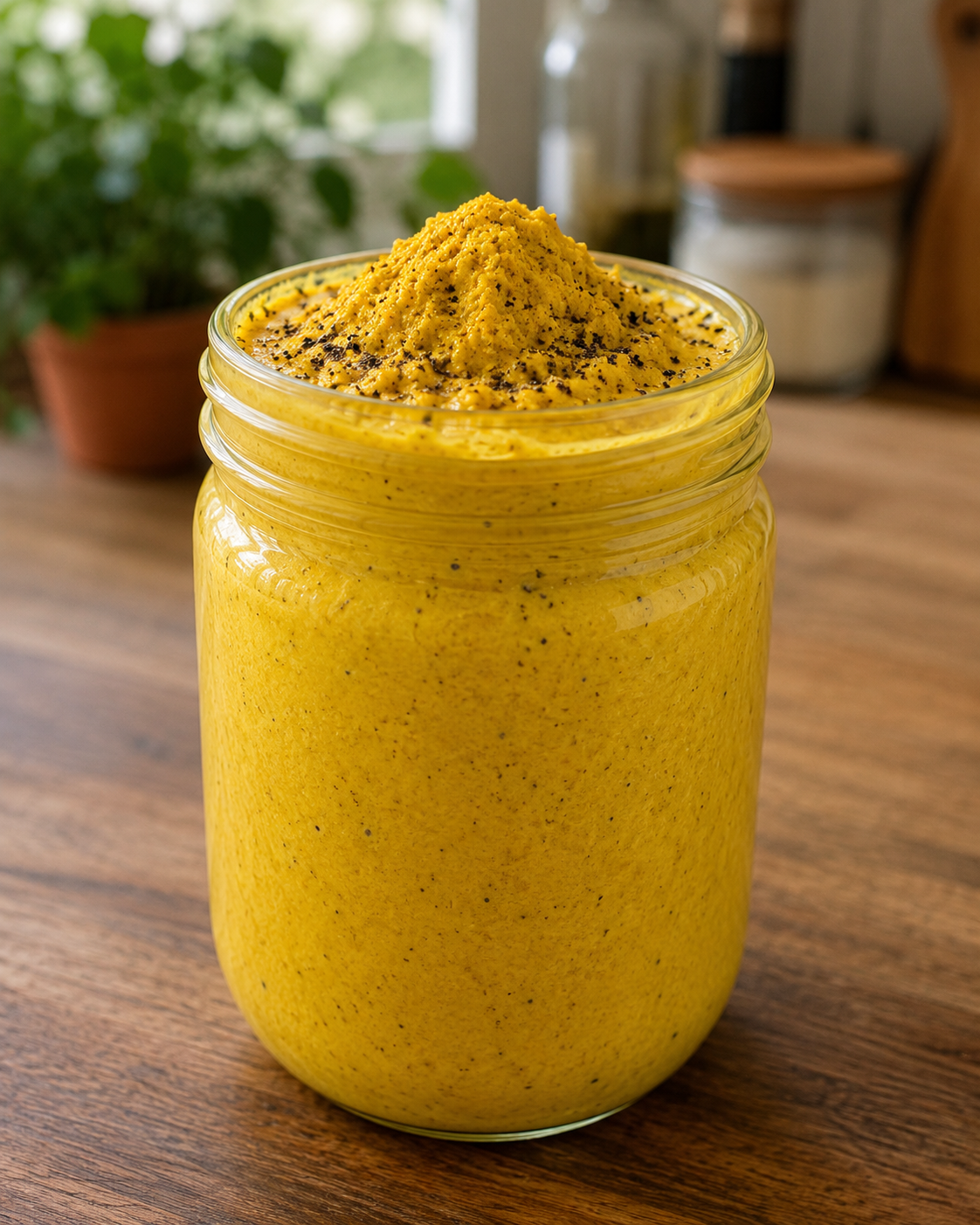
Turmeric and black pepper are two familiar kitchen spices that have become the center of an extraordinary health claim.
According to some viral posts, combining turmeric with a pinch of black pepper “switches on” a hidden cellular clean-up system, removes damaged cells, detoxifies the body, fights inflammation, and may even slow aging.
There’s a small piece of interesting science behind the excitement—but the claim goes much further than the evidence.
Turmeric contains curcumin, a group of compounds extensively studied for their biological activity. Black pepper contains piperine, which can affect how the body handles certain substances and has been shown to substantially increase curcumin exposure under particular experimental conditions.
Researchers have also investigated curcumin in laboratory and animal models involving autophagy—a normal process cells use to recycle certain damaged or unnecessary components.
But this doesn’t mean adding turmeric and pepper to dinner creates a clinically proven “cellular detox,” nor does it prove that the combination reverses aging or cleans damaged cells from the human body.
For most people, turmeric and black pepper are better viewed as flavorful spices that can contribute to a nutritious diet—not a biological reset button.
Important: Culinary amounts of turmeric and black pepper are different from concentrated curcumin/piperine supplements. Supplements can interact with medications and aren’t appropriate for everyone.
⸻
🧬 What Is This “Cellular Clean-Up” People Are Talking About?
The scientific term usually hiding behind this viral phrase is autophagy.
Autophagy comes from Greek words roughly meaning “self-eating.”
That sounds alarming, but it’s actually a normal biological recycling system.
Cells constantly produce proteins, structures, and other components.
Some eventually become:
- Old
- Damaged
- Unnecessary
- Dysfunctional
Through autophagy, cells can break down and recycle certain cellular material.
Think of it less like a dramatic detox and more like an ongoing maintenance and recycling program.
Autophagy is happening in your body already.
You don’t need turmeric to “unlock” a system that otherwise remains completely dormant.
⸻
🔬 Why Scientists Care About Autophagy
Cellular recycling is involved in normal physiology.
Researchers study autophagy in relation to:
- Aging
- Metabolism
- Immune function
- Neurodegenerative diseases
- Cancer
- Cardiovascular disease
- Cellular stress
But this area of science is complicated.
More autophagy isn’t automatically better.
Its role can vary according to:
- Tissue
- Disease
- Timing
- Cellular conditions
- Degree of activation
For example, autophagy can sometimes help cells survive stressful conditions.
In other circumstances, researchers are interested in reducing or modifying particular autophagy pathways.
So the social-media idea that:
“More autophagy = younger and healthier”
is an oversimplification.
⸻
🌿 What Is Curcumin?
Turmeric comes from the rhizome of the plant Curcuma longa.
Its yellow-orange color comes partly from compounds called curcuminoids.
Curcumin is the best-known of these compounds.
Scientists have investigated curcumin for possible effects involving:
- Inflammatory signaling
- Oxidative stress
- Cellular pathways
- Metabolic processes
- Joint symptoms
Much of the excitement comes from laboratory experiments where curcumin can influence numerous biological pathways.
But laboratory findings don’t automatically translate into the same effect after someone sprinkles turmeric onto food.
⸻
🧪 Curcumin and Autophagy: What’s the Connection?
Laboratory and animal research suggests curcumin can interact with signaling pathways involved in autophagy.
That’s scientifically interesting.
It has contributed to research involving cancer cells, neurological conditions, metabolic disease, and aging biology.
However, there’s an enormous difference between:
Curcumin alters autophagy-related signaling in cultured cells
and:
Turmeric cleans damaged cells from your body.
The second statement is not established.
Researchers can expose cells directly to carefully controlled concentrations of curcumin.
When you eat turmeric, the compound must instead pass through:
- Digestion
- Intestinal absorption
- Liver metabolism
- Circulation
- Distribution into tissues
The amount ultimately reaching a particular tissue may be very different.
⸻
⚫ Why Add Black Pepper?
This is where the turmeric-black pepper combination became famous.
Black pepper contains piperine.
Piperine can influence enzymes and transport processes involved in the metabolism of various compounds.
Curcumin itself has relatively poor oral bioavailability.
In other words, your body doesn’t necessarily absorb and retain large amounts of ordinary curcumin efficiently.
Piperine has been studied as one method of increasing curcumin exposure.
This has led to the common advice:
“Always combine turmeric with black pepper.”
But there’s another side to the story.
⸻
⚠️ Increased Absorption Isn’t Always Automatically Better
If piperine can change how your body processes curcumin, it can potentially affect how it handles other substances too.
That’s particularly relevant with concentrated supplements.
Drug metabolism is carefully regulated by enzymes and transport systems.
A concentrated ingredient that interferes with those systems can potentially change medication exposure.
That doesn’t mean sprinkling ordinary black pepper over dinner is dangerous.
It means:
Culinary spice use and concentrated piperine supplements shouldn’t be treated as equivalent.
⸻
📊 Viral Claim vs. What the Science Actually Supports
| Viral Claim | More Accurate Interpretation |
| Turmeric activates a hidden cellular clean-up | Curcumin can influence autophagy-related pathways in experimental research |
| Black pepper makes turmeric 20× more powerful | Piperine can substantially alter curcumin bioavailability under specific experimental conditions |
| The combination detoxes your cells | Not established |
| Turmeric reverses aging | Not proven |
| More curcumin is always better | No |
| Turmeric and pepper can be part of a healthy diet | Yes |
| Supplements are identical to culinary spices | No |
| Autophagy is a normal cellular process | Yes |
This distinction lets us appreciate the science without turning it into a miracle claim.
⸻
🍛 A Simple Way to Use Turmeric and Black Pepper
You don’t need concentrated shots or complicated detox drinks.
Use the spices as food.
Golden Vegetable Bowl
Ingredients
- 1 cup cooked vegetables
- ½ cup chickpeas or another appropriate protein source
- ¼ teaspoon turmeric
- Small pinch of black pepper
- 1 teaspoon olive oil
- Garlic or herbs to taste
Directions
Warm the vegetables and chickpeas.
Add turmeric and black pepper.
Finish with olive oil and your preferred herbs.
Serve as part of a balanced meal.
This gives you turmeric in a normal culinary context.
No megadose is required.
⸻
🫖 What About Turmeric Tea?
Turmeric tea can be an enjoyable beverage.
A simple version can contain:
- Warm water
- Small amount of turmeric
- Pinch of black pepper
- Optional ginger
If you add honey, remember that honey contributes sugar and carbohydrate.
Turmeric tea can be comforting.
But it shouldn’t be described as a drink that physically washes toxins out of your cells.
⸻
🥛 What About “Golden Milk”?
Golden milk generally combines turmeric with milk or a plant-based beverage and sometimes:
- Ginger
- Cinnamon
- Black pepper
- Honey
It can be a pleasant evening drink.
Some of turmeric’s compounds are fat-soluble, so consuming turmeric as part of a meal containing some fat is reasonable.
But golden milk isn’t a medical treatment.
And adding large amounts of honey can turn a supposedly metabolic-health drink into a significant source of added sugar.
⸻
⏱️ Does Turmeric Activate Autophagy Overnight?
There is no established human dose or schedule showing that drinking turmeric before bed reliably activates enough autophagy to produce a measurable “cellular cleanse” by morning.
You can’t normally feel autophagy happening.
There isn’t a sensation that proves your cells have entered a special cleaning mode.
Claims such as:
“Drink this tonight and damaged cells will be gone tomorrow”
should be viewed skeptically.
Human biology rarely works that simply.
⸻
🍽️ What About Fasting and Autophagy?
Fasting is another topic commonly paired with autophagy.
Nutrient availability does influence cellular signaling, and fasting can affect autophagy pathways in experimental models.
But translating this into exact human instructions is difficult.
Online claims such as:
- Autophagy begins exactly at 16 hours
- Maximum autophagy occurs at 24 hours
- 48 hours completely cleans your cells
are much more precise than the evidence allows.
Autophagy occurs differently across tissues, and directly measuring it in living humans is challenging.
⸻
👴 Older Adults Should Be Careful With Aggressive Fasting
This is particularly important.
An older adult shouldn’t begin prolonged fasting simply because a social-media post promises “cellular clean-up.”
Aggressive fasting can create problems for some people, including:
- Weakness
- Dizziness
- Dehydration
- Low blood glucose
- Medication complications
- Inadequate protein intake
- Loss of muscle mass
Older adults already face an increased risk of age-related muscle loss.
Preserving muscle and adequate nutrition can be more important than chasing an unproven autophagy target.
⸻
💊 Who Should Be More Careful With Turmeric Supplements?
Using turmeric in normal cooking is one thing.
Taking concentrated curcumin supplements every day is another.
Talk with a healthcare professional before using concentrated turmeric/curcumin products if you:
- Take several medications
- Take anticoagulant or antiplatelet medication
- Have gallbladder or bile-duct problems
- Have liver disease
- Have a history of kidney stones
- Are preparing for surgery
- Are pregnant or breastfeeding
- Are receiving cancer treatment
Supplement formulas can contain much more curcumin than you’d typically obtain from seasoning food.
Some also contain concentrated piperine specifically to increase absorption.
⸻
🩸 Turmeric and Blood-Thinning Medication
Turmeric and curcumin are frequently discussed in relation to platelet function and bleeding.
The practical concern becomes greater when someone takes concentrated supplements alongside medication that already affects blood clotting.
Don’t discontinue prescribed anticoagulants.
Instead, show your healthcare professional the exact supplement—including the ingredient label—before using it regularly.
A teaspoon of turmeric in cooking shouldn’t automatically be treated the same as a high-dose curcumin capsule.
⸻
🫀 What About the Liver?
Another reason “natural” doesn’t always mean harmless is that concentrated supplements have occasionally been associated with liver injury.
Turmeric used as a normal culinary spice has a long history of food use.
But supplement products can deliver much higher exposures, especially when they’re formulated to increase curcumin absorption.
Stop a new supplement and seek medical advice if concerning symptoms develop, such as:
- Yellowing of the skin or eyes
- Dark urine
- Severe unexplained fatigue
- Persistent nausea
- Significant upper abdominal pain
Don’t assume a supplement is protecting the liver simply because it’s marketed as anti-inflammatory.
⸻
🪨 Turmeric and Kidney Stones
Turmeric contains oxalates.
For most people using ordinary culinary quantities, this isn’t necessarily a problem.
But someone with a history of calcium oxalate kidney stones should be cautious about consuming unusually large amounts of turmeric or concentrated preparations.
Again:
Food-sized quantities and megadoses aren’t the same exposure.
⸻
🔥 Does Turmeric Reduce Inflammation?
Curcumin has been studied extensively for effects on inflammatory signaling.
Some clinical research suggests curcumin preparations may modestly improve symptoms in certain conditions, particularly some forms of joint discomfort.
But “anti-inflammatory” is often used too broadly online.
Inflammation isn’t one disease.
And eliminating all inflammation wouldn’t be desirable because inflammation is part of the body’s normal immune and repair response.
The goal isn’t to “turn inflammation off.”
It’s to address inappropriate or chronic inflammatory processes when medically relevant.
⸻
🚫 7 Turmeric Mistakes to Avoid
1. Treating Autophagy Like a Detox Button
It’s a complex cellular recycling process, not a switch you manually activate with a drink.
2. Taking Huge Amounts of Turmeric
More doesn’t guarantee stronger benefits.
3. Assuming Piperine Is Always Beneficial
Increasing absorption can also increase interaction concerns.
4. Combining Multiple Supplements
Curcumin, ginger, garlic, cinnamon, and other concentrated products can create a complicated mixture—especially alongside medication.
5. Replacing Medical Treatment
Turmeric isn’t a substitute for treatment of diabetes, arthritis, cancer, cardiovascular disease, or another medical condition.
6. Starting Prolonged Fasting for “Cellular Cleaning”
This can be particularly risky for older adults and people using glucose-lowering medication.
7. Assuming “Natural” Means Side-Effect-Free
Plants contain biologically active chemicals.
That’s precisely why concentrated plant products can have both effects and risks.
⸻
🥗 A Better Way to Support Healthy Aging
You don’t need to activate a secret biological pathway every morning.
Several less exciting habits have much stronger evidence for healthy aging.
Eat a varied diet
Include:
- Vegetables
- Whole fruits
- Legumes
- Whole grains
- Nuts and seeds
- Appropriate protein sources
- Healthy fats
Turmeric can simply be one of the spices used to make those foods enjoyable.
Preserve muscle
Resistance exercise and adequate protein become increasingly important with age.
Stay physically active
Regular movement supports cardiovascular, metabolic, muscular, and cognitive health.
Sleep consistently
Sleep is involved in numerous restorative biological processes.
Don’t smoke
Avoiding tobacco remains one of the most powerful health decisions available.
Manage chronic conditions
Blood pressure, diabetes, cholesterol, and other conditions matter far more than finding the perfect detox spice.
⸻
🧬 Can You “Clean” Your Cells With Food?
Not in the way detox marketing suggests.
Your body already has sophisticated systems for:
- Cellular recycling
- Waste processing
- DNA repair
- Protein quality control
- Liver metabolism
- Kidney filtration
- Immune surveillance
Nutrition provides the raw materials and energy required for normal physiology.
It doesn’t work like household cleaning fluid.
Rather than asking:
“Which food cleans my cells?”
a more useful question is:
“Which eating pattern helps support my long-term health?”
⸻
❓ Frequently Asked Questions
Does turmeric activate autophagy?
Curcumin can influence pathways associated with autophagy in laboratory and animal research. That doesn’t establish ordinary turmeric consumption as a clinically proven method for creating a therapeutic “cellular cleanse” in humans.
Why combine turmeric with black pepper?
Black pepper contains piperine, which can influence curcumin metabolism and increase its bioavailability under certain conditions.
Do I need black pepper every time I eat turmeric?
No. Turmeric can simply be used as a culinary spice. There’s no requirement to maximize curcumin absorption at every meal.
Can turmeric and black pepper reverse aging?
No convincing evidence shows that this combination reverses human aging.
Can turmeric detox the liver?
Turmeric isn’t a liver detox treatment. Concentrated turmeric supplements have, in rare cases, been associated with liver injury.
Is turmeric safe every day?
Normal culinary use is generally different from high-dose supplementation. Individual medical conditions and medications can change what’s appropriate.
Should seniors take curcumin supplements?
Not automatically. Older adults frequently take medications that may interact with concentrated supplements. Discuss regular curcumin supplementation with a healthcare professional.
Does turmeric clean arteries?
No. Turmeric doesn’t physically remove arterial plaque.
Can turmeric replace arthritis medication?
No. Don’t stop prescribed medication because you’re using turmeric or curcumin.
Is turmeric tea good before bed?
It can be an enjoyable caffeine-free beverage for many people, but there’s no good evidence that taking it at night creates a special overnight cellular clean-up.
⸻
⭐ The Bottom Line
Turmeric and black pepper are fascinating spices.
Turmeric contains curcumin, and black pepper contains piperine. Curcumin has demonstrated effects on numerous biological pathways in experimental research, including pathways associated with autophagy, while piperine can alter curcumin bioavailability.
That’s legitimate science.
But it doesn’t prove the viral claim that a spoonful of turmeric and pepper “triggers a hidden cellular clean-up,” detoxifies the body, removes damaged cells, or reverses aging.
Autophagy is already part of normal cellular biology.
You don’t need to force it with extreme fasting or concentrated supplements.
Use turmeric and black pepper where they make the most sense:
In food.
Enjoy them in vegetables, soups, curries, beans, and balanced meals.
And if you’re considering high-dose curcumin or piperine supplements—particularly if you’re over 60, take daily medications, have kidney or liver problems, or use blood-thinning medication—talk with your healthcare professional first.
The most reliable “healthy aging formula” remains far less mysterious:
Nutritious food, regular physical activity, adequate sleep, maintaining muscle, avoiding tobacco, and managing medical conditions properly.