
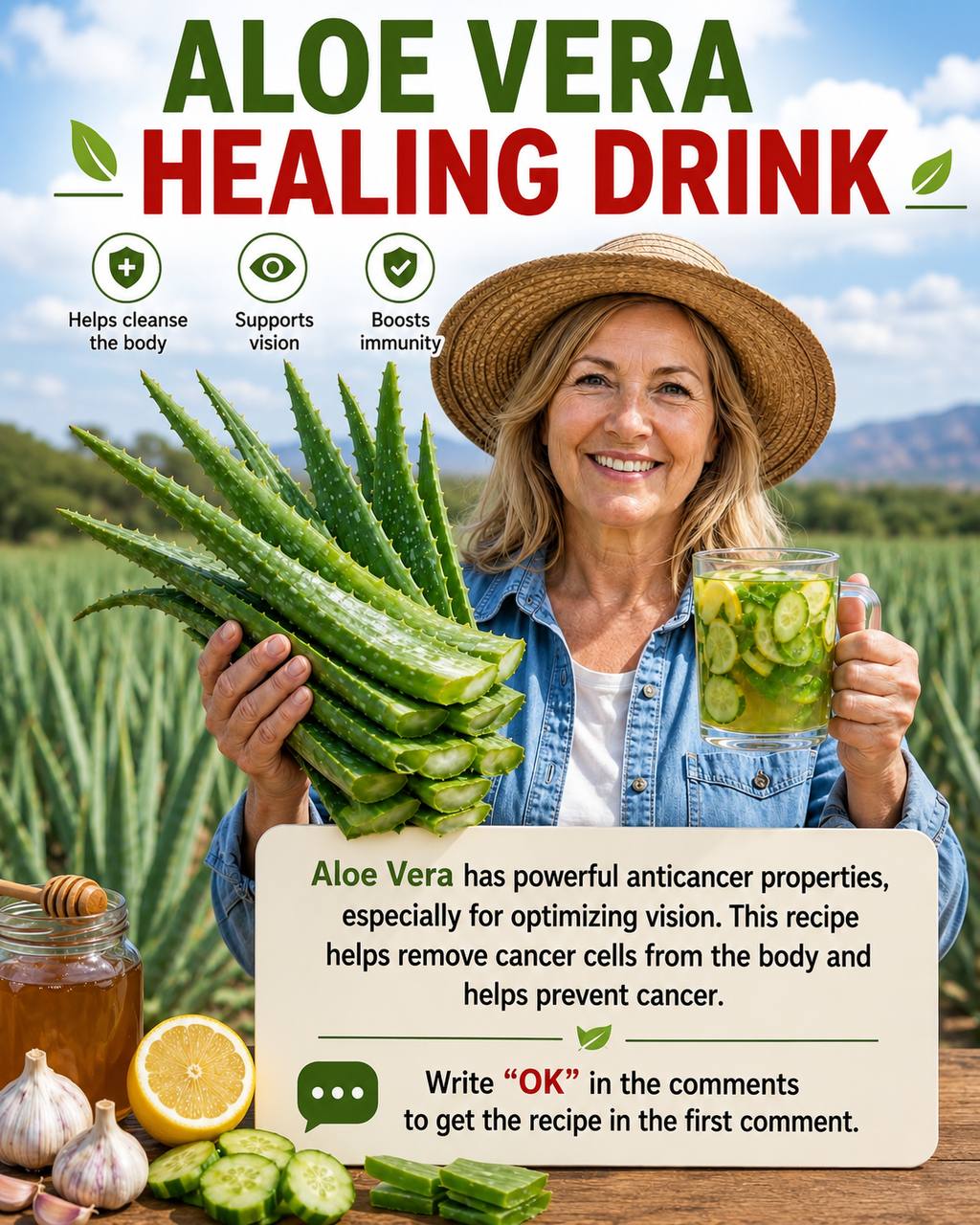
Aloe Vera and Cinnamon: A Natural Duo to Support Wellness and Healthy Vision — Benefits, Risks & What to Know First
Aloe vera and cinnamon are two ingredients that have been used in traditional wellness practices for generations.
Today, they’re often combined in homemade drinks promoted for everything from digestion and blood sugar to inflammation and eyesight.
You may even see claims that drinking aloe vera with cinnamon can:
Sharpen blurry vision.
Protect aging eyes.
Lower blood sugar naturally.
Clean the body from the inside.
Or even restore eyesight.
The reality is more nuanced.
Aloe vera and cinnamon contain biologically active compounds, and both have been studied for several health-related purposes. But there is no good clinical evidence that combining aloe vera and cinnamon restores lost eyesight, removes cataracts, reverses glaucoma, or repairs retinal damage.
For healthy vision, the strongest strategies remain a balanced diet, management of conditions such as diabetes and high blood pressure, avoiding smoking, protecting the eyes from excessive UV exposure, and getting appropriate eye examinations. The National Eye Institute (NEI) highlights these habits as important ways to protect eye health. (nei.nih.gov)
⚠️ Important Safety Note
This article is for general educational purposes and is not a substitute for medical or eye care.
Do not put aloe vera, cinnamon, cinnamon water, aloe juice, or any homemade mixture directly into your eyes.
Aloe and cinnamon should not be treated as homemade eye drops.
Oral aloe products also vary considerably. Aloe gel, aloe latex, and whole-leaf extracts are not interchangeable. NCCIH reports that aloe latex taken orally can cause abdominal pain, cramping, and diarrhea, while some oral aloe leaf extracts have been associated with cases of acute hepatitis. (NCCIH)
Cinnamon is generally considered safe in ordinary food amounts, but large quantities or prolonged use can cause digestive problems or allergic reactions. Cassia cinnamon can also contain substantial amounts of coumarin, which may be problematic for some people, particularly those with liver disease. (NCCIH)
If you take prescription medications—especially medicines for diabetes—or have liver, kidney, gastrointestinal, or other chronic medical conditions, discuss concentrated herbal products with your healthcare professional first. NCCIH notes that herbal products including aloe and cinnamon can interact with medications. (NCCIH)
🌿 What Is Aloe Vera?
Aloe vera is a succulent plant containing a clear inner gel.
But when discussing aloe, an important distinction is often overlooked.
An aloe leaf contains different components:
Inner aloe gel
Aloe latex
and preparations made from the whole leaf.
These have very different safety profiles.
NCCIH reports that short-term oral use of certain aloe gel preparations has been studied, while oral aloe latex can cause abdominal cramps and diarrhea and raises substantially greater safety concerns. (NCCIH)
This means that drinking a commercial food-grade aloe beverage is not the same as blending an entire aloe leaf at home.
🌳 What Is Cinnamon?
Cinnamon comes from the bark of trees belonging to the Cinnamomum genus.
Two broad categories commonly discussed are:
Cassia cinnamon
and
Ceylon cinnamon.
Cassia is widely available and generally contains more coumarin.
Ceylon cinnamon usually contains much less.
NCCIH notes that cinnamon products don’t always clearly identify the species used, even though their chemical composition can differ. (NCCIH)
For ordinary culinary use, cinnamon is generally considered safe.
Concentrated supplements and large daily quantities are another matter.
👁️ Can Aloe Vera and Cinnamon Improve Eyesight?
There is currently no established clinical evidence that drinking aloe vera and cinnamon can restore eyesight.
They have not been shown to:
Remove cataracts.
Reverse glaucoma.
Repair damaged retinal tissue.
Correct nearsightedness.
Correct farsightedness.
Correct astigmatism.
Or eliminate the need for glasses.
This does not mean nutrition is irrelevant to eye health.
Far from it.
NEI recommends an overall healthy lifestyle that includes nutritious foods, physical activity, smoking avoidance, management of chronic diseases, eye protection, and regular eye care. (nei.nih.gov)
The difference is between supporting eye health and claiming to reverse eye disease.
📊 Aloe + Cinnamon: Claims vs. Reality
| Claim | What the evidence supports |
| Cinnamon can be part of a healthy diet | Yes |
| Aloe is used in food and wellness products | Yes |
| Aloe may affect blood sugar | Preliminary evidence exists |
| Cinnamon may affect metabolic markers | Research remains uncertain |
| Healthy lifestyle supports eye health | Yes |
| Aloe + cinnamon improves eyesight | Not established |
| Aloe + cinnamon removes cataracts | No |
| Aloe + cinnamon reverses glaucoma | No |
| Aloe + cinnamon repairs the retina | Not established |
| Aloe + cinnamon replaces glasses | No |
| Aloe or cinnamon belongs directly in the eye | No |
🩸 What About Blood Sugar?
This is where the eye-health discussion becomes more interesting.
Diabetes can damage the eyes over time.
So maintaining appropriate blood glucose levels is important for people with diabetes.
NCCIH reports that a small amount of research suggests oral aloe may reduce blood glucose and HbA1c in people with diabetes. But this does not establish aloe as a replacement for diabetes treatment. (NCCIH)
Cinnamon has also been extensively marketed for blood sugar.
However, NCCIH says the research does not clearly support cinnamon for any health condition, and evidence regarding cinnamon supplementation for diabetes remains uncertain. (NCCIH)
That’s an important distinction.
A plant showing an effect in some studies does not mean:
“Drink this and stop your medication.”
Never make that substitution without medical guidance.
👁️ Why Blood Sugar Matters to Vision
Persistently elevated blood glucose can damage blood vessels, including those supplying the retina.
That is one reason diabetes management matters for long-term eye health.
NEI specifically emphasizes managing long-term conditions such as diabetes and high blood pressure as part of protecting vision. (nei.nih.gov)
But aloe and cinnamon are not treatments for diabetic retinopathy.
Someone with diabetes still needs appropriate:
Blood-glucose management.
Medical follow-up.
Dilated eye examinations.
And eye treatment when necessary.
🥤 A Gentle Aloe-Cinnamon Wellness Drink
If you enjoy these flavors and your healthcare professional has not advised you to avoid them, you can keep the recipe simple.
Ingredients
1 cup cold water
1–2 tablespoons commercially prepared food-grade inner-leaf aloe vera drink or gel intended for oral consumption
A small pinch of Ceylon cinnamon
A squeeze of lemon, optional
Ice, optional
Directions
Add the water and food-grade aloe to a glass.
Add only a small amount of cinnamon.
Stir thoroughly.
Add lemon and ice if desired.
Drink it as an occasional wellness beverage—not as medicine.
Do not use aloe latex or homemade whole-leaf aloe preparations for this drink.
NCCIH distinguishes aloe gel from aloe latex and notes substantially greater safety concerns with oral aloe latex. (NCCIH)
⚠️ Why I Prefer Food-Grade Aloe
Cutting an aloe leaf from a plant and blending the entire thing into a smoothie may sound more natural.
But “natural” does not automatically mean safer.
The yellowish latex portion of the aloe leaf contains compounds with strong laxative effects.
NCCIH reports that oral aloe latex can cause:
Abdominal pain.
Cramping.
And diarrhea.
Overuse may also increase risks involving certain medications. (NCCIH)
A commercially prepared food-grade inner-leaf aloe product is more predictable than randomly blending an entire raw leaf.
🌿 How Much Cinnamon?
You don’t need tablespoons of cinnamon.
A small culinary amount provides plenty of flavor.
Using increasingly large doses because you want stronger effects is not a good strategy.
NCCIH reports that cinnamon consumed in larger quantities or for long periods may cause gastrointestinal problems or allergic reactions. (NCCIH)
More isn’t automatically better.
🌳 Ceylon vs. Cassia Cinnamon
If cinnamon is something you consume regularly, the distinction can matter.
Cassia cinnamon may contain considerably more coumarin.
NCCIH notes that prolonged use of cassia cinnamon may be problematic for sensitive individuals, including people with liver disease, whereas Ceylon cinnamon generally contains only trace amounts. (NCCIH)
For an occasional sprinkle in food, this is usually much less concerning.
The issue becomes more relevant when people start consuming large amounts every day.
🚫 Don’t Take the “Cinnamon Challenge”
Never swallow spoonfuls of dry cinnamon.
NCCIH specifically warns against the so-called cinnamon challenge because inhaling cinnamon powder can cause serious harm. (NCCIH)
Cinnamon should be incorporated normally into food or beverages—not swallowed dry.
👁️ What Actually Supports Healthy Vision?
Rather than relying on one drink, build several protective habits.
NEI recommends healthy foods, physical activity, avoiding smoking, managing conditions such as diabetes and high blood pressure, wearing appropriate sunglasses, and staying current with eye care. (nei.nih.gov)
Useful foods include:
Dark leafy greens.
Colorful vegetables.
Whole fruits.
Fish.
Beans.
Nuts.
Seeds.
Eggs.
And other nutrient-dense foods.
NEI specifically highlights dark leafy greens such as spinach, kale, and collard greens, along with fish rich in omega-3 fatty acids such as salmon, tuna, and halibut. (nei.nih.gov)
🥬 Lutein and Zeaxanthin
Two nutrients frequently discussed in eye health are:
Lutein
and
Zeaxanthin.
They are found in foods such as dark leafy greens and are also included in the AREDS2 supplement formulation studied for age-related macular degeneration.
But AREDS2 is not a general eyesight supplement.
NEI says AREDS2 supplements can slow progression in certain people with intermediate AMD and some people with late AMD. They are not intended to restore normal eyesight in everyone. (nei.nih.gov)
💊 AREDS2 Is a Good Example of Why Evidence Matters
AREDS2 is one of the strongest examples of nutrition-related research in eye disease.
The formula contains specific doses of:
Vitamin C.
Vitamin E.
Zinc.
Copper.
Lutein.
And zeaxanthin. (nei.nih.gov)
In the major AREDS trials, these formulations reduced progression from intermediate to advanced AMD by approximately 25%. (nei.nih.gov)
But they did not prevent AMD from developing, and they did not have an overall effect on cataracts. (nei.nih.gov)
That’s why aloe and cinnamon shouldn’t be promoted as vision-restoring remedies without comparable evidence.
🥕 Don’t Forget Ordinary Foods
You don’t need exotic ingredients to eat for eye health.
Try building meals around:
Spinach.
Kale.
Broccoli.
Bell peppers.
Carrots.
Tomatoes.
Berries.
Citrus fruit.
Beans.
Eggs.
Fish.
Nuts.
Seeds.
And whole grains.
A colorful plate usually provides a wider range of nutrients than repeatedly drinking one herbal mixture.
☁️ Aloe and Cinnamon Cannot Remove Cataracts
A cataract is clouding of the natural lens inside the eye.
A drink passes through your digestive system.
It cannot travel to the eye and wash away a cloudy lens.
NEI’s AREDS and AREDS2 studies also found that the tested antioxidant supplement formulations did not have an overall effect on cataracts. (nei.nih.gov)
Claims that aloe, cinnamon, honey, carrots, or another food can “dissolve cataracts naturally” should therefore be treated cautiously.
🟢 They Don’t Replace Glaucoma Treatment
Glaucoma damages the optic nerve.
Depending on the type and severity, treatment may involve:
Prescription eye drops.
Laser procedures.
Surgery.
Or combinations of these approaches.
Aloe-cinnamon drinks are not established glaucoma treatments.
Do not stop prescribed glaucoma medication because a natural remedy promises to lower eye pressure.
👓 They Cannot Replace Glasses
If blurry vision comes from:
Nearsightedness.
Farsightedness.
Astigmatism.
Or age-related focusing changes,
a drink cannot reshape the eye enough to correct the refractive problem.
Proper glasses or contact lenses may be exactly what is needed.
🚫 Never Put Cinnamon in Your Eyes
This deserves its own warning.
Do not make cinnamon eye drops.
Do not rinse the eyes with cinnamon water.
Do not place cinnamon essential oil around or inside the eyes.
Cinnamon can irritate tissues and cause allergic reactions; NCCIH notes that topical cinnamon preparations can cause skin irritation or contact dermatitis. (NCCIH)
The eye is even more delicate.
🚫 Never Put Fresh Aloe Gel in Your Eyes
Aloe gel sold for skin use is not necessarily sterile or formulated for ophthalmic use.
Fresh aloe taken directly from a leaf isn’t sterile either.
Eating an appropriately prepared food-grade aloe product is completely different from putting aloe directly onto the eye.
Keep homemade plant preparations out of your eyes.
💊 Medication Interactions Matter
Natural products can still interact with medication.
This is particularly relevant if you take medicines for:
Diabetes.
Heart conditions.
Blood pressure.
Or other chronic illnesses.
NCCIH advises people taking medicines to discuss aloe and other herbal products with their healthcare providers because harmful interactions can occur. (NCCIH)
It provides similar caution for cinnamon and notes that some herbal products may interact with medicines. (NCCIH)
If you take several prescriptions every day, this becomes more important—not less.
🤰 Pregnancy and Breastfeeding
Concentrated herbal preparations deserve additional caution during pregnancy and breastfeeding.
NCCIH says oral aloe in gel, latex, or whole-leaf form may be unsafe during pregnancy and breastfeeding. (NCCIH)
For cinnamon, normal culinary amounts are different from concentrated medicinal doses; NCCIH notes uncertainty and safety concerns around larger amounts during pregnancy. (NCCIH)
Discuss concentrated herbal products with your healthcare professional.
📊 A Better Healthy-Vision Strategy
| Habit | Role |
| Leafy green vegetables | Supports nutritious eye-health diet |
| Fish | Useful part of balanced diet |
| Colorful fruits and vegetables | Provides varied nutrients |
| Regular physical activity | Supports overall metabolic health |
| Diabetes management | Important for protecting vision |
| Blood-pressure management | Important for vascular/eye health |
| UV-blocking sunglasses | Helps protect eyes from UV exposure |
| Avoiding smoking | Reduces important eye-health risks |
| Dilated eye examinations | Helps detect disease |
| AREDS2 when medically appropriate | Can slow certain stages of AMD |
| Aloe + cinnamon drink | Optional food/beverage, not eye treatment |
📅 A Simple 14-Day Wellness Routine
Instead of expecting one drink to transform your eyesight, try improving the entire routine.
Morning
Drink water.
Eat a balanced breakfast containing protein.
Take prescribed medications normally.
Lunch
Include a leafy green vegetable.
Choose a protein source.
Add whole fruit.
Afternoon
If you enjoy aloe and cinnamon and they’re appropriate for you, have a modest serving of the food-grade aloe-cinnamon drink.
Do not add large amounts of sugar.
Dinner
Include colorful vegetables.
Choose fish periodically if it fits your diet.
Outdoors
Wear sunglasses that provide appropriate UV protection.
NEI recommends sunglasses that block 99–100% of UVA and UVB radiation. (nei.nih.gov)
Every day
Stay active as appropriate for your health.
Avoid smoking.
Manage diabetes, blood pressure, and cholesterol according to your healthcare plan.
And don’t put homemade remedies in your eyes.
🚫 10 Common Aloe + Cinnamon Mistakes
1. Calling it an eyesight cure.
There is no established evidence that the combination restores lost eyesight.
2. Putting it directly into the eyes.
Never use homemade aloe-cinnamon eye drops.
3. Using the entire raw aloe leaf in a drink.
Aloe latex carries substantially greater safety concerns than appropriately prepared inner-leaf products. (NCCIH)
4. Using tablespoons of cinnamon every day.
Large or prolonged doses can create unnecessary risks. (NCCIH)
5. Assuming all cinnamon is identical.
Cassia and Ceylon cinnamon differ in coumarin content. (NCCIH)
6. Using the drink instead of diabetes medication.
Don’t replace prescribed treatment with herbal products.
7. Expecting it to remove cataracts.
It cannot.
8. Using it instead of glaucoma treatment.
It cannot replace appropriate eye-pressure treatment.
9. Ignoring medication interactions.
Both aloe and cinnamon require additional caution when used medicinally alongside medications. (NCCIH)
10. Ignoring changing vision because you’re trying a natural remedy.
Persistent vision changes need proper evaluation.
🚨 When Vision Changes Need Prompt Care
Seek urgent medical attention for:
Sudden loss of vision.
A major sudden change in vision.
A curtain or dark shadow across your visual field.
Sudden flashes of light.
A sudden large increase in floaters.
Severe eye pain.
A severely painful red eye.
Significant eye trauma.
Sudden double vision.
Or vision changes occurring with:
Facial drooping.
Weakness or numbness.
Confusion.
Difficulty speaking.
These symptoms should not be treated with aloe, cinnamon, vitamins, juice, or another home remedy.
❓ Frequently Asked Questions
Is aloe vera good for eyesight?
Aloe contains biologically active compounds, but there isn’t good clinical evidence that drinking aloe restores eyesight or treats cataracts, glaucoma, or retinal disease.
Is cinnamon good for the eyes?
Cinnamon can be used as part of a normal diet, but it has not been established as a treatment for poor vision or eye disease.
Can aloe vera and cinnamon improve blurry vision?
Not reliably. Blurry vision has many possible causes, including dry eye, refractive errors, cataracts, glaucoma, retinal disease, and diabetes-related eye problems. The cause needs to be identified.
Can I put aloe vera in my eyes?
Do not use fresh aloe or ordinary cosmetic aloe products as homemade eye drops.
Can I put cinnamon water in my eyes?
No.
Can aloe and cinnamon lower blood sugar?
Some research suggests oral aloe may affect glucose measurements, while evidence for cinnamon remains uncertain. Neither should replace diabetes treatment. (NCCIH)
Which cinnamon is better for frequent use?
Ceylon cinnamon generally contains less coumarin than cassia cinnamon. This may matter when cinnamon is consumed frequently or in larger quantities. (NCCIH)
Can this drink remove cataracts?
No.
What foods are better established for healthy eyes?
NEI recommends an overall nutritious diet and specifically highlights dark leafy greens and fish rich in omega-3 fatty acids as eye-healthy choices. (nei.nih.gov)
What supplement actually has evidence for an eye disease?
AREDS2 has strong clinical-trial evidence for slowing progression in certain people with AMD. It isn’t intended for everyone and should be discussed with an eye-care professional. (nei.nih.gov)
⭐ The Bottom Line
Aloe vera and cinnamon can be enjoyed as part of a broader wellness routine, but they should not be promoted as a cure for poor eyesight.
The evidence does not show that combining them can:
Restore lost eyesight.
Remove cataracts.
Reverse glaucoma.
Repair retinal damage.
Or eliminate the need for glasses.
For long-term eye health, focus on the habits supported by stronger evidence:
Eat plenty of vegetables and other nutrient-rich foods.
Include leafy greens regularly.
Stay physically active.
Manage diabetes and high blood pressure.
Avoid smoking.
Protect your eyes from UV exposure.
Get appropriate eye examinations.
NEI emphasizes that healthy eating, physical activity, sunglasses, chronic-disease management, and regular eye care are practical ways to protect vision. (nei.nih.gov)
If you enjoy aloe and cinnamon, keep them where the evidence supports them best:
As foods—not miracle eye medicine.
Not a cure • Never put aloe or cinnamon directly in your eyes • Use only food-grade aloe products intended for oral consumption • Large amounts may interact with medications • Persistent or sudden vision changes need proper evaluation.