
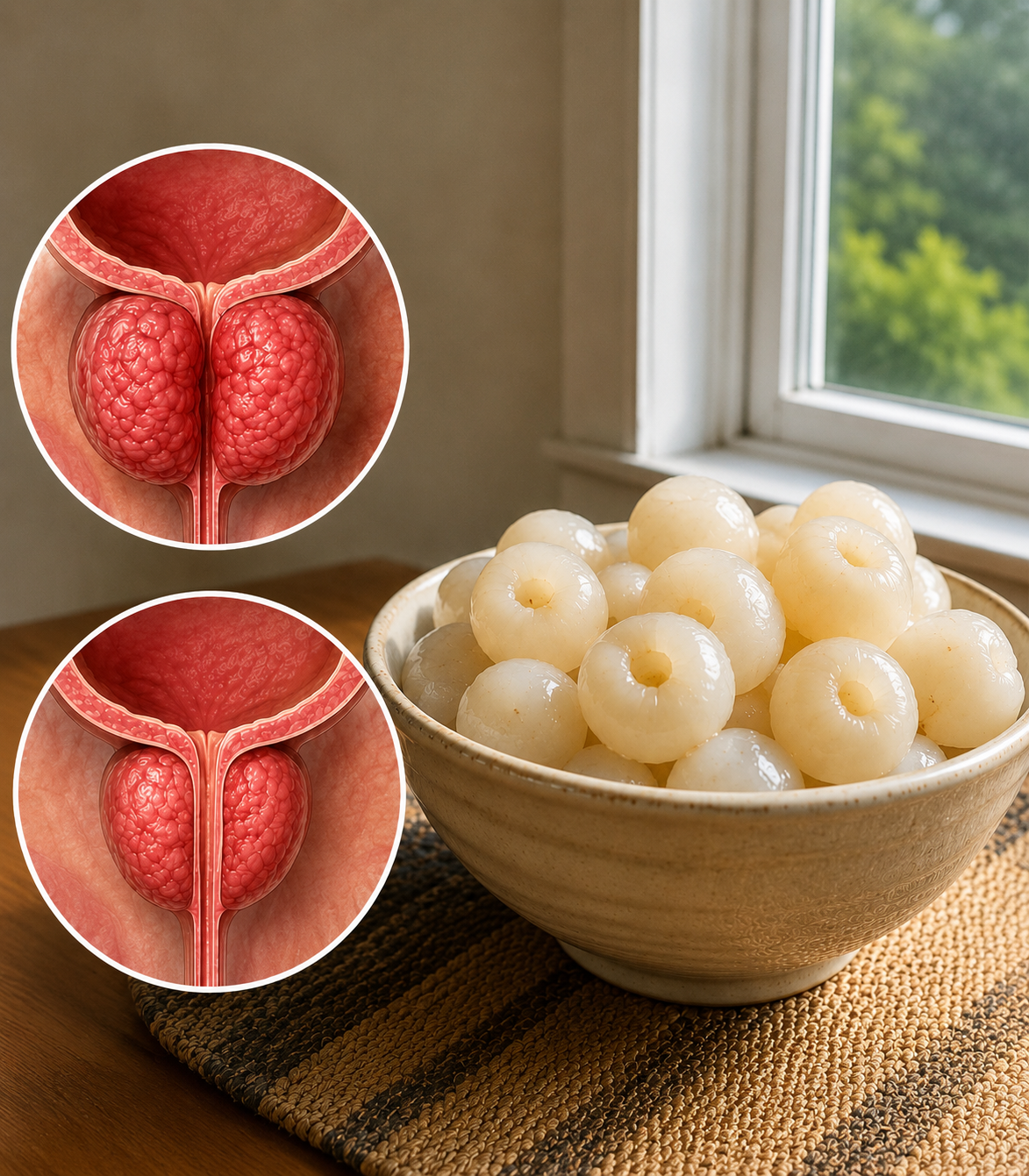
For many men over 50, nighttime starts to follow an exhausting pattern.
You fall asleep.
A few hours later, you wake up needing to urinate.
Then it happens again.
And sometimes again.
By morning, you’ve technically spent eight hours in bed—but you don’t feel rested.
Weak urine flow, urgency, difficulty getting started, dribbling, and repeated nighttime bathroom trips are common symptoms associated with benign prostatic hyperplasia (BPH), or an enlarged prostate.
And because BPH becomes increasingly common with age, it’s easy to understand why advertisements promising a tiny fruit that “shrinks the prostate naturally” attract so much attention.
The fruit they’re often referring to is the dark berry of the saw palmetto plant (Serenoa repens).
Saw palmetto has been used in supplements marketed for men’s urinary health for decades.
But here’s the important part:
Saw palmetto berries have not been proven to reliably shrink an enlarged prostate or stop nighttime urination.
Large, well-controlled studies and more recent reviews have generally found little or no meaningful benefit from saw palmetto used alone for BPH symptoms.
That doesn’t make the plant uninteresting.
It means men deserve the difference between an intriguing traditional remedy and a treatment that has actually been shown to work.
And if nighttime urination is stealing your sleep, there are several practical steps that may help much more.
🌴 What Is This Tiny Fruit?
Saw palmetto is a small palm native to the southeastern United States.
It produces small berries that darken as they mature.
Extracts made from these berries are sold in:
- Capsules
- Softgels
- Tablets
- Liquid extracts
- Men’s prostate formulas
You’ll frequently see claims such as:
“Supports normal prostate size.”
“Restores strong urine flow.”
“Reduces nighttime bathroom trips.”
“Natural prostate relief.”
Those claims have made saw palmetto one of the best-known prostate supplements.
But marketing and clinical evidence aren’t the same thing.
🧔 What Happens to the Prostate After 50?
The prostate is a gland located below the bladder.
The urethra—the tube carrying urine out of the bladder—passes through the prostate.
As some men age, prostate tissue enlarges.
Imagine placing increasing pressure around a flexible tube.
Urine can have more difficulty passing through.
The bladder may then need to work harder to push urine through the narrowed area.
This can contribute to symptoms such as:
- Weak urine stream
- Difficulty starting urination
- Stop-and-start flow
- Dribbling
- Feeling that the bladder hasn’t emptied
- Frequent urination
- Sudden urgency
- Nighttime urination
BPH itself is not prostate cancer.
But urinary symptoms still deserve evaluation because BPH isn’t the only possible cause.
🌙 Why Are You Going to the Bathroom All Night?
The medical term for waking from sleep to urinate is:
Nocturia
An enlarged prostate can contribute to nocturia.
But here’s something many advertisements don’t mention:
The prostate isn’t always the only reason.
Nighttime urination can be influenced by several factors.
These may include:
- Drinking large amounts in the evening
- Caffeine
- Alcohol
- Diabetes
- Certain medications
- Bladder problems
- Sleep disorders
- Fluid shifting from swollen legs
- Other urinary conditions
So if you’re waking four times every night, simply assuming:
“My prostate is huge.”
may lead you toward the wrong solution.
📊 Viral Claim vs. What We Actually Know
| Popular Claim | More Accurate Answer |
| Saw palmetto shrinks the prostate | Not reliably demonstrated |
| Saw palmetto stops nocturia | Evidence does not consistently support this |
| BPH can cause nighttime urination | Yes |
| Every nighttime bathroom trip comes from the prostate | No |
| Evening fluid changes may help some men | Yes |
| Caffeine and alcohol can worsen urinary symptoms | Yes |
| Prescription medications can improve BPH symptoms | Yes |
| Severe obstruction sometimes requires a procedure | Yes |
The goal shouldn’t be finding the strongest natural claim.
It should be figuring out why you’re waking up.
🔬 What Does the Research Say About Saw Palmetto?
Saw palmetto isn’t a remedy that researchers ignored.
It has actually been studied quite extensively.
Some older and smaller studies suggested that certain preparations might modestly improve urinary symptoms.
That helped build saw palmetto’s reputation.
But larger and more rigorous trials produced disappointing results.
A more recent review evaluating studies of saw palmetto in men with BPH concluded that saw palmetto used alone provides little or no benefit for BPH symptoms.
Even studies using higher-than-standard amounts have failed to consistently demonstrate meaningful improvement.
That’s an important lesson:
More supplement does not automatically mean more benefit.
🍅 What About Lycopene?
Another “tiny fruit” angle often involves tomatoes because they contain lycopene, a red carotenoid.
Lycopene is found in:
- Tomatoes
- Watermelon
- Pink grapefruit
- Guava
- Papaya
Tomatoes and other lycopene-rich foods can certainly be part of a nutritious diet.
But current evidence is insufficient to recommend lycopene as a treatment for BPH.
A tomato doesn’t function like prostate medication.
And eating tomato sauce tonight isn’t expected to dramatically strengthen tomorrow morning’s urine stream.
🍉 Can Watermelon Help the Prostate?
Watermelon contains lycopene and provides hydration.
It’s nutritious.
But watermelon has an interesting problem when we’re talking about nocturia.
A large bowl at 9:30 PM adds substantial fluid shortly before bed.
So even though it’s a healthy fruit, eating a huge amount late at night may actually increase the likelihood that you need to urinate overnight.
Timing matters.
💧 The Evening Fluid Mistake
Many men hear:
“Drink lots of water for prostate health.”
Then they continue drinking large glasses right until bedtime.
Hydration is important.
But if nighttime urination is your main problem, shifting more of your fluid intake earlier in the day may be helpful.
Instead of intentionally becoming dehydrated, try distributing fluids differently.
Earlier in the day
Drink normally according to your medical needs.
Later in the evening
Avoid repeatedly drinking large glasses without a reason.
Before bed
Use moderation.
People with heart failure, kidney disease, or physician-directed fluid plans should follow their healthcare professional’s instructions.
☕ Your Evening Coffee May Matter More Than Saw Palmetto
Caffeine can increase urinary urgency and frequency in some people.
Sources include:
- Coffee
- Tea
- Energy drinks
- Cola
- Certain pre-workout products
If you’re drinking coffee after dinner and waking repeatedly overnight, experiment with moving caffeine earlier.
This is simple.
It costs nothing.
And unlike taking another supplement, it doesn’t add another biologically active product to your medication list.
🍺 Alcohol Can Be Another Trigger
Alcohol can increase urine production and affect sleep quality.
That creates an unpleasant combination:
You may produce more urine while also sleeping less deeply.
If nocturia is a major issue, pay attention to what happens on evenings when you drink alcohol compared with evenings when you don’t.
Your own pattern can be revealing.
🚽 Don’t Rush the Final Bathroom Trip
Before bed:
Urinate normally.
Give yourself enough time to empty your bladder.
Some men find it helpful to wait briefly and try again—a practice sometimes called double voiding.
Don’t strain aggressively.
The purpose isn’t to force urine out.
It’s simply to give the bladder another opportunity to empty.
If you consistently feel unable to empty your bladder, however, tell your healthcare professional.
That symptom deserves evaluation.
🦵 What Do Swollen Ankles Have to Do With Nighttime Urination?
This connection surprises people.
During the day, gravity can contribute to fluid collecting in the legs.
When you lie down at night, some of that fluid returns to circulation.
The kidneys may then remove more fluid.
Result:
More urine overnight.
That’s one reason nighttime urination isn’t always purely a prostate problem.
If you regularly have significant leg or ankle swelling, tell your healthcare professional rather than treating it with a prostate supplement.
Swelling can have several causes that deserve proper assessment.
😴 Nocturia Can Steal More Than Sleep
Repeated nighttime awakenings can leave you feeling:
- Exhausted
- Irritable
- Foggy
- Unfocused
- Less physically energetic
Older adults also have another concern:
Falls.
Walking through a dark house half asleep several times each night increases opportunities for falling.
Consider:
- Nightlights
- Clear pathways
- Removing loose rugs
- Keeping glasses nearby
- Avoiding clutter between the bed and bathroom
Treating nocturia matters.
But making those nighttime trips safer matters too.
💊 Medications That Can Actually Help BPH
When BPH is responsible for bothersome symptoms, healthcare professionals have several evidence-based treatment options.
Alpha Blockers
These medications relax muscles around the prostate and bladder neck.
That can make urination easier.
Examples include medicines in the alpha-blocker family.
They often work faster than medications intended to reduce prostate growth.
But they can have side effects, including dizziness in some people.
That’s particularly relevant after 60 because dizziness can increase fall risk.
💊 5-Alpha Reductase Inhibitors
Another class includes medications that affect hormonal pathways involved in prostate growth.
Over time, they may:
- Slow prostate growth
- Shrink an enlarged prostate
- Improve urine flow in appropriate patients
These don’t work overnight.
Improvement can require months.
But unlike viral fruit claims, they have an established medical role in BPH management.
💊 Combination Treatment
Some men benefit from combining medication classes.
For example, a clinician may use:
A medication that relaxes prostate/bladder-neck muscles
plus
A medication that reduces prostate growth over time.
Treatment depends on:
- Symptom severity
- Prostate characteristics
- Other health conditions
- Medication interactions
- Side-effect tolerance
That’s why copying another man’s prostate medication isn’t appropriate.
⚠️ Check Your Cold Medicine
This is a surprisingly common problem.
Some over-the-counter cold and allergy medications can worsen urinary symptoms in men with BPH.
Decongestants and certain antihistamines deserve particular attention.
If your urine suddenly becomes much harder to pass after starting a cold medication, contact your healthcare professional or pharmacist.
Don’t simply double your prostate supplement.
🧪 What Tests Might Be Needed?
Evaluation doesn’t automatically mean something serious is wrong.
Your healthcare professional may begin with:
- Medical history
- Medication review
- Symptom discussion
- Physical examination
- Urine testing
Depending on the situation, additional evaluation may include:
- PSA testing when appropriate
- Urinary-flow testing
- Bladder-emptying measurements
- Ultrasound
- Other urologic tests
The goal is to determine whether your symptoms actually come from BPH—and how severe the obstruction may be.
🧠 BPH Is Not Prostate Cancer
This deserves emphasis.
Benign prostatic hyperplasia is:
Benign.
It isn’t prostate cancer.
But the two conditions can occur in the same age group.
And some urinary symptoms can overlap with other urinary or prostate problems.
So don’t use symptoms alone to diagnose yourself.
A weak stream does not automatically mean cancer.
But it also shouldn’t automatically be labeled harmless BPH without evaluation.
🥗 Can Diet Support Prostate Health?
There isn’t one food proven to switch off BPH.
A sensible overall eating pattern remains worthwhile for general health.
Build meals around foods such as:
- Vegetables
- Whole fruits
- Whole grains
- Beans
- Fish
- Appropriate lean proteins
- Nuts and seeds
- Unsaturated fats
This can support:
- Cardiovascular health
- Weight management
- Blood-pressure control
- Glucose management
Those issues become increasingly important with age.
Think:
Healthy dietary pattern.
Not:
Prostate miracle fruit.
🍅 A Simple Prostate-Conscious Lunch
Try:
Tomato-Cucumber Bean Bowl
Use:
- Chopped tomatoes
- Cucumber
- White beans or chickpeas
- Parsley
- Small amount of olive oil
- Lemon juice
- Black pepper
Add an appropriate protein if desired.
This meal provides vegetables, fiber, and plant foods without pretending any ingredient shrinks the prostate.
That’s the right way to use food.
🥜 What About Pumpkin Seeds?
Pumpkin seeds frequently appear in prostate-health articles.
They’re nutritious and provide:
- Unsaturated fats
- Protein
- Magnesium
- Zinc
- Plant compounds
But don’t turn them into medication.
A small serving can be part of a healthy diet.
Eating handful after handful won’t mechanically release prostate pressure.
🌿 What About Stinging Nettle?
Stinging nettle root is another herbal product used for urinary symptoms.
Some limited evidence suggests it may help certain lower urinary tract symptoms.
But evidence remains much less established than conventional BPH therapies.
The same rule applies:
Don’t replace evaluation or prescribed treatment with an herbal product.
🌳 What About Pygeum?
Extracts from Prunus africana, sometimes called African plum or pygeum, have also been studied.
Some older research suggests possible short-term improvement in urinary symptoms.
However, studies have often been:
- Small
- Short
- Variable in formulation
That makes strong conclusions difficult.
A product being traditional doesn’t automatically make its dose, purity, and effectiveness predictable.
🧴 Beware of the “7-Herb Prostate Formula”
Many supplements combine:
- Saw palmetto
- Pygeum
- Nettle
- Lycopene
- Pumpkin seed
- Zinc
- Selenium
A long ingredient list can make a product look powerful.
But it creates another problem:
If you experience:
- Dizziness
- Stomach upset
- Medication interactions
- Other side effects
it becomes difficult to know which ingredient caused it.
More ingredients aren’t automatically better.
🚫 8 Prostate Mistakes After 60
1. Assuming Every Nighttime Bathroom Trip Is BPH
Nocturia has multiple possible causes.
2. Drinking Huge Amounts Before Bed
Fluid timing matters.
3. Taking Saw Palmetto Expecting It to Shrink the Prostate
Current evidence doesn’t reliably support that claim.
4. Drinking Evening Coffee
Caffeine can aggravate urinary symptoms in some men.
5. Ignoring Cold and Allergy Medications
Certain products can worsen difficulty urinating.
6. Holding Urine for Hours
Don’t repeatedly ignore the urge to urinate.
7. Ignoring Persistent Incomplete Emptying
Urinary retention can become serious.
8. Waiting Until You Cannot Urinate
Complete inability to urinate requires urgent medical care.
🚨 When Prostate Symptoms Need Urgent Attention
Get medical help promptly if you:
Cannot urinate at all
This may represent acute urinary retention.
Have fever and chills with painful or urgent urination
This can indicate infection.
Notice blood in your urine
This requires evaluation.
Develop severe lower abdominal pain
A severely overfilled bladder can become extremely painful.
Don’t try another berry supplement first.
Get evaluated.
🩺 What Happens If BPH Is Left Untreated?
Mild BPH doesn’t always require immediate medication.
Some men can safely use watchful waiting with medical follow-up.
But significant obstruction can contribute to complications such as:
- Urinary retention
- Urinary tract infections
- Bladder stones
- Blood in the urine
- Bladder dysfunction
- Kidney problems
That’s why symptom severity matters.
A man waking once at night is very different from someone barely able to pass urine.
🔧 What If Medication Isn’t Enough?
Modern BPH treatment isn’t limited to major surgery.
Depending on the situation, options may include minimally invasive procedures designed to:
- Reduce enlarged tissue
- Move prostate tissue away from the urethra
- Improve urine flow
Other men may need surgery.
Treatment is individualized according to prostate anatomy, symptom severity, complications, and personal preferences.
🌙 A Better 7-Step Night Routine
Instead of relying on a “prostate berry,” try addressing the entire evening.
1. Hydrate Earlier
Get most routine fluid earlier in the day.
2. Reduce Large Late Drinks
Especially close to bedtime.
3. Move Caffeine Earlier
See whether afternoon/evening caffeine affects you.
4. Limit Evening Alcohol
Particularly when nocturia is severe.
5. Empty Your Bladder Before Bed
Take your time.
6. Make the Bathroom Route Safe
Use nightlights and remove fall hazards.
7. Track Your Pattern
For several days, record:
- Bedtime
- Evening beverages
- Number of nighttime trips
- Urinary urgency
- Stream strength
This information can be surprisingly helpful at a medical appointment.
📋 What to Tell Your Doctor
Don’t simply say:
“My prostate is bad.”
Be specific.
For example:
“I wake up four times each night.”
“My stream has become much weaker over six months.”
“I have to wait before urine starts.”
“I still feel full after urinating.”
“I’ve started leaking before reaching the bathroom.”
Specific symptoms help determine what testing and treatment may be useful.
❓ Frequently Asked Questions
What tiny fruit is marketed for enlarged prostate symptoms?
Saw palmetto berries are commonly used to make supplements promoted for urinary symptoms associated with BPH.
Does saw palmetto shrink an enlarged prostate?
Current high-quality evidence does not show that saw palmetto alone reliably shrinks the prostate or meaningfully improves BPH symptoms.
Can saw palmetto stop nighttime urination?
It hasn’t been reliably shown to do so. Nocturia also has many possible causes besides prostate enlargement.
Why do I urinate more at night after 60?
Possible contributors include BPH, evening fluid intake, caffeine, alcohol, bladder conditions, diabetes, certain medications, sleep problems, and nighttime fluid redistribution.
Can tomatoes shrink the prostate?
Tomatoes provide lycopene and are nutritious, but evidence is insufficient to recommend lycopene as a BPH treatment.
Is watermelon good for the prostate?
Watermelon contains lycopene and can be part of a healthy diet. However, eating a large amount close to bedtime adds considerable fluid and may worsen nocturia.
Should I stop drinking water at night?
Don’t intentionally dehydrate yourself. If medically appropriate, shifting more fluids earlier in the day and reducing large amounts shortly before bedtime may help.
Does coffee make BPH worse?
Caffeine can increase urgency and frequency in some people. Try reducing afternoon and evening caffeine and monitor whether symptoms change.
What medication helps urine flow?
Alpha blockers can relax muscles around the prostate and bladder neck, making urination easier in appropriate patients.
Can medicine actually shrink the prostate?
5-alpha reductase inhibitors can reduce prostate growth and shrink an enlarged prostate over time in appropriate patients.
When is difficulty urinating an emergency?
If you cannot urinate at all, seek medical help immediately.
⭐ The Bottom Line
The tiny saw palmetto berry has an impressive reputation.
But reputation isn’t the same as reliable treatment.
Despite decades of popularity, modern evidence indicates that saw palmetto used alone provides little or no consistent improvement in BPH symptoms for most men.
So if repeated nighttime bathroom trips are stealing your sleep, energy, and quality of life, don’t spend months jumping from one “prostate fruit” to another.
Start by finding out what’s actually causing the nocturia.
If BPH is responsible, effective options may include:
Changes in evening fluids, reducing caffeine and alcohol, reviewing medications, prescription treatments that improve urine flow or reduce prostate growth, and minimally invasive procedures or surgery when necessary.
Food still matters.
Fruit still belongs in a healthy diet.
And saw palmetto remains an interesting plant.
But the most powerful change after 60 isn’t discovering a berry that magically releases prostate pressure.
It’s identifying why you’re waking up all night—and treating the cause before another year of good sleep disappears.
The medical framing here is supported by NIDDK guidance: BPH can cause nocturia, weak/interrupted stream, urgency, frequency and incomplete emptying; treatment can range from lifestyle changes to alpha blockers, 5-alpha-reductase inhibitors and procedures. NCCIH’s latest summary says a 2023 review of 27 studies found saw palmetto alone provides little or no benefit for BPH symptoms.