
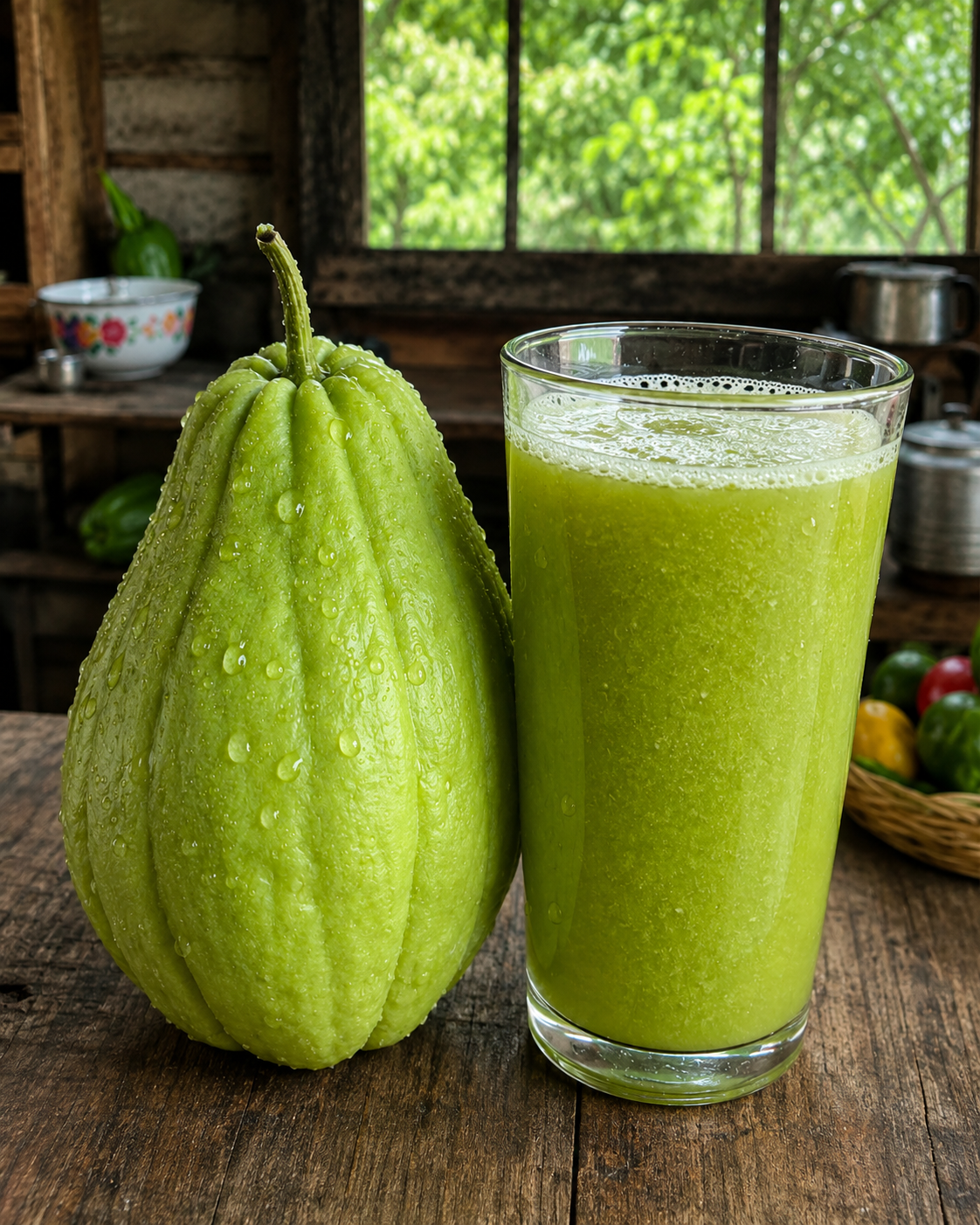
Chayote doesn’t look like a “superfood.”
It’s pale green, mildly flavored, inexpensive, and easy to overlook beside more colorful fruits and vegetables.
Yet online health posts increasingly give this small pear-shaped food dramatic powers:
“It drains swollen legs.”
“It removes knee inflammation.”
“It releases pressure from the arteries.”
Those claims go much further than the evidence.
Chayote can absolutely be part of a heart-conscious, vegetable-rich eating pattern. It provides water, fiber, vitamins, minerals, and plant compounds while being naturally low in sodium.
But eating chayote does not send an immediate “shock” through inflamed knees, remove fluid from swollen legs, or open clogged arteries.
That’s particularly important for adults over 50 because persistent leg swelling or a suddenly swollen knee can sometimes be a symptom that deserves medical attention—not another homemade remedy.
So what can chayote actually do?
Quite a bit as a food.
Just not what the viral headlines promise.
🥒 What Exactly Is Chayote?
Chayote (Sechium edule) belongs to the squash family.
Although it’s often prepared like a vegetable, botanically it’s a fruit.
Depending on where you live, you may also hear names such as:
- Vegetable pear
- Mirliton
- Chocho
- Choko
- Christophine
Its flavor is mild—somewhere between cucumber and zucchini—which makes it easy to add to savory meals.
You can:
- Steam it
- Boil it
- Roast it
- Sauté it
- Add it to soups
- Add it to salads
- Combine it with beans
- Serve it alongside fish or chicken
And that versatility is probably more useful than trying to turn it into medicine.
🦵 Can Chayote Really Reduce Swollen Knees?
First, we need to separate two different problems.
A swollen knee
may involve the joint itself.
Swollen feet, ankles, and legs
may involve fluid accumulating in body tissues.
Those aren’t necessarily the same condition.
A knee can become painful and swollen from osteoarthritis, injury, gout, inflammatory arthritis, infection, or other causes.
Osteoarthritis, for example, can produce pain, stiffness, swelling, and reduced movement in affected joints.
Chayote hasn’t been shown to reverse osteoarthritis or rebuild damaged cartilage.
That’s a major distinction.
🦴 What Actually Helps Knee Osteoarthritis?
For osteoarthritis, evidence-based treatment focuses on improving movement, reducing symptoms, and maintaining function.
One of the most consistently recommended treatments is surprisingly simple:
Exercise.
Appropriate exercise can reduce joint pain and stiffness while improving flexibility, strength, and endurance.
Depending on someone’s abilities, that may include:
- Walking
- Cycling
- Swimming
- Water exercise
- Range-of-motion exercises
- Strength training
- Balance work
For people carrying excess body weight, weight management can also reduce stress on weight-bearing joints such as the knees.
Food can support this bigger strategy.
It doesn’t replace it.
🥗 Where Chayote Fits
This is where chayote becomes useful.
Instead of asking:
“Will chayote cure my knee?”
ask:
“Can chayote help me build lighter, vegetable-rich meals?”
Yes.
Imagine replacing a heavily salted side dish with sautéed chayote, peppers, onions, herbs, and olive oil.
You’re not treating arthritis with chayote.
You’re improving the overall composition of the meal.
Repeated consistently, those dietary choices can support broader goals such as weight and cardiovascular management.
That’s much more realistic.
💧 Heavy, Swollen Legs Are Different
When both ankles or lower legs become puffy, the problem may be edema.
Edema means fluid has accumulated in tissues.
Potential causes include:
- Prolonged standing
- High sodium intake
- Certain medications
- Problems with leg veins
- Heart failure
- Kidney disease
- Liver disease
- Lymphatic problems
That’s why calling chayote a “natural water pill” can be dangerous.
Someone with unexplained swelling shouldn’t simply try to force water out of the body with foods or herbs.
The cause matters.
🧂 Sodium May Be More Important Than the Chayote
Here’s an interesting way to look at it.
Suppose someone eats chayote with:
- Processed meat
- Salty seasoning packets
- Soy sauce
- Canned gravy
- Large amounts of added salt
Then advertises the meal as a remedy for swollen legs.
That misses the bigger picture.
For some people with fluid retention, healthcare professionals may recommend reducing dietary sodium.
Chayote’s advantage is that it’s naturally mild and can be prepared without much salt.
Try flavoring it with:
- Garlic
- Lemon
- Parsley
- Black pepper
- Paprika
- Thyme
- Cumin
instead of automatically reaching for large amounts of salt.
❤️ What About “Pressured Arteries”?
This phrase usually refers to high blood pressure.
Blood pressure isn’t simply pressure caused by food physically clogging a tube.
It is influenced by complex interactions involving:
- Blood vessels
- Heart function
- Kidneys
- Nervous system
- Hormones
- Sodium intake
- Body weight
- Physical activity
- Genetics
- Medications
- Other medical conditions
No single fruit switches this system off.
Chayote shouldn’t replace prescribed blood-pressure medication.
🥬 The Better Blood-Pressure Strategy
Instead of searching for one miraculous food, build meals around an overall dietary pattern containing plenty of:
- Vegetables
- Fruits
- Beans
- Whole grains
- Nuts and seeds
- Fish and appropriate lean proteins
- Unsaturated fats
while controlling excessive sodium and highly processed foods.
Chayote can fit beautifully into that pattern.
But it’s one member of the team—not the entire team.
📊 Viral Claim vs. Reality
| Viral Claim | More Accurate Reality |
| Chayote drains swollen legs | Not established |
| Chayote eliminates knee inflammation | Not proven |
| Chayote rebuilds knee cartilage | No |
| Chayote unclogs arteries | No |
| Chayote instantly lowers blood pressure | Not established |
| Chayote can replace blood-pressure medication | No |
| Chayote can be part of a heart-conscious diet | Yes |
| Lower-sodium meals may help some people with fluid retention | Yes |
| Exercise can help knee osteoarthritis | Yes |
| Persistent unexplained leg swelling deserves evaluation | Yes |
🍲 Simple Garlic-Herb Chayote Recipe
Here’s a much better way to use chayote.
Ingredients
- 2 medium chayotes
- 1 tablespoon olive oil
- 1 garlic clove, minced
- ½ small onion, sliced
- ½ red bell pepper, sliced
- 1 tablespoon chopped parsley
- Black pepper
- Paprika
- Fresh lemon juice
Salt lightly according to your dietary needs.
Step 1
Wash the chayote thoroughly.
Cut it in half and remove the central seed if desired.
Slice into thin pieces.
Step 2
Heat olive oil in a skillet over medium heat.
Add onion and bell pepper.
Cook until they begin softening.
Step 3
Add chayote.
Cook until tender but not mushy.
Step 4
Add garlic near the end so it doesn’t burn.
Season with:
- Black pepper
- Paprika
- Parsley
Step 5
Finish with fresh lemon juice.
That’s it.
No detox.
No “artery cleanse.”
Just a simple vegetable-rich side dish.
🍗 Turn It Into a Complete Meal
Serve the sautéed chayote with:
Protein
Grilled salmon, chicken, beans, or lentils.
Whole-food carbohydrate
Brown rice, quinoa, or another appropriate whole grain.
Extra vegetables
Add tomatoes, leafy greens, broccoli, or peppers.
Healthy fat
Use a modest amount of olive oil.
This approach matters much more than eating chayote by itself.
🌿 What About Chayote Tea?
In some traditional practices, preparations made from different parts of the chayote plant have been used for various purposes.
But traditional use isn’t proof of clinical effectiveness.
Tea also introduces another issue:
A cup of chayote tea isn’t nutritionally equivalent to eating the whole food.
You lose much of the fiber and change the concentration of compounds.
Don’t assume:
“If eating chayote is healthy, concentrated chayote tea must be healthier.”
That logic doesn’t always work.
🧃 What About Chayote Juice?
Juicing is another popular trend.
A typical viral recipe might combine:
- Chayote
- Cucumber
- Lemon
- Ginger
- Celery
and call it a “swelling flush.”
It may produce a refreshing drink.
But it isn’t medical treatment for edema.
And for most people, eating whole vegetables has another advantage:
Fiber.
A vegetable-based meal generally provides more intact fiber than strained juice.
💊 Don’t Stop Your Blood-Pressure Medicine
This deserves its own section.
If your blood pressure improves after changing your diet, exercising, losing weight, or making other lifestyle changes, that’s excellent.
But don’t independently stop medication.
Blood pressure can sometimes remain dangerously high without obvious symptoms.
Medication adjustments should be made with the healthcare professional managing your blood pressure.
🦵 A Better Routine for Heavy Legs
If a clinician has determined that your swelling isn’t caused by a dangerous condition, several simple measures may sometimes be recommended.
These can include:
Movement
Long periods of sitting or standing can contribute to lower-leg swelling.
Regular movement helps the leg muscles assist circulation.
Elevation
Depending on the cause, elevating the legs while resting may help.
Sodium Management
Reducing excessive sodium may help some people with fluid accumulation.
Compression
Compression stockings can be useful for certain causes of swelling.
But compression isn’t appropriate for everyone.
If you have circulation problems or significant medical conditions, get professional guidance first.
🚶 The “Calf Pump” Matters
Your calf muscles aren’t just there for walking.
When they contract, they help move blood upward through the leg veins.
Sitting still for hours removes much of that assistance.
If medically safe for you, regular movement can include:
- Short walks
- Ankle circles
- Gentle calf raises
- Flexing and extending the ankles
This is particularly useful to remember during long periods of sitting.
Again, movement addresses something chayote cannot.
🧂 Watch the Hidden Salt
Some foods don’t taste extremely salty but still contribute substantial sodium.
Common sources can include:
- Processed meats
- Packaged soups
- Fast food
- Frozen meals
- Chips
- Certain breads
- Sauces
- Seasoning mixes
- Restaurant meals
Instead of simply adding chayote to a high-sodium diet, look at the whole plate.
🥑 What About Potassium?
Potassium-rich foods are often discussed in relation to blood pressure because potassium and sodium balance are involved in blood-pressure regulation.
But this is another area where internet advice becomes oversimplified.
More potassium isn’t automatically safer.
People with certain kidney problems or those taking particular medications may need individualized potassium advice.
So don’t begin drinking concentrated potassium-rich juices or using potassium-containing salt substitutes because an online article promised lower blood pressure.
Food advice needs context.
🦴 Knee Swelling: Don’t Assume It’s “Inflammation”
People frequently describe every swollen joint as inflammation from food.
But a swollen knee can have many causes.
For example:
- Osteoarthritis
- Injury
- Gout
- Bursitis
- Inflammatory arthritis
- Infection
The appropriate treatment depends on the cause.
A dietary remedy cannot diagnose that difference.
❄️ Heat or Cold?
For osteoarthritis-related symptoms, some people find heat or cold helpful.
Heat
May help with stiffness and comfort.
Cold
May temporarily numb pain and help with swelling after activity.
Protect your skin and don’t apply extreme temperatures directly.
And if the knee is suddenly extremely swollen, hot, red, or painful, don’t assume you simply overused it.
Seek medical advice.
⚖️ Why Body Weight Can Matter to Knees
Your knees are weight-bearing joints.
For someone with overweight or obesity and knee osteoarthritis, reducing body weight can reduce joint stress and improve pain and mobility.
This doesn’t require starving yourself.
A more sustainable approach is replacing some:
- Fried foods
- Sugary beverages
- Oversized refined-carbohydrate portions
- Highly processed snacks
with satisfying meals built around vegetables, protein, fiber-rich foods, and appropriate portions.
Chayote can help bulk up those meals without becoming the “medicine.”
🥒 Three Easy Ways to Eat More Chayote
1. Chayote and Eggs
Sauté chopped chayote, onion, and peppers.
Add eggs.
Finish with herbs.
2. Chayote Chicken Bowl
Combine:
- Roasted chayote
- Grilled chicken
- Brown rice
- Greens
- Lemon-herb dressing
3. Chayote Bean Salad
Mix cooked, cooled chayote with:
- Beans
- Tomato
- Cucumber
- Parsley
- Lemon
- Olive oil
Simple food beats complicated detox recipes.
🚫 8 Mistakes People Make With Chayote
1. Expecting It to Drain Edema
It doesn’t diagnose or treat the cause of fluid retention.
2. Calling It an Arthritis Cure
There is no evidence that chayote cures osteoarthritis.
3. Using It Instead of Blood-Pressure Medication
Food doesn’t replace prescribed treatment.
4. Drinking Huge Amounts of Chayote Juice
More isn’t automatically better.
5. Ignoring Sodium
A low-sodium vegetable can’t rescue an otherwise extremely salty diet.
6. Ignoring Swelling in One Leg
New one-sided swelling can sometimes be medically important.
7. Treating Every Swollen Knee With Food
Joint swelling has multiple possible causes.
8. Looking for Overnight Results
Cardiovascular and joint health are built through consistent habits—not a single meal.
🚨 When Swollen Legs Need Immediate Attention
Some swelling should not be managed with home remedies.
Get urgent medical attention if leg swelling occurs with:
Chest pain
or
Shortness of breath.
New or worsening swelling affecting only one leg—particularly if accompanied by redness, warmth, or pain—also deserves prompt medical evaluation.
Those symptoms can sometimes indicate a blood clot or another serious problem.
🚨 When a Swollen Knee Needs Evaluation
Contact a healthcare professional if your knee swelling is:
- Severe
- Unexplained
- Repeatedly returning
- Associated with significant pain
- Limiting your ability to walk
Seek prompt care for a knee that becomes suddenly:
- Very hot
- Red
- Severely painful
especially with fever or feeling very unwell.
Joint infection and other acute conditions require medical treatment.
❤️ What Actually Protects Your Arteries?
If your real goal is healthier arteries and better blood pressure, focus on the boring things that repeatedly outperform miracle-food headlines:
Know your blood pressure.
Don’t guess.
Take prescribed medication correctly.
Reduce excessive sodium.
Eat more minimally processed plant foods.
Stay physically active.
Avoid smoking.
Maintain a healthy weight when appropriate.
Manage cholesterol.
Manage diabetes.
Sleep adequately.
Keep medical appointments.
Chayote can participate in that lifestyle.
It can’t replace it.
📅 A Simple One-Day Heart-Conscious Menu
Breakfast
Oatmeal with berries and walnuts.
Lunch
Bean, tomato, cucumber, and leafy-green salad with olive oil and lemon.
Snack
Whole fruit.
Dinner
Grilled fish with garlic-herb chayote and a whole grain.
Evening
Water according to thirst and your medical needs.
Notice what’s missing:
No detox shot.
No miracle tea.
No enormous supplement stack.
Just food.
❓ Frequently Asked Questions
Is chayote good for swollen legs?
Chayote can be part of a nutritious, lower-sodium eating pattern, but it isn’t an established treatment for leg edema. Persistent swelling should be evaluated to identify the cause.
Does chayote reduce knee inflammation?
There’s no strong clinical evidence showing that eating chayote rapidly reduces knee inflammation or treats osteoarthritis.
Can chayote rebuild cartilage?
No food has been shown to make chayote specifically rebuild damaged knee cartilage.
Is chayote good for blood pressure?
It can fit into a heart-conscious diet, particularly when used in place of heavily processed, high-sodium foods. It should not be considered a replacement for blood-pressure treatment.
Can I eat chayote every day?
For most healthy people, chayote can be included regularly as part of a varied diet. Individual dietary restrictions may apply.
Is chayote better raw or cooked?
Both can work. Cooking makes it softer and allows it to absorb herbs and seasonings. Raw chayote can add crunch to salads.
Is chayote juice better than whole chayote?
Not necessarily. Whole chayote preserves the food’s intact fiber and is easy to incorporate into meals.
Can I use chayote instead of my water pill?
No. Never replace a prescribed diuretic with chayote or another food without speaking with your healthcare professional.
Why do my legs feel heavy at the end of the day?
Prolonged standing, venous problems, fluid accumulation, body weight, medications, and several medical conditions can contribute. Persistent symptoms deserve evaluation.
Why is only one leg swollen?
New swelling in one leg can have several causes, including a blood clot. If it’s new or worsening—especially with pain, warmth, or redness—seek prompt medical evaluation.
⭐ The Bottom Line
Chayote deserves a place on the plate.
It doesn’t deserve miracle claims.
This mild green fruit can help you create satisfying meals built around vegetables rather than heavily processed, high-sodium foods.
That’s genuinely useful.
But chayote has not been proven to rapidly drain swollen knees or legs, rebuild cartilage, unclog arteries, or replace blood-pressure medication.
If your knees hurt, evidence-based osteoarthritis care may include appropriate exercise, strengthening, weight management when needed, and medical treatment.
If your legs are persistently swollen, find out why.
And if your blood pressure is high, measure it, manage the factors you can control, and follow appropriate medical treatment.
So enjoy chayote roasted, sautéed, steamed, or tossed into a vegetable bowl.
Just don’t expect one green fruit to do the work of your heart, kidneys, veins, joints, medications, exercise routine, and entire diet.
The real benefit isn’t a “shock” through the body. It’s what happens when simple foods like chayote become part of healthier habits you can actually maintain.
For the medical side, NIAMS says knee osteoarthritis can cause pain, stiffness and swelling, and recommends exercise as a core treatment; weight management can also reduce stress and pain in weight-bearing joints when appropriate. MedlinePlus notes that leg edema has many possible causes and recommends urgent evaluation for swelling accompanied by chest pain or shortness of breath, as well as prompt assessment of new/worsening one-sided swelling.