
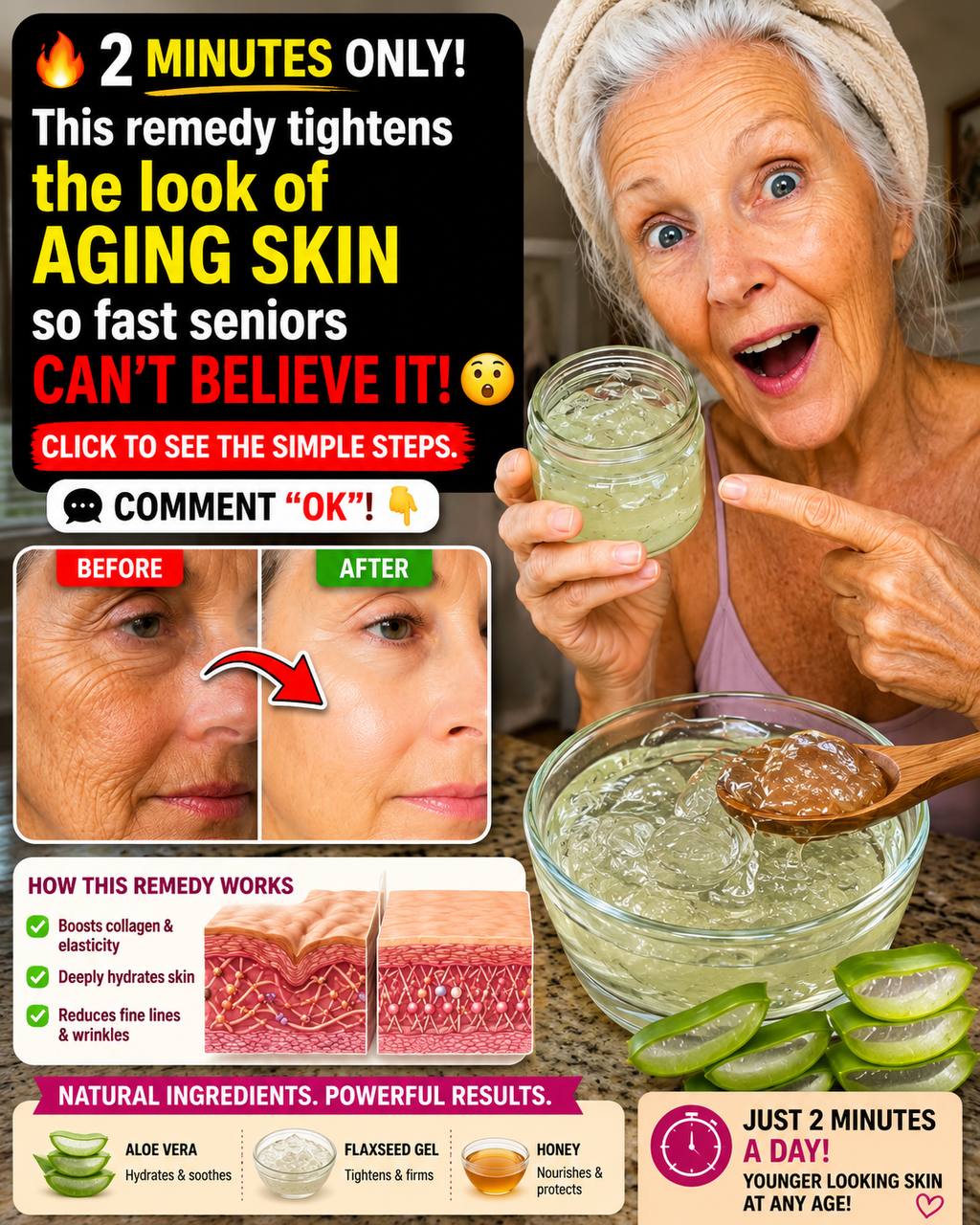
Aloe vera appears in countless DIY skincare recipes promising smoother skin, fewer wrinkles, and a tighter-looking complexion. Many people blend pure aloe gel with other kitchen ingredients and apply it as a mask or leave-on treatment, hoping for quick visible results. While aloe vera is a genuinely useful soothing and hydrating ingredient, the claim that it “tightens sagging skin fast” needs realistic context.
This article explains what aloe vera can and cannot do for aging skin, shares a simple homemade preparation, outlines proper use, and highlights important limitations so you can decide whether it belongs in your routine.
What Aloe Vera Actually Does for Skin
The clear gel inside aloe vera leaves contains water, polysaccharides, amino acids, enzymes, and antioxidants. These components give it well-documented soothing and moisturizing properties.
Proven or commonly observed effects include:
- Light hydration that can make skin feel softer and look temporarily smoother
- Cooling and calming of mild redness or irritation
- Support for the skin barrier when used as a gentle hydrating layer
Because hydrated skin reflects light better and fine lines caused by dryness become less noticeable, many people see a short-term improvement in skin texture after using aloe. This is real—but it is primarily a hydration effect, not structural tightening or collagen rebuilding.
The Truth About Tightening and Wrinkles
Sagging skin and deeper wrinkles result from loss of collagen, elastin, fat pads, and bone support over time, combined with sun damage and gravity. No topical plant gel has been shown to reverse these changes quickly or dramatically.
Aloe vera:
- Does not significantly boost collagen production in the way retinoids or certain professional treatments can
- Does not produce lasting skin tightening
- Does not erase established wrinkles
Any “tightening” sensation is usually temporary and related to the gel drying on the skin or the immediate plumping effect of moisture. Results fade once the hydration levels return to baseline.
In short, aloe can improve the look and feel of dry or dull skin in the short term. It is not a fast or powerful solution for sagging or deep wrinkles.
Simple Homemade Aloe Vera Wrinkle Remedy
Basic version (gentle and suitable for most skin types)
- 2 tablespoons fresh aloe vera gel (from the plant or pure store-bought gel with minimal additives)
- 1 teaspoon plain yogurt or a few drops of a light facial oil (optional, for extra nourishment)
- Optional: 2–3 drops of rosehip or jojoba oil for mature skin
Method
- Scoop fresh aloe gel from a clean leaf (drain the yellow latex first) or use a pure commercial gel.
- Mix with the optional yogurt or oil until smooth.
- Apply a thin layer to clean face and neck, avoiding the immediate eye area.
- Leave on for 15–20 minutes.
- Rinse with lukewarm water and follow immediately with moisturizer.
- Use 2–3 times per week at most.
Fresh gel should be stored in the refrigerator and used within a few days.
How to Use It for Best Results
- Always start with a patch test on the inner arm.
- Apply to clean skin.
- Follow with a good moisturizer—aloe alone is not occlusive enough for most mature skin.
- Use sunscreen every morning. Hydration without sun protection will not meaningfully improve aging skin.
- Be consistent with the rest of your routine rather than relying on the mask alone.
Realistic Timeline and Expectations
- Immediate: Skin may feel cooler, smoother, and more comfortable.
- After several uses: Dryness-related dullness and fine dehydration lines can look better.
- Long-term structural change (sagging, deep wrinkles): Minimal to none from aloe alone.
If you notice irritation, redness, or stinging, discontinue use. Pure aloe is generally well tolerated, but the latex or added ingredients can cause reactions in some people.
Better-Supported Approaches for Aging Skin
For more meaningful improvement in skin texture and firmness, evidence-based options include:
- Daily broad-spectrum sunscreen
- Topical retinoids (retinol or prescription forms) if tolerated
- Consistent moisturization to support the barrier
- Professional treatments (such as certain lasers, radiofrequency, or injectables) when appropriate
- Healthy lifestyle factors: not smoking, adequate protein intake, sleep, and sun protection
Aloe can complement these steps as a soothing, hydrating ingredient, but it does not replace them.
Safety Precautions
- Avoid using aloe on broken or severely irritated skin without guidance.
- Do not ingest homemade aloe preparations intended for the skin.
- If you have very sensitive skin, rosacea, or a history of plant allergies, introduce it carefully.
- Pregnant or breastfeeding individuals should check with a healthcare provider before regular use of any new topical remedy.
- Store-bought gels vary widely—choose those listing aloe as a main ingredient and free from unnecessary fragrance or alcohol if your skin is reactive.
Frequently Asked Questions
Can aloe vera replace retinol or other anti-aging products?
No. It lacks the collagen-stimulating and cell-turnover effects of retinoids.
Why does my skin feel tighter after using aloe?
The gel often creates a temporary tightening sensation as it dries. This is not the same as improved skin elasticity or lifted tissue.
Is fresh aloe better than store-bought?
Fresh gel is pure and inexpensive, but it spoils quickly and requires careful preparation to avoid the irritating latex. High-quality commercial gels can be more convenient and stable.
How long should I try it before deciding if it works?
Evaluate hydration and comfort after 1–2 weeks of consistent use. Do not expect dramatic changes in sagging or deep wrinkles.
Can I leave aloe on overnight?
Some people do, but many prefer rinsing it off and applying moisturizer, especially if the gel feels sticky or drying as it sits.
Final Thoughts
Aloe vera is a gentle, cooling, and hydrating ingredient that can make skin feel softer and look temporarily smoother, especially when dryness is contributing to a dull or lined appearance. The popular claim that it “tightens sagging skin fast” overstates what the plant can deliver. Any tightening effect is short-lived and largely cosmetic.
Used realistically—as a soothing hydration step rather than a miracle wrinkle cure—aloe can be a pleasant addition to a broader skincare routine. Pair it with daily sunscreen, consistent moisturizing, and proven active ingredients when appropriate for better long-term results.
If sagging or wrinkles are a significant concern, a dermatologist can help you evaluate options that match your skin type and goals. Simple plant-based remedies work best when expectations stay grounded in what the evidence and experience actually support.