
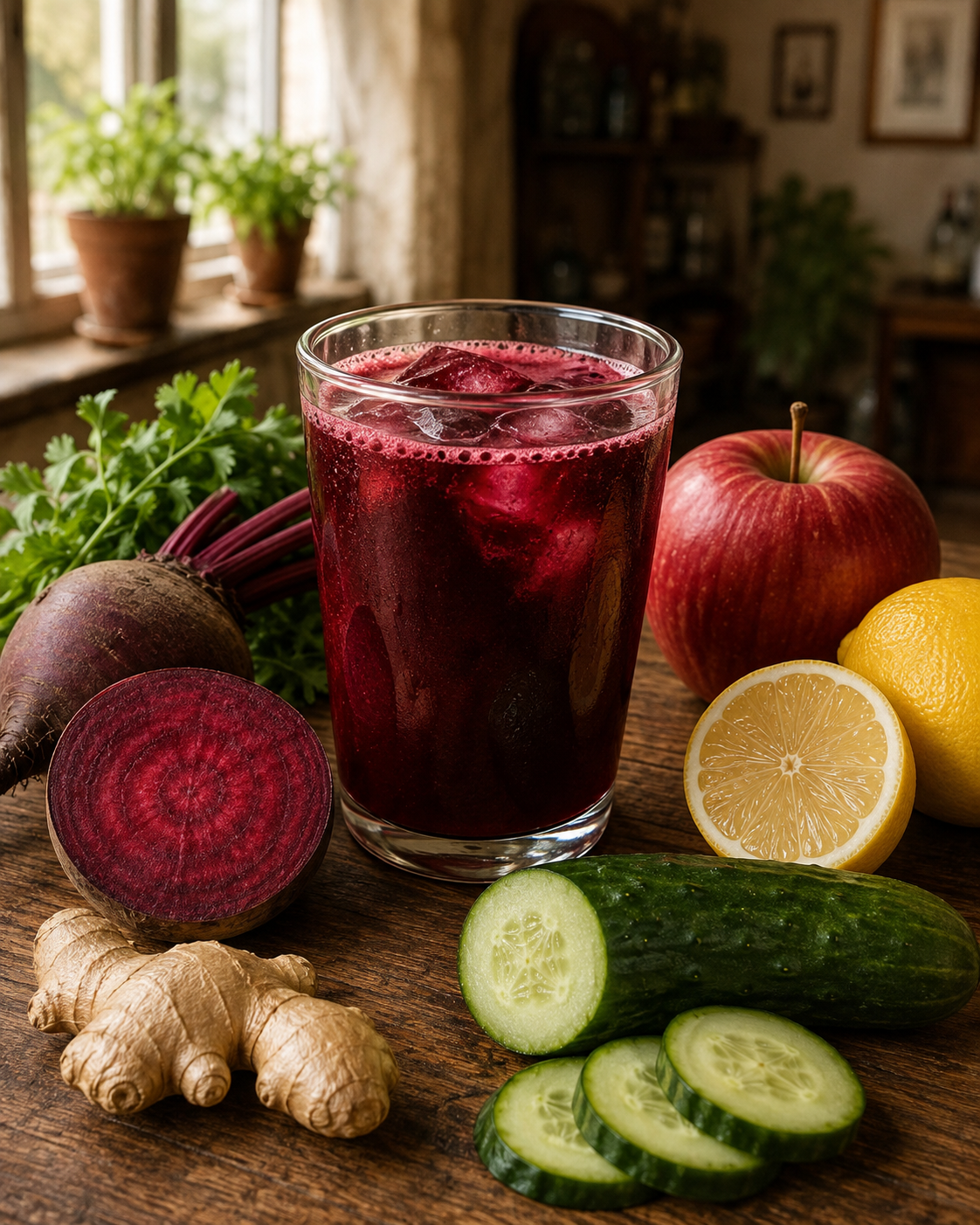
A deep-red glass of beetroot juice can look almost medicinal.
Its color is intense. Beets contain natural nitrates. Studies have linked nitrate-rich beetroot juice with changes in blood pressure and blood-vessel function.
That has fueled a much bigger claim online:
“Drink this red juice and your struggling kidneys will begin repairing themselves.”
There is a small piece of interesting science behind the excitement—but the viral version goes far beyond what research has demonstrated.
Beetroot juice has not been proven to repair damaged kidneys, reverse chronic kidney disease (CKD), “flush” creatinine, or restore kidney filtration.
What researchers have found is more specific: dietary nitrate from beetroot can increase nitric-oxide-related compounds and, in some small studies, improve certain cardiovascular measurements such as blood pressure. Because blood pressure and kidney health are closely connected, that’s worth understanding.
But there are also situations where drinking large amounts of beet juice may be a poor choice—particularly for some people with kidney stones or individualized dietary restrictions.
🥤 Why Beetroot Juice Gets So Much Attention
Beets naturally contain inorganic nitrate.
After you consume nitrate, bacteria in your mouth help convert it to nitrite, which can subsequently contribute to the body’s production of nitric oxide.
Nitric oxide helps blood vessels relax.
That’s the physiological pathway that makes beetroot genuinely interesting.
A small crossover study involving 17 people with CKD found that concentrated nitrate-rich beetroot juice lowered peripheral blood pressure and reduced a measure called renal resistive index several hours after consumption compared with water.
That sounds impressive.
But here’s the important part:
The researchers themselves concluded that whether dietary nitrate can actually slow progression of cardiovascular or kidney disease still needs investigation.
So:
Improving one short-term measurement ≠ repairing a kidney.
🫘 What Your Kidneys Actually Do
Healthy kidneys continuously filter your blood.
They remove wastes and excess water, regulate electrolytes, contribute to blood-pressure regulation, and perform several other essential functions.
NIDDK notes that healthy kidneys filter about half a cup of blood every minute.
Chronic kidney disease means the kidneys are damaged or have structural problems that prevent them from filtering blood as well as they should.
Two of the biggest causes in adults are:
Diabetes and high blood pressure.
That’s why something that modestly affects blood pressure can be interesting for kidney research.
But it’s still a huge leap from:
“Beet nitrate may affect blood pressure.”
to:
“Beet juice heals kidneys.”
📊 Viral Claim vs. What Research Actually Shows
| Viral claim | What the evidence says |
| Beet juice repairs damaged kidneys | Not established |
| It flushes creatinine from the kidneys | Not established |
| Beetroot contains dietary nitrate | Yes |
| Nitrate can contribute to nitric oxide production | Yes |
| Beetroot juice may lower blood pressure in some settings | Evidence exists |
| A small CKD trial found short-term vascular/renal changes | Yes |
| Beet juice has been proven to reverse CKD | No |
| Beets may matter for certain kidney-stone patients | Yes |
| CKD treatment should focus on proven risk factors | Yes |
❤️ The Blood-Pressure Connection Is Important
High blood pressure and kidney disease can reinforce each other.
High blood pressure can damage and narrow blood vessels throughout the body—including vessels in the kidneys.
As kidney function worsens, problems regulating fluid and blood pressure can make matters worse.
NIDDK describes high blood pressure as both a cause and consequence of kidney disease and emphasizes blood-pressure control as one of the most important parts of CKD management.
That’s the context in which beetroot research becomes interesting.
Not because beetroot “scrubs” the kidneys.
But because its nitrate content may influence vascular physiology.
🧪 What Happened in the CKD Beetroot Study?
The small study involved people with CKD whose average kidney filtration was already reduced.
Participants received concentrated beetroot juice providing approximately 300 mg of nitrate or water.
Several hours later, researchers found reductions in peripheral blood pressure and renal resistive index after beetroot juice.
That’s a useful physiological observation.
But it doesn’t tell us that:
Kidney tissue regenerated.
eGFR permanently improved.
Protein leakage disappeared.
Dialysis was prevented.
Creatinine normalized.
Or CKD was reversed.
Those are very different outcomes.
🚴 Another Interesting CKD Study
A separate small randomized crossover study involved 12 people with stage 3–4 CKD.
After concentrated nitrate-rich beetroot juice, participants performed somewhat more total work and exercised somewhat longer than after nitrate-depleted placebo.
However, peak oxygen consumption and measured mitochondrial oxidative capacity did not significantly improve. The researchers specifically called for further investigation of chronic nitrate supplementation.
Again, that’s interesting research.
But it’s not evidence of kidney regeneration.
🩸 Can Beet Juice Lower Creatinine?
This is where many viral articles become misleading.
There’s no established evidence that drinking beet juice reliably lowers elevated creatinine by repairing kidney filtration.
Creatinine is a waste product used as part of kidney-function assessment.
If creatinine is elevated, the useful question isn’t:
“Which juice removes it?”
It’s:
“Why is it elevated, and what do my kidney-function tests show?”
CKD evaluation generally involves more than a single creatinine value.
If kidney disease is suspected, medical evaluation and follow-up matter.
🚫 Your Kidneys Don’t Need a “Detox Flush”
This is one of the most persistent kidney myths.
The kidneys themselves are filtration organs.
You don’t clean them the same way you’d rinse a coffee filter.
If kidney tissue has been damaged by years of:
High blood pressure,
Diabetes,
Autoimmune disease,
Medication toxicity,
Genetic disease,
or another medical condition,
forcing large quantities of vegetable juice through the body doesn’t rebuild the damaged tissue.
The real goal is protecting the kidney function you have.
⭐ What Actually Protects Kidney Function?
NIDDK emphasizes several evidence-based priorities for people with CKD.
Among them are:
- Control blood pressure.
- Meet blood-glucose goals when diabetes is present.
- Monitor kidney health with your healthcare team.
- Take prescribed medication correctly.
- Develop an appropriate nutrition plan.
- Stay physically active.
- Maintain an appropriate weight.
- Get enough sleep.
- Stop smoking.
Notice what’s missing:
“Drink a red detox every morning.”
🥤 A Simple Beet Drink—If It Fits Your Diet
If you enjoy beets and don’t have a reason to restrict them, you don’t need an elaborate recipe.
Simple Beet-Lemon Drink
Ingredients
½ small cooked beet
1 cup cold water
Small squeeze of lemon
A few slices of cucumber
Optional fresh mint
Blend until smooth.
Don’t add large amounts of sugar or honey.
And treat it as:
A food beverage—not kidney medicine.
For someone with CKD, kidney stones, blood-pressure medication, or dietary restrictions, individualized guidance is more important than following a generic internet recipe.
🥗 Whole Beets Are Another Option
You don’t need juice.
Try a simple salad:
Cooked beet
Cucumber
Parsley
Olive oil
Lemon
A whole-food meal also avoids the idea that nutrients must be concentrated into a drink to “work.”
Often, they don’t.
⚠️ The Kidney-Stone Catch Most Viral Posts Leave Out
Here’s where the story becomes especially interesting.
Beets contain oxalate.
For most people, that doesn’t mean beets are automatically dangerous.
But calcium oxalate is the most common type of kidney stone, and people with high urinary oxalate or recurrent calcium-oxalate stones may be advised to limit certain high-oxalate foods.
The National Kidney Foundation specifically lists beets among foods that may need limiting for some calcium-oxalate stone formers.
So imagine the irony:
Someone sees:
“Beet juice cleans your kidneys.”
They have recurrent calcium-oxalate stones.
They begin drinking concentrated beet juice every morning.
But their individualized stone-prevention plan might actually call for limiting high-oxalate foods.
That’s exactly why universal kidney remedies don’t work.
🪨 Not Everyone With Kidney Stones Must Avoid Beets
The opposite extreme is also wrong.
If you’ve ever had a kidney stone, you don’t automatically need to ban beets forever.
Stone prevention depends on:
The type of stone.
Your urine chemistry.
Sodium intake.
Fluid intake.
Calcium intake.
Oxalate intake.
Animal protein.
Other medical factors.
The National Kidney Foundation emphasizes that oxalate restriction should be individualized rather than imposed on everyone.
🥛 Calcium and Oxalate: A Common Misunderstanding
People with calcium-oxalate stones often hear the word calcium and assume:
“I need to stop eating calcium.”
That can be counterproductive.
Adequate calcium from food can bind oxalate in the digestive tract, reducing how much oxalate is absorbed.
The National Kidney Foundation therefore advises getting an appropriate amount of dietary calcium rather than automatically eliminating calcium.
Stone nutrition is more nuanced than:
“Beets good.”
or:
“Beets bad.”
💧 What About Drinking Lots of Water to Flush the Kidneys?
For many people trying to prevent kidney stones, adequate hydration is extremely important.
NIDDK calls drinking enough liquid—mainly water—the most important dietary measure for kidney-stone prevention.
But that advice isn’t universal for every kidney patient.
People with advanced kidney failure or certain heart/kidney conditions may need individualized fluid limits.
So don’t turn:
“Stay appropriately hydrated”
into:
“Drink gallons until your kidneys are clean.”
They’re not the same recommendation.
🧂 Sodium May Matter More Than Your Beet Drink
A person may drink beet juice every morning while continuing to eat:
Processed meats.
Fast food.
Packaged soups.
Salty sauces.
Frozen meals.
Chips.
Restaurant food.
That makes little sense.
High sodium intake can worsen blood-pressure control and fluid retention, which can be especially important in CKD.
NIDDK advises people with high blood pressure and kidney disease to avoid foods and beverages high in sodium.
Your overall eating pattern matters far more than one red drink.
🩸 Diabetes Matters Too
Diabetes is one of the major causes of CKD in adults.
For someone with diabetes, kidney protection can involve:
Blood-glucose management.
Blood-pressure management.
Appropriate medications.
Regular kidney testing.
Nutrition.
Physical activity.
Avoiding smoking.
Adding beet juice without controlling diabetes doesn’t solve the underlying problem.
💊 Don’t Replace Kidney Medication With Beet Juice
This deserves a clear statement.
If you’ve been prescribed medication for:
High blood pressure,
Diabetes,
CKD,
Heart disease,
or another condition,
don’t stop it because a red drink appears to lower your blood pressure.
NIDDK specifically includes taking medicines as prescribed among its key CKD-management strategies.
Food can complement medical treatment.
It shouldn’t secretly replace it.
📉 What If Beet Juice Lowers My Blood Pressure Too Much?
Because nitrate-rich beetroot juice can affect blood pressure in some people, someone already using blood-pressure-lowering medication should be sensible about concentrated supplementation.
A person prone to low blood pressure may experience symptoms such as:
Lightheadedness.
Weakness.
Dizziness.
Feeling faint.
Don’t respond by simply adding more salt or changing medication yourself.
Discuss persistent symptoms with your healthcare professional.
🔴 Don’t Panic if Your Urine Turns Red
Beets can sometimes turn urine or stool pink or reddish.
This is commonly called beeturia.
But don’t automatically assume every red urine episode is caused by yesterday’s beet salad.
Blood in urine can have many causes and deserves medical attention, particularly when unexplained, persistent, painful, or accompanied by other urinary symptoms.
🚫 7 Common Beetroot Mistakes
1. Calling Beet Juice a Kidney Repair Drink
Interesting nitrate research doesn’t prove kidney regeneration.
2. Expecting Creatinine to Be “Flushed Out”
Elevated creatinine needs interpretation, not detoxification.
3. Drinking Huge Concentrated Portions
More isn’t automatically better.
4. Ignoring Kidney-Stone History
Beets can be relevant to people who need to manage urinary oxalate.
5. Adding Lots of Sugar or Honey
Turning vegetable juice into a sugary beverage defeats much of the purpose.
6. Replacing Medication
Diet should complement—not replace—appropriate CKD treatment.
7. Focusing on One Food Instead of Blood Pressure
NIDDK calls blood-pressure control one of the most important steps in protecting kidneys with CKD.
📋 A Better Kidney Routine
| Instead of… | Focus on… |
| Kidney detox juice | Appropriate hydration |
| Trying to flush creatinine | Understanding kidney-function tests |
| One miracle vegetable | Balanced individualized diet |
| Excessive beet juice | Reasonable food portions |
| Ignoring salt | Sodium awareness |
| Ignoring diabetes | Glucose management |
| Stopping medication | Taking medication as prescribed |
| Waiting for symptoms | Regular kidney monitoring |
🚨 Symptoms That Need More Than a Juice
Kidney disease can sometimes progress quietly.
But more advanced disease can cause symptoms such as swelling, changes in urination, fatigue, nausea, itching, muscle cramps, chest discomfort or shortness of breath.
Seek prompt medical attention for concerning symptoms such as:
Very little or no urine.
Rapidly worsening swelling.
Severe weakness or confusion.
Persistent vomiting.
Significant blood in the urine.
Severe flank pain.
Chest pain.
Shortness of breath.
A vegetable drink isn’t an appropriate way to investigate these symptoms.
❓ Frequently Asked Questions
Is beetroot juice good for kidneys?
Beetroot contains useful nutrients and dietary nitrate. Small studies in CKD have produced interesting cardiovascular and physiological findings, but beetroot juice isn’t an established treatment for repairing kidney disease.
Can beet juice lower creatinine?
It hasn’t been established as a reliable treatment for lowering elevated creatinine by improving kidney filtration.
Can beetroot reverse CKD?
No clinical evidence currently establishes beetroot juice as a way to reverse chronic kidney disease.
Does beet juice improve blood flow?
Dietary nitrate from beetroot can increase nitrate/nitrite availability and influence nitric-oxide pathways. Clinical studies have documented vascular and blood-pressure effects in some populations.
Can someone with CKD drink beet juice?
It depends on kidney function, laboratory results, medications, fluid needs and the rest of the diet. Concentrated dietary supplements shouldn’t automatically be treated like ordinary vegetable servings.
Are beets bad for kidney stones?
Not for everyone. But beets are relatively high in oxalate, so some people with calcium-oxalate stones or high urinary oxalate may be advised to limit them.
Should I avoid calcium if I have calcium-oxalate stones?
Not automatically. Appropriate calcium from food can actually help bind oxalate in the digestive tract.
What’s the best drink for preventing kidney stones?
For most people who don’t have a medical fluid restriction, water remains the primary choice. NIDDK emphasizes adequate fluid intake as a major stone-prevention strategy.
What is more important than beet juice for CKD?
Controlling blood pressure, managing diabetes when present, monitoring kidney function, taking prescribed medication, following an individualized diet, exercising appropriately and avoiding smoking are major priorities.
⭐ The Bottom Line
That red drink is more scientifically interesting than many viral “kidney cleanses.”
Beetroot contains dietary nitrate.
The body can use nitrate through pathways related to nitric oxide and blood-vessel function.
A small study involving people with CKD found short-term reductions in blood pressure and renal resistive index after concentrated nitrate-rich beetroot juice. Another small study found an acute improvement in some exercise measures.
Those are legitimate findings.
But they do not prove that beet juice:
Repairs damaged kidneys.
Reverses CKD.
Flushes creatinine.
Restores eGFR.
Or replaces kidney medication.
And there’s an important twist: because beets are relatively high in oxalate, concentrated beet intake may not fit the diet of some people prone to calcium-oxalate kidney stones.
The strongest kidney strategy remains much less dramatic: identify kidney disease early, control blood pressure, manage diabetes, monitor kidney function, follow an individualized nutrition plan, and use prescribed treatments appropriately.
Enjoy beetroot as food if it fits your health needs. Just don’t ask one red glass to do the job of your kidneys—or your medical care.