
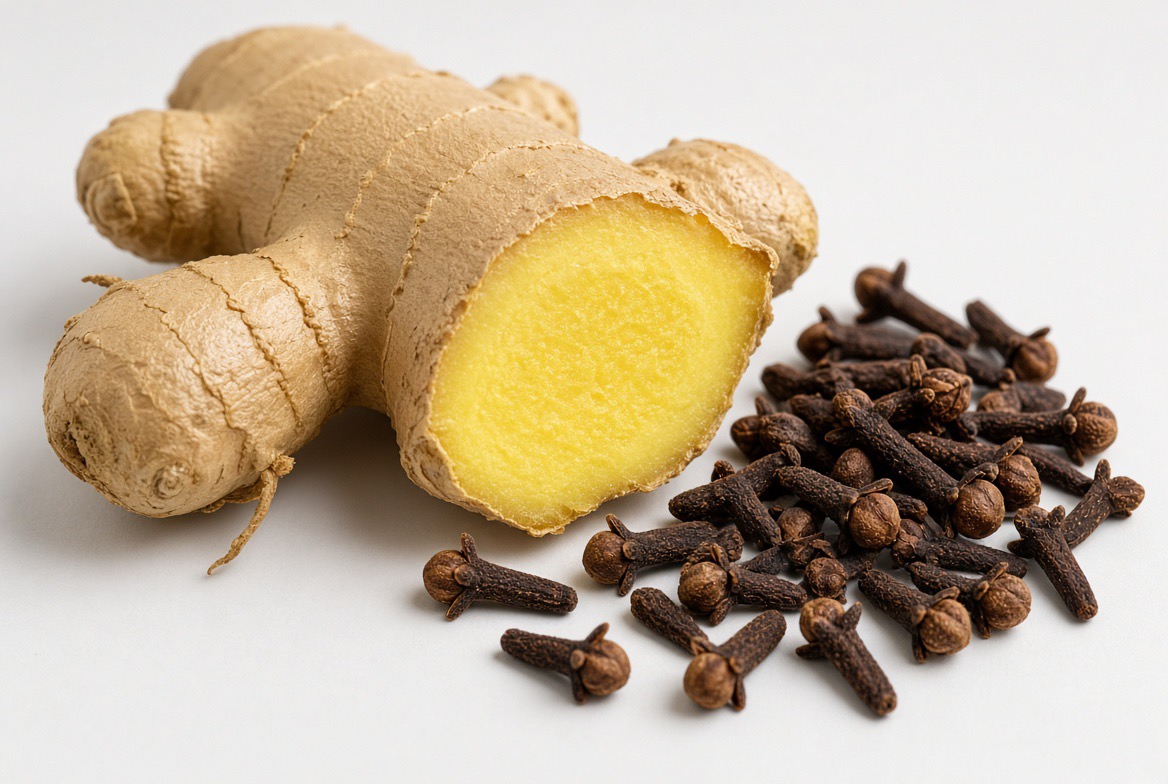
Ginger and cloves are two powerful-smelling kitchen spices that have been used in traditional cooking and herbal drinks for generations.
Recently, combinations of these ingredients have gained attention across social media.
Viral videos often suggest that boiling ginger with cloves and drinking the mixture every morning can produce dramatic health changes.
Some even promise:
“Drink this for seven days and see what happens!”
“Clean your arteries naturally.”
“Eliminate inflammation overnight.”
“Lower blood sugar without medication.”
“Boost circulation after 60.”
“Remove toxins from your body.”
But does mixing ginger and cloves really produce these effects?
The answer is more interesting—and less dramatic—than the viral headlines suggest.
Ginger contains compounds called gingerols and shogaols, while cloves contain a prominent aromatic compound called eugenol.
These substances have attracted scientific interest for their biological activity.
However, there is no convincing clinical evidence that drinking ginger-and-clove tea cures chronic diseases, cleans arteries, reverses diabetes, or produces dramatic health improvements within days.
Let’s explore what science actually supports, how to prepare a simple drink, and the precautions that matter.
Important Health and Safety Note
This article is for general educational purposes and does not replace professional medical advice.
Ginger and cloves are commonly used in cooking, but concentrated supplements and essential oils may cause adverse effects.
Never drink concentrated clove essential oil. Large ingestions can cause severe poisoning, including liver damage.
If you take blood-thinning medications, diabetes medications, or other prescriptions, discuss frequent medicinal-strength ginger or clove preparations with your healthcare professional.
Do not stop prescribed treatment because of claims about a homemade drink.
1. What Happens When You Mix Ginger and Cloves?
From a culinary perspective, the combination creates a warming, aromatic beverage.
Ginger provides a spicy, slightly peppery flavor.
Cloves contribute a sweet, intense fragrance.
When steeped in hot water, some of the ingredients’ water-soluble compounds move into the liquid.
The drink may contain small amounts of naturally occurring plant chemicals.
But several factors affect its composition:
- Amount of ginger
- Number of cloves
- Water temperature
- Steeping time
- Freshness of the ingredients
- Whether the ginger is sliced or crushed
A homemade tea is not a standardized medicinal preparation.
And combining two ingredients does not automatically multiply their health effects.
2. What Is Ginger?
Ginger comes from the underground stem, or rhizome, of Zingiber officinale.
It is widely used in:
Soups.
Stir-fries.
Curries.
Baked goods.
Teas.
And traditional culinary preparations.
Ginger contains compounds including gingerols and shogaols.
Researchers have investigated these compounds for possible effects involving nausea, pain, inflammation, and other biological processes.
According to the National Institutes of Health’s National Center for Complementary and Integrative Health (NCCIH), ginger has been studied in humans for several health-related purposes.
However, the quality of research varies, and many studies used supplements rather than ordinary culinary ginger.
3. What Are Cloves?
Cloves are the dried flower buds of Syzygium aromaticum.
They have an intense aroma and are commonly used in spice blends, teas, baked goods, and savory dishes.
Cloves contain eugenol, a compound responsible for much of their distinctive scent.
Eugenol has demonstrated biological effects in laboratory research.
However, concentrated eugenol and clove oil are substantially different from using one or two whole cloves to flavor tea.
Ordinary culinary amounts of cloves are generally well tolerated.
Concentrated clove oil can be toxic if swallowed.
4. A Simple Ginger and Clove Tea Recipe
If you enjoy the flavor, there’s no need to use extremely strong preparations.
Ingredients
- 2 cups water
- ½–1 inch fresh ginger, thinly sliced
- 2 whole cloves
- 1 thin lemon slice, optional
- A small cinnamon stick, optional
Preparation time: 5 minutes
Steeping time: 5–10 minutes
Servings: 2 small cups
Instructions
Step 1: Wash the ginger thoroughly.
Step 2: Slice it into thin pieces.
Step 3: Bring two cups of water to a gentle simmer.
Step 4: Add the ginger and whole cloves.
Step 5: Simmer gently for approximately five minutes.
Step 6: Turn off the heat and allow the spices to steep for another five minutes.
Step 7: Strain into cups.
Step 8: Add a little lemon if desired.
Serve warm.
This is a mild culinary beverage, not a clinically tested therapeutic dose.
Avoid adding concentrated clove oil, large quantities of cloves, or excessive ginger.
5. Can Ginger and Cloves Help Digestion?
Ginger has been studied for its effects on nausea and digestive discomfort.
NCCIH reports that ginger may help with nausea and vomiting associated with pregnancy, although many studies evaluated supplements rather than food-based preparations.
Research on other types of nausea is mixed or uncertain.
For indigestion, ginger has traditionally been used to soothe the stomach, but high-quality clinical evidence remains limited.
There is even less direct human evidence demonstrating that the ginger-and-clove combination improves digestion.
A warm beverage may feel comforting after a meal.
That doesn’t make it a treatment for persistent digestive disease.
6. Does Ginger Help With Nausea?
Of the many claims made about ginger, nausea relief is among the better researched.
Studies suggest ginger may be useful for certain types of nausea.
However, this does not mean the same benefits have been established for every ginger preparation.
A clinical trial using measured doses of ginger extract is not equivalent to a cup of homemade tea.
If nausea is persistent, severe, accompanied by dehydration, or associated with other concerning symptoms, medical evaluation is important.
7. Can the Combination Reduce Inflammation?
Inflammation is a complex biological process.
The body uses inflammatory responses to protect itself from infection and injury.
Chronic inflammation may contribute to several diseases.
Ginger compounds have demonstrated anti-inflammatory activity in some experimental research.
Clove compounds have also shown biological activity in laboratory models.
But these observations do not establish that homemade ginger-and-clove tea treats inflammatory diseases.
There is no convincing evidence that drinking the mixture can reverse arthritis, eliminate joint damage, or treat autoimmune disorders.
Laboratory anti-inflammatory activity is not the same as a proven clinical treatment.
8. What About Joint Pain After 60?
Ginger supplements have been studied for osteoarthritis symptoms.
NCCIH notes that they may provide some benefit for knee osteoarthritis, but much of the research has been of poor quality.
The results do not establish that ginger regenerates cartilage.
Nor do they prove that adding cloves provides additional benefits.
A warm cup of ginger-and-clove tea can be enjoyed as a beverage.
But persistent joint pain deserves appropriate assessment.
Evidence-based approaches may include physical therapy, exercise, weight management when appropriate, and medications or other treatments recommended by a clinician.
9. Does This Drink Improve Blood Circulation?
Many viral videos claim ginger and cloves can dramatically improve circulation.
Some laboratory investigations suggest ginger compounds can influence processes involving blood vessels and platelets.
But these findings do not mean a homemade drink clears blocked arteries.
Atherosclerosis involves complex processes including cholesterol accumulation, inflammation, and changes within arterial walls.
No tea has been proven to dissolve arterial plaque within days.
If you have circulation problems, heart disease, or symptoms suggesting peripheral artery disease, seek appropriate medical advice.
10. Can Ginger and Cloves Lower Blood Sugar?
Some studies have examined concentrated ginger preparations for possible effects on blood glucose.
Results have varied.
Certain herbal compounds may influence glucose-related processes in experimental research.
However, the ginger-and-clove tea recipe has not been established as an effective treatment for diabetes.
People taking insulin or other glucose-lowering medications should exercise caution with concentrated supplements.
Using herbal products alongside prescribed treatment can sometimes increase the possibility of unintended blood-glucose changes.
Never replace diabetes medication with ginger-and-clove tea.
11. Can It Lower Blood Pressure?
Blood-pressure control is important for heart, brain, and kidney health.
Some herbal compounds have been investigated for potential effects on blood-pressure regulation.
However, clinical evidence does not establish that ginger-and-clove tea reliably lowers blood pressure.
A homemade beverage is not equivalent to a prescribed antihypertensive medicine.
If you have high blood pressure, focus on proven strategies such as:
Taking prescribed medication.
Reducing excess sodium.
Staying physically active.
Maintaining a balanced dietary pattern.
And monitoring blood pressure as directed.
12. Does It Clean the Arteries?
No.
This is one of the most misleading claims associated with the recipe.
Arterial plaque cannot be washed away by drinking herbal tea.
Although a healthy diet contributes to cardiovascular health, treating established atherosclerosis may require medications and other medical interventions.
A ginger-and-clove drink can fit into a balanced eating pattern.
It cannot substitute for cholesterol management or cardiovascular treatment.
13. Can Ginger and Cloves Boost Immunity?
Ginger and cloves contain naturally occurring plant compounds.
Some demonstrate antimicrobial or other biological effects in laboratory studies.
However, this does not establish that drinking the tea prevents infections.
The immune system depends on many factors, including:
Adequate nutrition.
Sleep.
Vaccination.
Overall health.
And appropriate medical care.
No single herbal drink has been proven to create dramatically stronger immunity overnight.
14. What About Colds and Sore Throats?
Warm liquids may provide temporary comfort when someone has a sore throat.
A mild ginger-and-clove beverage may feel soothing.
However, it should not be viewed as a cure for influenza, COVID-19, bacterial throat infections, or other respiratory illnesses.
If symptoms are severe, persistent, or accompanied by difficulty breathing, seek medical care.
Very strong spice preparations may actually irritate the mouth or throat.
15. Can the Mixture Burn Belly Fat?
No convincing clinical evidence shows that ginger-and-clove tea specifically burns belly fat.
Body weight is influenced by overall energy intake, activity, sleep, medications, and other factors.
Replacing a sugary beverage with unsweetened tea may reduce calorie intake.
But the spices themselves have not been shown to produce dramatic fat loss.
Claims such as “lose ten pounds in seven days” should be treated skeptically.
16. Does It Detox the Liver?
The liver plays a central role in processing nutrients, medications, and many substances.
A ginger-and-clove drink has not been proven to remove accumulated toxins or reverse liver damage.
This distinction is especially important because concentrated clove oil can actually harm the liver.
The NIH’s LiverTox database documents that large ingestions of eugenol-containing clove oil may produce severe liver injury.
Do not drink clove essential oil as a detox remedy.
17. Ginger and Cloves: Claims vs. Reality
| Viral claim | Scientific assessment |
| Creates a flavorful warming drink | Yes |
| Ginger may help certain types of nausea | Some human evidence |
| Cloves contain eugenol | Yes |
| Ginger contains gingerols and shogaols | Yes |
| Both contain biologically active compounds | Yes |
| The tea clears blocked arteries | Not proven |
| The tea reverses diabetes | No |
| The mixture regenerates cartilage | No |
| The drink eliminates inflammation overnight | Not established |
| The drink burns belly fat | Not established |
| The tea detoxifies the liver | Not established |
| Concentrated clove oil is safe to drink | False |
| The beverage replaces prescription medication | No |
18. Is Ginger and Clove Tea Safe Every Day?
For many healthy adults, an occasional mild drink made with ordinary culinary amounts may be reasonable.
However, there is no established medical requirement to drink it daily.
Daily use of strong or concentrated preparations deserves more caution.
The safety of a tea depends on the amount of each ingredient, frequency, individual health conditions, and medications.
If you experience discomfort, stop drinking it.
Don’t increase the strength simply because a viral video recommends doing so.
19. Ginger Side Effects
NCCIH reports that ginger taken by mouth can sometimes cause:
Abdominal discomfort.
Heartburn.
Diarrhea.
And irritation of the mouth or throat.
These effects may become more likely when large amounts are consumed.
If ginger worsens your reflux, reduce the amount or avoid it.
People with chronic digestive disorders should be especially cautious with strong preparations.
20. Clove Oil: An Important Safety Warning
Clove oil is a concentrated essential oil.
It is not the same thing as using whole cloves in food.
Its main component, eugenol, can cause significant toxicity when swallowed in excessive amounts.
Reported severe effects include:
Liver damage.
Seizures.
Breathing problems.
Low blood glucose.
And serious systemic poisoning.
Children are especially vulnerable to accidental ingestion.
Never add drops of concentrated clove essential oil to this recipe.
Keep essential oils securely stored away from children.
If someone swallows a significant amount of clove oil, seek urgent medical assistance or contact a poison control service. Do not induce vomiting unless a medical professional instructs you to do so.
21. Blood Thinners and Bleeding Risk
Ginger supplements may affect platelet activity.
Clove oil also contains eugenol, which can influence platelet-related processes.
People taking medications such as warfarin or other anticoagulants should be cautious with concentrated ginger or clove preparations.
The risk from ordinary culinary amounts is not necessarily the same as that from supplements or essential oils.
But if you take blood thinners, have a bleeding disorder, or are preparing for surgery, discuss herbal supplements with your healthcare team.
22. Pregnancy and Breastfeeding
Ginger has been studied for pregnancy-related nausea.
However, herbal supplement use during pregnancy should be discussed with a healthcare professional.
The safety of concentrated clove preparations during pregnancy and breastfeeding is not well established.
Avoid medicinal-strength mixtures without professional guidance.
Normal culinary use of spices is different from taking high-dose extracts.
23. Diabetes Medication Precautions
Some herbal supplements may affect glucose levels.
This is especially relevant for people taking insulin or medications that can cause low blood sugar.
If you use such medication, discuss frequent concentrated herbal products with your healthcare professional.
Do not assume that combining two herbs is safer or more effective than using one.
24. Three Easy Ginger and Clove Drink Variations
Classic Ginger and Clove Tea
Ingredients
- 1 cup water
- ¼–½ inch fresh ginger
- 1 whole clove
Simmer gently for five minutes, strain, and enjoy warm.
Ginger, Clove, and Lemon Infusion
Ingredients
- 1 cup water
- ¼ inch fresh ginger
- 1 whole clove
- 1 thin lemon slice
Steep the ginger and clove in hot water.
Add lemon just before serving.
Ginger and Clove Iced Tea
Ingredients
- 2 cups water
- ½ inch fresh ginger
- 2 whole cloves
- Ice cubes
Prepare a mild infusion.
Strain and allow it to cool.
Refrigerate promptly and serve over ice.
None of these drinks requires added sugar or essential oils.
25. Ten Common Ginger-and-Clove Mistakes
1. Expecting dramatic results in seven days.
There is no established timeline for the viral health claims.
2. Adding concentrated clove essential oil.
This can be dangerous.
3. Using too many cloves.
Stronger is not automatically better.
4. Drinking large quantities of concentrated ginger.
This may cause digestive discomfort or medication concerns.
5. Believing the drink clears arteries.
Arterial plaque cannot be washed away with tea.
6. Replacing diabetes medication.
Herbal drinks are not approved diabetes treatments.
7. Assuming laboratory studies prove a human cure.
Biological activity does not establish clinical effectiveness.
8. Ignoring medication interactions.
Concentrated supplements require caution.
9. Adding excessive honey or sugar.
This can turn a simple beverage into a high-sugar drink.
10. Treating a persistent medical problem with tea alone.
Unexplained symptoms deserve proper evaluation.
26. A Realistic Seven-Day Wellness Routine
Instead of expecting one drink to transform your health, try a balanced approach.
Day 1
Replace one sugary beverage with water or unsweetened tea.
Day 2
Enjoy a mild ginger-and-clove drink if you tolerate the spices.
Day 3
Include vegetables with lunch and dinner.
Day 4
Take a walk or participate in physical activity appropriate for your health.
Day 5
Review how much sodium is present in packaged foods you commonly eat.
Day 6
Focus on adequate sleep and regular meals.
Day 7
Choose the healthy habits that feel sustainable.
The goal is consistency.
A warming beverage may be an enjoyable part of that routine, but it isn’t the treatment itself.
27. When to Seek Medical Advice
Seek medical evaluation if you experience:
Persistent abdominal discomfort.
Repeated vomiting.
Unexplained weight loss.
Ongoing joint swelling.
Frequent low blood sugar.
Dizziness associated with medication.
Or other symptoms that concern you.
Seek urgent medical care for chest pain, severe breathing difficulty, stroke-like symptoms, or signs of serious poisoning.
A homemade herbal drink should never delay emergency treatment.
Frequently Asked Questions
What happens when you mix ginger with cloves?
You create an aromatic beverage containing some compounds extracted from the spices. It is not proven to produce dramatic health changes.
Is ginger and clove tea good for digestion?
Ginger has evidence for some types of nausea, but direct clinical evidence for the combination is limited.
Can I drink ginger and cloves every morning?
An occasional mild tea may be suitable for many healthy adults, but daily medicinal use isn’t necessary or established as beneficial.
Can ginger and cloves reduce inflammation?
The ingredients contain compounds with experimental anti-inflammatory activity, but the tea has not been proven to treat inflammatory diseases.
Does ginger and clove tea help arthritis?
Ginger supplements have shown possible modest benefits in some studies of osteoarthritis, but evidence quality is limited. The tea cannot regenerate cartilage.
Can it lower blood sugar?
The combination is not a proven diabetes treatment and should not replace medication.
Does it clean blocked arteries?
No. There is no clinical evidence that the beverage dissolves arterial plaque.
Can it help with weight loss?
Replacing sugary drinks with unsweetened tea may reduce calorie intake, but the spices are not proven to burn belly fat.
Is clove oil safe to add to tea?
No. Concentrated clove essential oil should not be consumed as a homemade health remedy.
Can I add lemon?
Yes, if you tolerate citrus.
What is the best time to drink it?
There is no established special benefit to drinking the tea in the morning, at night, or on an empty stomach.
Is it safe for adults over 60?
Ordinary culinary amounts may be suitable for many older adults, but concentrated preparations require additional caution when medications or chronic health conditions are involved.
Final Thoughts: What Science Really Says
Ginger and cloves are flavorful culinary ingredients with interesting scientific research behind them.
Ginger has been studied for nausea and other health-related purposes.
Cloves contain eugenol, a biologically active compound that has been investigated in experimental research.
But mixing them does not create a clinically proven cure for diabetes, arthritis, poor circulation, clogged arteries, or liver problems.
The most realistic benefits of this recipe are simple:
A warm, aromatic drink.
A naturally unsweetened alternative to sugary beverages.
A pleasant way to enjoy ordinary culinary spices.
And possibly some of the effects associated with ginger, although those effects have not been established specifically for this homemade combination.
The viral headline asks you to mix ginger with cloves and “see what happens.”
The scientifically responsible answer is:
You’ll make a flavorful spice infusion—but dramatic medical results have not been demonstrated.
Enjoy it as a beverage, use reasonable amounts, and continue relying on evidence-based medical care for health conditions.
Health reminder: Do not ingest concentrated clove oil. Ginger and clove supplements can pose risks for people taking certain medications. Homemade tea is not a substitute for prescribed treatment.