
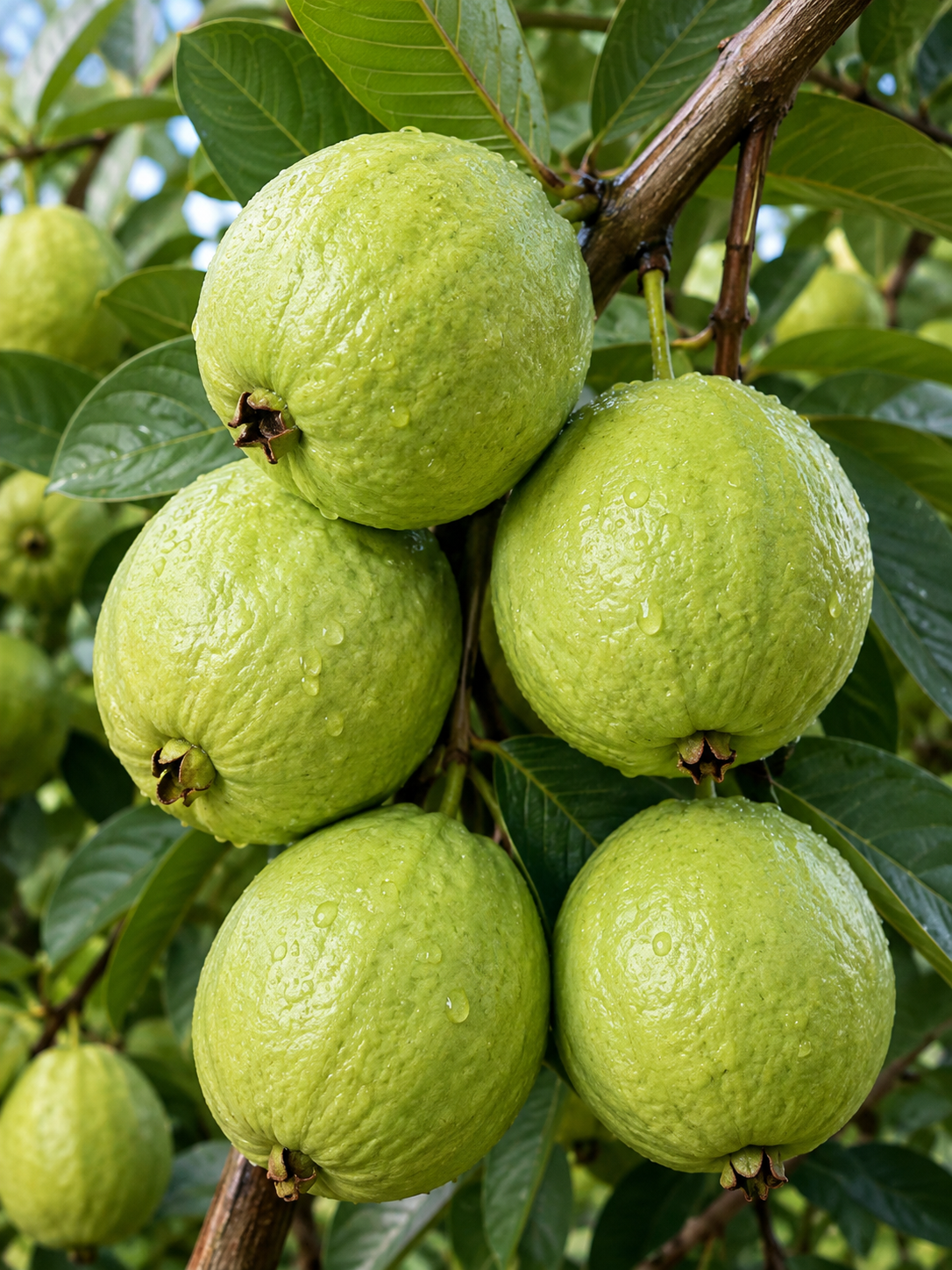
Guava has become a favorite ingredient in health posts and social-media memes.
Depending on the post, one guava supposedly crushes blood sugar, cleans the kidneys, melts belly fat, lowers blood pressure, restores eyesight, fixes digestion, or boosts immunity almost instantly.
Guava really is a nutritious fruit.
But those dramatic claims turn a healthy food into something it isn’t: medicine.
Guava provides vitamin C, dietary fiber, potassium, folate, and a variety of plant compounds. Eating whole fruit can contribute to a balanced diet, and researchers have investigated guava fruit and leaves for several potential health effects.
That does not mean guava can cure diabetes, reverse kidney disease, unclog arteries, or replace prescription treatment.
Here’s what guava may realistically offer, which popular claims are exaggerated, and what older adults should know before turning it into a daily “remedy.”
Important: Guava is food, not a cure. If you have diabetes, kidney disease, take daily medications, or have another chronic condition, don’t replace medical treatment with guava fruit, guava-leaf tea, extracts, or supplements.
🍈 What Makes Guava Nutritious?
Fresh guava packs an impressive amount of nutrition into a relatively small fruit.
Depending on the variety, it can provide:
- Vitamin C
- Dietary fiber
- Potassium
- Folate
- Carotenoids
- Polyphenols
- Small amounts of several minerals
Pink guava also contains carotenoid pigments, including lycopene.
One of guava’s biggest nutritional advantages is that you can eat much of the whole fruit, including its fiber-rich flesh.
That makes whole guava very different from sweetened guava juice or concentrated extracts.
🍊 Claim #1: “Guava Boosts Immunity Instantly”
The reality: Partly true—but exaggerated.
Guava is particularly rich in vitamin C.
Vitamin C contributes to normal immune function and acts as an antioxidant.
So including vitamin-C-rich foods such as guava in your diet can certainly help you meet your nutritional requirements.
But eating one guava doesn’t suddenly create a supercharged immune system.
And vitamin C isn’t a shield against every infection.
Better way to think about it:
Guava supports normal nutrition that the immune system needs.
That’s considerably more accurate than saying it “boosts immunity instantly.”
🩸 Claim #2: “Guava Forces Blood Sugar Down”
This is one of the most common guava claims online.
Whole guava contains fiber, and fiber can help slow digestion compared with consuming rapidly absorbed refined carbohydrates.
Replacing candy, pastries, or sweet drinks with an appropriate portion of whole fruit may therefore be a useful dietary change for some people.
But guava doesn’t function like insulin or diabetes medication.
Important distinction
Eating a whole guava as part of a balanced meal is very different from drinking a large bottle of guava juice.
Juice:
- Contains less intact fiber
- Can be consumed rapidly
- May contain added sugar
- Can deliver considerably more carbohydrate than expected
If you have diabetes, portion size and your overall meal still matter.
🍹 Whole Guava vs. Guava Juice
| Choice | Fiber | Easy to Overconsume? | Practical Everyday Choice |
| Whole guava | Higher | Less likely | Often a good option |
| Homemade strained juice | Lower | Yes | Portion carefully |
| Sweetened guava drink | Often low | Very easy | Limit |
| Guava extract | Not comparable to fruit | Depends | Not necessary for most people |
| Guava-leaf supplement | Not the same as fruit | — | Discuss before regular use |
The healthiest-looking label isn’t always the best choice.
“Made with real fruit” can still describe a beverage containing substantial added sugar.
❤️ Claim #3: “Guava Cleans Your Arteries”
No fruit scrubs plaque out of arteries.
Atherosclerosis is a complex disease involving cholesterol-containing plaque, inflammation, blood vessels, blood pressure, smoking, diabetes, genetics, age, and many other factors.
Guava can still fit into a heart-healthy diet.
Its fiber and potassium are useful nutritional components, and replacing heavily processed snacks with whole fruit can improve overall diet quality.
But that isn’t the same as unclogging an artery.
For cardiovascular health, the bigger picture includes:
- Blood-pressure management
- Cholesterol management
- Regular physical activity
- Avoiding smoking
- Managing diabetes
- Appropriate body weight
- A balanced dietary pattern
- Taking prescribed medications correctly
One fruit cannot replace those measures.
💓 Claim #4: “Guava Lowers Blood Pressure”
This claim has a little more nuance.
Guava contains potassium.
Potassium is important for normal blood-pressure regulation, and diets containing appropriate amounts of fruits and vegetables are strongly associated with cardiovascular health.
But guava isn’t a rapid blood-pressure treatment.
If your blood pressure is dangerously elevated, eating fruit is not an emergency intervention.
People taking blood-pressure medication should also never discontinue it because they’re eating more fruit.
⚠️ Kidney Disease Changes the Potassium Question
This is especially important for older adults.
Healthy kidneys regulate potassium very efficiently.
When kidney function becomes significantly impaired, however, some people can develop high blood potassium.
That means telling everyone with kidney disease to consume unlimited amounts of potassium-rich fruits can be unsafe.
At the same time, not everyone with CKD needs potassium restriction.
Your:
- Kidney function
- Blood potassium
- Medications
- Dialysis status
- Overall diet
determine what’s appropriate.
If you’ve been told your potassium is high, ask your renal dietitian or healthcare professional how guava fits into your eating plan.
🧠 Claim #5: “Guava Prevents Dementia”
There is no convincing evidence that eating guava prevents dementia.
Fruit and vegetables can certainly be components of dietary patterns associated with better cardiovascular and overall health.
And what’s good for blood vessels can matter for brain health.
But that’s very different from claiming that one fruit protects someone from Alzheimer’s disease or another form of dementia.
Brain health depends on many factors, including:
- Age
- Genetics
- Blood pressure
- Diabetes
- Cholesterol
- Physical activity
- Sleep
- Smoking
- Social and cognitive activity
- Overall nutrition
There is no single “anti-dementia fruit.”
👁️ Claim #6: “Guava Restores Eyesight”
Guava provides vitamin C and carotenoids.
Those nutrients contribute to normal health.
But guava cannot reverse common structural causes of vision loss such as:
- Cataracts
- Advanced glaucoma
- Retinal detachment
- Significant diabetic retinopathy
If your vision is becoming blurry, don’t spend months trying different fruits before getting an eye examination.
And sudden vision loss is particularly important.
Sudden loss of vision requires prompt medical evaluation.
⚖️ Claim #7: “Guava Melts Belly Fat”
No food selectively burns abdominal fat.
Not guava.
Not lemon.
Not ginger.
Not apple cider vinegar.
Not cinnamon.
Body fat changes primarily according to longer-term energy balance, diet quality, activity, sleep, medications, hormones, and individual biology.
Guava can still help indirectly.
Because whole guava contains fiber and water, it may be more satisfying than highly processed sweets.
Replacing a 400-calorie dessert with an appropriate portion of whole fruit could support calorie control.
But the fruit isn’t chemically “melting” fat.
🚽 Claim #8: “Guava Fixes Constipation Overnight”
Here’s another claim containing a grain of truth.
Guava provides dietary fiber.
Adequate fiber can help support regular bowel movements.
But suddenly eating huge amounts isn’t necessarily better.
A rapid increase in fiber can cause:
- Gas
- Bloating
- Abdominal discomfort
- Changes in stool frequency
Fiber also works best as part of a broader routine involving appropriate hydration and physical activity.
If constipation is severe, persistent, accompanied by bleeding, unexplained weight loss, significant abdominal pain, or a major change in bowel habits, it deserves medical evaluation.
🧴 Claim #9: “Guava Makes Skin Look Younger”
Vitamin C is involved in normal collagen formation.
That’s real biology.
But eating guava won’t erase wrinkles overnight or reverse decades of sun exposure.
Skin aging involves:
- UV exposure
- Genetics
- Smoking
- Hormonal changes
- Collagen loss
- Environmental exposure
- Normal aging
Eating fruits and vegetables supports overall nutrition.
For preventing premature skin aging, however, one of the most useful everyday habits remains sun protection.
🌿 What About Guava Leaves?
This is where things become more complicated.
Guava-leaf tea and extracts are commonly promoted for:
- Blood sugar
- Cholesterol
- Diarrhea
- Weight loss
- Blood pressure
- Digestion
Researchers have investigated guava leaves because they contain numerous plant compounds.
But concentrated extracts and herbal preparations shouldn’t automatically be treated as equivalent to eating guava fruit.
The dose can be different.
The compounds can be more concentrated.
And supplement products can vary considerably.
☕ Is Guava-Leaf Tea Safe?
A mild traditional tea isn’t necessarily dangerous for every healthy adult.
But “natural” doesn’t mean risk-free.
Regular or concentrated use deserves additional caution if you:
- Take diabetes medication
- Take several daily medications
- Have kidney disease
- Have liver disease
- Are pregnant or breastfeeding
- Are preparing for surgery
Don’t combine multiple glucose-lowering herbs with diabetes medication simply because each ingredient is natural.
If glucose falls too low, that’s not a successful detox.
It’s hypoglycemia.
🍈 A Simple Way to Eat Guava
There’s no need to turn guava into medicine.
Try this instead:
Simple Guava & Yogurt Bowl
Ingredients
- ½–1 small fresh guava, chopped
- ½ cup plain unsweetened yogurt
- 1 tablespoon chopped nuts or seeds
- Sprinkle of cinnamon
Directions
Wash the guava thoroughly.
Chop it into bite-sized pieces.
Add it to plain yogurt and sprinkle a small amount of nuts or seeds on top.
This creates a snack containing:
- Fruit
- Fiber
- Protein
- Healthy fats
No detox powder required.
No syrup required.
No miracle claim required.
🍬 If You Have Diabetes, Try This Approach
Instead of asking:
“Which fruit lowers blood sugar fastest?”
A more useful question is:
“How does this fruit fit into my entire meal?”
For example, eating fruit alongside protein or another balanced meal can be more satisfying than consuming a large serving of fruit juice alone.
Monitor glucose according to your treatment plan and learn how different meals affect your individual readings.
Everyone’s glucose response isn’t identical.
📊 Viral Guava Claims vs. Reality
| Viral Claim | More Accurate Answer |
| Guava cures diabetes | No |
| Guava provides fiber | Yes |
| Guava is rich in vitamin C | Yes |
| Guava melts belly fat | No |
| Guava supports a nutritious diet | Yes |
| Guava juice is identical to whole fruit | No |
| Guava cleans kidneys | No |
| Guava unclogs arteries | No |
| Guava may help increase dietary fiber | Yes |
| Guava-leaf extract is the same as fruit | No |
| Guava restores eyesight | No |
| Guava can replace medication | No |
A healthy food doesn’t need miracle claims to be valuable.
👴 Why Adults Over 60 Should Be More Careful With Health Memes
Older adults are more likely to take multiple medications.
They’re also more likely to live with conditions such as:
- Diabetes
- High blood pressure
- Chronic kidney disease
- Heart disease
That changes the risk-benefit equation for concentrated supplements and home remedies.
Eating a normal serving of fruit is one thing.
Taking concentrated extracts three times daily while using several prescription medications is another.
The stronger the “natural remedy,” the more important it becomes to ask whether it interacts with existing treatment.
🚫 7 Guava Mistakes to Avoid
1. Treating Guava Like Diabetes Medication
It isn’t.
2. Drinking Unlimited Guava Juice
Fruit juice can deliver a substantial amount of carbohydrate quickly.
3. Assuming More Is Better
A nutritious food doesn’t need to be consumed in extreme quantities.
4. Mixing Guava-Leaf Remedies With Multiple Supplements
Combining several herbs makes interactions and side effects harder to predict.
5. Ignoring Potassium Restrictions
People with kidney disease should follow individualized laboratory-based advice.
6. Buying “Guava Detox” Products
A detox label doesn’t prove effectiveness.
7. Stopping Medication
Feeling better after improving your diet isn’t a reason to discontinue prescribed treatment without medical guidance.
🥗 A Better Daily Strategy
Instead of consuming one “superfruit” every day and expecting dramatic results, rotate different plant foods.
For example:
Breakfast
Oatmeal with berries and nuts.
Lunch
Vegetables, beans or another protein source, and an appropriate whole-grain option.
Snack
A serving of guava or another whole fruit.
Dinner
Vegetables with fish, poultry, legumes, tofu, or another appropriate protein.
Drinks
Water or unsweetened beverages according to your individual fluid needs.
This provides far more nutritional variety than relying on one viral ingredient.
🚨 When Food Isn’t the Answer
Don’t try to treat serious symptoms with guava.
Seek appropriate medical care for problems such as:
- Very high or very low blood glucose
- Chest pain
- Severe shortness of breath
- Sudden weakness
- Sudden vision loss
- Severe dehydration
- Very little or no urine
- Persistent blood in the stool
- Unexplained weight loss
- Severe abdominal pain
Nutrition supports health.
It doesn’t replace emergency or diagnostic care.
❓ Frequently Asked Questions
Is it healthy to eat guava every day?
For many healthy adults, guava can be part of a varied diet. There’s no requirement to eat it daily, and individual conditions may affect appropriate portions.
Is guava good for diabetes?
Whole guava contains fiber and can fit into many diabetes-friendly eating patterns. It isn’t a treatment for diabetes, and portions still matter.
Does guava lower blood sugar immediately?
No reliable evidence shows that eating guava rapidly forces blood glucose down.
Is guava juice healthy?
It can contain nutrients, but whole fruit generally provides more intact fiber. Commercial guava drinks may also contain added sugar.
Can guava clean the kidneys?
No fruit “cleans” the kidneys. The kidneys themselves filter waste from the bloodstream.
Is guava safe with kidney disease?
It depends partly on kidney function and potassium levels. People with CKD who have been given potassium restrictions should discuss fruit choices and portions with their healthcare team.
Does guava help constipation?
Its fiber can contribute to normal bowel regularity, particularly as part of a balanced diet with appropriate fluid intake.
Can guava lower cholesterol?
A high-fiber, plant-rich dietary pattern can support cardiovascular health. Guava alone shouldn’t be considered cholesterol medication.
Is guava-leaf tea better than the fruit?
Not necessarily.
The leaf and fruit aren’t interchangeable, and concentrated leaf preparations have different safety and evidence considerations.
Can guava help you lose weight?
Guava can be a filling whole-fruit option because it provides fiber, but it doesn’t directly burn body fat.
⭐ The Bottom Line
Guava deserves its reputation as a nutritious fruit.
It provides vitamin C, fiber, potassium, and several beneficial plant compounds.
What it doesn’t deserve are claims that it:
cures diabetes, cleans the kidneys, unclogs arteries, melts belly fat, restores eyesight, or fixes multiple diseases overnight.
You don’t need those claims to make guava worth eating.
Enjoy whole guava in an appropriate portion as part of a varied diet.
Choose whole fruit more often than sugary guava drinks.
Be more cautious with concentrated guava-leaf extracts and supplements—particularly if you take medication or have kidney disease.
And when a health meme promises that one fruit can fix several unrelated medical conditions at once, that’s usually the moment to become more skeptical, not more excited.
Healthy foods are powerful because of what they contribute to your diet over time—not because they work like miracle drugs.