
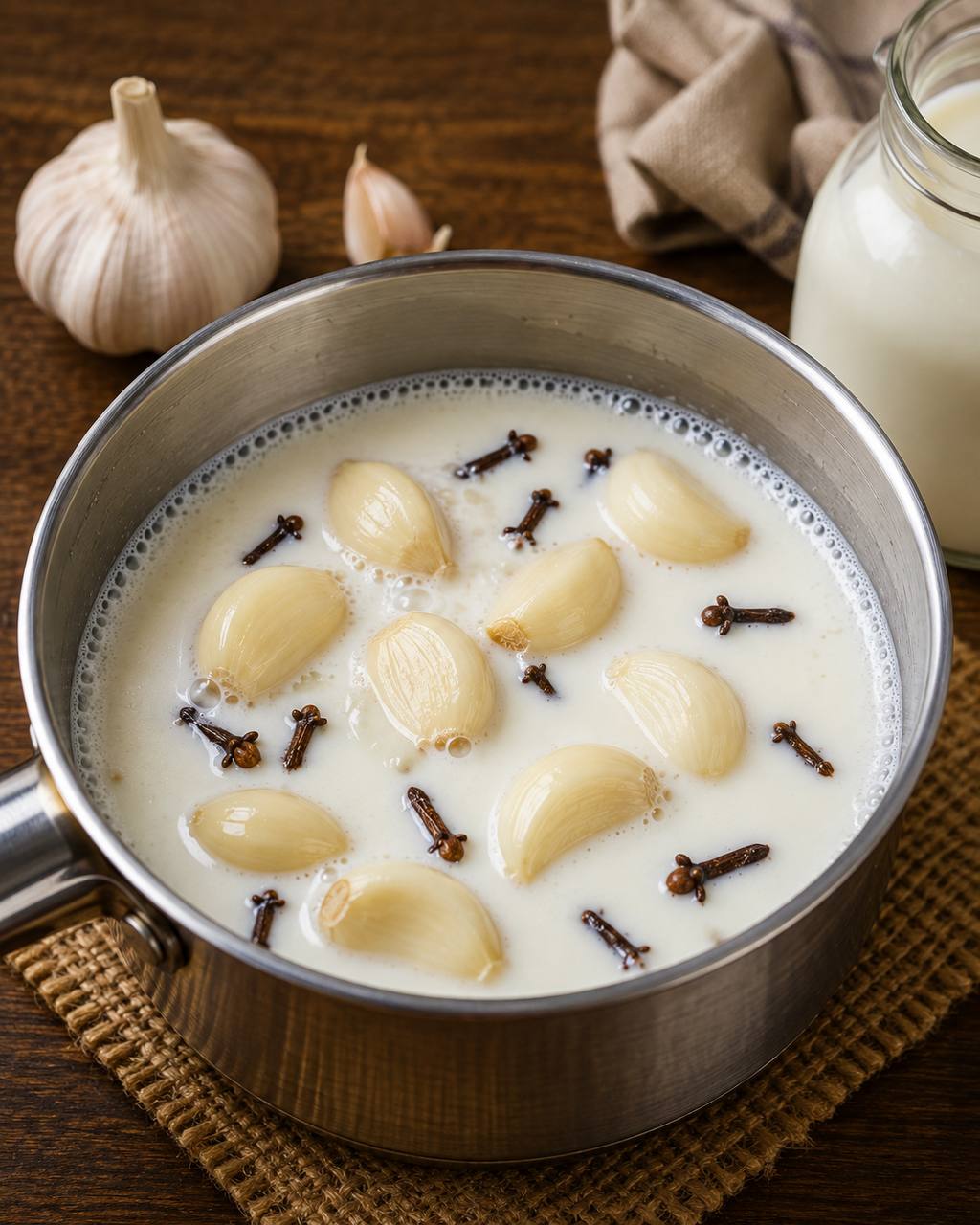
Garlic boiled in milk is a traditional home remedy used in various cultures for generations. People prepare it for respiratory comfort, immune support, better sleep, or general wellness, especially during colder months. The combination pairs the bioactive compounds in garlic with the soothing, nutrient-rich qualities of milk.
For adults over 60, any regular home remedy deserves careful evaluation. Age-related changes in digestion, medication use, and overall health can alter both benefits and risks. This article explains how the remedy is typically made, the potential benefits supported by tradition and available research on its ingredients, the important risks seniors should understand, and practical guidance for safer use.
What Is Garlic Boiled in Milk?
The basic preparation involves simmering crushed or sliced garlic cloves in milk, then straining and drinking the warm liquid (sometimes with a small amount of honey or turmeric added). Proponents believe the process softens garlic’s intensity while allowing beneficial compounds to infuse into the milk.
Garlic contains allicin and other sulfur compounds formed when the clove is crushed or chopped. These have been studied for antimicrobial, antioxidant, and mild cardiovascular effects. Milk provides protein, calcium, and a creamy base that many find gentler than consuming raw garlic.
Potential Benefits
Most evidence comes from research on garlic itself or traditional use rather than large clinical trials of the exact garlic-and-milk combination. Possible benefits include:
1. Respiratory and throat comfort
Warm milk is inherently soothing. Garlic’s traditional use for coughs and congestion, combined with the warm liquid, may provide temporary comfort during mild respiratory irritation.
2. Immune support
Garlic has demonstrated antimicrobial and immune-modulating properties in laboratory and some human studies. Regular culinary use of garlic is associated with general immune resilience, though results vary.
3. Cardiovascular support
Garlic has been studied for modest effects on blood pressure and cholesterol in some trials. Any benefit would come primarily from the garlic component and is usually small.
4. Antioxidant intake
Garlic supplies antioxidants that help counter oxidative stress. This contributes to overall cellular health when part of a varied diet.
5. Sleep and relaxation (anecdotal)
Some people report that a warm cup in the evening feels calming and supports falling asleep. The ritual and warmth likely play a large role.
6. Digestive warmth
In traditional systems, this preparation is sometimes used to ease occasional digestive discomfort, though garlic can also irritate sensitive stomachs.
7. Nutrient contribution from milk
Milk adds high-quality protein, calcium, and vitamin B12—nutrients that support muscle maintenance and bone health after 60.
Benefits are generally modest and most noticeable when the remedy is used occasionally as part of an overall healthy lifestyle rather than as a standalone treatment.
How to Prepare Garlic Boiled in Milk
Basic recipe (1 serving)
- 1–2 garlic cloves, peeled and lightly crushed or sliced
- 1 cup milk (dairy or a fortified plant-based alternative if preferred)
- Optional: small pinch of turmeric or ½ teaspoon honey (add honey after heating)
Method
- Place the milk and crushed garlic in a small saucepan.
- Bring to a gentle simmer over low–medium heat (do not boil vigorously).
- Simmer for 5–8 minutes so the garlic infuses the milk.
- Remove from heat, strain out the garlic pieces, and let cool slightly.
- Add honey if desired and drink warm.
Start with one clove if you are new to the preparation. Stronger versions increase both potential effects and the chance of side effects.
Risks and Side Effects — Especially After 60
Digestive upset
Garlic can cause heartburn, bloating, gas, or stomach irritation, particularly when consumed on an empty stomach or in higher amounts. Milk may soothe some people but can worsen symptoms in those with lactose intolerance.
Blood-thinning effects
Garlic has mild antiplatelet properties. This can increase bleeding risk when combined with blood thinners (warfarin, aspirin, clopidogrel, etc.) or before surgery.
Blood pressure and blood sugar
Garlic may modestly lower blood pressure or blood sugar in some individuals. Those on related medications should monitor levels and consult their doctor.
Medication interactions
Possible interactions exist with anticoagulants, HIV medications, and certain other drugs. Always check with a healthcare provider or pharmacist.
Odor and social considerations
The garlic smell can linger on the breath and skin.
Lactose intolerance or milk sensitivity
Common after 60. Lactose-free milk or fortified plant alternatives can be substituted, though the traditional preparation uses dairy.
High-dose or long-term concerns
Culinary amounts are generally safe for most healthy people. Large or prolonged medicinal quantities of garlic raise the risk of side effects and are not recommended without guidance.
Who Should Be Cautious or Avoid This Remedy
- People taking blood thinners or preparing for surgery
- Individuals with bleeding disorders
- Those with active acid reflux, gastritis, or stomach ulcers
- People with diabetes (monitor blood sugar)
- Anyone with significant kidney disease or on multiple medications
- Individuals with known garlic or milk allergies/intolerances
- Those scheduled for surgery (stop garlic-containing remedies as advised by the surgical team)
What to Know Before Using It After 60
- This is a traditional comfort remedy, not a proven medical treatment for infections, high blood pressure, or other conditions.
- Occasional use is more appropriate than daily long-term consumption for most seniors.
- Start with a mild version (one clove) and observe tolerance.
- Inform your doctor, especially if you take prescription medications.
- Prioritize evidence-based foundations of healthy aging: balanced nutrition, strength-supporting activity, blood pressure and blood sugar control, sleep, and regular medical care.
- Stop immediately if you experience digestive distress, unusual bruising, dizziness, or other concerning symptoms.
Practical Tips for Safer Use
- Choose fresh, firm garlic cloves.
- Crush or slice the garlic and let it sit a few minutes before heating to support beneficial compound formation.
- Keep the simmer gentle to preserve more of the milk’s nutrients and avoid scorching.
- Drink it warm, preferably not on a completely empty stomach if you are prone to irritation.
- Limit frequency—several times per week during times of need is more realistic than every day indefinitely.
- Maintain good oral hygiene afterward to manage garlic breath.
Frequently Asked Questions
Can garlic boiled in milk cure a cold or cough?
No. It may provide temporary soothing comfort but does not treat viral or bacterial infections. Seek medical care for persistent or severe symptoms.
Is it safe to drink every day after 60?
For many healthy older adults, occasional use is fine. Daily long-term use increases the chance of digestive side effects and medication interactions and should be discussed with a doctor.
Can I use plant-based milk?
Yes. Fortified soy, oat, or almond milk can work if you avoid dairy. The flavor and traditional profile will differ slightly.
Does cooking garlic in milk destroy its benefits?
Heat reduces some heat-sensitive compounds (including some allicin), but other beneficial sulfur compounds and antioxidants remain. The warm delivery and soothing effect are part of the appeal.
What if I don’t like the taste?
The flavor is strong. Using fewer cloves, adding a small amount of honey or turmeric, or simply choosing other garlic preparations (cooked in meals) may be more sustainable.
Final Thoughts
Garlic boiled in milk is a long-standing home preparation that some people over 60 find comforting for mild respiratory or general wellness support. Garlic contributes well-studied bioactive compounds, while warm milk adds soothing texture and nutrients. Potential benefits center on temporary comfort, modest antioxidant and antimicrobial support, and the value of a calming ritual.
However, the risks—particularly digestive irritation, blood-thinning effects, and medication interactions—become more relevant with age and daily or frequent use. This remedy works best as an occasional, moderate addition rather than a daily necessity or medical substitute.
If you have chronic health conditions or take medications regularly, consult your healthcare provider before making garlic boiled in milk a habit. The most reliable path to healthier aging remains proven strategies: nutrient-dense eating, regular movement (especially strength work), medication adherence when prescribed, and consistent medical follow-up. A warm traditional drink can be a pleasant complement when used thoughtfully and safely.