L
Viral posts sometimes make an extraordinary promise:
Drink one particular herbal tea and cancer cells begin disappearing within 48 hours.
The message can sound especially convincing when it includes images of medicinal plants, a dramatic “before and after” cancer cell, and claims that pharmaceutical companies don’t want people to know about the remedy.
But this is precisely where an important distinction must be made.
Scientists absolutely do study plants for compounds that might influence cancer cells. In fact, nature has contributed important molecules to modern medicine.
However:
Finding that a plant compound affects cancer cells in a laboratory is completely different from proving that drinking an herbal tea can treat cancer inside the human body.
The National Cancer Institute states that there is currently no evidence that any food, herb, vitamin, mineral, dietary supplement, or combination of them can cure cancer, slow it reliably, or prevent it from returning.
And there is no credible evidence that an ordinary herbal drink can “stop cancer at the root” within 48 hours.
🌿 Why Do These Herbal Cancer Claims Sound So Convincing?
Many plants contain biologically active compounds.
Researchers can isolate these compounds and expose cancer cells to them in laboratory dishes.
Sometimes something interesting happens.
A compound might interfere with:
Cell division.
Inflammatory pathways.
Oxidative processes.
Signals involved in cell survival.
Researchers may then describe the compound as having “anticancer activity.”
But that phrase is frequently misunderstood online.
Laboratory activity does not equal a cancer cure.
A substance can damage cancer cells in a laboratory yet fail as a treatment because the human body may:
Absorb very little of it.
Break it down rapidly.
Remove it before sufficient concentrations reach a tumor.
Require doses that would be unsafe.
Or respond completely differently from isolated cells.
This is why laboratory findings are only the beginning of cancer research—not the final answer.
⏱️ What About the “48-Hour” Claim?
This is another major warning sign.
Laboratory experiments commonly expose cultured cells to substances for periods such as:
24 hours.
48 hours.
72 hours.
A social-media post may then transform:
“Cancer cells were exposed to an extract for 48 hours in vitro”
into:
“This plant cures cancer in 48 hours.”
Those statements mean completely different things.
A cell growing in a laboratory dish is not:
A tumor inside a human body.
A metastatic cancer.
A person’s immune system.
A liver processing compounds.
A kidney eliminating them.
Or a patient receiving chemotherapy, radiation, immunotherapy, targeted therapy, hormone therapy, or surgery.
The number 48 hours therefore tells us almost nothing about whether drinking a plant infusion can treat cancer in a person.
📊 Viral Claim vs. What the Evidence Actually Supports
| Viral claim | Evidence-based interpretation |
| One plant stops cancer in 48 hours | Not demonstrated |
| Herbal tea destroys cancer “at the root” | No clinical evidence |
| Laboratory cancer-cell death proves a cure | No |
| Plants contain compounds worth researching | Yes |
| Some plant compounds have contributed to medicines | Yes |
| Drinking the original plant equals taking a cancer drug | No |
| Herbal products can interact with cancer medicines | Yes |
| Some complementary approaches may help treatment symptoms | Yes |
| Herbs should replace chemotherapy or other treatment | No |
NCCIH specifically states that no complementary health approach has been shown to cure cancer or cause cancer to go into remission.
🧪 “But Aren’t Some Cancer Drugs Made From Plants?”
Yes—and this is where the story becomes genuinely interesting.
Nature has been an important source of drug discovery.
Researchers can identify a promising molecule in a plant and then:
Isolate it.
Determine its chemical structure.
Study how it works.
Establish an appropriate dose.
Test toxicity.
Study how the body metabolizes it.
Conduct clinical trials.
Manufacture it at controlled concentrations.
Monitor patients carefully.
The final medication may be very different from drinking tea made from the original plant.
This is similar to saying:
A tree contains a useful chemical.
Therefore drinking tea made from its bark must provide the same controlled dose and therapeutic effect as a purified medication.
That conclusion simply doesn’t follow.
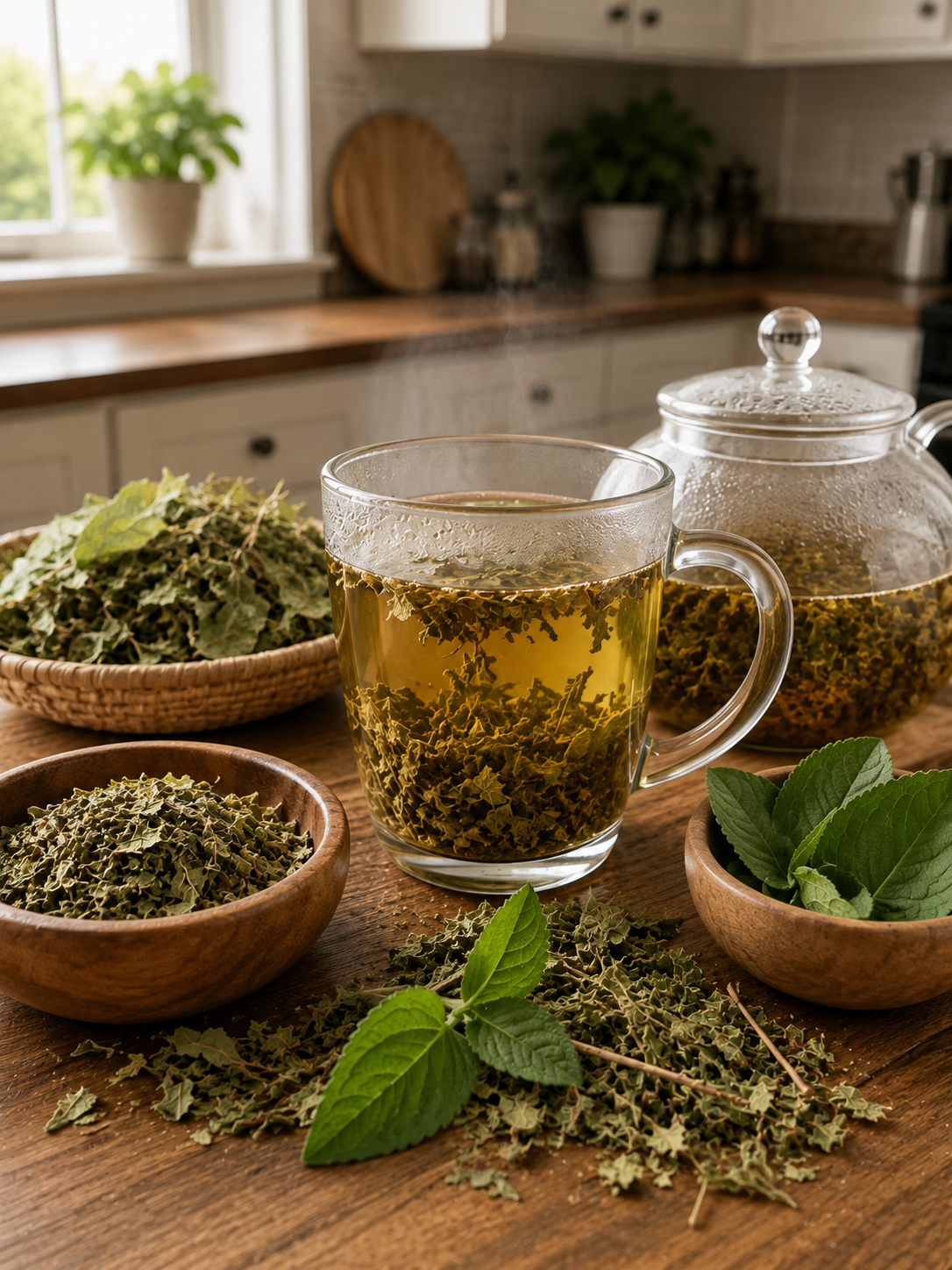
🍵 Can Herbal Tea Still Have a Place?
Absolutely.
An herbal beverage does not need to cure cancer to have value.
Depending on the particular herb and the person’s medical situation, a simple tea might provide:
Hydration.
Warmth.
Enjoyment.
A caffeine-free beverage alternative.
Temporary digestive comfort.
A relaxing evening ritual.
Some herbs have also been investigated for particular treatment-related symptoms.
For example, NCCIH reports that ginger has been studied for chemotherapy-associated nausea, although results have been mixed.
That is a reasonable scientific question.
It is very different from claiming:
“Ginger cures cancer.”
⚠️ The Most Important Rule for Someone Receiving Cancer Treatment
Before starting a medicinal herb, concentrated extract, supplement, or “cancer tea,” tell the oncology team.
This isn’t because doctors are opposed to plants.
It’s because plants contain chemicals.
And chemicals can interact with medicines.
The National Cancer Institute warns that dietary supplements, herbal products, and special teas can change how anticancer drugs are absorbed, metabolized, distributed, or removed from the body.
NCCIH likewise advises people undergoing cancer treatment to discuss supplements with their healthcare providers because herbal supplements may interfere with treatment effectiveness.
💊 More Natural Does Not Mean More Compatible
Imagine someone takes an anticancer medicine that depends on a particular liver enzyme.
Then they begin taking a concentrated herbal extract.
If that herb changes the activity of the same enzyme, the cancer drug might theoretically become:
Too concentrated.
Not concentrated enough.
More toxic.
Or less effective.
NCI explains that interactions involving drug-metabolizing systems such as cytochrome P450 enzymes and transport proteins are an important concern with supplements during cancer treatment.
That’s why your oncologist needs to know about everything you’re taking.
🌿 Tea Is Not the Same as Herbal Extract
This distinction gets lost constantly online.
Suppose a study investigates:
500 mg of a standardized plant extract.
That doesn’t mean:
One teaspoon of leaves steeped in hot water gives 500 mg.
And it doesn’t mean:
Five cups of tea equal the studied treatment.
Extraction method matters.
Plant species matters.
Plant part matters.
Concentration matters.
Preparation matters.
Dose matters.
Bioavailability matters.
A homemade infusion cannot automatically be substituted for a standardized research preparation.
🚫 “Pharmaceutical Companies Hate This” Is Not Evidence
This phrase appears frequently in viral health posts:
“Doctors don’t want you to know.”
“Big Pharma hates this plant.”
“The cure has been hidden.”
But none of those statements demonstrate that a treatment works.
Scientific evidence comes from things such as:
Human clinical trials.
Appropriate control groups.
Reproducible results.
Defined doses.
Safety monitoring.
Tumor response.
Progression-free survival.
Overall survival.
Not from how dramatic a social-media caption sounds.
NCCIH specifically warns about fraudulent online cancer remedies marketed with phrases such as products that supposedly “cure cancer,” “selectively kill cancer cells,” or are “more effective than chemotherapy.”
🥗 What Food CAN Do During Cancer Care
Food still matters enormously.
Good nutrition can help support:
Adequate energy.
Protein intake.
Muscle maintenance.
Hydration.
Recovery.
Overall health.
And the ability to tolerate treatment.
But NCI emphasizes that there is no single food or special diet proven to control cancer.
That means the goal isn’t to discover:
The one cancer-killing vegetable.
It is to build a nutritional pattern appropriate for the individual patient.
🍓 A Better “Antioxidant Drink”
Rather than making a medicinal claim, someone who isn’t under a dietary restriction might enjoy a simple unsweetened beverage such as:
Water.
A few berries.
A slice of lemon.
Fresh mint.
Ice.
This can be a pleasant alternative to soda.
But don’t call it:
Cancer-killing water.
It isn’t.
🍵 What About Green Tea?
Green tea is probably one of the most researched teas in relation to cancer.
Yet even here the evidence is much less dramatic than viral posts suggest.
NCCIH reports that human studies examining green tea and cancer have produced inconsistent results, and current evidence cannot establish that green tea prevents cancer. Concentrated green-tea extracts have also been linked to liver problems in some people.
So even one of the world’s most extensively studied teas does not justify:
“Drink this and stop cancer.”
🧄 What About Garlic?
Garlic contains interesting sulfur-containing compounds and has been investigated extensively.
But NCI notes that evidence regarding garlic and several other dietary supplements for cancer prevention remains too limited to draw firm conclusions.
Garlic remains an excellent culinary ingredient.
It simply isn’t chemotherapy in vegetable form.
🌿 What About Turmeric?
Curcumin—the best-known compound in turmeric—is another excellent example.
Scientists have investigated it extensively.
But NCCIH reports that the clinical studies have been too small, brief, and variable to provide enough evidence to recommend curcumin products as cancer treatment.
Again:
Interesting research ≠ proven cancer therapy.
🍋 What About Lemon?
Lemon provides vitamin C and can make water more enjoyable.
It does not:
Make the body alkaline.
Destroy tumors.
Remove cancer toxins.
Or cure cancer.
The body tightly regulates blood pH through systems involving the lungs and kidneys.
Drinking lemon water doesn’t selectively change the environment surrounding cancer cells.
🧃 What About Juicing?
Juicing is another popular cancer claim.
People may combine enormous quantities of:
Carrot.
Beet.
Celery.
Apple.
Ginger.
Turmeric.
Leafy greens.
Then describe the mixture as “tumor starving.”
NCI states that there is no proof that juicing—or other popular dietary approaches—can slow cancer, cure it, or prevent recurrence.
Vegetables are nutritious.
Juice is not cancer treatment.
🍯 What About Honey and Herbal Syrups?
Honey can be useful as a food.
But mixing honey with medicinal herbs doesn’t turn the combination into an anticancer drug.
And because concentrated herbal products may interact with treatment, patients should discuss them with their oncology team.
🚫 8 Cancer-Remedy Red Flags
Be skeptical when a post promises:
1. “Cures cancer in 24–48 hours.”
Cancer treatment does not work like that.
2. “Works on every type of cancer.”
Cancer is not one disease.
3. “Kills cancer but leaves every healthy cell untouched.”
That requires rigorous evidence.
4. “Doctors don’t want you to know.”
Conspiracy language isn’t clinical evidence.
5. “More powerful than chemotherapy.”
Ask for high-quality human trials.
6. “Thousands were cured but nobody reported it.”
Extraordinary claims require verifiable evidence.
7. “Stop your medication first.”
This can be dangerous.
8. “If it worked in a laboratory, it works in humans.”
Laboratory research is only an early stage of evidence.
🧬 Cancer Is Not One Disease
This is another reason universal herbal cures make little sense.
Breast cancer can differ dramatically from:
Lung cancer.
Prostate cancer.
Pancreatic cancer.
Leukemia.
Melanoma.
Colon cancer.
And even two people with the same type of cancer may have tumors with different:
Mutations.
Receptors.
Stages.
Growth rates.
Treatment responses.
Modern oncology increasingly tailors treatment to the biology of the individual cancer.
A single cup of tea cannot reasonably be assumed to treat all of these diseases identically.
🏥 What Actually Determines Cancer Treatment?
Treatment depends on factors including:
Cancer type.
Stage.
Tumor location.
Molecular characteristics.
Overall health.
Previous treatments.
Patient preferences.
Depending on the cancer, evidence-based treatment may involve:
Surgery.
Radiation therapy.
Chemotherapy.
Immunotherapy.
Targeted therapy.
Hormone therapy.
Or combinations of treatments.
Complementary approaches may sometimes be added to help manage symptoms, but NCCIH emphasizes that they should not replace or delay conventional cancer treatment.
🧘 Complementary Care Can Still Be Valuable
Rejecting a fake herbal cure does not mean rejecting every complementary approach.
NCCIH reports evidence that some complementary approaches may help manage particular cancer-related symptoms or treatment side effects.
Depending on circumstances, these may include:
Acupuncture.
Mindfulness-based stress reduction.
Yoga.
Certain relaxation approaches.
Some may help with symptoms such as pain, anxiety, nausea, or fatigue when used appropriately alongside medical care.
The key word is:
Complementary.
Alongside treatment.
Not instead of treatment.
🧑⚕️ Questions to Ask Before Taking an Herbal Product
If someone has cancer and wants to use an herbal tea or supplement, useful questions include:
What exactly is the plant?
Which part of the plant is being used?
Is this ordinary food-level tea or a concentrated extract?
What dose am I taking?
Could it interact with my cancer medication?
Could it affect surgery or bleeding?
Could it affect my liver or kidneys?
Has this exact preparation been studied in humans?
What outcome did the study actually measure?
NCCIH recommends telling healthcare providers about all complementary products being used so potential interactions can be considered.
⚠️ Never Delay Evaluation Because of a Viral Remedy
This is where misleading posts become genuinely dangerous.
A person finds:
A new lump.
Blood in stool.
Unexplained bleeding.
Persistent cough.
Unexplained weight loss.
A changing skin lesion.
Persistent swallowing problems.
Or another concerning symptom.
Then someone online says:
“Don’t go to the doctor—drink this plant for 48 hours.”
That delay can matter.
NCCIH warns that postponing proven cancer treatment in favor of unproven alternatives can reduce the likelihood of remission or cure.
❓ Frequently Asked Questions
Can an herbal tea cure cancer?
No herbal tea has been demonstrated to cure cancer. NCI states that no herb, food, supplement, vitamin, mineral, or special diet has been proven to cure cancer.
Can a plant kill cancer cells in 48 hours?
A plant extract may affect cultured cancer cells during a 48-hour laboratory experiment. That does not demonstrate that drinking the plant treats cancer in humans.
Are plants useless in cancer research?
No. Plant compounds are scientifically interesting and nature has contributed to drug discovery. But promising compounds still require rigorous testing before they become treatments.
Can herbal products interfere with chemotherapy?
Yes. NCI warns that supplements and herbs may alter how cancer medicines are absorbed, metabolized, or eliminated.
Is green tea an anticancer treatment?
No. Human studies have produced inconsistent findings, and green tea has not been established as a cancer treatment.
Does turmeric cure cancer?
No. Curcumin is actively researched, but current clinical evidence is insufficient to recommend it as cancer treatment.
Can diet cure cancer?
No special diet has been proven to cure cancer. Good nutrition remains important for general health and during treatment.
Should someone undergoing chemotherapy stop drinking all herbal tea?
Not necessarily. But the oncology team should know about medicinal herbs, supplements, extracts, and special teas because some can interact with treatment.
⭐ The Bottom Line
The claim shown in viral posts is dramatic:
“This plant stops cancer at the root in just 48 hours.”
But there is no credible clinical evidence supporting that promise.
The National Cancer Institute states that no food, herb, vitamin, mineral, dietary supplement, or combination of these has been proven to slow cancer, cure it, or prevent it from returning.
That doesn’t mean plants are scientifically uninteresting.
Quite the opposite.
Researchers continue investigating plant compounds, and some may eventually contribute to useful medicines or supportive therapies.
But there is a huge difference between:
A plant compound affecting cancer cells in a laboratory
and
a cup of herbal tea curing cancer inside a human being.
And for anyone already receiving cancer treatment, herbal supplements deserve particular caution because they can potentially change how anticancer medicines work.
So enjoy ordinary herbal tea when it is appropriate for you.
Study medicinal plants.
Be curious about emerging research.
But never allow a viral “48-hour cure” to replace diagnosis, oncology care, or evidence-based treatment.
With cancer, the safest secret isn’t a hidden plant—it’s getting the right diagnosis and effective treatment as early as possible.