
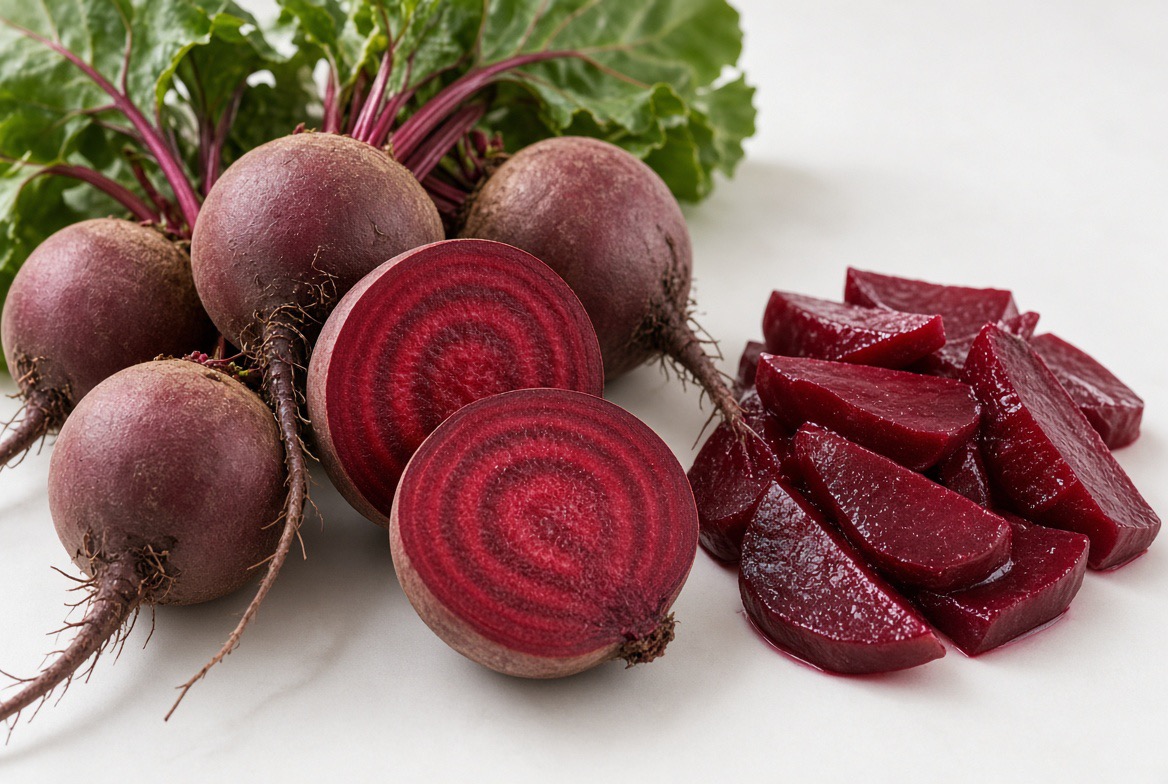
Pickled beets are one of those foods people seem to either love or avoid completely.
Some people remember them as a colorful side dish served at family dinners. Others associate them with an overly sweet, vinegary taste and a jar sitting in the refrigerator for weeks.
But beyond their distinctive flavor and deep ruby-red color, pickled beets raise an interesting nutritional question:
Are pickled beets actually healthy?
Beets naturally contain fiber, potassium, folate, pigments called betalains, and dietary nitrates.
However, pickling changes the final food. Depending on the recipe, it may introduce considerable amounts of added sugar and sodium.
Some viral articles also suggest that pickled beets can clean arteries, lower blood pressure immediately, detoxify the liver, or reverse chronic diseases.
Those claims deserve a closer look.
The reality is that pickled beets can fit into a healthy diet, but their nutritional value depends heavily on how they’re prepared and how much you eat.
Let’s explore what research actually says.
Important Nutrition and Health Note
This article provides general nutrition education and does not replace individualized medical advice.
People with chronic kidney disease, recurring calcium oxalate kidney stones, diabetes, or medically prescribed sodium restrictions may need to pay closer attention to portions and preparation methods.
Pickled beets are not a substitute for blood-pressure medication, diabetes treatment, or other prescribed care.
1. What Exactly Are Pickled Beets?
Pickled beets are cooked beetroot preserved or flavored with an acidic liquid, usually vinegar.
Traditional recipes may also contain:
- Water
- Sugar
- Salt
- Cinnamon
- Cloves
- Onion
- Other herbs and spices
Some varieties are sweet and tangy.
Others are more sour, earthy, or mildly spicy.
Their bright red-purple color comes from naturally occurring pigments called betalains.
Penn State Extension explains that beets can be safely preserved by freezing, pressure canning, or using properly acidified pickling methods.
However, not every homemade pickled-beet recipe is safe for shelf storage.
2. Do People Really Enjoy Pickled Beets?
Absolutely—although personal taste varies.
Pickled beets offer an unusual combination of flavors.
The earthy sweetness comes from the beetroot.
Vinegar provides a sharp acidic taste.
Added sugar, when used, balances the acidity.
Spices such as cloves and cinnamon can create a warmer, traditional flavor.
Texture also matters.
Some people prefer tender, thinly sliced beets, while others enjoy firmer pieces.
If you’ve tried pickled beets once and disliked them, a less-sweet or more mildly seasoned version may taste completely different.
3. What Nutrients Do Pickled Beets Contain?
Pickled beets contain nutrients originally present in beetroot, although cooking and pickling can change their amounts.
They typically provide:
Dietary carbohydrates.
Small amounts of fiber.
Potassium.
Some folate and other micronutrients.
Betalain pigments.
And varying amounts of dietary nitrate.
But pickled beets may also contain added sodium and sugar.
Approximate nutrition
A USDA-derived entry for canned pickled beets, including their liquid, provides approximately the following per ½ cup:
| Nutrient | Approximate amount |
| Calories | 74 |
| Carbohydrates | 18.5 g |
| Total sugars | 12.5 g |
| Dietary fiber | 0.9 g |
| Protein | 0.9 g |
| Sodium | 169 mg |
| Potassium | 131 mg |
| Phosphorus | 20 mg |
These are general reference values, not guaranteed amounts for every brand.
Homemade recipes can vary considerably, especially in sugar and salt.
Always read the Nutrition Facts label when purchasing packaged pickled beets.
4. Why Are Beets So Colorful?
Beets contain a group of pigments known as betalains.
Two important categories are:
Betacyanins: Responsible for red-purple coloring.
Betaxanthins: Associated with yellow-orange coloring.
These compounds have attracted scientific interest because of their antioxidant activity in laboratory studies.
However, antioxidant activity alone does not establish that a food prevents disease.
Eating colorful vegetables is generally worthwhile, but one serving of pickled beets cannot be expected to reverse oxidative damage or prevent every illness.
5. Can Pickled Beets Support Heart Health?
Beetroot is known for its naturally occurring dietary nitrates.
In the body, nitrate can contribute to nitric oxide production.
Nitric oxide plays a role in blood-vessel relaxation and normal vascular function.
Researchers have studied nitrate-rich beetroot juice for potential blood-pressure effects.
A 2024 systematic review and meta-analysis of 11 trials involving 349 people with hypertension found an average reduction of approximately 5.3 mmHg in clinic-measured systolic blood pressure compared with placebo.
However, the certainty of evidence was low, and the results did not establish consistent improvements in all blood-pressure measures.
Importantly, those studies generally investigated measured doses of nitrate-rich beetroot juice—not ordinary pickled beets.
Therefore, you cannot assume that a serving of sweet pickled beets will produce the same effects.
6. Do Pickled Beets Lower Blood Pressure?
This depends on what someone means by “lower.”
Beetroot contains compounds with potential vascular effects.
But typical pickled-beet products haven’t been established as reliable blood-pressure treatments.
The concentration of nitrate may vary according to processing, storage, and preparation.
At the same time, pickled beets can contain significant added sodium.
For someone managing hypertension, the sodium content may be particularly important.
Eating a few pickled beets is not equivalent to receiving a standardized nitrate intervention in a clinical trial.
Continue taking prescribed blood-pressure medication.
7. Can Pickled Beets Clean Your Arteries?
No.
A common online claim suggests beetroot can flush cholesterol deposits out of blood vessels.
Arterial plaque involves a complicated process of lipid accumulation, inflammation, and changes in arterial tissues.
A food or drink cannot simply wash this material away.
A balanced eating pattern that includes vegetables may support cardiovascular health.
But established atherosclerosis may require cholesterol management, blood-pressure control, and other medical treatment.
Pickled beets do not dissolve arterial plaque.
8. What Happens to Nutrients During Pickling?
Pickling can change the composition of a food.
Beets are usually cooked before being placed in a vinegar-based solution.
Heat, storage, and exposure to liquid can influence certain vitamins, pigments, and other compounds.
Some nutrients may move from the beet pieces into the surrounding liquid.
Others may degrade during processing.
The exact changes depend on the method used.
For that reason, a nutrition claim based on raw beetroot cannot automatically be applied to canned pickled beets.
Fresh, roasted, steamed, and pickled beets can all have a place in the diet.
But they’re not nutritionally identical.
9. The Added Sugar Question
Many traditional pickled-beet recipes contain sugar.
Sugar helps balance the sourness of vinegar.
Some commercial products contain relatively large amounts of added sweeteners.
This matters because beetroot already contains naturally occurring carbohydrates.
Additional sugar can increase the total carbohydrate and calorie content.
If you have diabetes or are monitoring sugar intake, compare labels.
Look at:
Total carbohydrates.
Total sugars.
Added sugars.
And serving size.
A product labeled “made with real beets” can still contain plenty of added sugar.
10. What About Sodium?
Sodium is another important consideration.
Pickled vegetables are sometimes prepared with salt to improve flavor and preservation.
For people with high blood pressure or certain kidney conditions, excessive sodium intake can be problematic.
Sodium affects fluid balance and blood-pressure regulation.
When shopping, compare different brands and choose lower-sodium options when available.
Do not assume that all pickled vegetables contain the same amount.
Also remember that draining the liquid does not necessarily remove all the sodium already present in the beets.
11. Are Pickled Beets Good for Digestion?
Beets provide some dietary fiber.
Fiber supports normal bowel function and contributes to healthy digestive patterns.
However, the amount in a modest serving of pickled beets is relatively small.
If you’re trying to increase fiber intake, combine them with other fiber-rich foods such as:
Vegetables.
Beans.
Whole grains.
Fruit.
And nuts or seeds when appropriate.
Pickled beets can contribute variety, but they should not be treated as a major digestive-health treatment.
12. Are Pickled Beets Probiotic?
Not necessarily.
This is an important distinction.
Many commercial pickled beets are prepared with vinegar and may be heat processed.
This is different from vegetables fermented by microorganisms.
Vinegar-pickled beets are not automatically probiotic foods.
Properly fermented beets may contain live microorganisms, depending on processing and storage.
But even fermented foods cannot automatically be described as clinically proven probiotic treatments.
Check the specific product rather than assuming all pickled vegetables contain beneficial live bacteria.
13. Can Pickled Beets Improve Energy?
Beets contain carbohydrates, which provide energy.
Researchers have also examined nitrate-rich beetroot juice for effects on exercise performance.
But this doesn’t mean ordinary pickled beets provide an immediate energy boost.
The quantity of nitrate in a typical serving may differ from amounts used in research.
And a few slices of pickled beetroot aren’t a substitute for adequate food, sleep, hydration, and exercise.
If you’re experiencing persistent fatigue, look for the underlying cause rather than relying on one vegetable.
14. What About Liver Detox Claims?
Some viral posts suggest beets cleanse the liver.
Betalains and other beet compounds have been studied in experimental systems.
But no convincing human clinical evidence demonstrates that eating pickled beets detoxifies the liver or reverses liver disease.
Your liver already performs complex metabolic and detoxification functions.
A nutritious diet can support overall health.
However, pickled beets are not a proven treatment for fatty liver disease, hepatitis, or cirrhosis.
15. Can People With Diabetes Eat Pickled Beets?
Often, yes—but the recipe and serving matter.
Beets naturally contain carbohydrates.
Sweet pickled beets may contain additional sugar from the preserving liquid.
If you have diabetes:
Choose a modest portion.
Check the label.
Compare added sugar between brands.
Count the carbohydrates as part of your meal plan.
Pair the beets with a balanced meal containing appropriate protein, fiber, and other nutrients.
Avoid assuming that vinegar cancels out the carbohydrates.
Pickled beets do not cure diabetes or replace glucose-lowering medication.
16. Are Pickled Beets Kidney-Friendly?
This depends on your kidney function and dietary requirements.
Beets contain potassium and naturally occurring oxalates.
Commercial pickled beets may also contain added sodium.
People with chronic kidney disease do not all need the same restrictions.
Some may need to manage potassium intake.
Others may have normal potassium levels and be able to include beets in appropriate portions.
People with recurring calcium oxalate kidney stones may also need individualized guidance about oxalate-rich foods.
If you have CKD, discuss portions with your renal dietitian rather than assuming all beets are either completely forbidden or unlimited.
17. Why Oxalates Matter
Oxalates are naturally occurring compounds found in many plant foods.
Beets contain oxalates.
For some people with recurrent calcium oxalate kidney stones, dietary oxalate management can be relevant.
However, the appropriate approach depends on individual medical history and urine chemistry.
Adequate dietary calcium, appropriate fluid intake, and sodium moderation may also play important roles in stone prevention.
Do not eliminate entire food groups without professional guidance.
18. Why Can Beets Turn Urine Pink or Red?
Some people notice reddish or pink urine after eating beets.
This phenomenon is called beeturia.
It occurs when beet pigments are excreted in urine.
It is usually harmless.
However, red urine can also indicate blood.
If the color is unexplained, persistent, associated with pain, or accompanied by other concerning symptoms, seek medical evaluation rather than assuming beets are responsible.
Beets can also temporarily color stool.
19. Pickled Beets vs. Fresh Beets
| Feature | Fresh or simply cooked beets | Pickled beets |
| Naturally occurring plant nutrients | Yes | Some retained |
| Dietary fiber | Yes | Some retained |
| Betalain pigments | Yes | Amount varies with processing |
| Dietary nitrates | Present | Amount varies |
| Added sugar | None unless added | Often present |
| Added sodium | None unless added | Often present |
| Vinegar flavor | No | Yes |
| Convenience | Requires preparation | Often ready to eat |
| Live probiotics | Not inherently | Not automatically |
Neither version is universally superior.
If you want more control over sugar and sodium, simply cooked beets may be easier to customize.
If you enjoy a tangy side dish, pickled beets can still fit into a balanced meal.
20. How to Choose Better Store-Bought Pickled Beets
When shopping, start with the Nutrition Facts panel.
Look for:
A reasonable serving size.
Lower added sugar.
Lower sodium.
A short ingredient list when possible.
And no unnecessary sweeteners for your preferences.
Some traditional products contain beetroot, vinegar, water, salt, sugar, and spices.
That’s not automatically unhealthy.
What matters is how the product fits into your overall diet.
21. A Simple Refrigerator Pickled Beet Recipe
You don’t need to make a large batch to enjoy the flavor.
This recipe is intended for refrigerator storage only, not shelf-stable canning.
Ingredients
- 2 medium cooked beets, peeled and sliced
- ½ cup vinegar labeled 5% acidity
- ½ cup water
- 1 teaspoon sugar, optional
- ¼ teaspoon salt, optional
- 2 whole cloves
- 1 small cinnamon-stick piece, optional
Instructions
Step 1: Cook the beets until tender, then cool slightly and peel.
Step 2: Slice them into uniform pieces.
Step 3: In a small saucepan, combine the vinegar, water, sugar, salt, and spices.
Step 4: Heat gently until the sugar dissolves.
Step 5: Place the sliced beets in a clean, heat-safe glass container.
Step 6: Pour the pickling liquid over the beets.
Step 7: Let cool briefly, cover, and refrigerate promptly.
Step 8: Allow the flavors to develop in the refrigerator for at least 24 hours before serving.
Keep refrigerated at 40°F (4°C) or colder and use within several days.
Food safety warning: This is not a tested shelf-stable canning recipe. Do not leave the jars at room temperature, seal them as pantry preserves, or assume they’re safe for long-term unrefrigerated storage.
For shelf-stable pickled beets, follow a validated recipe from the National Center for Home Food Preservation or a university extension service without changing the vinegar, water, or vegetable proportions.
22. Why Safe Pickling Matters
Beets are naturally a low-acid vegetable.
Safe shelf-stable pickling requires proper acidification and processing.
Penn State Extension advises following tested recipes with adequate vinegar and proper processing.
The National Center for Home Food Preservation warns against changing the proportions of vinegar, water, and food in tested pickling recipes.
Improperly preserved low-acid vegetables can create serious food-safety risks.
Never assume a sealed jar is safe simply because it contains vinegar.
23. Five Delicious Ways to Eat Pickled Beets
1. Pickled Beet and Goat Cheese Salad
Combine pickled beet slices with leafy greens, a small amount of goat cheese, and walnuts.
Add olive oil if desired.
2. Beet and Cucumber Side Salad
Toss chopped pickled beets with diced cucumber and fresh parsley.
A simple way to balance their sweetness and acidity.
3. Pickled Beet Sandwich
Add a few slices to a sandwich containing turkey, hummus, or another appropriate protein.
They provide color and a tangy contrast.
4. Pickled Beet Grain Bowl
Combine pickled beets with cooked quinoa, roasted vegetables, and chickpeas.
Adjust the components to your dietary needs.
5. Beet and Egg Salad
Serve sliced pickled beets alongside boiled eggs and leafy greens.
It’s colorful, simple, and satisfying.
24. Are Pickled Beets Good for Adults Over 60?
Pickled beets can be part of enjoyable meals for many older adults.
But nutritional needs vary.
Some older adults need to pay particular attention to:
Blood pressure.
Diabetes.
Kidney function.
Medication interactions.
Protein intake.
And overall diet quality.
If chewing is difficult, tender beet slices can be easier to eat than some raw vegetables.
However, sweet and salty commercial varieties may be less suitable for people managing certain conditions.
The best approach is to enjoy appropriate portions while considering the full meal.
25. Ten Common Pickled Beet Mistakes
1. Assuming pickled beets are identical to fresh beets.
Preparation changes nutrient composition.
2. Ignoring added sugar.
Some brands are surprisingly sweet.
3. Ignoring sodium.
Pickling recipes may contain considerable salt.
4. Treating them as blood-pressure medication.
Beetroot juice research does not prove that pickled beets treat hypertension.
5. Believing they clean the liver.
This has not been clinically demonstrated.
6. Assuming all pickled vegetables contain probiotics.
Many are vinegar-pickled and heat processed rather than fermented.
7. Eating unlimited portions because they’re vegetables.
Carbohydrates, sugar, sodium, and individual needs still matter.
8. Ignoring oxalates when medically relevant.
People with recurrent calcium oxalate stones may need specific guidance.
9. Improvising shelf-stable canning recipes.
Unsafe acidity or processing can create serious risks.
10. Assuming red urine always comes from beets.
Unexplained blood-colored urine should be medically assessed.
Frequently Asked Questions
Are pickled beets actually healthy?
They can be part of a healthy diet. They provide some plant nutrients, but added sugar and sodium vary considerably.
Are pickled beets as nutritious as fresh beets?
Not exactly. Cooking and pickling may alter some nutrients and introduce added sugar or salt.
Do pickled beets lower blood pressure?
Certain studies of nitrate-rich beetroot juice have found modest blood-pressure effects, but those findings cannot automatically be applied to pickled beets.
Are pickled beets good for your heart?
They can fit into a heart-conscious eating pattern, particularly when lower in added sodium and sugar. They do not replace cardiovascular treatment.
Can pickled beets clean arteries?
No. There is no evidence that they dissolve arterial plaque.
Are pickled beets good for digestion?
They provide some fiber, although the amount per serving is modest.
Are pickled beets probiotic?
Not necessarily. Vinegar-pickled or heat-processed products may contain no live probiotic microorganisms.
Can people with diabetes eat pickled beets?
Often, yes. Portion size, total carbohydrates, and added sugar matter.
Are pickled beets safe for kidney disease?
It depends on kidney function and dietary restrictions. Sodium, potassium, and oxalate content may be relevant.
Can pickled beets cause red urine?
Yes. Beeturia can temporarily change urine color, but unexplained or persistent red urine should not automatically be attributed to beets.
Should I drink pickled beet juice from the jar?
There’s no special health reason to do so. The liquid may contain substantial vinegar, sugar, and sodium.
Can I make pickled beets without sugar?
For refrigerator pickles, sugar can often be adjusted for taste. For shelf-stable canning, use a tested recipe specifically designed for the desired formulation.
Are homemade pickled beets better than store-bought?
Homemade versions offer more control over flavor and ingredients, but food safety is essential. Commercial products can be convenient and nutritious choices when labels fit your needs.
Final Thoughts: Are Pickled Beets Worth Eating?
Yes—if you enjoy them.
Pickled beets can add color, flavor, and variety to everyday meals.
They provide some of the nutrients naturally found in beetroot, including plant pigments, minerals, and fiber.
But the preparation method matters.
Some varieties contain significant amounts of added sugar and sodium.
And although beetroot nitrate research is scientifically interesting, it doesn’t prove that ordinary pickled beets clean arteries, reverse hypertension, or prevent disease.
The practical takeaway is simple:
Enjoy pickled beets because you like their flavor and because they can fit into a nutritious diet—not because they promise miraculous results.
Compare labels.
Choose appropriate portions.
Practice safe home preservation.
And remember that an overall balanced eating pattern matters much more than any single food.
Pickled beets aren’t a miracle food—and they don’t have to be. Sometimes a colorful, tangy side dish is reason enough to enjoy them.
Health reminder: Pickled beets are food, not a treatment for cardiovascular, kidney, or metabolic disease. Nutritional needs and restrictions vary by individual.