
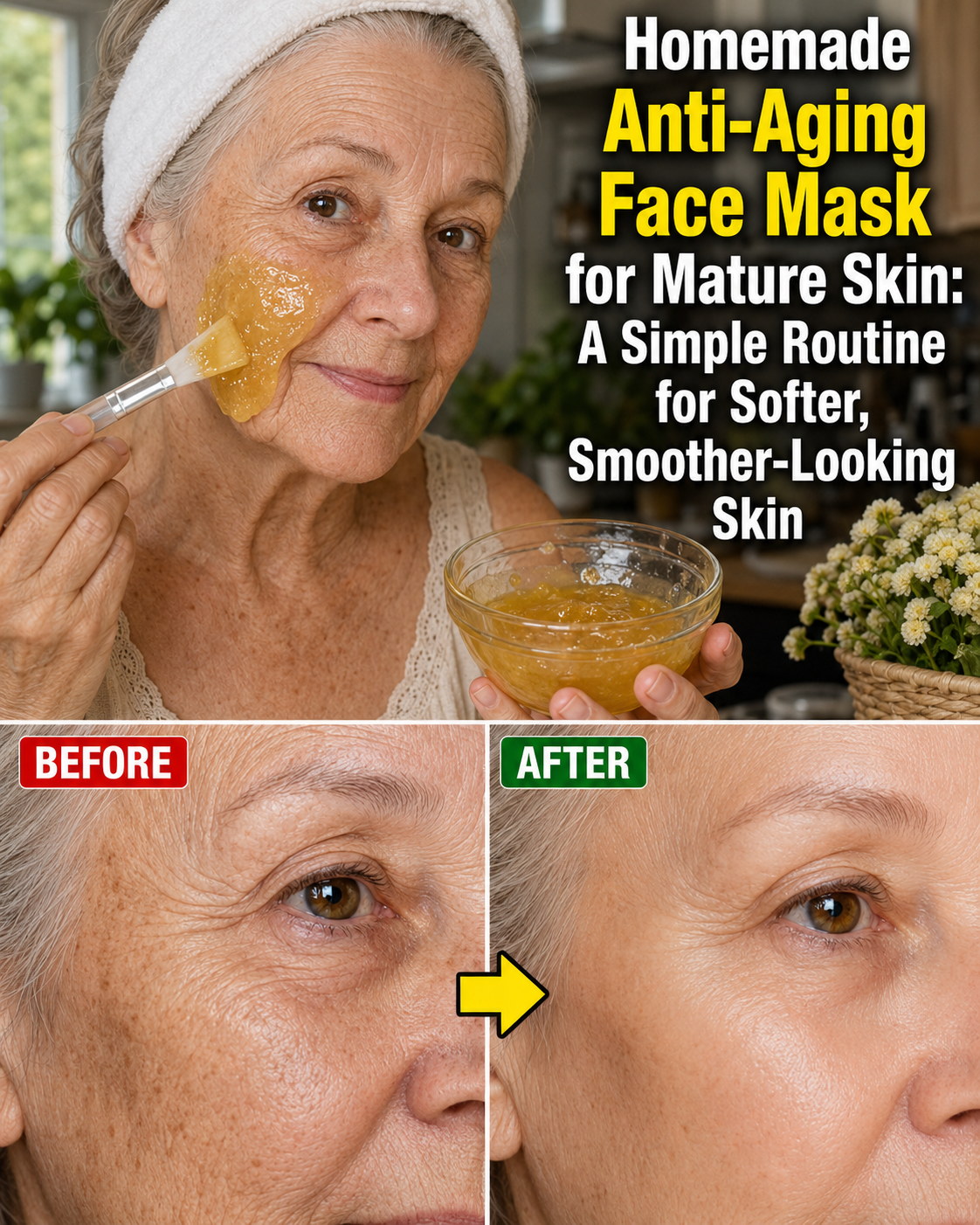
As skin matures, it changes in noticeable ways. It often becomes drier, thinner, and less elastic. Fine lines appear more readily, the complexion can look dull, and the skin barrier may not hold moisture as effectively as it once did. Store-bought products can help, but many people prefer simple, affordable options made from ingredients already in the kitchen.
Homemade face masks will not erase deep wrinkles or replace professional treatments. What they can do is support hydration, gently improve texture, and leave mature skin feeling softer and looking smoother when used consistently as part of a gentle routine. This article focuses on practical, low-risk recipes and a straightforward approach that prioritizes safety and realistic results for skin over 50, 60, and beyond.
Why Mature Skin Needs a Different Approach
With age, several changes occur:
- Oil production decreases, leading to dryness
- Cell turnover slows, so dead skin cells linger longer
- Collagen and elastin decline, reducing firmness
- The skin barrier becomes more fragile and reactive
- Healing takes longer, and irritation is more common
Aggressive scrubs, strong acids, or harsh essential oils that younger skin might tolerate can easily cause redness, stinging, or barrier damage in mature skin. The goal shifts toward hydration, gentle nourishment, mild exfoliation, and protection rather than intense “anti-aging” claims.
Benefits of Simple Homemade Masks for Mature Skin
When chosen carefully, kitchen-based masks can offer:
- Immediate hydration and a softer feel
- Mild enzymatic or lactic-acid style exfoliation without irritation
- A calming effect on dry, tight, or slightly inflamed skin
- Cost-effective care that avoids unnecessary fragrances and preservatives
- A pleasant, low-pressure self-care ritual
Results are usually temporary and cumulative. Consistency and gentle handling matter more than any single “miracle” ingredient.
Key Ingredients That Work Well for Mature Skin
Raw honey
A natural humectant that draws moisture into the skin. It also has soothing and mild antibacterial properties. Manuka honey is excellent if available, but ordinary raw honey works well.
Plain yogurt (preferably full-fat Greek or regular plain)
Contains lactic acid, a gentle alpha-hydroxy acid that helps loosen dead surface cells and improve texture without the strength of synthetic AHAs. The fats and proteins also provide nourishment.
Ripe avocado
Rich in healthy fats, vitamin E, and antioxidants. Excellent for very dry or depleted mature skin.
Aloe vera gel (pure, from the plant or a clean store-bought version)
Soothes, hydrates, and supports the skin barrier. Ideal for sensitive or easily reddened skin.
Mashed banana
Offers potassium, vitamins, and a soft, creamy texture that feels comforting on dry skin.
Finely ground oatmeal
Calms irritation and provides very gentle physical exfoliation when used carefully. Colloidal oatmeal is especially skin-friendly.
Optional additions in small amounts
A few drops of rosehip oil, jojoba oil, or plain olive oil for extra nourishment (use sparingly if skin is congestion-prone).
Avoid lemon juice, undiluted essential oils, baking soda, and harsh scrubs. These are common in online recipes but frequently irritate mature skin.
Three Reliable Homemade Mask Recipes
1. Hydrating Honey + Yogurt Mask (Best everyday option)
Ingredients (one application):
- 1 tablespoon raw honey
- 1 tablespoon plain full-fat yogurt
Instructions:
Mix until smooth. Apply a thin, even layer to clean skin. Leave on for 10–15 minutes. Rinse with lukewarm water using gentle circular motions, then pat dry. Follow with moisturizer while skin is still slightly damp.
This combination delivers hydration and very mild resurfacing. Most mature skin types tolerate it well.
2. Nourishing Avocado + Honey Mask (For very dry or dull skin)
Ingredients:
- ½ ripe avocado
- 1 teaspoon raw honey
- Optional: ½ teaspoon plain yogurt or a few drops of jojoba oil
Instructions:
Mash the avocado thoroughly until creamy. Mix in honey (and optional ingredients). Apply a comfortable layer. Leave for 15 minutes. Rinse gently. The texture is richer and leaves skin feeling soft and supple.
3. Soothing Oatmeal + Aloe + Banana Mask (For sensitive or reactive mature skin)
Ingredients:
- 1 tablespoon finely ground oatmeal (blend regular oats if needed)
- 1 tablespoon pure aloe vera gel
- 2–3 tablespoons mashed ripe banana
Instructions:
Combine into a smooth paste. Apply gently. Leave for 10–12 minutes. Rinse with lukewarm water. This mask focuses on calming and moisture rather than active exfoliation.
A Simple Weekly Routine for Mature Skin
Consistency beats intensity. Here is a realistic schedule:
Morning (daily)
- Cleanse with a gentle, non-foaming cleanser or just lukewarm water if skin is very dry
- Apply a hydrating serum or toner if desired
- Moisturizer
- Broad-spectrum sunscreen (SPF 30 or higher) — non-negotiable for preventing further photoaging
Evening (daily)
- Gentle cleanse
- Treatment (retinol alternative, peptide cream, or prescription product if recommended by a dermatologist)
- Rich moisturizer or facial oil
Mask frequency
- Start with once a week
- If well tolerated, increase to twice a week
- Always on clean skin, preferably in the evening
- Never apply on broken, sunburned, or actively irritated skin
After any mask, seal in moisture with a good moisturizer. For extra dryness, apply moisturizer onto slightly damp skin or layer a facial oil on top.
Application Tips That Protect Mature Skin
- Always do a patch test on the inner arm or behind the ear 24 hours before full-face use
- Use clean hands or a soft brush
- Keep the mask away from the immediate eye area
- Do not leave masks on longer than recommended — longer is not better
- Rinse with lukewarm (not hot) water
- Pat dry instead of rubbing
- Follow immediately with moisturizer
Supporting Habits That Improve Results
Homemade masks work best as part of a larger approach:
- Drink adequate water throughout the day
- Prioritize sleep
- Eat a diet with healthy fats, colorful vegetables, and adequate protein
- Manage stress where possible
- Avoid smoking and limit excess alcohol
- Use sunscreen every day, even indoors near windows
- Choose gentle cleansers free of strong sulfates and fragrance
- Consider a humidifier in dry climates or during winter
Important Precautions and When to Avoid Homemade Masks
Stop use and consult a dermatologist if you experience:
- Persistent redness, burning, or itching
- Breakouts that appear after starting the masks
- Signs of allergy (swelling, hives)
People with very sensitive skin, rosacea, eczema, or a history of contact dermatitis should proceed carefully or stick to the simplest honey-only mask.
Those using prescription retinoids, strong acids, or undergoing professional treatments should check with their dermatologist before adding homemade masks.
Never use ingredients you know you are allergic to. Honey is generally safe but should be avoided by anyone with a known honey or bee-product allergy.
Frequently Asked Questions
Can homemade masks replace retinol or professional treatments?
No. They support comfort and surface appearance. They do not stimulate collagen the way retinoids, certain peptides, or in-office procedures can.
How long until I see results?
Many people notice softer skin after the first use. Improvements in texture and radiance usually become more apparent after 3–4 weeks of consistent use.
Is it safe to use these masks around the eyes?
Keep them away from the delicate eye area. Use an eye cream instead.
Can I store leftover mask?
It is best to make a fresh batch each time. Dairy and fruit spoil quickly.
What if my skin feels tight after rinsing?
You may need a richer moisturizer or a shorter mask time. Over-cleansing or hot water can also cause tightness.
Final Thoughts
Mature skin benefits most from kindness, consistent hydration, and protection rather than aggressive intervention. A simple homemade mask made from honey, yogurt, avocado, aloe, or oatmeal can become a pleasant weekly ritual that leaves the skin feeling softer and looking smoother.
Start slowly, listen to how your skin responds, and pair the masks with daily sunscreen and a good moisturizer. These small, sustainable habits often deliver more noticeable long-term improvement than complicated multi-step routines.
If you have specific skin concerns such as deep wrinkles, significant sun damage, or medical skin conditions, a consultation with a dermatologist remains the most reliable next step. Homemade care works best as a supportive practice, not a substitute for professional guidance when needed.
Softer, more comfortable skin is an achievable goal at any age when the approach stays gentle and realistic.