
Open the refrigerator in some health-conscious households, and you might find several large bottles filled with bright green juice.
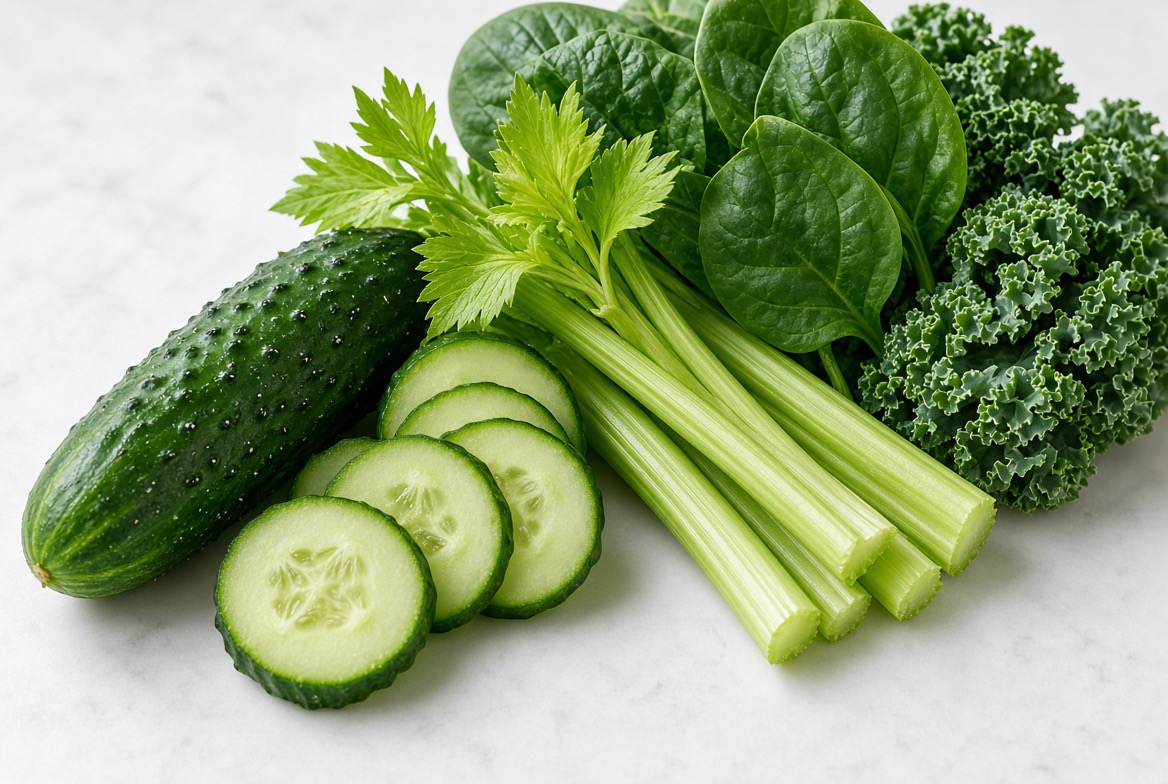
They’re often made with celery, cucumber, spinach, parsley, lemon, ginger, and green apples.
The idea is simple: prepare a large batch, store it in the refrigerator, and drink a glass every morning.
Across social media, these bottles are frequently promoted with claims such as:
“Seven days of green juice will transform your body!”
“Clean your liver and kidneys naturally.”
“Remove inflammation and eliminate toxins.”
“Drink this every morning to lose belly fat.”
“One bottle a day repairs your gut and boosts immunity.”
But are large batches of homemade green juice actually healthy?
And how long can freshly prepared vegetable juice safely remain in the refrigerator?
The answer involves both nutrition and food safety.
Green vegetable juices can provide vitamins, minerals, water, and naturally occurring plant compounds.
However, juicing often removes much of the fiber found in whole vegetables.
Some recipes also contain concentrated amounts of potassium, vitamin K, or natural sugars.
Most importantly, homemade juice prepared from raw vegetables is generally unpasteurized, meaning it may contain harmful microorganisms even when refrigerated.
A green juice can be a nutritious beverage, but it is not a detox treatment—and preparing several large bottles for days of storage introduces food-safety concerns.
Let’s examine what the science actually says.
1. Why Are Large Bottles of Green Juice So Popular?
Batch-prepared green juice has become popular because it’s convenient.
Instead of washing and cutting vegetables every morning, people prepare a large quantity in advance.
They may fill several glass bottles and store them in the refrigerator.
Common ingredients include:
- Celery
- Cucumber
- Spinach
- Kale
- Parsley
- Green apple
- Lemon
- Ginger
- Mint
- Water
The bright green color makes the juice look fresh and nutritious.
And some combinations genuinely taste refreshing.
However, the color of a drink does not establish that it cleans the liver, heals the kidneys, or prevents disease.
2. What Nutrients Are Found in Green Juice?
The nutritional content depends on the ingredients and preparation method.
A green juice may contain:
Vitamin C.
Vitamin K.
Folate.
Potassium.
Naturally occurring carbohydrates.
Water.
And various plant compounds.
Leafy vegetables also contain pigments such as chlorophyll.
But a beverage’s nutrient content depends on the quantities used.
For example, a juice made mostly from cucumber and water differs substantially from one made with several handfuls of spinach, celery, and multiple apples.
There is no standardized nutritional profile for homemade green juice.
3. Homemade Green Juice Recipe
Here’s a simple vegetable-focused version intended for immediate consumption.
Refreshing Cucumber, Celery, Apple, and Ginger Green Juice
Preparation time: 10 minutes
Total time: 10 minutes
Servings: 2 small glasses
Difficulty: Easy
Ingredients
- 1 medium cucumber
- 2 celery stalks
- ½ green apple, cored
- ½ cup fresh spinach
- ½ inch fresh ginger
- Juice of ½ lemon
- 1 cup cold drinking water, if blending
- A few fresh mint leaves, optional
No honey or added sugar is necessary.
Instructions
Step 1: Wash everything thoroughly.
Wash all produce under running water.
Pay particular attention to leafy vegetables and celery.
Step 2: Prepare the ingredients.
Cut the cucumber into pieces.
Chop the celery.
Core the apple.
Slice the ginger.
Step 3: Add to a blender.
Place the prepared ingredients in a blender with the water.
Step 4: Blend.
Blend until the mixture is smooth.
Step 5: Add lemon.
Stir in the lemon juice.
Step 6: Decide whether to strain.
For a thinner drink, strain through a fine-mesh sieve.
For more fiber, keep the pulp.
Step 7: Serve.
Pour into two clean glasses and consume promptly.
This blended version preserves more fiber than extracted juice when the pulp is retained.
Food-safety note: Washing produce reduces contamination but does not eliminate every harmful microorganism. This raw, homemade drink is not pasteurized.
4. Is Green Juice Healthier Than Whole Vegetables?
Not necessarily.
Whole vegetables contain nutrients along with dietary fiber.
Juicing removes much of that fiber.
The Mayo Clinic explains that juicing is not inherently healthier than eating whole fruits and vegetables.
Although many vitamins, minerals, and plant chemicals remain in the liquid, much of the fiber is lost during extraction.
Fiber supports digestive function and helps increase fullness after meals.
For everyday nutrition, whole vegetables or smoothies that retain the pulp are often more satisfying.
Green juice can provide variety, but it shouldn’t replace all vegetables in your diet.
5. Why Fiber Matters
Fiber contributes to several important aspects of health.
These include:
Normal bowel function.
Healthy digestion.
Feeling satisfied after meals.
And supporting healthy cholesterol and glucose-management patterns.
Spinach, apples, cucumbers, and celery contain fiber in their whole forms.
However, extracting juice separates much of that fiber from the liquid.
A glass of strained green juice may therefore be less filling than a plate of vegetables or a thick blended smoothie.
If your goal is to increase fiber intake, keep the pulp whenever practical.
6. Do Green Juices Detoxify the Liver?
There is no strong clinical evidence that green juice cleanses the liver or removes accumulated toxins.
The liver already carries out complex metabolic and detoxification functions.
It processes many nutrients, medications, and other substances.
Drinking vegetable juice does not cause the liver to suddenly remove years of toxins.
The Mayo Clinic notes that juice cleanses lack strong scientific support for claims about removing toxins or promoting weight loss.
A balanced diet can support overall health.
But a green beverage is not a treatment for liver disease.
7. Can Green Juice Clean the Kidneys?
No homemade vegetable juice has been proven to repair damaged kidney filters or reverse chronic kidney disease.
Appropriate hydration supports normal kidney function.
However, people with advanced kidney disease may require restrictions on fluids and certain minerals.
Some green juices contain significant amounts of potassium.
The National Kidney Foundation advises people with reduced kidney function to review juicing plans with their healthcare professional or renal dietitian.
More green juice is not always better, especially for someone with kidney disease.
8. Does Green Juice Improve Digestion?
A green juice may provide fluid and some nutrients.
But it doesn’t automatically repair the gut or eliminate digestive disorders.
If the juice has been strained, much of the fiber has been removed.
A blended smoothie with the pulp retained can contribute more fiber.
However, increasing fiber too quickly may cause bloating or gas.
People with persistent gastrointestinal symptoms should seek appropriate evaluation rather than relying exclusively on juice.
9. Can Green Juice Help With Weight Loss?
Green juice may fit into a balanced eating plan.
Replacing a high-calorie sugar-sweetened drink with a modest serving of unsweetened vegetable juice may reduce calorie intake.
But green juice doesn’t selectively burn belly fat.
And adding large bottles of juice to your existing diet can increase your overall calorie intake.
Some recipes contain several apples, pineapple, mango, or other sweet fruits.
Those ingredients may make the drink taste delicious, but they also increase the carbohydrate content.
Weight management depends on the overall dietary pattern, physical activity, sleep, medications, and other factors.
10. Does Green Juice Boost Immunity?
Green vegetables provide nutrients involved in normal immune function.
But a single beverage cannot guarantee protection against infection.
Immune health depends on many factors, including adequate nutrition, sleep, vaccination, and overall health.
Claims that a green juice prevents colds, influenza, or other infections are not established.
11. The Biggest Concern: Storing Large Bottles for Days
Freshly prepared vegetable juice is generally not pasteurized.
This matters because raw fruits and vegetables may carry microorganisms.
During juicing or blending, bacteria on the surface of produce can enter the finished liquid.
The U.S. Food and Drug Administration warns that untreated fruit and vegetable juices can cause foodborne illness.
Refrigeration slows the growth of many microorganisms.
However, refrigeration does not sterilize juice or guarantee that it will remain safe for an extended period.
Preparing five or seven large bottles of raw juice for an entire week is not a reliable food-safety strategy.
12. How Long Can Homemade Green Juice Stay in the Fridge?
There is no universal scientifically validated safe storage period for every homemade, unpasteurized juice recipe.
Its safety depends on:
The initial condition of the produce.
Washing and preparation.
Equipment cleanliness.
Possible contamination.
Refrigerator temperature.
Ingredients.
And storage conditions.
For freshness and to limit storage time, the practical choice is to prepare only what you plan to drink immediately.
If preparing ahead, refrigerate promptly in clean containers and consume as soon as possible, ideally the same day.
A 24-hour storage goal may be useful as a conservative household practice, but it is not a guarantee of microbiological safety.
People at increased risk of foodborne illness should choose pasteurized or otherwise safely treated juice rather than relying on refrigerated raw homemade juice.
13. What Temperature Should Your Refrigerator Be?
The USDA recommends keeping refrigerators at 40°F (4°C) or below.
Temperature control helps slow microbial growth.
For homemade juice:
Refrigerate promptly.
Use clean, food-safe containers.
Keep bottles tightly covered.
Avoid repeated warming and cooling.
Do not leave prepared juice at room temperature for extended periods.
USDA guidance advises not leaving refrigerated juice at room temperature for more than two hours.
On very hot days, an even shorter period may be appropriate.
14. Does Lemon Juice Make Stored Juice Safe?
No.
Lemon juice may improve flavor and increase acidity.
But adding lemon does not automatically eliminate harmful microorganisms.
The FDA explains that acidic juices can still contain pathogens.
Some harmful bacteria can survive in acidic environments.
Therefore, lemon juice should not be used as a replacement for pasteurization or appropriate food-safety practices.
A bottle does not become safe for a week simply because it contains lemon.
15. Can You Tell Whether Green Juice Is Unsafe by Smelling It?
Not reliably.
Spoiled juice may develop:
An unpleasant odor.
Gas.
Foaming.
Separation.
Or visible mold.
These are reasons to discard it.
However, disease-causing microorganisms may be present even when the drink looks and smells normal.
The USDA explains that pathogenic bacteria do not necessarily change the taste, smell, or appearance of food.
A normal smell is not proof of safety.
16. Who Should Avoid Unpasteurized Juice?
The FDA identifies several groups at increased risk of serious illness from untreated juice.
These include:
Young children.
Older adults.
Pregnant women.
And people with weakened immune systems.
People receiving certain cancer treatments or organ transplants may also be especially vulnerable.
For these individuals, pasteurized or otherwise safely treated juices are a safer choice.
Fresh-looking, organic, or homemade labels do not eliminate microbial risk.
17. How to Prepare Vegetables More Safely
The FDA recommends several basic precautions.
Wash your hands with soap and water before preparing food.
Clean knives, cutting boards, and juicer parts thoroughly.
Wash produce under running water.
Scrub firm vegetables when appropriate.
Remove bruised or damaged portions.
Discard rotten produce.
Avoid using soap, bleach, or household detergent on fruits and vegetables.
Keep raw produce separate from raw meat, poultry, and seafood.
Remember that washing reduces—but does not eliminate—microbial contamination.
18. What Happens to Nutrients During Storage?
Some nutrients and plant compounds can change during storage.
Vitamin C, for example, may decline with exposure to oxygen, light, heat, and time.
Color and flavor may also change.
The rate of nutrient loss depends on the ingredients and preparation conditions.
This doesn’t mean juice becomes nutritionally worthless after a few hours.
But it reinforces the value of preparing modest portions instead of storing large batches unnecessarily.
Nutritional quality and microbiological safety are separate concerns.
A juice may retain nutrients while still presenting a food-safety risk.
19. Do Large Bottles Provide More Benefits?
No.
A large bottle doesn’t automatically offer greater health benefits than a small glass.
The total quantity of produce matters.
A very large juice may concentrate:
Potassium.
Vitamin K.
Carbohydrates.
Natural sugars.
And other dietary substances.
Excessive consumption can be inappropriate for certain individuals.
It’s better to use portions suited to your overall diet.
20. The Potassium Problem for Kidney Patients
Many vegetables commonly used in green juices contain potassium.
Potassium is necessary for normal nerve and muscle function.
But some people with advanced chronic kidney disease cannot remove excess potassium effectively.
The National Kidney Foundation notes that juicing can concentrate potassium and complicate dietary management.
Examples of ingredients that may contribute substantial potassium include:
Spinach.
Tomatoes.
Certain fruit juices.
And large quantities of leafy vegetables.
Not every person with CKD needs potassium restriction.
The correct approach depends on blood test results and individual medical advice.
21. Green Juice and Blood-Thinning Medication
Leafy greens such as spinach and kale contain vitamin K.
Vitamin K is important for normal blood clotting.
People taking warfarin generally need to keep vitamin K intake relatively consistent.
Suddenly adding large daily bottles of spinach or kale juice could significantly change vitamin K intake and interfere with anticoagulation management.
This concern is specific to vitamin K-sensitive treatment such as warfarin and should not be assumed to apply identically to every anticoagulant.
Do not avoid vegetables unnecessarily.
Instead, discuss substantial dietary changes with your prescribing clinician.
22. Spinach, Oxalates, and Kidney Stones
Spinach contains substantial amounts of oxalates.
For some people who repeatedly develop calcium oxalate kidney stones, high oxalate intake is relevant.
Large quantities of raw spinach juice can therefore be a concern.
However, appropriate stone prevention depends on individual urine chemistry and medical history.
Not everyone needs a low-oxalate diet.
A renal or kidney-stone dietitian can help determine suitable choices.
23. What About Celery Juice?
Celery juice is frequently marketed as a healing drink.
Celery provides water and various nutrients.
But there is no convincing clinical evidence that celery juice cures inflammatory disease, detoxifies the liver, or heals the digestive tract.
Celery can be enjoyed in juice, soups, salads, and other meals.
Its nutritional value doesn’t depend on drinking it alone every morning.
24. Is Parsley Juice Safe?
Parsley is a useful culinary herb.
However, concentrated parsley preparations may not be suitable for everyone.
People with certain kidney conditions, medication concerns, or pregnancy-related restrictions should avoid medicinal-strength herbal preparations unless advised otherwise.
Small amounts of parsley used as seasoning are different from large concentrated extracts.
No reliable clinical evidence demonstrates that parsley juice restores damaged kidneys.
25. Green Juice Claims vs. Scientific Reality
| Viral claim | What science supports |
| Green juice provides water | Yes |
| Vegetable juice supplies some vitamins and minerals | Yes |
| Blending with pulp retains more fiber | Yes |
| Extracted juice is healthier than whole vegetables | Not established |
| Green juice detoxifies the liver | Not proven |
| Green juice repairs kidneys | No |
| Juice melts belly fat | Not established |
| A large bottle works better than a small serving | Not established |
| Lemon makes raw juice safe for days | No |
| Refrigeration sterilizes homemade juice | No |
| Unpasteurized juice may contain harmful bacteria | Yes |
| Some kidney patients need to limit concentrated juices | Yes |
| Green juice can fit into a nutritious diet | Yes |
26. A Better Alternative to Seven Large Bottles
Instead of preparing an entire week’s supply of raw juice, consider a simpler routine.
Wash only the produce you need.
Prepare a small batch.
Use clean equipment.
Enjoy it promptly.
And eat whole vegetables throughout the day.
For additional convenience, you can prepare individual portions of suitable ingredients for freezing, then blend them when needed.
Freezing washed and prepared ingredients can reduce daily preparation time.
However, freezing does not reliably eliminate harmful microorganisms that may already be present.
Wash and handle ingredients properly before freezing.
27. Three Refreshing Green Drink Variations
1. Cucumber and Mint Green Refresher
Ingredients
- ½ cucumber
- ½ cup cold water
- 4 fresh mint leaves
- 1 teaspoon lemon juice
Blend and serve promptly.
This version has a light, refreshing flavor.
2. Apple, Celery, and Ginger Green Drink
Ingredients
- ½ green apple
- 1 celery stalk
- ¼ inch ginger
- ¾ cup cold water
Blend until smooth.
Keep the pulp for more fiber.
3. Spinach and Pineapple Green Smoothie
Ingredients
- ¼ cup spinach
- ¼ cup pineapple
- ½ cucumber
- ¾ cup cold water
Blend until smooth.
People with kidney-related potassium or oxalate concerns may need different ingredients or portions.
These drinks are ordinary foods, not detox treatments.
28. Ten Common Green Juice Mistakes
1. Preparing a week’s worth of raw juice.
Long refrigeration does not guarantee safety.
2. Assuming lemon prevents food poisoning.
Acid does not eliminate every harmful microorganism.
3. Believing refrigeration kills bacteria.
It generally slows growth rather than sterilizing the product.
4. Drinking large quantities every day.
More isn’t automatically better.
5. Straining away all the fiber.
This removes one of the important benefits of whole vegetables.
6. Adding several sweet fruits.
This can substantially increase carbohydrate intake.
7. Ignoring kidney-related potassium restrictions.
Concentrated green juices may be inappropriate for some patients.
8. Changing vitamin K intake suddenly while taking warfarin.
Large amounts of leafy greens can interfere with stable anticoagulation management.
9. Replacing meals with juice alone.
Juice-only diets may lack adequate protein, fat, and other nutrients.
10. Expecting a detox cure.
There is no strong scientific evidence that green juice cleanses the liver or reverses chronic disease.
29. A Realistic Seven-Day Vegetable Routine
Instead of drinking a huge bottle each day, aim for more varied vegetable intake.
Monday: Enjoy a small, freshly prepared cucumber and celery drink.
Tuesday: Include a mixed vegetable salad at lunch.
Wednesday: Add cooked vegetables to dinner.
Thursday: Choose whole fruit instead of sweetened juice.
Friday: Prepare a spinach-containing smoothie if it fits your dietary needs.
Saturday: Enjoy vegetable soup with an appropriate amount of sodium.
Sunday: Prepare roasted vegetables and a simple fresh salad.
This provides dietary variety without relying on large batches of refrigerated raw juice.
Frequently Asked Questions
Is homemade green juice healthy?
It can contribute fluids, vitamins, minerals, and plant compounds. However, extracted juice often contains less fiber than whole vegetables.
Can I store green juice in the fridge for seven days?
It’s not recommended to rely on a seven-day refrigerated storage routine for homemade, unpasteurized raw juice. Prepare fresh, modest batches instead.
How long should I refrigerate homemade juice?
Refrigerate immediately and drink as soon as possible, ideally the same day. There is no guaranteed safe storage period for every homemade raw juice.
Does lemon keep green juice fresh?
Lemon can influence flavor, acidity, and some quality changes, but it does not guarantee microbiological safety.
Can green juice detoxify the kidneys?
No. Green juice has not been shown to repair kidney tissue or reverse chronic kidney disease.
Is green juice good for weight loss?
It may fit into a balanced eating plan, but it does not directly burn fat. Portion size and overall calorie intake matter.
Is green juice safe for people with diabetes?
Some recipes can fit into diabetes meal plans, but carbohydrate content varies. Whole vegetables or fiber-containing smoothies may be more filling.
Can people with chronic kidney disease drink green juice?
It depends on potassium levels, fluid restrictions, ingredients, and individual medical needs.
Is spinach juice safe for kidney stones?
Spinach is high in oxalates. People with recurring calcium oxalate stones may need individualized guidance.
Does green juice contain probiotics?
Not automatically. Fresh vegetable juice is not necessarily a fermented or probiotic food.
Is cold-pressed juice safer?
Not necessarily. Cold pressing does not inherently pasteurize juice or eliminate harmful microorganisms.
Are glass bottles better than plastic bottles?
Clean food-safe containers of either material can be used. Glass doesn’t make unpasteurized juice sterile or guarantee longer safe storage.
Can I freeze green juice?
Freezing may help preserve quality for later consumption, but it doesn’t reliably kill all harmful pathogens. Proper produce handling remains important.
Is it safe for older adults?
Older adults face increased risks from some foodborne infections. Pasteurized or otherwise safely treated juices are a safer option.
Can I replace breakfast with green juice?
A small vegetable juice alone may not provide adequate protein, fat, or calories for a balanced breakfast.
Final Thoughts: Are Large Bottles of Green Juice Worth It?
Homemade green juice can be refreshing and provide useful nutrients.
Cucumber contributes water.
Celery provides flavor and plant nutrients.
Leafy greens contribute vitamins and minerals.
Lemon adds acidity.
Ginger adds a warming, spicy taste.
But the benefits should not be exaggerated.
Green juice doesn’t detoxify the liver.
It doesn’t repair damaged kidneys.
It doesn’t eliminate belly fat.
And storing large bottles of raw juice in the refrigerator does not guarantee food safety.
The FDA warns that untreated juices can carry harmful microorganisms.
The Mayo Clinic emphasizes that juicing is not healthier than eating whole fruits and vegetables.
And the National Kidney Foundation cautions that concentrated juices may be unsuitable for people with certain kidney-related dietary restrictions.
For a more practical approach:
Prepare small batches.
Wash produce properly.
Use clean equipment.
Drink freshly prepared juice promptly.
Keep the pulp when possible.
Eat a variety of whole vegetables.
And follow individualized dietary guidance if you have a medical condition.
The most important message is simple:
A small glass of fresh green juice can be a nutritious addition to your diet. A refrigerator full of large bottles is not a guaranteed shortcut to better health.
Health reminder: Homemade raw juice is unpasteurized and may contain harmful bacteria. Pregnant women, young children, older adults, and people with weakened immune systems should choose pasteurized or otherwise safely treated juice.