
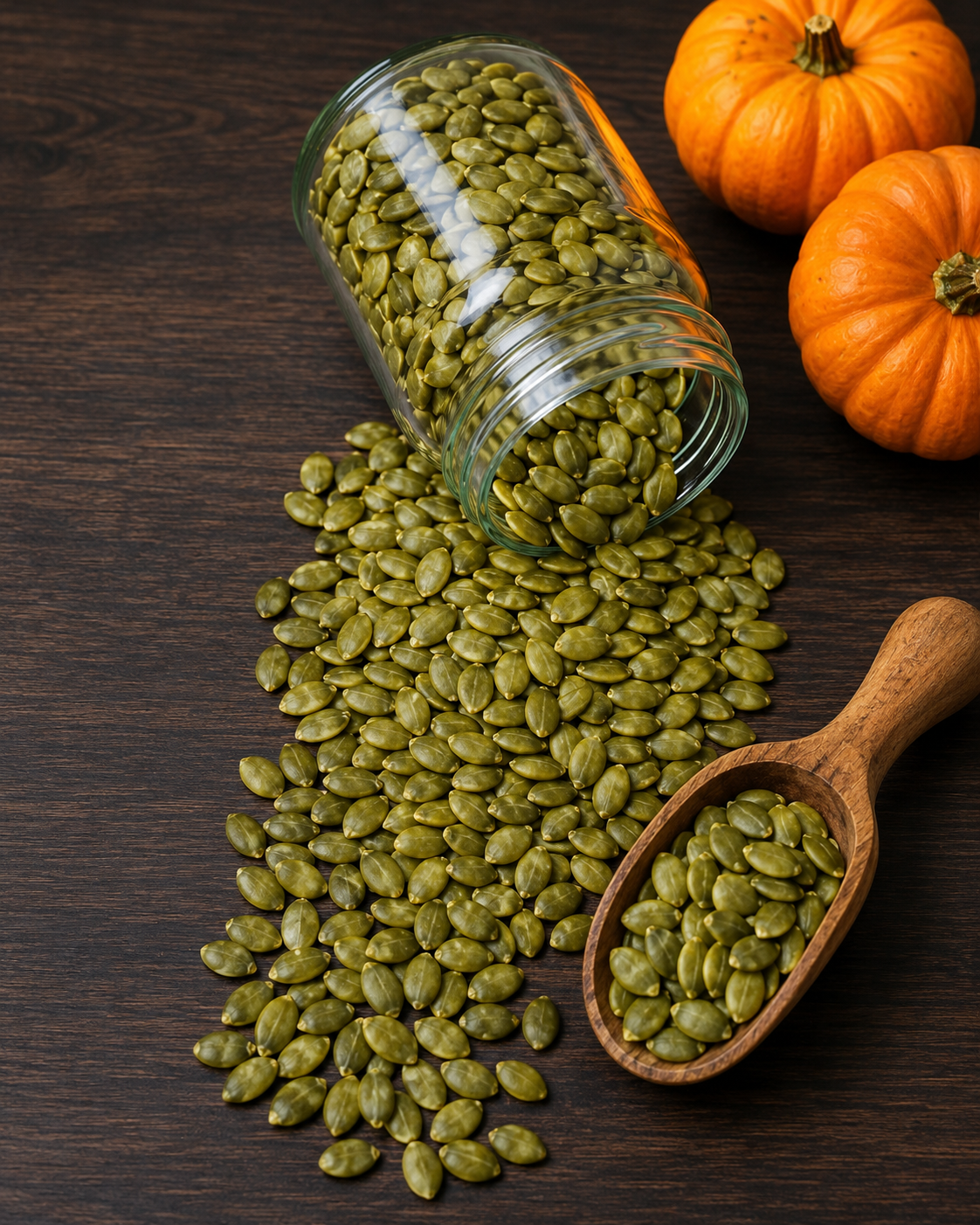
For men over 50, a handful of green pumpkin seeds can suddenly look much more interesting when nighttime bathroom trips begin interrupting sleep.
You may have heard claims that pumpkin seeds can:
Shrink an enlarged prostate.
Restore strong urine flow.
Stop nighttime urination.
Repair prostate damage.
And some viral posts go even further, claiming that eating them the “correct way” produces dramatic results in only two hours.
Pumpkin seeds are genuinely nutritious, and researchers have studied pumpkin seed preparations for urinary symptoms associated with benign prostatic hyperplasia, or BPH.
But there’s an important difference between:
“May modestly support urinary symptoms over time”
and
“Repairs your prostate within two hours.”
The second claim isn’t supported by good clinical evidence.
So rather than throwing pumpkin seeds away as another internet myth, let’s look at what researchers have actually found—and the mistakes that can turn a potentially useful food into another disappointing home remedy.
🎃 Why Pumpkin Seeds Attract So Much Attention
Pumpkin seeds—also called pepitas when the green kernel is removed from its shell—are nutrient-dense foods.
They contain:
- Protein
- Unsaturated fats
- Fiber
- Magnesium
- Zinc
- Iron
- Plant sterols
- Various antioxidant compounds
These nutrients make pumpkin seeds a reasonable addition to an overall healthy diet.
But their connection with prostate health comes from something more specific.
Pumpkin seed preparations have been investigated in men experiencing lower urinary tract symptoms, or LUTS, often associated with BPH.
That makes the subject more interesting than many completely unsupported “prostate superfood” claims.
👨 What Actually Happens to the Prostate After 50?
The prostate sits underneath the bladder and surrounds part of the urethra—the tube that carries urine out of the body.
With age, prostate tissue commonly grows.
When this noncancerous enlargement becomes significant, it’s called:
Benign Prostatic Hyperplasia — BPH
BPH is extremely common in older men. NIDDK estimates it affects roughly 29% to 33% of men age 65 and older and identifies it as the most common prostate problem in men over 50.
As prostate tissue enlarges, it may interfere with urine passing through the urethra.
That’s when symptoms can begin.
🚽 Symptoms Men Often Ignore
BPH may cause:
- Difficulty starting urination
- Weak urine stream
- Interrupted stream
- Dribbling
- Frequent urination
- Sudden urgency
- Nighttime urination
- Difficulty completely emptying the bladder
Importantly, symptom severity doesn’t always match prostate size. A relatively small enlargement can sometimes cause significant urinary problems, while a larger prostate may cause surprisingly few symptoms.
That’s why looking at a picture of a “damaged prostate” doesn’t tell you what’s actually happening inside your body.
🌙 The Nighttime Bathroom Cycle
For many men, nocturia becomes the symptom they hate most.
You fall asleep.
Two hours later:
Bathroom.
Back to sleep.
Then:
Bathroom again.
By morning, you’ve technically spent seven hours in bed but feel as though you slept four.
BPH can contribute to nocturia, but nighttime urination isn’t automatically caused by the prostate.
Fluid intake, caffeine, alcohol, bladder disorders, sleep problems, diabetes, medications and other health conditions may also contribute.
That distinction matters because no amount of pumpkin seeds can correct every possible cause.
🎃 What Research Says About Pumpkin Seeds
Here’s where the story becomes interesting.
A large randomized study followed 1,431 men ages 50–80 with lower urinary tract symptoms associated with BPH.
Participants received pumpkin seeds, pumpkin seed extract or placebo for 12 months.
Men eating pumpkin seeds showed some improvement in symptom scores compared with placebo, although results involving the extract were less convincing.
Notice the timeline:
12 months.
Not two hours.
Another randomized clinical trial compared pumpkin seed oil with tamsulosin, a medication commonly used for BPH symptoms.
Both groups experienced symptom improvement over the study period, but tamsulosin produced greater symptom-score improvement than pumpkin seed oil. Researchers concluded that more studies were needed to confirm pumpkin seed oil’s role.
Again:
The study followed participants for months.
Not one afternoon.
📊 Viral Claim vs. What Research Actually Supports
| Viral Claim | Better Interpretation |
| Pumpkin seeds repair a damaged prostate | Not established |
| They shrink the prostate within 2 hours | No evidence |
| They immediately restore urine flow | Not established |
| Pumpkin seed preparations may improve some BPH symptoms | Possibly |
| Benefits may take weeks or months | More consistent with available studies |
| Pumpkin seeds replace BPH medication | No |
| Pumpkin seeds are nutritious | Yes |
| Severe urinary obstruction requires medical evaluation | Yes |
🚫 Mistake #1: Expecting Results in Two Hours
This is probably the biggest mistake created by viral posts.
Eating pumpkin seeds at 6 PM and expecting your prostate to dramatically shrink by 8 PM isn’t realistic.
The human studies investigating pumpkin seed preparations measured outcomes over much longer periods.
One pilot study involving 60 men using a specific pumpkin seed extract reported improvement in symptoms after 8 and 12 weeks.
That doesn’t prove ordinary grocery-store pumpkin seeds will produce identical results.
But it demonstrates something important:
When researchers look for potential benefits, they don’t expect prostate tissue to transform within two hours.
What to do instead
Treat pumpkin seeds as food.
Use them consistently as part of a nutritious diet if you enjoy them.
Don’t repeatedly increase the dose because nothing happened after breakfast.
🚫 Mistake #2: Turning Pumpkin Seeds Into a Salt Bomb
Plain pumpkin seeds can be nutritious.
But many packaged versions are heavily salted.
That changes the nutritional picture.
A better choice for regular use is:
Unsalted or lightly salted pumpkin seeds.
You can add flavor using:
- Paprika
- Garlic powder
- Black pepper
- Cumin
- Cinnamon
- Herbs
instead of relying on large amounts of salt.
This is especially useful for people also trying to manage blood pressure or cardiovascular risk.
🚫 Mistake #3: Eating Huge Amounts Because “More Must Work Better”
A small serving of pumpkin seeds is one thing.
Eating half a bag every evening because you want faster prostate results is another.
Pumpkin seeds are calorie-dense.
They also contain substantial fat, although much of it is unsaturated.
So you don’t need enormous quantities.
A practical food portion might be approximately:
1 ounce — about a small handful.
That’s enough to add pumpkin seeds to your diet without turning them into an entire meal.
And remember:
Clinical trials involving specific extracts or oils cannot automatically be translated into:
“Eat unlimited whole pumpkin seeds.”
Food, oil and concentrated extracts aren’t interchangeable.
🥄 Raw or Roasted?
This question appears constantly.
There’s no convincing evidence that men must eat pumpkin seeds exclusively raw to obtain prostate benefits.
Both raw and roasted pumpkin seeds can be nutritious.
The bigger considerations are:
Added salt
Choose unsalted or lightly salted.
Added oils
Avoid versions drenched in unnecessary added fats.
Added sugar
Some flavored seed mixes contain surprising amounts.
Portion size
A small handful is usually enough as a food serving.
You don’t need a secret preparation technique.
🔥 Does Roasting Destroy Everything?
No.
Roasting changes foods chemically to some degree, but it doesn’t transform pumpkin seeds into nutritionally useless objects.
If lightly roasted seeds taste better and make it easier for you to include them consistently, that’s perfectly reasonable.
The viral idea that one small preparation mistake “wipes out every prostate benefit” isn’t supported.
🥗 A Better Way to Eat Pumpkin Seeds
Instead of treating them like pills, use them as part of meals.
For example:
Breakfast
Oatmeal
Berries
Plain yogurt
1–2 tablespoons pumpkin seeds
Lunch
Large vegetable salad
Beans or chicken
Olive oil and lemon dressing
Pumpkin seeds sprinkled on top
Snack
Fruit with a small handful of unsalted pumpkin seeds.
Dinner
Fish
Roasted vegetables
Whole grain or beans
This creates something much more valuable than a “prostate hack”:
A sustainable dietary pattern.
🥣 Pumpkin Seed Yogurt Bowl
Here’s an easy recipe.
Ingredients
- ¾ cup plain Greek yogurt
- 1–2 tablespoons unsalted pumpkin seeds
- ½ cup berries
- 1 tablespoon oats
- Small sprinkle of cinnamon
Preparation
Add yogurt to a bowl.
Top with berries, oats and pumpkin seeds.
Finish with cinnamon.
That’s it.
No strange powder.
No enormous supplement dose.
No promise that your prostate will shrink before lunch.
🥗 Savory Pumpkin Seed Salad
For men who don’t enjoy sweet breakfasts:
You will need
- Mixed greens
- Tomato
- Cucumber
- Bell pepper
- Chickpeas
- 1–2 tablespoons pumpkin seeds
- Olive oil
- Lemon
- Black pepper
Combine everything and serve.
This provides:
- Fiber
- Protein
- Healthy fats
- Vegetables
- Minerals
while keeping pumpkin seeds in their appropriate role:
food.
💊 Whole Seeds vs. Pumpkin Seed Oil
This is another important distinction.
The research isn’t all based on ordinary whole pumpkin seeds.
Some trials have investigated:
Pumpkin seed oil
Others investigated:
Pumpkin seed extracts.
And some investigated:
Whole pumpkin seeds.
These preparations contain different concentrations of compounds.
You cannot take a clinical trial using 360 mg of a particular oil preparation and assume that eating a random quantity of whole seeds produces exactly the same effect.
That’s why supplement headlines can be misleading.
🧪 What About Zinc?
Pumpkin seeds contain zinc, and zinc plays many important roles in the body.
The prostate also contains relatively high concentrations of zinc.
That has led to another viral leap:
“More zinc = healthier prostate.”
Biology isn’t that simple.
You need adequate zinc.
You don’t necessarily need massive supplemental doses.
High-dose zinc supplements can cause problems, including interference with copper status.
So don’t automatically combine:
Pumpkin seeds + zinc pills + prostate supplements + multivitamins
without checking how much you’re actually consuming.
🌿 What About Plant Sterols?
Pumpkin seeds contain phytosterols—plant compounds structurally similar to cholesterol.
They’re one reason researchers have been interested in pumpkin seed preparations.
But again, identifying an interesting compound doesn’t establish a cure.
Human outcomes matter more than laboratory theories.
And the human evidence currently suggests:
Potential symptom support—not prostate regeneration.
🚽 What Actually Helps BPH Symptoms?
For mild symptoms, NIDDK lists several lifestyle strategies that may help.
These include drinking fewer liquids before bedtime, limiting caffeine and alcohol, staying physically active, emptying the bladder completely and avoiding holding urine for long periods.
Those simple measures may sometimes have a more noticeable effect on nighttime bathroom trips than changing how you roast your pumpkin seeds.
💧 Change WHEN You Drink
This is particularly useful for nocturia.
Don’t deliberately dehydrate yourself during the day.
Instead, if medically appropriate:
Drink normally earlier.
Then avoid unnecessarily large amounts of fluid close to bedtime.
Imagine someone eating pumpkin seeds at 8 PM for prostate health while drinking:
- Two glasses of water
- A large tea
- Another glass before bed
and wondering why they’re urinating all night.
The seeds aren’t necessarily the problem.
The fluid timing may be.
☕ Evening Coffee Can Work Against You
Caffeine may worsen urinary frequency and urgency in some people.
So if you’re waking several times overnight, consider your afternoon and evening:
- Coffee
- Tea
- Cola
- Energy drinks
before blaming your prostate entirely.
Moving caffeine earlier may be worth trying.
🍺 Alcohol Can Matter Too
Alcohol can contribute to increased urine production and disrupt sleep.
For someone already experiencing nocturia, that combination isn’t helpful.
Again, pumpkin seeds can’t cancel out every other behavior.
🚽 Empty Your Bladder Before Bed
Take enough time to urinate comfortably before sleeping.
Some men may find a second attempt shortly afterward helpful.
Don’t strain.
If you repeatedly feel that your bladder remains significantly full after urinating, however, that’s something to discuss with a healthcare professional.
Incomplete emptying can occur with BPH and other urinary problems.
💊 Medication Can Be Much More Effective
Men sometimes avoid treatment because they’re worried that starting medication means they’ll take it forever.
But significant BPH has effective treatment options.
NIDDK lists medications including:
Alpha blockers
These relax muscles around the bladder neck and prostate, making urination easier.
5-alpha reductase inhibitors
These can stop prostate growth or help shrink the prostate over time.
PDE-5 inhibitors
These may improve urinary symptoms in selected patients.
Combination therapy can also be appropriate for some men.
Pumpkin seeds shouldn’t replace prescribed treatment when treatment is needed.
🔧 What If Medication Isn’t Enough?
Modern BPH care isn’t limited to pills.
There are minimally invasive procedures designed to widen the urinary pathway or reduce obstructing prostate tissue.
Surgery may be considered when symptoms are severe, medication doesn’t help or complications develop.
That’s important because untreated obstruction can eventually become more than an inconvenience.
⚠️ Why Ignoring BPH Can Be a Mistake
Significant BPH can interfere with bladder emptying.
Potential complications include:
- Urinary retention
- Urinary tract infections
- Bladder stones
- Blood in the urine
- Kidney problems
NIDDK notes that prolonged obstruction can eventually weaken the bladder’s ability to empty effectively.
No amount of pumpkin seeds should delay evaluation when symptoms are progressing.
🚨 The Symptom You Should Never Treat With Seeds
If you suddenly:
Cannot urinate at all
seek medical help immediately.
Acute urinary retention can cause severe lower abdominal pain and requires prompt bladder drainage to relieve pain and help protect the bladder and kidneys.
Don’t drink pumpkin seed tea.
Don’t take another supplement.
Don’t wait until morning.
Get medical care.
🩺 Other Warning Signs
Seek prompt medical attention if urinary symptoms occur with:
- Fever
- Chills
- Significant urinary pain
- Blood in the urine
- Severe lower abdominal pain
These symptoms can indicate problems beyond ordinary BPH.
🔍 Don’t Assume Every Urinary Problem Is BPH
Weak flow and nighttime urination can occur with an enlarged prostate.
But similar symptoms may also occur with:
- Bladder disorders
- Urinary infection
- Prostatitis
- Urethral narrowing
- Urinary retention
- Other prostate conditions
NIDDK notes that different prostate conditions can produce similar symptoms, which is why evaluation and testing may be necessary.
🧪 What Might Your Doctor Check?
Depending on your symptoms and history, evaluation may involve:
- Medical history
- Medication review
- Physical examination
- Urinalysis
- PSA when appropriate
- Urine-flow testing
- Post-void residual measurement
- Ultrasound
- Other urologic testing
Not everyone needs every test.
The goal is determining why you’re having symptoms before deciding how to treat them.
🧊 What About “Prostate Inflammation”?
Another internet mistake is calling every enlarged prostate an inflamed prostate.
BPH and prostatitis aren’t the same thing.
BPH is noncancerous prostate enlargement.
Prostatitis involves inflammation and, in some cases, bacterial infection.
The treatments differ.
Bacterial prostatitis may require antibiotics; eating pumpkin seeds won’t eliminate a bacterial prostate infection.
🥜 Are Pumpkin Seeds Safe Every Day?
For many healthy adults, ordinary food portions can fit easily into a balanced diet.
But consider:
Calories
Seeds are energy-dense.
Salt
Choose unsalted when possible.
Allergies
Seed allergies are possible.
Digestive tolerance
Large quantities can cause digestive discomfort in some people.
Supplements
Concentrated extracts aren’t nutritionally equivalent to whole foods.
If you take multiple medications or have chronic medical conditions, discuss concentrated herbal or seed extracts with your healthcare professional.
📋 The 3-Mistake Rule
If you remember nothing else from this article, remember this:
Mistake 1 — Expecting a two-hour prostate transformation
Available human research looked at weeks or months, not hours.
Mistake 2 — Choosing heavily salted, highly processed seeds
Use plain, unsalted or lightly salted pumpkin seeds when possible.
Mistake 3 — Treating pumpkin seeds like medication
They may be a useful food and have interesting research behind them, but they don’t replace diagnosis or proven BPH treatment.
🌙 A Simple Night Routine for Men With BPH Symptoms
Try making your routine more systematic.
Earlier in the day
Stay appropriately hydrated.
Afternoon
Move caffeine earlier if possible.
Dinner
Avoid excessive alcohol and very large drinks.
Evening
Don’t repeatedly drink large amounts of fluid.
Before bed
Empty your bladder comfortably.
Overnight
Use a nightlight and keep the route to the bathroom clear.
During the week
Track how many times you wake to urinate.
If the pattern remains troublesome, bring that information to your healthcare professional.
📊 A Simple Bladder Diary
Try recording symptoms for three days.
| Time | Drink | Urination | Symptoms |
| 7 AM | Coffee | Normal | None |
| 10 AM | Water | Normal | Mild urgency |
| 6 PM | Water | Weak stream | Hesitation |
| 9 PM | Tea | — | — |
| 12 AM | — | Bathroom | Weak stream |
| 3 AM | — | Bathroom | Urgency |
This can reveal patterns that are impossible to see from memory alone.
❓ Frequently Asked Questions
Do pumpkin seeds shrink an enlarged prostate?
There isn’t strong evidence that ordinary pumpkin seeds reliably shrink prostate size. Some clinical studies suggest pumpkin seed preparations may improve certain urinary symptoms.
Can pumpkin seeds work within two hours?
There’s no good evidence supporting a dramatic prostate benefit within two hours. Clinical studies showing potential symptom improvement followed men for weeks or months.
How many pumpkin seeds should I eat?
There isn’t a clinically established amount of ordinary pumpkin seeds that treats BPH. As food, a small handful or a few tablespoons can fit into many healthy diets.
Should pumpkin seeds be raw?
They don’t have to be. Plain raw or lightly roasted seeds can both be reasonable food choices.
Should I soak pumpkin seeds overnight?
You can if you prefer their texture that way, but there’s no established evidence that soaking suddenly activates a prostate treatment.
Is pumpkin seed oil better than whole seeds?
They’re different products. Some research has specifically investigated pumpkin seed oil, but that doesn’t establish it as superior for every person.
Can pumpkin seeds stop nighttime urination?
Some studies have reported improvement in lower urinary tract symptoms, including nocturia, but pumpkin seeds aren’t a guaranteed treatment. Nocturia also has many causes besides BPH.
Can I replace tamsulosin with pumpkin seeds?
Don’t do this independently. In one randomized trial, both pumpkin seed oil and tamsulosin groups improved, but tamsulosin produced greater symptom-score improvement.
Does BPH mean prostate cancer?
No. BPH is a noncancerous enlargement of the prostate. However, urinary symptoms can overlap with other prostate and urinary conditions, so persistent symptoms should be evaluated.
When should I worry about weak urine flow?
Persistent or worsening weak flow, difficulty starting, incomplete emptying, frequent nocturia or urinary urgency should be discussed with a healthcare professional.
What if I cannot urinate?
Seek immediate medical attention. Acute urinary retention requires prompt treatment.
⭐ The Bottom Line
Pumpkin seeds are much more interesting than the typical miracle-food headline suggests—but for a different reason.
They are nutrient-dense foods, and human clinical research has found signals that pumpkin seed or pumpkin seed oil preparations may modestly improve lower urinary tract symptoms in some men with BPH.
That’s worth studying.
But the evidence does not show that pumpkin seeds repair a “damaged” prostate, shrink it dramatically, restore urine flow, or reverse BPH within two hours.
The better strategy after 50 is straightforward:
Enjoy a reasonable portion of plain pumpkin seeds if you like them.
Avoid turning them into a heavily salted snack.
Don’t take enormous quantities expecting faster results.
Pay attention to evening fluids, caffeine and alcohol.
Track persistent urinary symptoms.
And if your stream is becoming weaker, you’re repeatedly waking at night, or you’re struggling to empty your bladder, get evaluated.
Pumpkin seeds can stay on the menu.
They just shouldn’t replace the urologist when your prostate is telling you something is wrong.