
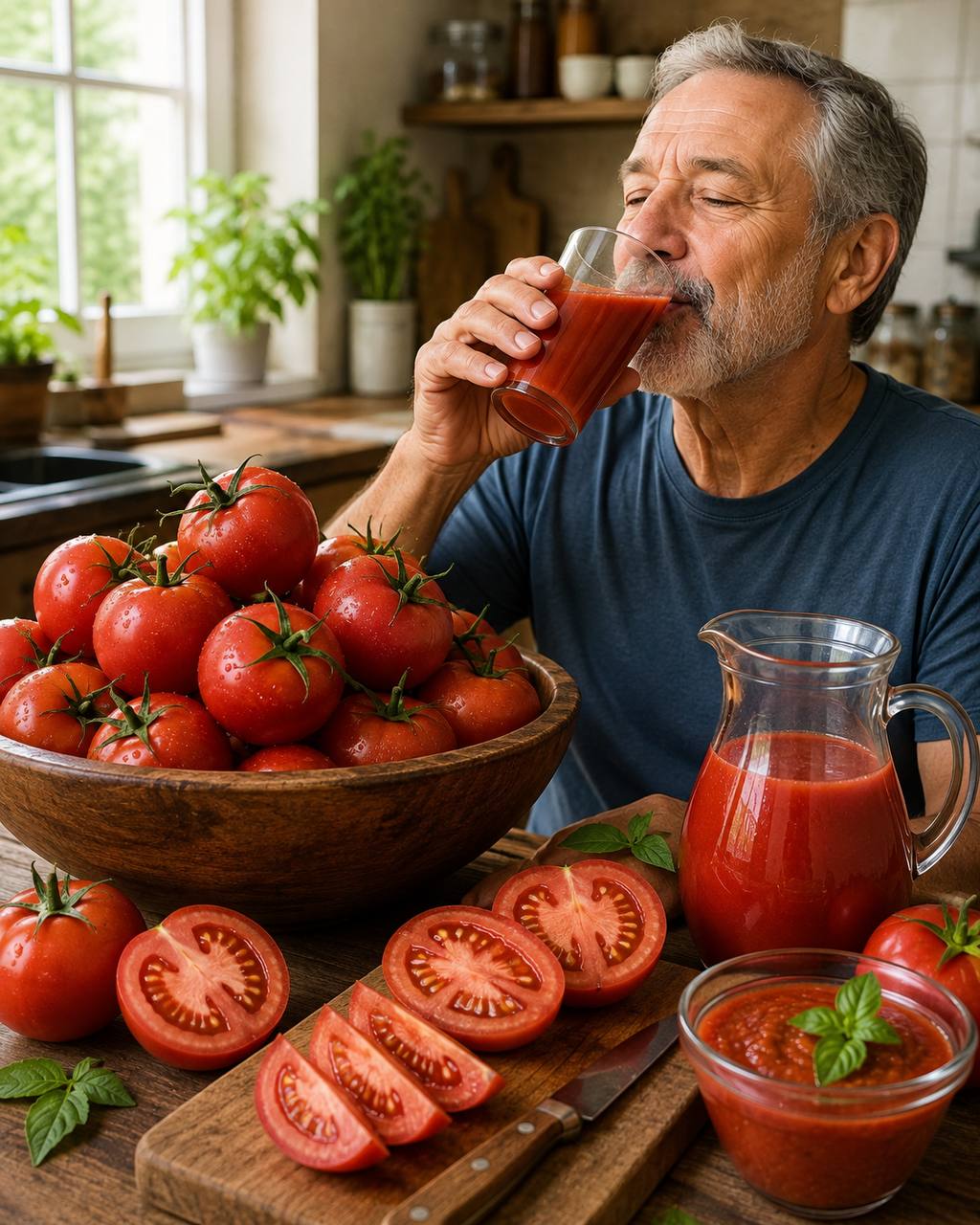
After age 60, prostate health becomes a more frequent topic of conversation for many men. The prostate gland naturally enlarges with age in most men, a condition known as benign prostatic hyperplasia (BPH). At the same time, the risk of prostate cancer rises steadily. While genetics, age, and family history play major roles, diet is one of the factors men can influence.
Tomatoes and the red pigment they contain—lycopene—have received significant attention in this area. Lycopene is a powerful antioxidant that belongs to the carotenoid family. It is especially concentrated in tomatoes and tomato products, and research over several decades has explored whether higher intake is linked to better prostate outcomes.
This article examines what the evidence actually shows about tomatoes, lycopene, and prostate health after 60. It covers potential benefits, realistic limitations, the best ways to include tomatoes in the diet, and the broader lifestyle steps that matter most for men in this age group.
Prostate Changes After Age 60
The prostate is a small gland that sits below the bladder and surrounds the urethra. After age 50, and especially after 60, two issues become more common:
Benign prostatic hyperplasia (BPH)
Non-cancerous enlargement of the prostate. It can cause urinary symptoms such as frequent urination (especially at night), weak stream, difficulty starting urination, or the feeling of incomplete emptying. BPH is extremely common—by age 60, more than half of men have some degree of enlargement, and the percentage continues to rise with age.
Prostate cancer risk
Prostate cancer is one of the most common cancers in men. Risk increases significantly with age. Most cases grow slowly, but some are more aggressive. Regular screening discussions with a doctor (PSA testing and digital rectal exam when appropriate) remain important.
Diet cannot eliminate these risks, but certain dietary patterns are associated with better overall prostate health and may play a supportive role.
What Is Lycopene and Why Does It Matter?
Lycopene is the compound that gives tomatoes, watermelon, pink grapefruit, and a few other foods their red or pink color. It is a potent antioxidant that helps neutralize free radicals—unstable molecules that can damage cells over time.
Unlike some nutrients, lycopene is fat-soluble and is better absorbed when tomatoes are cooked and consumed with a small amount of fat (such as olive oil). Processed tomato products—tomato paste, sauce, puree, and canned tomatoes—often provide more bioavailable lycopene than raw tomatoes because heat breaks down cell walls and concentrates the nutrient.
Typical lycopene content (approximate):
- Fresh raw tomato: lower amount per serving
- Tomato paste or sauce: significantly higher concentration
- Cooked tomato dishes with oil: improved absorption
What the Research Shows About Lycopene and Prostate Health
The relationship between lycopene (and tomato intake) and prostate health has been studied extensively, with mixed but interesting findings.
Observational studies
Many large population studies have found that men with higher tomato or lycopene intake tend to have a lower risk of prostate cancer, particularly more aggressive forms. Some research has also linked higher lycopene levels in the blood to more favorable prostate outcomes.
Clinical and mechanistic research
Laboratory and some human studies suggest lycopene may:
- Reduce oxidative stress and inflammation in prostate tissue
- Influence cell growth and signaling pathways involved in cancer development
- Support antioxidant defenses in the body
Limitations of the evidence
Randomized controlled trials (the strongest form of evidence) have not consistently shown that lycopene supplements or high-tomato diets dramatically reduce prostate cancer incidence or treat existing disease. Results are often modest or mixed. Lycopene appears more promising as part of an overall healthy dietary pattern than as a standalone “treatment.”
Major health organizations generally view tomatoes and lycopene as beneficial components of a healthy diet, but they do not recommend lycopene supplements specifically for prostate cancer prevention based on current evidence.
In short: Regular consumption of tomato products is a reasonable, low-risk dietary habit that may offer modest protective associations for prostate health, especially when combined with other healthy behaviors. It is not a cure or guaranteed preventive measure.
Best Ways for Men Over 60 to Get Lycopene from Tomatoes
Absorption and practical intake matter more than simply eating a raw tomato occasionally.
Prioritize cooked and processed tomato products
- Tomato sauce or puree (homemade or low-sodium commercial)
- Tomato paste (stirred into soups, stews, or sauces)
- Cooked tomatoes with olive oil or another healthy fat
- Canned tomatoes (choose low-sodium when possible)
- Tomato-based soups and stews
Simple daily and weekly ideas
- Add tomato paste or sauce to vegetable soups and stews
- Make a simple tomato sauce with garlic, olive oil, and herbs to serve over fish, chicken, or whole grains
- Include cooked tomatoes in omelets or scrambled eggs
- Enjoy a Mediterranean-style meal with tomato sauce several times per week
- Use salsa (especially cooked versions) as a condiment
Pairing tips for better absorption Always include a source of fat—olive oil, avocado, nuts, or cheese—when eating tomato products. This significantly improves lycopene uptake.
How much is reasonable? There is no official daily requirement for lycopene. Many studies showing associations involved the equivalent of several servings of tomato products per week. Aiming for tomato-based dishes a few times per week is a practical target for most men.
Other Prostate-Supportive Dietary Patterns
Tomatoes work best as part of a broader approach:
- Emphasize vegetables, fruits, whole grains, and legumes
- Include fatty fish (salmon, sardines) for omega-3s
- Choose healthy fats such as olive oil, nuts, and avocado
- Limit excessive red and processed meats
- Maintain a healthy weight—obesity is linked to higher risk of aggressive prostate cancer and more severe BPH symptoms
- Stay adequately hydrated (while managing evening fluid intake if nighttime urination is an issue)
The Mediterranean-style eating pattern, which naturally includes tomatoes, olive oil, fish, and plenty of plants, is frequently associated with better overall health outcomes in older adults, including aspects of prostate health.
Lifestyle Factors That Matter Alongside Diet
Diet is only one piece. Other high-impact steps for men over 60 include:
- Regular physical activity, including both aerobic exercise and strength training
- Maintaining a healthy body weight
- Not smoking
- Limiting excessive alcohol
- Managing blood pressure, blood sugar, and cholesterol
- Discussing prostate screening appropriately with a physician based on individual risk
- Addressing urinary symptoms early rather than ignoring them
Pelvic floor exercises and certain medications can help manage BPH symptoms when needed—these should be guided by a doctor.
Safety and Practical Considerations
Tomato products are safe for the vast majority of men. A few points to keep in mind:
- Acidic tomato foods may bother people with significant acid reflux or GERD. Cooking and pairing with other foods can reduce this for some individuals.
- Canned tomato products can be high in sodium—choose low-sodium versions when possible, especially if blood pressure is a concern.
- Lycopene supplements are available, but whole-food sources are generally preferred. High-dose supplements have not shown clear superior benefits for prostate health in trials and are unnecessary for most people.
- Men on blood thinners or with specific medical conditions should discuss major diet changes with their doctor, although tomatoes themselves are rarely problematic.
Frequently Asked Questions
Can eating tomatoes shrink an enlarged prostate?
No. Tomatoes and lycopene are not a treatment for BPH. Medical evaluation and proven therapies are needed for bothersome urinary symptoms.
Is tomato juice a good source of lycopene?
Yes, especially if it is low-sodium and consumed with a bit of fat. However, some commercial juices are high in sodium or added sugar—read labels carefully.
Should men with prostate cancer eat more tomatoes?
A balanced diet that includes tomato products is reasonable for most men, but it should not replace medical treatment. Discuss diet with the oncology or urology team.
Are raw tomatoes useless for lycopene?
No, but cooked and processed forms generally provide more absorbable lycopene. Both can be part of a healthy diet.
How soon could someone notice benefits?
Dietary patterns influence long-term risk. There is no rapid “effect” on prostate size or cancer risk from tomatoes alone. Consistency over months and years is what matters.
Final Thoughts
For men over 60, tomatoes and the lycopene they contain represent a simple, enjoyable, and low-risk addition to a prostate-supportive lifestyle. The evidence suggests a modest association with better prostate outcomes, particularly when tomato products are consumed regularly as part of an overall healthy dietary pattern.
Cooked tomato dishes prepared with a little olive oil offer the most practical way to increase lycopene intake. Pair this habit with regular physical activity, weight management, not smoking, and appropriate medical follow-up for the greatest benefit.
No single food can guarantee prostate health. However, choosing nutrient-rich options like tomatoes several times a week is a positive step that supports both prostate and overall health as men age. If urinary symptoms are present or there is a family history of prostate cancer, a conversation with a physician remains the most important action.