
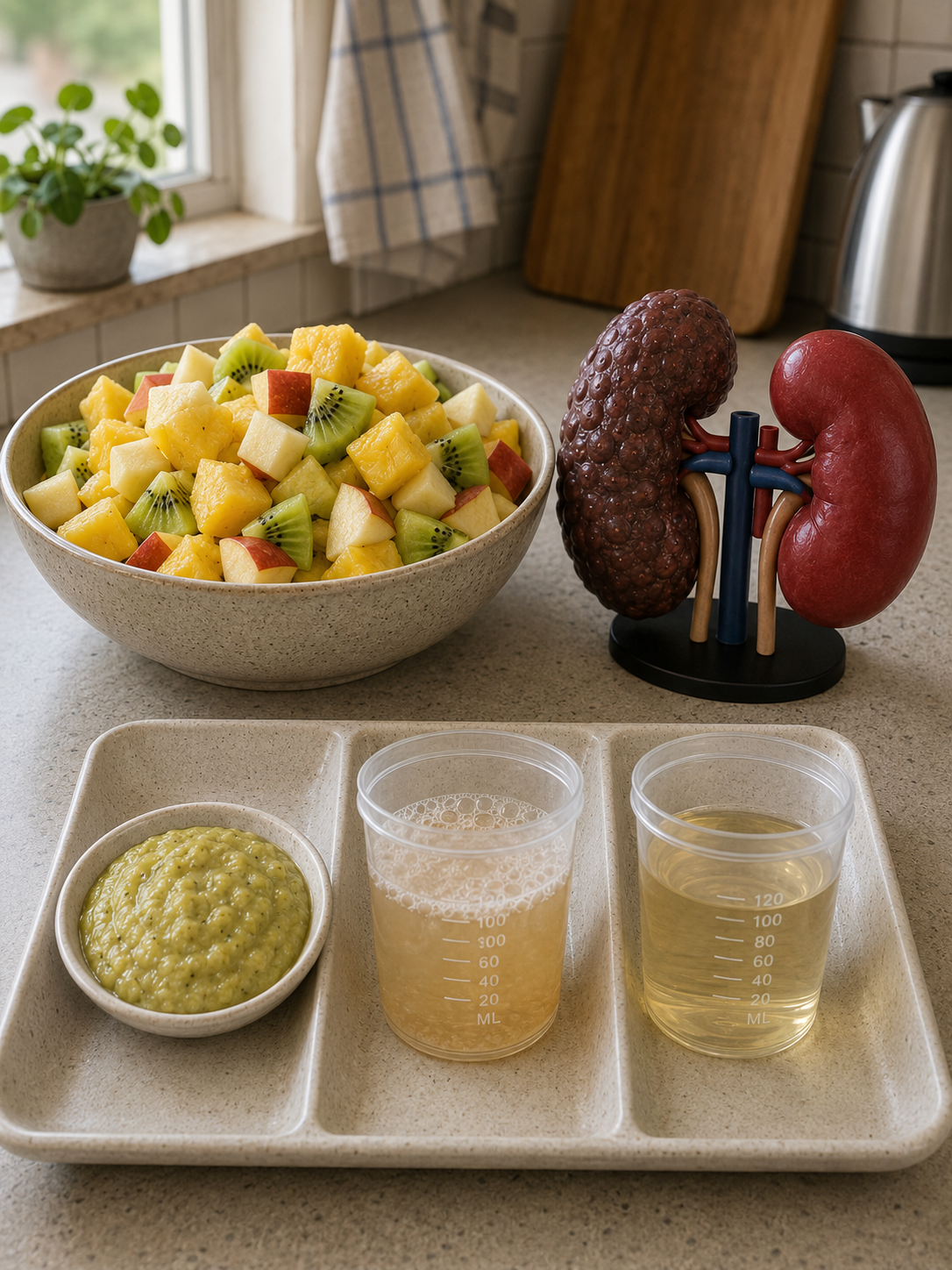
A high creatinine result can be unsettling—especially when you’re told it may be connected to how well your kidneys are filtering your blood.
That concern has fueled a popular online claim: eat three specific fruits and your kidneys will “flush out” excess creatinine.
It’s an appealing idea, but that’s not how kidney function works.
Creatinine is a waste product produced largely through normal muscle metabolism. Healthy kidneys filter creatinine from the blood and remove it through urine. When kidney filtration decreases, creatinine may rise—but kidney function isn’t the only thing that can influence the number.
Dehydration, intense exercise, muscle mass, certain medications, creatine supplements, and eating a large amount of cooked meat can sometimes affect creatinine measurements.
Most importantly, no fruit has been proven to force damaged kidneys to rapidly flush creatinine from the bloodstream.
Fruits such as berries, apples, and grapes can still fit into many kidney-conscious eating patterns because they provide fiber and beneficial plant compounds. But if you have chronic kidney disease (CKD), your ideal diet depends on your kidney function, potassium level, medications, diabetes status, and other laboratory results.
Here’s what those three fruits can realistically offer—and what you should do when creatinine is higher than expected.
Important: High creatinine is a laboratory finding, not a disease by itself. Don’t attempt to “flush” it out with large amounts of water, juice, fruit, supplements, or detox drinks. The underlying cause matters.
🧪 What Is Creatinine?
Your muscles use a compound called creatine as part of normal energy metabolism.
As creatine is broken down, the body produces creatinine.
Creatinine enters the bloodstream and is eventually filtered by the kidneys.
That’s why blood creatinine is commonly used as one piece of information for estimating kidney filtration.
But looking at creatinine alone doesn’t tell the entire story.
Healthcare professionals commonly use it to calculate an estimated glomerular filtration rate (eGFR).
eGFR provides a more useful estimate of how effectively the kidneys are filtering blood.
🩺 Does High Creatinine Automatically Mean Kidney Failure?
No.
A higher-than-expected creatinine result deserves attention, but one result doesn’t automatically mean kidney failure.
Creatinine can vary according to factors including:
- Age
- Muscle mass
- Hydration
- Recent strenuous exercise
- Diet
- Creatine supplementation
- Certain medications
- Acute illness
- Kidney filtration
That’s why healthcare professionals interpret creatinine alongside other information.
They may look at:
- eGFR
- Previous creatinine results
- Urine albumin
- Blood pressure
- Potassium
- Other blood tests
- Medications
- Medical history
The trend over time can be particularly informative.
🍎 Where Does Fruit Fit Into Kidney Health?
Fruit doesn’t directly extract creatinine from the blood.
Instead, appropriate fruit can contribute to an overall eating pattern that supports cardiovascular and metabolic health.
That’s important because conditions such as high blood pressure and diabetes are major contributors to chronic kidney disease.
But kidney nutrition isn’t one-size-fits-all.
Some people with CKD need to monitor potassium closely.
Others don’t.
That’s why a generic internet list of “kidney-cleansing fruits” can sometimes be misleading.
Let’s look at three fruits that can often fit comfortably into balanced diets.
🍎 Fruit #1: Apples
Apples are inexpensive, portable, and naturally low in sodium.
They also provide fiber, including pectin.
Fiber is useful for digestive health and can help make meals more satisfying.
Apples also provide various plant compounds concentrated partly in the skin.
Why they can be useful
Instead of eating:
- Candy
- Pastries
- Sugary desserts
an appropriate portion of whole apple can be a more nutrient-dense snack.
That doesn’t mean apple lowers creatinine directly.
Its value comes from being part of an overall healthy eating pattern.
Better choice
Choose whole apple more often than apple juice.
Juice removes much of the fiber and is much easier to consume quickly in large quantities.
🫐 Fruit #2: Berries
Blueberries, strawberries, raspberries, and blackberries contain colorful plant compounds including anthocyanins and other polyphenols.
They also provide fiber when eaten whole.
Berries are often promoted as “kidney detox foods.”
That’s an exaggeration.
Your kidneys don’t need berries to detox them.
However, berries can be a nutritious alternative to highly processed sweets and may fit well into many balanced eating plans.
Easy serving idea
Try a modest portion of berries with:
- Plain yogurt, if appropriate for your dietary needs
- Oatmeal
- A balanced breakfast
- A small snack
If you have advanced CKD, diabetes, or individualized potassium restrictions, follow the portion guidance provided by your clinician or renal dietitian.
🍇 Fruit #3: Grapes
Grapes contain water, fiber, and several plant compounds, including polyphenols.
Red and purple grapes are particularly known for compounds such as resveratrol.
Again, this doesn’t make grapes a creatinine-lowering medication.
Their practical benefit is simple:
They’re an enjoyable whole fruit that can replace some heavily processed snacks.
Watch the portion
Grapes are easy to eat by the handful.
For people managing diabetes or carbohydrate intake, portions still matter.
“Natural sugar” is still carbohydrate.
📊 3 Fruits: What They Offer vs. What They Don’t
| Fruit | What It Provides | What It Doesn’t Do |
| Apples | Fiber and plant compounds | Force kidneys to flush creatinine |
| Berries | Fiber and polyphenols | Repair damaged kidneys |
| Grapes | Plant compounds and hydration | Rapidly lower creatinine |
| Any fruit | Can contribute to a balanced diet | Replace medical kidney treatment |
The difference is important.
A food can be healthy without being a treatment for a laboratory abnormality.
🚫 The “Creatinine Flush” Myth
The kidneys aren’t plumbing pipes that can simply be rinsed clean.
If blood creatinine is elevated because kidney filtration has decreased, drinking a special juice or eating several servings of fruit won’t mechanically push creatinine through damaged filters.
Treatment depends on why kidney function changed.
For example, management might involve addressing:
- Dehydration
- Medication effects
- Uncontrolled diabetes
- High blood pressure
- Urinary obstruction
- Acute illness
- Kidney inflammation
- Chronic kidney disease
Different causes require very different responses.
That’s why identifying the cause matters much more than finding a supposed detox food.
💧 Should You Drink More Water to Lower Creatinine?
This requires nuance.
If you’re dehydrated, restoring appropriate hydration can be important.
But that doesn’t mean drinking enormous quantities of water is a kidney treatment.
People with certain forms of advanced kidney disease, heart failure, or fluid-retention problems may actually be instructed to limit fluids.
So don’t force gallons of water simply to make a laboratory number fall.
Follow your healthcare professional’s advice about fluid intake.
🥤 What About Kidney Detox Juice?
Be careful with this trend.
“Kidney cleanse” drinks commonly combine large quantities of:
- Fruit
- Coconut water
- Celery
- Spinach
- Beetroot
- Herbal extracts
For a healthy person, some of those ingredients may simply be foods.
For someone with impaired kidney function, however, highly concentrated drinks can deliver substantial amounts of potassium or other compounds very quickly.
Juicing also makes it easier to consume the equivalent of several servings of fruit at once.
A safer general principle
Whole foods in appropriate portions are usually more sensible than concentrated detox drinks.
⚠️ Potassium Changes the Conversation
People sometimes hear that bananas, oranges, avocado, or coconut water are “healthy for the kidneys.”
They’re nutritious foods.
But many are also relatively rich in potassium.
Healthy kidneys normally help regulate potassium.
When kidney function becomes substantially impaired, some people have difficulty removing excess potassium.
Too much potassium in the blood—called hyperkalemia—can become dangerous because potassium is involved in the heart’s electrical activity.
This does not mean everyone with CKD must avoid potassium-rich fruit.
Some people with CKD have normal potassium levels and don’t need severe restriction.
Your laboratory results should guide the decision.
🍌 Should You Stop Eating Bananas?
Not automatically.
This is a common mistake.
Someone sees a high creatinine result online, reads that potassium can be dangerous in kidney disease, and immediately eliminates bananas, tomatoes, potatoes, oranges, beans, and numerous other nutritious foods.
That may be unnecessary.
Potassium restriction should be individualized according to:
- Kidney function
- Blood potassium
- Medications
- Dialysis status
- Overall diet
Ask your healthcare professional or renal dietitian whether potassium restriction actually applies to you.
🍗 Protein and Creatinine: Another Important Detail
Creatinine comes from muscle metabolism, so people sometimes assume they should eliminate protein.
Again, the reality is more complicated.
People with kidney disease may need individualized protein intake.
Eating excessively high amounts of protein may not be appropriate for some people with CKD, while consuming too little can contribute to malnutrition and muscle loss—particularly in older adults.
People receiving dialysis often have different protein requirements than people with earlier-stage CKD.
Don’t make a dramatic low-protein diet change based solely on one creatinine result.
🧂 Sodium May Matter More Than a “Magic Fruit”
For many people concerned about kidney and cardiovascular health, paying attention to sodium is considerably more practical than searching for a creatinine-flushing fruit.
Large amounts of sodium are commonly found in:
- Processed meats
- Fast food
- Packaged soups
- Salty snacks
- Frozen meals
- Restaurant foods
- Certain sauces and seasonings
High sodium intake can make blood-pressure and fluid management more difficult.
And blood-pressure control is extremely important for kidney health.
👴 Why High Creatinine Matters More After 60
Kidney filtration commonly changes with age.
Older adults are also more likely to:
- Take multiple medications
- Have high blood pressure
- Live with diabetes
- Experience dehydration during illness
- Use supplements
- Have urinary obstruction
- Develop cardiovascular disease
All of those factors can influence kidney health.
Older adults should be particularly careful about suddenly starting “kidney detox” supplements.
Herbal doesn’t mean harmless.
Some products contain ingredients that can interact with medications or place additional stress on impaired kidneys.
💊 Review Your Medications and Supplements
If creatinine unexpectedly increases, tell your healthcare professional about everything you’re taking.
That includes:
- Prescription medications
- Over-the-counter pain relievers
- Vitamins
- Herbal products
- Protein powders
- Creatine supplements
- Workout products
Don’t stop prescribed medication on your own.
But a complete medication review can sometimes identify important contributors or medicines whose doses need adjustment when kidney function changes.
🚫 7 Mistakes to Avoid With High Creatinine
1. Trying to Flush It Out With Fruit
Fruit doesn’t mechanically clean creatinine from your bloodstream.
2. Drinking Gallons of Water
Appropriate hydration matters; excessive fluid isn’t automatically safer.
3. Starting a “Kidney Detox”
Concentrated supplements and herbal mixtures may create new risks.
4. Eating Unlimited Fruit Because It’s Healthy
Portions still matter, particularly with diabetes or potassium restrictions.
5. Eliminating All Protein
Protein requirements depend on your kidney status and overall health.
6. Focusing Only on Creatinine
eGFR, urine albumin, potassium, blood pressure, medical history, and trends provide important context.
7. Ignoring a Sudden Change
A rapid rise in creatinine can be more concerning than a stable value that’s been mildly abnormal for years.
🧪 Tests Worth Understanding
If kidney disease is suspected, your healthcare professional may use several tests.
Serum creatinine
Measures creatinine in the blood.
eGFR
Uses creatinine and other information to estimate kidney filtration.
Urine albumin-to-creatinine ratio (UACR)
Checks whether albumin, a blood protein, is leaking into urine.
Electrolytes
Tests such as potassium and sodium help show how well the body is maintaining important chemical balances.
These results together provide much more useful information than the appearance of urine or a detox recipe.
🚨 When Should You Seek Medical Care?
Contact a healthcare professional if you have an unexpectedly elevated creatinine result, particularly if it’s new or worsening.
Prompt medical attention becomes especially important if you develop symptoms such as:
- Very little or no urine
- Significant swelling
- Shortness of breath
- Persistent vomiting
- Severe weakness
- Confusion
- Blood in the urine
- Significant flank or back pain
- Rapid worsening of your general condition
These symptoms don’t prove kidney failure, but they deserve proper evaluation.
❤️ What Actually Supports Kidney Health?
Instead of trying to “flush” your kidneys, focus on protecting them.
Control blood pressure
High blood pressure can damage the kidneys over time.
Manage diabetes
Persistently elevated blood glucose can damage the kidney’s filtering structures.
Avoid unnecessary supplement megadoses
More isn’t always better.
Use pain medications carefully
Some medications can be problematic for kidney function, particularly in susceptible people or when used excessively.
Discuss regular use with your healthcare professional.
Eat a balanced diet
Emphasize minimally processed foods while following any individualized sodium, potassium, phosphorus, protein, or fluid recommendations.
Don’t smoke
Smoking harms blood vessels throughout the body, including those involved in kidney health.
Keep follow-up appointments
Kidney disease can progress without dramatic symptoms.
Laboratory trends help detect changes earlier.
🍽️ A Simple Kidney-Conscious Snack Idea
For someone without individualized restrictions, a simple snack could be:
Berry & Apple Bowl
Ingredients
- ½ small apple, chopped
- ¼–½ cup mixed berries
- Sprinkle of cinnamon
Mix and serve fresh.
There’s no need for:
- Detox powder
- Baking soda
- Herbal drops
- Apple cider vinegar
- “Kidney cleansing” supplements
It’s simply a nutritious whole-food snack.
And that’s exactly how it should be viewed.
❓ Frequently Asked Questions
What fruits lower creatinine quickly?
No fruit has been proven to rapidly lower creatinine by forcing the kidneys to flush it out.
If creatinine is elevated, identifying the reason is more important.
Are apples good for people with kidney disease?
Apples can fit into many kidney-conscious eating patterns. Individual requirements still depend on kidney function, potassium levels, diabetes, and the rest of the diet.
Are berries kidney-friendly?
Berries can be a nutritious whole-fruit choice for many people. Portion and individual laboratory results still matter.
Are grapes safe with high creatinine?
Grapes may fit into many diets, but high creatinine alone doesn’t determine which foods you should eat. People with diabetes should also consider carbohydrate portions.
Can drinking water lower creatinine?
If dehydration contributed to an elevated result, appropriate hydration may help address the underlying dehydration.
But forcing excessive water doesn’t repair impaired kidney filtration.
Is lemon water good for high creatinine?
Lemon water isn’t a treatment for elevated creatinine. It can simply be a flavored beverage for people who are allowed normal fluid intake.
Should I stop eating meat before a creatinine test?
Don’t alter your normal diet or medication routine specifically to manipulate a laboratory result unless your healthcare professional or testing instructions tell you to.
Can creatinine return to normal?
Sometimes.
If an elevation was caused by a reversible problem such as dehydration or another temporary condition, it may improve after the cause is addressed.
If chronic kidney disease is responsible, management focuses on protecting remaining kidney function and treating contributing conditions.
Is high creatinine dangerous?
The significance depends on the level, how quickly it changed, your eGFR, urine results, medical history, age, and other factors.
A healthcare professional should interpret the result in context.
⭐ The Bottom Line
Apples, berries, and grapes can be nutritious additions to many eating patterns and provide fiber and beneficial plant compounds.
But they do not force your kidneys to flush high creatinine.
There is no scientifically established “three-fruit kidney cleanse.”
When creatinine is elevated, the more useful questions are:
Has it changed from previous results? What is the eGFR? Is protein leaking into the urine? Is potassium normal? Could dehydration, medication, illness, or another condition be contributing?
Those answers tell you far more about kidney health than any viral detox recipe.
Enjoy fruit as food—not medicine.
And if your creatinine is unexpectedly high or rising, especially if you’re experiencing swelling, reduced urination, vomiting, shortness of breath, or significant weakness, get medical advice rather than trying to flush the number down at home.