
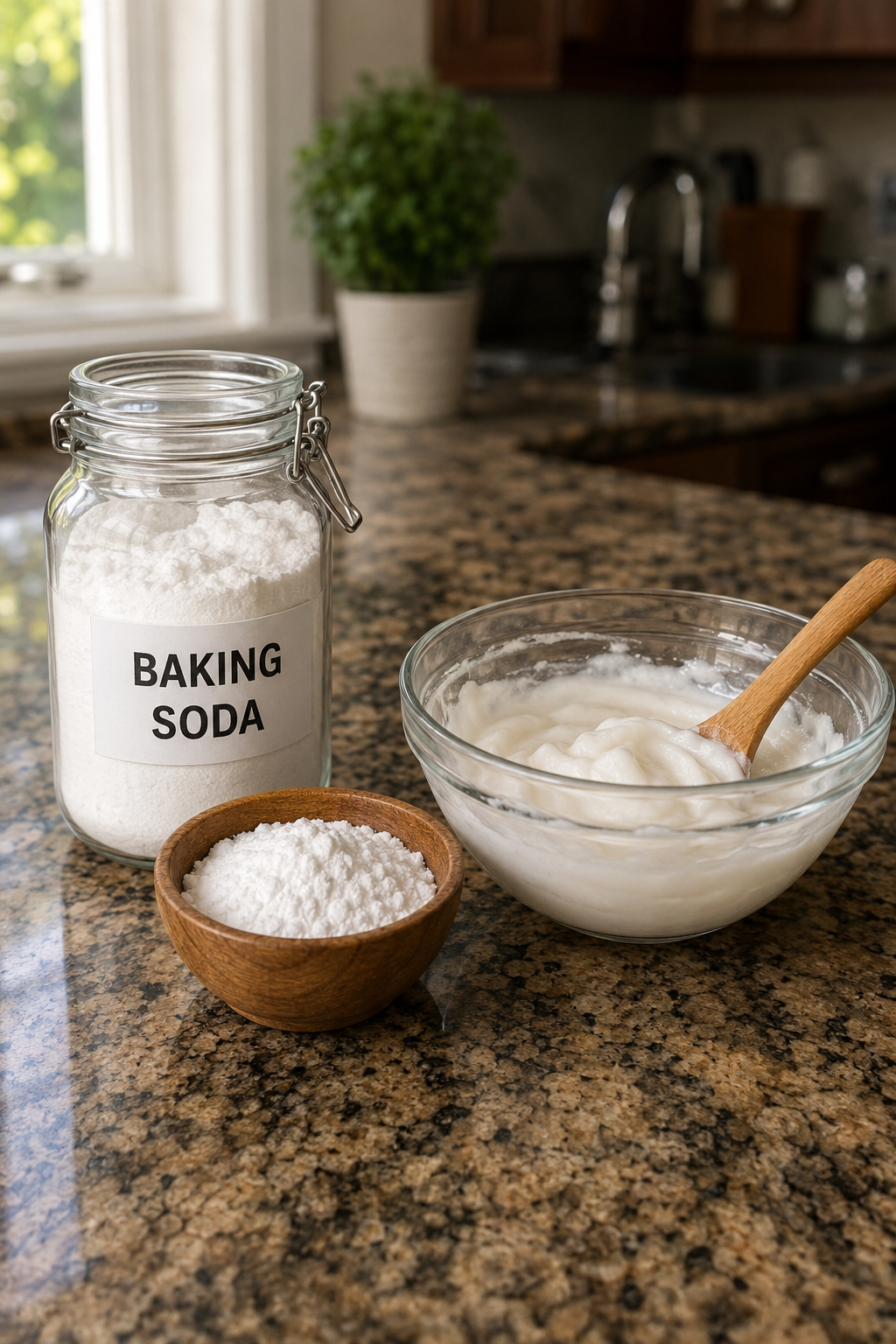
Baking soda is one of those kitchen ingredients that seems to appear in almost every homemade beauty remedy.
Mix it with water and social media promises that the simple white paste can:
Brighten dull skin.
Erase dark spots.
Smooth wrinkles.
Deep-clean pores.
Remove dead skin.
Make mature skin look years younger.
Baking soda—sodium bicarbonate—really can feel unusually smooth and clean after rinsing because it changes the surface environment of the skin and can act as a mild abrasive.
But for mature skin, that temporary “clean” feeling comes with an important downside:
Baking soda is alkaline, while healthy facial skin naturally maintains a mildly acidic surface. Repeatedly applying an alkaline paste can irritate the skin barrier, increase dryness, and make sensitive or aging skin feel worse rather than younger.
That matters particularly after 50, because skin naturally becomes thinner, drier, and more prone to irritation and water loss with age.
So baking soda deserves a much more careful look before it becomes part of a mature-skin routine.
🌿 Why Does Baking Soda Feel Like It Works?
Baking soda has a slightly gritty texture.
When mixed into a paste and rubbed over the skin, it can physically loosen surface flakes.
That may temporarily make skin feel:
Smoother.
Less oily.
Cleaner.
Brighter.
But those immediate effects can be misleading.
Removing surface oil and flakes doesn’t mean wrinkles have been repaired or pigmentation has disappeared.
And when skin becomes overly stripped, it may look tighter for a short period simply because it is dry.
Tighter does not necessarily mean healthier.
📊 Viral Claim vs. What Mature Skin Actually Needs
| Viral claim | More realistic interpretation |
| Baking soda erases wrinkles | No evidence |
| It permanently tightens loose skin | No |
| It removes age spots | Not established |
| It may remove some surface oil and flakes | Yes |
| It can irritate or dry facial skin | Yes |
| Mature skin is especially prone to dryness | Yes |
| Moisturizer can temporarily soften fine lines | Yes |
| Daily sunscreen helps prevent additional photoaging | Strong evidence |
| Retinoids can improve fine lines and texture | Better evidence, but irritation is possible |
The American Academy of Dermatology recommends starting an anti-aging routine with sun protection and moisturizer, rather than aggressively exfoliating aging skin.
🧪 The Problem Is Skin pH
Healthy skin isn’t neutral.
Its outer surface is mildly acidic.
That acidic environment supports normal barrier function and helps maintain the skin’s protective ecosystem.
Baking soda, by contrast, is alkaline.
Putting an alkaline paste on the face can temporarily alter the skin’s surface environment.
A single brief exposure may not create noticeable problems for everyone.
But repeated use—especially combined with scrubbing—can lead to:
Dryness.
Tightness.
Burning.
Redness.
Flaking.
Greater sensitivity.
For someone whose skin is already dry or reactive, that tradeoff makes little sense.
👩🦳 Why This Matters More After 50
Aging skin is different from younger skin.
AAD notes that during the 60s and 70s, skin becomes thinner and loses water more easily, contributing to increased dryness and irritation.
Similar changes may begin earlier during midlife.
That means mature skin generally benefits from:
Gentle cleansing.
Regular moisturizing.
Fewer irritating products.
Consistent sun protection.
Carefully selected active ingredients.
Repeated baking-soda scrubs move in almost the opposite direction.
🥄 The Common DIY Baking Soda Paste
The traditional recipe is extremely simple:
1 teaspoon baking soda
Enough water to form a thin paste
And that’s exactly where caution is needed.
If someone still chooses to experiment despite the irritation risk, it should not be treated as a daily facial mask or scrub.
Do not vigorously massage it into the skin.
Do not combine it with other irritating ingredients.
And stop immediately if you notice burning, stinging, redness, or persistent tightness.
AAD advises stopping non-prescription skin-care products that sting, burn, or tingle, because irritation can make signs of aging more noticeable.
For most mature faces, there are gentler ways to get the cosmetic result people are seeking.
🚫 Mistake #1: Mixing Baking Soda With Lemon
This is one of the most common homemade “age spot” recipes.
Baking soda.
Lemon juice.
Sometimes honey.
It sounds natural.
But adding lemon doesn’t transform baking soda into an anti-aging treatment.
Instead, you’re combining an alkaline abrasive with a highly acidic citrus ingredient.
That can make a sensitive face sting and become irritated.
And irritation can sometimes leave pigmentation looking more noticeable, particularly in people prone to post-inflammatory dark marks.
Skip the chemistry experiment.
🚫 Mistake #2: Scrubbing Until Skin Feels Squeaky Clean
“Squeaky clean” isn’t the goal for mature skin.
If your face feels extremely tight after washing, you’ve probably removed too much surface oil.
AAD recommends gentle, moisturizing cleansers for older adults with dry or irritated skin.
Your skin barrier needs lipids and moisture.
It does not need to feel stripped.
🚫 Mistake #3: Using Baking Soda Every Day
Repeated exposure increases the chance of dryness and irritation.
And irritation can make:
Fine lines.
Rough texture.
Redness.
Uneven tone.
look more obvious.
AAD specifically warns that using too many irritating anti-aging products can make skin appear older rather than younger.
More exfoliation isn’t automatically more anti-aging.
🚫 Mistake #4: Expecting It to Remove Wrinkles
Wrinkles develop because of changes involving:
Collagen.
Elastin.
Sun damage.
Facial movement.
Genetics.
Skin thickness.
Hormonal changes.
Lifestyle.
Baking soda doesn’t rebuild the dermal collagen network responsible for deeper wrinkles.
A temporary smooth feel after exfoliation is a surface effect.
It shouldn’t be confused with structural skin rejuvenation.
☀️ The Most Important Anti-Aging Product Is Much Less Exciting
If your goal is younger-looking skin after 50, one product consistently matters more than baking soda:
Sunscreen
AAD recommends broad-spectrum sunscreen with SPF 30 or higher as a foundation of anti-aging skin care.
Why?
Ultraviolet radiation contributes to:
Fine lines.
Wrinkles.
Uneven pigmentation.
Loss of elasticity.
Rough texture.
And skin cancer.
You can’t meaningfully talk about preventing premature aging while ignoring daily sun protection.
🧴 Moisturizer Can Make a Bigger Visible Difference
This may sound almost too simple.
But moisturizer can make mature skin look better quickly.
AAD notes that moisturizer can immediately plump some fine lines and recommends applying moisturizer consistently as part of an anti-aging routine.
Look for ingredients such as:
Ceramides.
Glycerin.
Hyaluronic acid.
Squalane.
Petrolatum where appropriate.
These help support hydration and reduce the rough, crepey appearance that dryness can create.
💧 A Better Two-Step DIY-Style Routine
If you like simple routines, keep the simplicity without the baking soda.
Step 1: Gentle Cleanse
Wash with lukewarm—not hot—water and a fragrance-free gentle cleanser.
Step 2: Moisturize While Slightly Damp
Apply a fragrance-free moisturizer while your skin still retains a little moisture.
AAD specifically notes that applying moisturizer to damp skin helps trap water and improve hydration.
That’s simple enough to feel like a home remedy.
But it actually supports the skin barrier.
✨ What About Fine Lines?
If the goal is genuinely reducing fine lines rather than temporarily smoothing surface flakes, retinoids have far stronger evidence than baking soda.
AAD explains that retinoids can improve skin-cell turnover, stimulate collagen, improve skin tone, and reduce fine lines and wrinkles.
But they aren’t appropriate for everyone.
Dry or sensitive skin can become irritated.
AAD recommends beginning with a lower-strength formula and introducing it slowly, often every other night initially.
Someone with significant redness, inflammation, or rosacea should get professional guidance before starting one.
🍊 What About Vitamin C?
Vitamin C is another ingredient used for:
Uneven tone.
Dark spots.
Photoaging.
AAD includes vitamin C among science-backed ingredients that may help reduce signs of skin aging and pigmentation.
That doesn’t mean everyone needs a complicated routine.
A simple morning routine could be:
Gentle cleanse.
Vitamin C if tolerated.
Moisturizer.
Broad-spectrum SPF 30+.
And the evening routine can remain simple.
🧽 Do You Need Exfoliation at All?
Some mature skin can benefit from gentle exfoliation.
But aggressive physical scrubbing usually isn’t necessary.
If you have rough texture, a dermatologist may recommend carefully selected products containing ingredients such as:
Lactic acid.
Glycolic acid.
Other mild exfoliating acids.
But even proven exfoliants can irritate when overused.
AAD repeatedly emphasizes introducing skin-care products gradually and stopping products that cause persistent irritation.
The skin isn’t a kitchen counter.
You don’t need to scrub harder to make it cleaner.
🌸 What About Age Spots?
Brown spots on mature skin can have several causes.
Many are related to years of sun exposure.
But not every dark spot is simply an “age spot.”
Some pigmented lesions should be evaluated.
If a spot is:
Growing.
Changing color.
Changing shape.
Bleeding.
Crusting.
Itching persistently.
Or clearly different from your other spots,
get it checked rather than repeatedly scrubbing it with baking soda.
No DIY paste should delay evaluation of a suspicious skin lesion.
🧴 Baking Soda vs. Better Mature-Skin Options
| Goal | Baking soda | Better approach |
| Dryness | May worsen it | Moisturizer |
| Fine lines | No proven repair | Moisturizer + retinoid if suitable |
| Sun damage prevention | No | SPF 30+ |
| Rough texture | Abrasive, irritating | Gentle targeted exfoliation |
| Dark spots | Not established | Sunscreen + appropriate active |
| Skin barrier | May disrupt | Ceramides/glycerin |
| Temporary oil removal | Yes | Gentle cleanser |
| Collagen support | No | Retinoids have better evidence |
🧼 A Simple Mature-Skin Morning Routine
You do not need ten steps.
Morning
Gentle cleanser or simply rinse if your skin is very dry.
Moisturizer.
Broad-spectrum SPF 30 or higher.
Optional vitamin C if your skin tolerates it.
AAD emphasizes that consistency matters more than piling multiple anti-aging products onto the skin at once.
🌙 A Simple Evening Routine
Evening
Gentle cleanser.
Moisturizer.
Optional retinoid if appropriate and tolerated.
That’s enough for many people.
Trying a different homemade mask every night makes it difficult to know what’s helping and what’s causing irritation.
🚫 8 Baking Soda Mistakes to Avoid
1. Using It Every Day
Repeated alkalinity and abrasion can be unnecessarily harsh.
2. Scrubbing Aggressively
Physical friction can worsen irritation.
3. Mixing It With Lemon
This adds another potential irritant without proven anti-aging benefit.
4. Mixing It With Vinegar
The fizz looks impressive but doesn’t equal better skin care.
5. Leaving It on for 20–30 Minutes
Longer exposure doesn’t mean better results.
6. Applying It to Rosacea, Eczema, or Already-Irritated Skin
These conditions need gentler care.
7. Assuming Burning Means It’s Working
AAD recommends stopping products that sting or burn unless a clinician has specifically advised otherwise.
8. Skipping Sunscreen While Chasing DIY Remedies
Sun protection has far more evidence for protecting mature skin.
🧪 Patch Testing Still Matters
Even products marketed as hypoallergenic can cause reactions.
AAD recommends testing a new product on a small area before using it more broadly, especially if your skin is sensitive.
For DIY mixtures, this is even more important because there isn’t a manufacturer controlling concentration, formulation, or stability.
If something causes:
Redness.
Itching.
Burning.
Swelling.
Persistent dryness.
stop using it.
👵 Why Mature Skin Often Looks “Dull”
Dull-looking skin isn’t necessarily dirty.
It may result from:
Dryness.
Surface-cell buildup.
Sun damage.
Reduced natural oil production.
Uneven pigmentation.
Slower cell turnover.
Smoking.
Poor sleep.
Environmental exposure.
Removing more oil with an alkaline paste may temporarily change texture without addressing the underlying issue.
Hydration and sun protection are usually better foundations.
🛁 Hot Water Can Be Another Hidden Problem
People sometimes blame their moisturizer when the real issue is very hot showers.
Hot water can remove natural oils and worsen dryness.
AAD recommends shorter bathing, warm rather than hot water, and gentle fragrance-free cleansing for older adults with dry skin.
Your face deserves the same gentleness.
💧 “Plumping” Isn’t the Same as Reversing Aging
A good moisturizer can make fine lines appear softer because hydrated skin becomes temporarily fuller.
That’s a genuine cosmetic benefit.
But it doesn’t mean the biological aging process has been reversed.
Similarly:
Baking soda making skin temporarily smoother doesn’t mean wrinkles were erased.
It’s useful to separate:
Appearance improvement
from
structural repair.
🚨 When You Should See a Dermatologist
Consider professional evaluation if you have:
Persistent facial redness.
Severe dryness or cracking.
New or changing pigmented spots.
Bleeding lesions.
A rash that won’t settle.
Chronic itching.
Significant acne appearing later in life.
Persistent sensitivity to multiple products.
A dermatologist can help determine whether the problem is simple dryness, rosacea, eczema, contact dermatitis, sun damage, or another condition.
❓ Frequently Asked Questions
Is baking soda safe for mature facial skin?
Occasional brief exposure may not cause a problem for everyone, but baking soda is alkaline and can be drying or irritating. Mature skin tends to become drier and more sensitive with age, so it generally isn’t an ideal routine facial treatment.
Can baking soda remove wrinkles?
No good evidence shows that baking soda reverses wrinkles or rebuilds collagen.
Does baking soda tighten skin?
It may temporarily make skin feel tight because it removes surface oils and moisture. That shouldn’t be confused with genuine skin tightening.
Can baking soda fade age spots?
There isn’t strong clinical evidence that it safely removes age-related pigmentation.
Can I combine baking soda and lemon?
That’s not recommended for sensitive or mature facial skin because both can contribute to irritation.
How often should I exfoliate after 50?
There is no universal schedule. Mature skin varies widely. If you exfoliate, start gently and less frequently, and stop if dryness, burning, or redness develops.
What is better than baking soda for mature dry skin?
A fragrance-free moisturizer, gentle cleanser, and daily broad-spectrum sunscreen are better-supported foundations.
What actually helps fine lines?
Moisturizers can temporarily plump fine lines, and retinoids have evidence for improving mild wrinkles and skin texture over time.
What SPF should mature skin use?
AAD recommends broad-spectrum sunscreen with an SPF of 30 or higher.
Should sensitive skin use retinol?
Possibly, but cautiously. AAD notes that people with significant dryness, redness, or inflammation may not be good candidates without professional guidance.
⭐ The Bottom Line
Baking soda is inexpensive.
Simple.
Familiar.
And it can make the skin feel temporarily smoother because it removes surface oil and flakes.
But those qualities don’t make it a good anti-aging treatment.
For mature skin, the bigger concern is that an alkaline, abrasive paste can strip and irritate a skin barrier that is already becoming thinner and more prone to dryness with age.
There is no strong evidence that baking soda:
Erases wrinkles.
Rebuilds collagen.
Tightens loose skin permanently.
Or removes age spots safely.
Instead, dermatologists recommend building anti-aging care around much gentler—and better-supported—basics:
A mild cleanser.
Regular moisturizer.
Broad-spectrum SPF 30+.
And carefully chosen ingredients such as retinoids when appropriate.
So if the goal is beautiful-looking skin after 50, don’t judge a remedy by how tight or squeaky-clean your face feels afterward.
Mature skin generally looks its best when its barrier is protected, hydrated, and defended from the sun—not scrubbed into submission with a kitchen paste.