
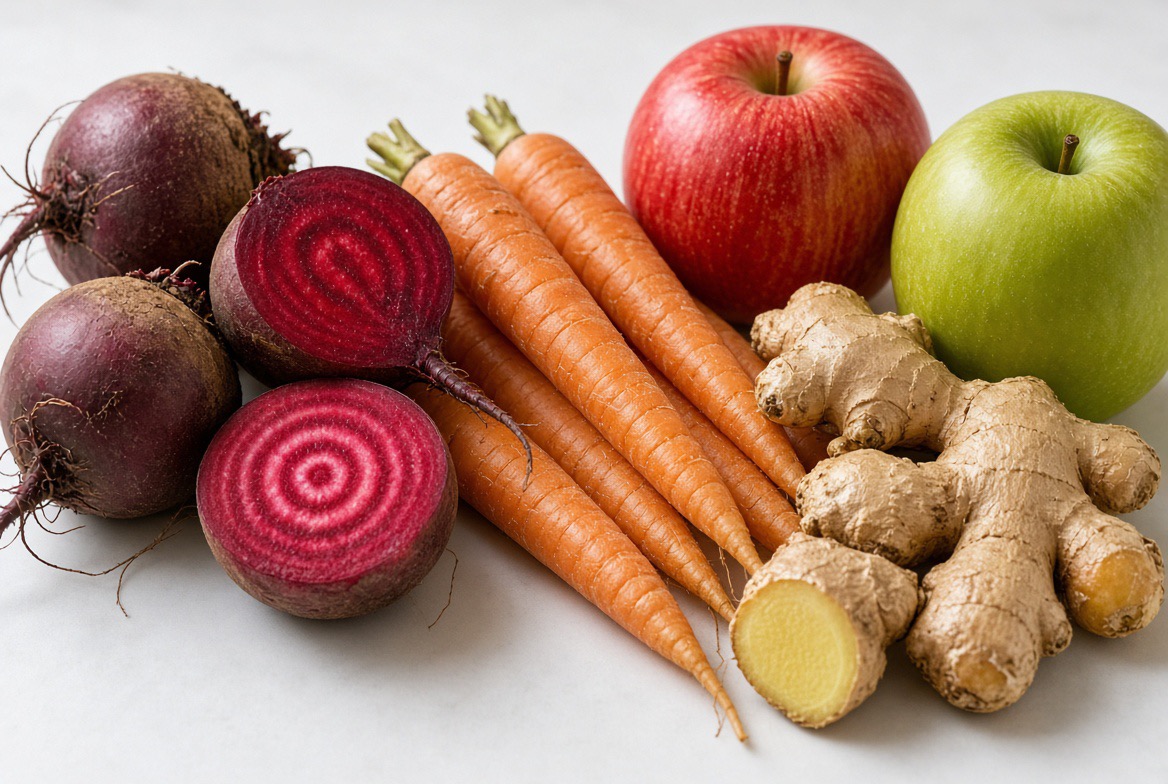
A bright red glass of beet, carrot, apple, and ginger juice has become a popular symbol of natural wellness.
The ingredients are colorful, easy to find, and packed with naturally occurring plant nutrients.
But across social media, this simple juice is often promoted with extraordinary promises.
Some viral posts claim:
“Drink this every morning and cleanse your liver!”
“Remove toxins from your kidneys naturally.”
“Lower blood pressure without medication.”
“Restore your eyesight and boost your energy.”
“Clean your arteries in just a few days.”
These claims sound impressive, but how much of the science actually supports them?
Beets provide dietary nitrates and betalain pigments. Carrots contain beta-carotene, apples provide plant compounds and fiber when eaten whole, and ginger contains gingerols and other biologically active substances.
Together, these ingredients create a flavorful, nutritious beverage.
However, there is no convincing clinical evidence that this juice combination cures diabetes, reverses kidney disease, repairs the liver, removes arterial plaque, or restores eyesight.
Understanding what it can—and cannot—do makes it easier to enjoy the drink without falling for exaggerated health promises.
Important Health Disclaimer
This article is for general educational purposes and does not replace medical advice.
Beet-carrot-apple-ginger juice is a food-based beverage, not a treatment for chronic disease.
People with diabetes, chronic kidney disease, recurrent calcium oxalate kidney stones, low blood pressure, or relevant medication concerns may need to modify the ingredients and portions.
Never stop prescribed medications because of a homemade juice.
1. The Beet-Carrot-Apple-Ginger Juice Recipe
This homemade version uses four simple ingredients.
Quick Recipe Details
Preparation time: 10 minutes
Total time: 10 minutes
Servings: 2 small glasses
Difficulty: Easy
Best served: Fresh and chilled
Ingredients
- 1 small cooked beet, peeled and chopped
- 1 medium carrot, washed and chopped
- ½ medium apple, cored and chopped
- ½ inch fresh ginger, peeled
- 1 cup cold drinking water
- Ice cubes, optional
- 1 teaspoon lemon juice, optional
No added sugar or honey is necessary.
How to Prepare
Step 1: Wash the produce.
Wash the carrot, apple, ginger, and optional lemon thoroughly under running water.
Step 2: Prepare the beet.
Use a fully cooked and cooled beet for easier blending.
Remove its skin and chop into small pieces.
Step 3: Cut the carrot and apple.
Chop the carrot and remove the apple core and seeds.
Step 4: Prepare the ginger.
Peel a small piece and slice it thinly.
Step 5: Blend the ingredients.
Place the beet, carrot, apple, ginger, and water in a blender.
Blend until smooth.
Step 6: Adjust the texture.
Add a little extra water if necessary.
Step 7: Serve.
Divide between two glasses and serve immediately.
For more fiber, keep the pulp instead of straining the mixture.
Technically, this creates a smoothie rather than an extracted juice, but it preserves more of the original ingredients.
2. What Makes This Drink Nutritious?
The ingredients provide different nutrients.
Beetroot contributes folate, potassium, dietary nitrates, and colorful plant pigments.
Carrots supply beta-carotene, which the body can convert into vitamin A.
Apples provide natural carbohydrates, plant compounds, and fiber when the pulp is retained.
Ginger adds flavor and contains substances such as gingerols.
These ingredients can complement a balanced diet.
But a nutritious food doesn’t automatically function as medicine.
Supporting normal nutrition and curing disease are two very different claims.
3. Beets: The Most Studied Ingredient
Beetroot is especially interesting because it contains dietary nitrate.
After consumption, the body can convert some nitrate into nitrite and nitric oxide.
Nitric oxide helps regulate blood-vessel function.
Scientists have studied nitrate-rich beetroot juice for potential effects on:
Blood pressure.
Exercise performance.
Blood-vessel function.
And oxygen use during activity.
Some clinical studies have reported modest benefits.
However, the nitrate concentration of ordinary homemade beet juice varies considerably.
A smoothie made with one small cooked beet cannot be assumed to provide the same dose as a standardized beetroot product used in research.
4. Can Beet Juice Lower Blood Pressure?
This is one of the more scientifically credible areas of beetroot research.
A 2024 systematic review and meta-analysis examined 11 randomized clinical trials involving 349 adults with hypertension.
Researchers found an average reduction of approximately 5.3 mmHg in clinic-measured systolic blood pressure among people receiving nitrate-rich beetroot juice.
However, the certainty of evidence was low.
The same review did not find a significant overall effect on diastolic blood pressure or 24-hour blood-pressure measurements.
This suggests a possible modest effect under certain conditions.
It does not establish beetroot juice as a replacement for blood-pressure medication.
And it does not prove that the beet-carrot-apple-ginger combination has the same effect.
5. Carrots: A Source of Beta-Carotene
Carrots contain beta-carotene, an orange plant pigment.
The body can convert beta-carotene into vitamin A.
Vitamin A contributes to normal vision, immune function, and other essential processes.
However, eating carrots or drinking carrot juice does not automatically improve eyesight beyond normal vision.
Carrots cannot:
Remove cataracts.
Reverse glaucoma.
Repair retinal damage.
Correct nearsightedness.
Or eliminate the need for glasses.
They are nutritious vegetables, not vision-restoring medicine.
6. Do Carrots Improve Night Vision?
Vitamin A is important for normal vision in low-light conditions.
A serious vitamin A deficiency can affect night vision.
Correcting a deficiency may improve deficiency-related symptoms.
But consuming additional beta-carotene does not give someone with adequate vitamin A superhuman night vision.
This is an example of a real nutritional benefit becoming exaggerated online.
7. Apples: Sweetness and Fiber
Apples help balance the earthy flavor of beets and the spicy taste of ginger.
They contain natural carbohydrates and various plant compounds.
Whole apples also provide dietary fiber, particularly when the peel is included.
Fiber supports normal digestion and helps increase fullness after meals.
However, extracted apple juice contains considerably less fiber than whole apples.
The CDC recommends choosing whole fruits over fruit juices because intact fruit retains fiber and is generally more filling.
That’s why using half an apple in a blended drink can be more practical than adding several cups of bottled apple juice.
8. Ginger: Flavor and Scientific Interest
Ginger has a long culinary history.
It contains naturally occurring compounds including gingerols and shogaols.
Researchers have studied ginger for several potential health effects.
According to the NIH’s National Center for Complementary and Integrative Health, ginger may help certain types of nausea, although evidence varies according to the condition.
Ginger supplements have also been investigated for osteoarthritis symptoms and other health concerns.
But most clinical studies used measured supplement preparations rather than small amounts added to a homemade juice.
A little ginger can make this recipe delicious.
It does not transform the beverage into a cure.
9. Does This Juice Detoxify the Liver?
No convincing clinical evidence demonstrates that beet-carrot-apple-ginger juice detoxifies the liver or reverses liver disease.
The liver already performs important metabolic functions.
It processes nutrients, medications, and many substances that enter the body.
A balanced diet helps support overall health.
But the liver doesn’t need a special homemade juice to begin removing waste.
Claims that this drink can reverse fatty liver disease, cirrhosis, or hepatitis are not supported by human clinical evidence.
10. Can It Cleanse the Kidneys?
The same distinction applies to kidney health.
Your kidneys naturally filter waste products from the blood.
Adequate hydration supports normal body functions.
But drinking vegetable juice does not regenerate damaged kidney filters.
It does not reliably lower elevated creatinine.
And it cannot replace dialysis or prescribed kidney treatment.
Some concentrated juices may actually be unsuitable for people with advanced kidney disease because they contain significant potassium.
The National Kidney Foundation advises people with reduced kidney function to review juicing plans with their kidney doctor or dietitian.
11. What About Kidney Stones?
Beets naturally contain oxalates.
For people who form calcium oxalate kidney stones, dietary oxalate can be relevant.
A large daily beet-juice routine may therefore be inappropriate for certain individuals.
The National Kidney Foundation explains that people with recurrent calcium oxalate stones and high urinary oxalate may need to limit some high-oxalate foods, including beets.
However, not everyone needs a strict low-oxalate diet.
Adequate dietary calcium, sodium moderation, and an individualized stone-prevention plan are also important.
12. Can This Juice Lower Cholesterol?
There is no convincing evidence that this four-ingredient juice eliminates high cholesterol.
Cholesterol management involves more than antioxidant-rich beverages.
Strategies with stronger evidence include:
Reducing excessive saturated fat.
Increasing soluble fiber.
Choosing unsaturated fats.
Being physically active.
Managing diabetes.
Avoiding smoking.
And using prescribed cholesterol-lowering medications when indicated.
Apples provide fiber when eaten whole or blended with the pulp.
But drinking a small smoothie isn’t equivalent to treating elevated LDL cholesterol.
13. Does It Clean Blocked Arteries?
No.
Arterial plaque cannot be flushed away through drinking juice.
Atherosclerosis involves the accumulation of cholesterol-rich material and inflammatory changes in arterial walls.
Although dietary nitrates may influence blood-vessel function, this does not mean beetroot dissolves plaque.
Treating cardiovascular disease requires an individualized medical approach.
14. Can the Juice Improve Energy?
This claim needs careful interpretation.
The apple, carrot, and beet provide carbohydrates, which the body uses for energy.
The drink also provides fluid.
Someone who hasn’t eaten or drunk enough may feel better after consuming an appropriate snack and beverage.
Beetroot nitrate has also been studied for certain exercise-performance outcomes.
However, there is no convincing evidence that this juice cures chronic fatigue.
Persistent exhaustion can be caused by:
Anemia.
Sleep disorders.
Thyroid problems.
Diabetes.
Medication effects.
Infections.
Heart or lung conditions.
And other medical problems.
A juice recipe cannot identify or treat all these causes.
15. What About Inflammation?
Beets contain betalain pigments and other plant compounds.
Ginger contains substances that have demonstrated biological activity in laboratory research.
Some of these compounds have been studied for potential effects on inflammatory pathways.
However, laboratory anti-inflammatory activity doesn’t automatically translate into clinical benefits.
There is no convincing evidence that this juice combination cures arthritis, autoimmune disease, or chronic inflammatory conditions.
16. Can It Help With Weight Loss?
Replacing high-calorie, sugar-sweetened beverages with a smaller unsweetened drink may reduce calorie intake.
But beet-carrot-apple-ginger juice is not a special fat-burning formula.
Weight management depends on overall eating patterns, activity, sleep, medications, and other factors.
Adding several glasses of fruit and vegetable juice to an existing diet may increase calorie intake rather than reduce it.
Portion size matters.
17. Viral Claims vs. Scientific Reality
| Popular claim | What science supports |
| Contains plant nutrients | Yes |
| Provides natural carbohydrates | Yes |
| Supplies beta-carotene | Yes |
| Contains dietary nitrates | Yes |
| Can contribute fluid intake | Yes |
| Beetroot nitrate may modestly affect blood pressure | Some evidence |
| Ginger may help certain types of nausea | Some evidence |
| The juice cures diabetes | No |
| The juice reverses kidney disease | No |
| The juice detoxifies the liver | Not established |
| The mixture repairs eyesight | No |
| The drink removes arterial plaque | No |
| The juice eliminates arthritis | No |
| The drink burns belly fat | Not established |
18. Juice vs. Smoothie: Which Is Better?
This is an important practical question.
A juice extractor removes much of the pulp and fiber.
A blender processes the whole ingredients.
If you keep the pulp, more of the original fiber remains.
The CDC recommends choosing whole fruits over juice because whole fruit provides fiber and promotes fullness.
For general nutrition, a blended drink can be a useful choice.
However, eating the individual fruits and vegetables remains an excellent option.
You do not need to juice produce to receive its nutritional benefits.
19. Is This Drink Suitable for People With Diabetes?
It may fit into some diabetes meal plans, but portions matter.
Beets, carrots, and apples contain carbohydrates.
When blended together, their carbohydrates contribute to the total amount consumed.
The American Diabetes Association emphasizes that fruit carbohydrates should be included in meal planning.
For people with diabetes, consider:
Using a smaller serving.
Keeping the pulp.
Avoiding added honey or sugar.
Reducing the amount of apple if necessary.
Monitoring individual glucose responses as recommended.
And pairing the drink with an appropriate balanced meal.
This recipe does not replace diabetes medication.
20. Is It Safe for People With Low Blood Pressure?
Beetroot juice has shown modest blood-pressure-lowering effects in some trials.
For someone who already experiences low blood pressure or takes blood-pressure-lowering medication, concentrated nitrate-rich products may require caution.
Ordinary dietary servings are different from standardized nitrate supplements.
However, anyone experiencing dizziness, fainting, or unusual blood-pressure changes should discuss the situation with a healthcare professional.
21. Is Ginger Safe With Medication?
Ginger is commonly used in food.
However, concentrated ginger supplements may interact with certain medications.
Extra caution may be necessary for people using blood-thinning medications or multiple prescriptions.
Ginger can also cause:
Heartburn.
Abdominal discomfort.
Diarrhea.
And mouth or throat irritation.
The NIH’s NCCIH recommends discussing herbal products with healthcare professionals when taking medication.
22. Why Beet Juice Can Turn Urine Pink or Red
Some people notice red or pink urine after consuming beets.
This phenomenon is called beeturia.
It occurs because beet pigments may pass into urine.
It is often harmless.
However, blood in urine can look similar.
If red urine occurs without a clear dietary explanation, persists, or is accompanied by pain or other symptoms, seek medical evaluation.
Do not assume every episode is caused by beetroot.
23. Should You Drink It Every Morning?
There is no established clinical requirement to consume this particular juice every day.
For many healthy adults, a modest serving can be part of a varied diet.
But no research demonstrates that drinking it every morning produces guaranteed improvements in kidney function, cholesterol, vision, or immunity.
Your body benefits from dietary variety.
Rotate different vegetables and fruits rather than relying on one recipe.
And continue drinking plain water as your main hydration beverage.
24. Three Ways to Customize the Recipe
Lower-Sugar Vegetable-Focused Version
Use:
- ½ small cooked beet
- ½ cucumber
- ½ carrot
- ¼ apple
- 1 cup water
- A small slice of ginger
This version uses less fruit and more water.
It still contains carbohydrates, so individual portion needs matter.
Mild Ginger Version
Use:
- ½ small cooked beet
- ½ carrot
- ½ apple
- ¼ inch ginger
- 1 cup water
This variation is less spicy.
Citrus Beet and Carrot Blend
Use:
- ½ small cooked beet
- 1 small carrot
- Juice of ¼ lemon
- 1 cup water
This version has a brighter, less sweet taste.
None of these versions is a medical treatment.
25. Ten Common Juice Mistakes
1. Expecting the drink to cure chronic diseases.
Nutritious ingredients are not equivalent to medications.
2. Adding excessive honey or sugar.
The apple and vegetables already provide natural sweetness.
3. Drinking enormous portions.
Juicing can make it easier to consume large quantities of carbohydrates and certain minerals.
4. Straining away all the pulp.
This removes much of the fiber.
5. Ignoring potassium restrictions.
People with advanced kidney disease may need individualized limits.
6. Drinking large amounts of beet juice with recurrent kidney stones.
Beetroot contains oxalates.
7. Assuming all red juices improve circulation.
Color alone does not establish cardiovascular benefit.
8. Replacing prescribed medication.
The beverage cannot replace diabetes, cholesterol, or blood-pressure treatment.
9. Ignoring unexplained fatigue.
Persistent fatigue deserves proper evaluation.
10. Believing more ingredients produce stronger medical effects.
Adding additional herbs does not guarantee safety or effectiveness.
26. A Practical Seven-Day Healthy Eating Routine
Instead of using this juice as a detox, build a sustainable routine.
Day 1: Enjoy a modest glass of the blended beet-carrot-apple-ginger recipe.
Day 2: Eat a whole apple as a snack.
Day 3: Add cooked carrots or another vegetable to lunch.
Day 4: Replace a sugary beverage with plain water.
Day 5: Include fiber-rich foods such as oats, beans, or vegetables.
Day 6: Enjoy roasted beets as a side dish if appropriate for your health.
Day 7: Review your overall eating pattern and continue the habits that work best.
The goal is balanced nutrition—not a dramatic cleanse.
27. When to Seek Medical Advice
Consult a healthcare professional if you have:
Persistent fatigue.
Elevated blood pressure.
Abnormal kidney tests.
Unexplained blood-glucose changes.
Frequent dizziness.
Recurring kidney stones.
Or medication-related concerns.
Seek urgent medical care for chest pain, severe shortness of breath, stroke-like symptoms, or severe sudden weakness.
Do not use a homemade juice to delay emergency treatment.
Frequently Asked Questions
Is beet-carrot-apple-ginger juice healthy?
It can be a nutritious beverage when consumed in reasonable portions. It provides carbohydrates, plant compounds, and some vitamins and minerals.
What are the main benefits?
The drink can contribute fluid, beta-carotene, and other plant nutrients. Beetroot nitrate has shown modest blood-pressure effects in some studies, but those findings cannot be directly applied to every homemade recipe.
Can it cleanse the liver?
There is no convincing clinical evidence that it detoxifies the liver or reverses liver disease.
Can it improve kidney function?
It has not been shown to repair damaged kidneys or reverse chronic kidney disease.
Can it improve eyesight?
Carrots provide beta-carotene, which can support normal vitamin A nutrition, but the drink cannot treat cataracts, glaucoma, or refractive errors.
Does it lower cholesterol?
The combination is not a proven cholesterol-lowering treatment.
Can it cure diabetes?
No. It contains carbohydrates and should be included in diabetes meal planning.
Is it good for high blood pressure?
Nitrate-rich beetroot juice has shown modest systolic blood-pressure effects in some studies, but this homemade drink is not a substitute for prescribed treatment.
Can it help with fatigue?
It provides some carbohydrate energy and fluid, but it does not treat persistent or unexplained fatigue.
Is it safe for kidney stones?
People prone to calcium oxalate stones may need to moderate beetroot intake and discuss concentrated juice routines with their healthcare professional.
Should I strain the juice?
Keeping the pulp retains more fiber. For general nutrition, that is often preferable.
Can I add lemon?
Yes. Lemon adds flavor without requiring extra sugar.
Can I drink it on an empty stomach?
There is no established special health advantage to taking it on an empty stomach. People with reflux or sensitive digestion may prefer consuming it with food.
Can older adults enjoy this drink?
Many can, but individual conditions—including kidney disease, diabetes, and medication use—may require adjustments.
Final Thoughts: Nutritious Recipe or Overhyped Cure?
Beet-carrot-apple-ginger juice deserves attention for its nutritional value—not for exaggerated medical promises.
Each ingredient contributes something different.
Beets: Dietary nitrates and colorful plant compounds.
Carrots: Beta-carotene and other nutrients.
Apples: Natural sweetness, plant compounds, and fiber when the pulp is retained.
Ginger: Distinctive flavor and biologically active compounds.
Research on nitrate-rich beetroot juice suggests possible modest benefits for systolic blood pressure.
Ginger also has evidence for certain types of nausea.
But there is no convincing clinical evidence that combining these four foods can cure diabetes, cleanse damaged kidneys, repair eyesight, reverse liver disease, or clear blocked arteries.
For better long-term health, focus on:
Balanced meals.
Whole fruits and vegetables.
Appropriate hydration.
Regular physical activity.
Blood-pressure and blood-glucose management.
And prescribed medical care when necessary.
The takeaway is simple:
Enjoy this colorful drink as part of a balanced diet—but don’t mistake a nutritious recipe for a miracle cure.
Health reminder: This beverage is not a treatment for kidney disease, diabetes, cardiovascular disease, or other chronic conditions. Seek individualized advice if you have relevant dietary restrictions or take prescription medication.