
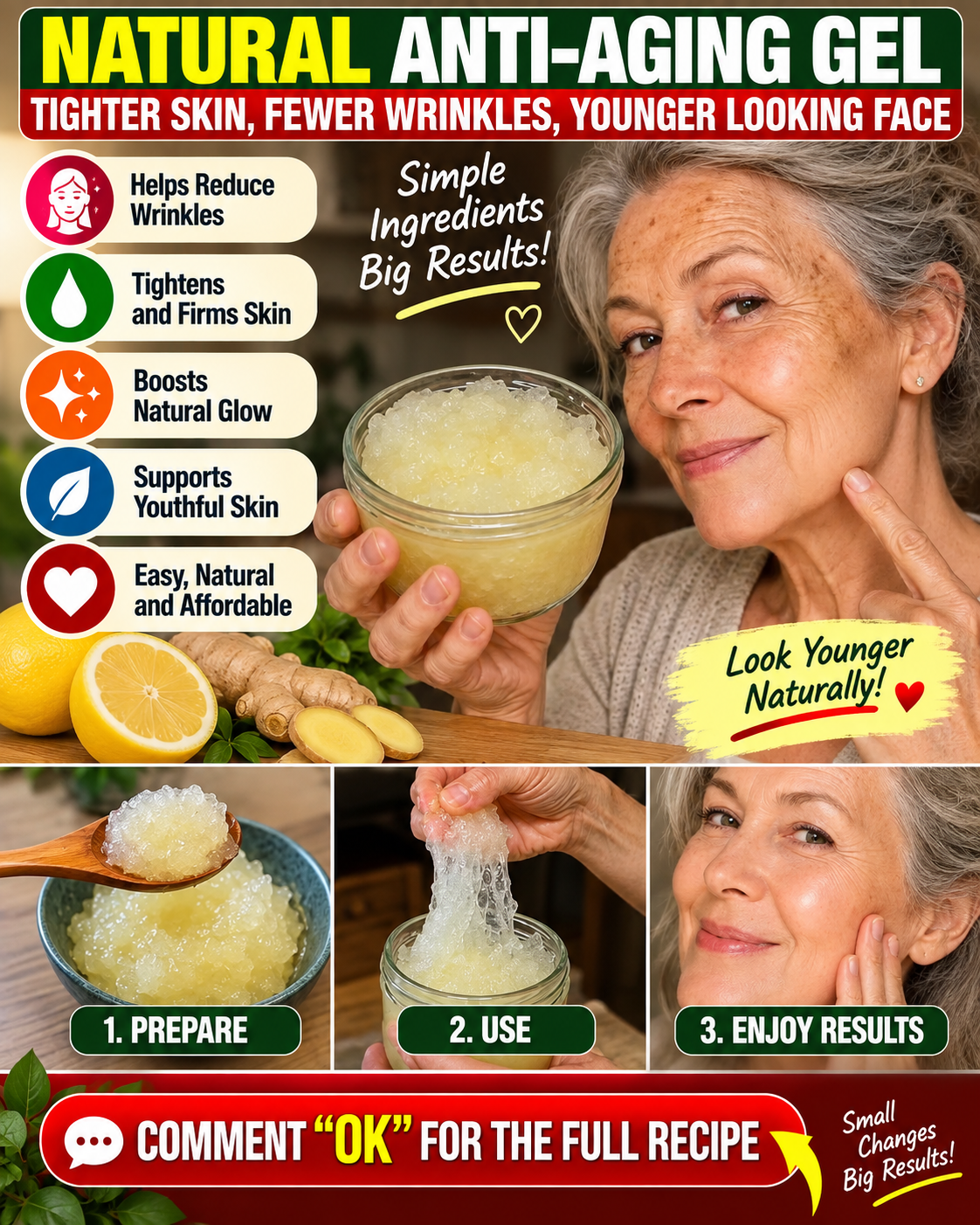
Mature skin often starts asking for something different.
A moisturizer that felt perfectly adequate years ago may suddenly disappear into the skin, leaving the face feeling tight again an hour later. Fine lines may look deeper when the skin is dry, and the cheeks, neck, and hands may feel rougher or more fragile.
This is normal: as skin ages, it tends to become thinner and lose water more easily. The American Academy of Dermatology (AAD) notes that dryness and irritation become especially common in the 60s and 70s.
A simple moisturizing gel can make mature skin feel softer and temporarily make fine lines less noticeable by improving hydration.
But there is an important distinction:
Hydrating mature skin is realistic. Erasing wrinkles, rebuilding lost facial volume, or “lifting” sagging skin overnight is not.
AAD notes that even skin-firming creams generally produce subtle results at best, while moisturizers can temporarily plump the skin and make fine lines less noticeable.
⚠️ Important Safety Note
This article is for general educational purposes and is not a substitute for individualized advice from a dermatologist or healthcare professional.
“Natural” does not automatically mean gentle, hypoallergenic, or safe for every skin type.
Always patch-test a new product first. Stop using it if you develop persistent burning, swelling, itching, blistering, or a worsening rash.
Do not apply homemade products to infected, severely irritated, or broken skin.
And if a mole, sore, dark spot, or other skin lesion is new, changing, bleeding, or not healing, have it professionally evaluated instead of trying to treat it with an anti-aging remedy.
🌿 What Should an Anti-Aging Gel Actually Do?
A realistic moisturizing gel should primarily do three things:
Add hydration.
Help the skin feel softer and smoother.
Reduce the appearance of dryness-related fine lines temporarily.
That may sound less dramatic than “erase 20 years overnight,” but it is much closer to what skin care can genuinely accomplish.
AAD identifies moisturizer and sunscreen as two of the most effective foundational anti-aging products.
💧 A Simple Mature-Skin Gel Routine
For the safest approach, use a commercially prepared, fragrance-free moisturizing gel rather than trying to preserve a homemade water-based cosmetic for days or weeks.
Look for a simple product formulated for sensitive or dry skin.
Useful moisturizing ingredients may include:
Glycerin
Hyaluronic acid
Ceramides
Dimethicone
AAD lists glycerin and hyaluronic acid among ingredients that can help reduce dryness and notes that ceramides can also help hydrate skin.
Apply a thin layer to slightly damp skin.
Then, if your skin is dry, apply a fragrance-free cream over it.
This second step is especially useful because a gel alone may be too light for mature skin.
🧴 Why a Cream May Work Better Than Gel Alone
This is one of the most important details for mature skin.
Gels tend to be light and water-based.
Creams contain more oil and are generally more hydrating.
Ointments are thicker still and retain water particularly well.
AAD specifically notes that people over 50 often benefit from a cream-based moisturizer and that ointments can be especially useful for very dry skin.
So rather than asking:
“Which anti-aging gel should I use?”
a better question may be:
“How can I combine hydration with enough moisture retention for my skin?”
📊 Gel vs. Cream vs. Ointment
| Product | Texture | Best use for mature skin |
| Gel | Light | Adds lightweight hydration |
| Lotion | Light-medium | Mild dryness |
| Cream | Richer | Often better for mature/dry skin |
| Ointment | Thickest | Very dry or rough areas |
For many people with mature skin, a gel followed by a cream provides a more comfortable result than gel alone.
✨ A Simple Morning Routine
You do not need ten products.
Try this:
Step 1 — Gentle cleanse
Wash with lukewarm water and a mild, fragrance-free cleanser.
Avoid aggressive scrubbing.
AAD recommends warm rather than hot water and gentle, fragrance-free cleansing for older, drier skin.
Step 2 — Hydrating gel
While the skin is still slightly damp, apply your fragrance-free hydrating gel.
Step 3 — Moisturizer
Apply a fragrance-free cream if your skin still feels dry.
Step 4 — Sunscreen
Finish with broad-spectrum, water-resistant SPF 30 or higher on exposed skin.
Sun protection is not an optional extra in an anti-aging routine. AAD describes sun protection as the foundation of an effective anti-aging plan.
🌙 A Simple Night Routine
At night:
Cleanse gently.
Apply your hydrating gel to slightly damp skin.
Follow with a fragrance-free cream.
If certain areas are extremely dry, a very small amount of a bland ointment such as petrolatum can help reduce moisture loss.
AAD recommends creams or ointments rather than lotions for very dry skin and lists petrolatum among useful moisturizing ingredients.
No complicated seven-step ritual is necessary.
🌱 What About Aloe Vera Gel?
Aloe vera is one of the most popular “natural anti-aging” ingredients.
A simple aloe-based cosmetic gel may feel cooling and hydrating.
But aloe should not be described as a natural facelift.
It has not been proven to restore the structural changes responsible for facial sagging or erase established wrinkles.
If you enjoy aloe, use it primarily as a soothing or hydrating cosmetic ingredient.
Choose a product intended for skin rather than assuming raw plant material is automatically safer.
🧪 Why Commercial Gel Can Be Safer Than a Homemade Jar
This is easy to overlook.
A water-rich homemade cosmetic stored for several days can become contaminated if it is not properly formulated and preserved.
That is why a safer routine is usually:
Use a commercially formulated fragrance-free gel.
Use clean hands.
Keep the container closed.
Follow the manufacturer’s storage instructions.
Do not mix large batches of aloe, food, herbs, or water and leave them sitting in a bathroom jar for weeks.
Simple skin care should not create a contamination problem.
🍋 Skip Lemon Juice
Lemon is frequently included in homemade anti-aging recipes.
It is unnecessary.
Acidic kitchen ingredients can irritate sensitive skin, and mature skin is often already dry and fragile.
A product that makes your face sting is not “activating collagen.”
AAD specifically recommends stopping an anti-aging product if it causes stinging, burning, or tingling because these sensations can indicate irritation.
🧂 Skip Baking Soda Too
Baking soda is another popular DIY ingredient.
It does not rebuild collagen or erase wrinkles.
Aggressive DIY mixtures can disrupt already-dry skin and leave it feeling rougher and more irritated.
For mature skin, gentle and consistent usually beats aggressive.
🍯 Do You Need Honey?
Not necessarily.
Honey is often added to DIY masks because it can make skin feel temporarily soft.
But you do not need kitchen honey to build an effective mature-skin routine.
A properly formulated fragrance-free moisturizer containing established humectants and emollients is easier to use consistently and avoids the mess and unpredictability of food-based facial mixtures.
🥥 What About Coconut Oil?
Oil can reduce moisture loss and make dry skin feel softer.
But oils are not wrinkle erasers.
And some facial skin types may find heavy oils uncomfortable or prone to breakouts.
If your skin tolerates an oil, think of it as an emollient or occlusive step, not a collagen-restoring treatment.
🌹 Essential Oils Are Not Necessary
Lavender, peppermint, citrus, tea tree, and other essential oils are frequently added to homemade anti-aging products.
They are not required.
In fact, fragrance can irritate dry, sensitive skin.
AAD recommends fragrance-free products for mature skin because fragrance can contribute to irritation.
A moisturizer does not have to smell luxurious to work well.
🌞 Sunscreen Is the Real Anti-Aging Essential
If you use a moisturizing gel every night but expose your skin to substantial UV radiation every day without protection, you are missing one of the most important parts of an anti-aging routine.
Ultraviolet exposure accelerates skin aging—a process known as photoaging.
AAD recommends:
Broad-spectrum protection
SPF 30 or higher
and water resistance when choosing sunscreen.
Protect exposed areas such as:
Face.
Neck.
Upper chest.
Hands.
And arms.
👒 Don’t Forget Physical Sun Protection
Sunscreen is only part of sun protection.
Shade, hats, sunglasses, and protective clothing can also reduce UV exposure.
This matters because prevention is easier than trying to reverse decades of accumulated sun damage with a cream.
🧴 Why Moisturizer Makes Wrinkles Look Better
A moisturizer does not need to rebuild the face to make a visible difference.
Dry skin exaggerates texture.
When a moisturizer traps additional water in the skin, the surface can look plumper and smoother, making some fine lines less obvious.
AAD specifically notes that moisturizer can reduce the appearance of fine lines and give the complexion a brighter, younger appearance.
The effect is real.
It is simply more modest than many advertisements suggest.
⏳ Don’t Expect Overnight Transformation
Hydration can improve the appearance of dryness relatively quickly.
Other skin-care improvements require patience.
AAD notes that moisturizer may plump fine lines within days, while many anti-aging products require at least six weeks—and sometimes up to three months—to show their full effect.
Take photos in the same lighting if you want to judge changes.
Do not rely on one mirror check immediately after applying a shiny moisturizer.
🧬 What About Collagen?
Skin aging involves complex structural changes, including changes in collagen and elasticity.
A moisturizing gel can improve hydration.
It cannot simply replace lost collagen from the outside.
Claims such as:
“Rebuilds all collagen overnight.”
“Erases 20 years.”
“Lifts loose skin instantly.”
should be treated cautiously.
AAD notes that topical creams cannot penetrate deeply enough to truly lift sagging skin, although certain retinoids can produce subtler improvements by supporting collagen production.
⭐ What About Retinol?
If someone wants more than hydration, retinoids have considerably better evidence than most viral DIY ingredients.
Retinol is a type of retinoid used in over-the-counter skin-care products.
AAD notes that retinoids can improve mild fine lines, wrinkles, uneven pigmentation, and skin texture.
However, retinoids can also cause:
Dryness.
Redness.
Peeling.
Irritation.
Mature skin that is already very dry or inflamed may not tolerate them well.
AAD recommends starting with a low-strength formulation and gradually increasing use when appropriate.
A dermatologist can help determine whether a retinoid is appropriate for your skin.
⚠️ Don’t Introduce Everything at Once
Suppose you begin using:
Retinol.
Vitamin C.
A new exfoliating acid.
A new gel.
And a new moisturizer
all in the same week.
If your skin becomes red and irritated, you may have no idea which product caused it.
AAD recommends starting with one anti-aging product at a time because combining several new products can irritate the skin.
Keep the routine boring enough that you can tell what works.
🧪 Patch-Test New Products
Even products labeled “hypoallergenic” can cause reactions.
AAD recommends testing a new anti-aging product on a small area of the inner forearm twice daily for four to five days before broader use.
If you develop:
Redness.
Itching.
Swelling.
Burning.
Or a rash,
do not apply it over your entire face.
🚿 Hot Water Can Work Against Your Routine
Very hot showers and long baths can remove natural oils and worsen dryness.
AAD recommends using warm rather than hot water and keeping showers or baths relatively short—around 5 to 10 minutes—for older dry skin.
After washing:
Pat rather than rub.
Leave the skin slightly damp.
Apply moisturizer promptly.
That simple timing can make a significant difference.
💧 The “3-Minute” Moisturizing Habit
One of the easiest habits for mature skin is applying moisturizer soon after washing.
AAD recommends applying a creamy fragrance-free moisturizer within about three minutes after bathing to help retain water in the skin.
The same basic principle works for the face.
Do not wait until your skin feels tight and completely dry.
📅 A Simple 14-Day Mature-Skin Reset
For the next two weeks, simplify your routine.
Morning
Gentle cleanse or rinse.
Hydrating fragrance-free gel.
Cream moisturizer if needed.
Broad-spectrum SPF 30+.
Evening
Gentle cleanse.
Hydrating gel.
Fragrance-free cream.
Small amount of ointment on extremely dry areas if needed.
During these 14 days:
Avoid harsh scrubs.
Avoid lemon juice.
Avoid baking soda.
Avoid heavily fragranced products.
Avoid constantly switching products.
And take one photo on day 1 and another on day 14 in the same location and lighting.
Look for realistic improvements:
Less tightness.
Less flaking.
Softer texture.
More comfortable skin.
And fine lines looking less pronounced because the skin is better hydrated.
📊 What Can You Realistically Expect?
| Claim | Realistic expectation |
| Softer-feeling skin | Yes |
| Better hydration | Yes |
| Smoother-looking dry texture | Often |
| Temporary plumping of fine lines | Possible |
| Improved skin barrier with consistent moisturizing | Yes |
| Erase deep wrinkles | No |
| Permanently tighten loose skin | No |
| Restore lost facial volume | No |
| Replace a facelift | No |
| Reverse decades of sun damage overnight | No |
AAD specifically cautions that anti-aging products generally deliver modest results and cannot reproduce the results of a facelift.
🚫 10 Common Mature-Skin Mistakes
1. Using hot water.
It can worsen dryness.
2. Scrubbing flaky skin aggressively.
Dry skin often needs moisture rather than more exfoliation.
3. Using fragrance because it makes a product feel luxurious.
Fragrance can irritate mature, dry skin.
4. Assuming “natural” means hypoallergenic.
5. Using lemon juice or baking soda as an anti-aging treatment.
6. Applying gel but skipping cream despite significant dryness.
7. Trying five new anti-aging products simultaneously.
This can increase irritation.
8. Expecting a moisturizer to lift sagging skin.
Topical moisturizers cannot produce a surgical lifting effect.
9. Spending heavily while ignoring sunscreen.
AAD identifies sunscreen and moisturizer as foundational anti-aging products.
10. Ignoring a changing skin lesion because you’re focused on wrinkles.
🔎 When to See a Dermatologist
Arrange an evaluation if you develop:
Persistent severe itching.
Cracked or bleeding skin.
A rash that does not improve.
Repeated facial swelling.
A painful or infected-looking area.
A new or changing mole.
A sore that does not heal.
A rapidly changing dark spot.
Or another skin change that concerns you.
AAD notes that skin-cancer and precancerous growth risk increases with age, making regular attention to changing skin particularly important.
❓ Frequently Asked Questions
What is the best natural gel for mature skin?
There is no single “best” gel. A fragrance-free moisturizing gel with ingredients such as glycerin or hyaluronic acid can help hydrate skin. Very dry mature skin will often benefit from a cream applied afterward.
Can aloe vera remove wrinkles?
Aloe-based products may feel soothing and hydrating, but aloe has not been shown to erase established wrinkles or lift sagging facial skin.
Can a moisturizing gel make me look younger?
Improved hydration can temporarily plump the skin and make some fine lines less noticeable. AAD recognizes this as a genuine effect of moisturizer.
Can a gel tighten loose skin?
Do not expect a topical gel to create a true lifting effect. AAD notes that skin-firming creams generally produce subtle results at best.
Should mature skin use gel or cream?
If the skin is dry, cream is often more moisturizing. A gel can be used underneath, but many adults over 50 need a richer moisturizer.
Is petroleum jelly good for mature skin?
Petrolatum can help retain moisture and is listed by AAD among useful ingredients for very dry skin. It does not erase wrinkles, but it can help with dryness.
Should I use retinol?
Retinol can help mild fine lines, uneven tone, and texture, but it may irritate dry or sensitive skin. Start cautiously and consider discussing it with a dermatologist.
How long before I see results?
Hydration can make the skin look smoother relatively quickly, but many anti-aging products need six weeks or longer for their full effect.
What is the most important anti-aging step?
Daily sun protection is fundamental. AAD recommends broad-spectrum SPF 30 or higher and describes sun protection as the foundation of an anti-aging skin-care plan.
Do expensive creams work better?
Not necessarily. AAD notes that effective anti-aging products exist across different price ranges.
⭐ The Bottom Line
A mature-skin routine does not need a long ingredient list or an expensive collection of products.
Start with the basics:
Gentle cleansing.
Hydration.
A fragrance-free cream that reduces moisture loss.
Daily broad-spectrum SPF 30+ protection.
A lightweight moisturizing gel can help skin feel softer and smoother, especially when applied to slightly damp skin and followed with a cream when additional moisture is needed.
But keep expectations realistic.
No natural gel has been proven to:
erase deep wrinkles overnight,
restore lost facial volume,
permanently tighten sagging skin,
or make mature skin biologically young again.
AAD considers moisturizer and sunscreen two of the most effective starting points for an anti-aging routine, and moisturization can make fine lines less noticeable by improving skin hydration.
The most useful anti-aging routine is usually not the most dramatic one.
It is the one that protects the skin barrier, prevents additional UV damage, avoids unnecessary irritation, and is gentle enough to use consistently.
For external use only • Patch-test new products • Stop if significant irritation occurs • “Natural” does not mean allergy-free • See a dermatologist for persistent irritation or new/changing skin lesions.