
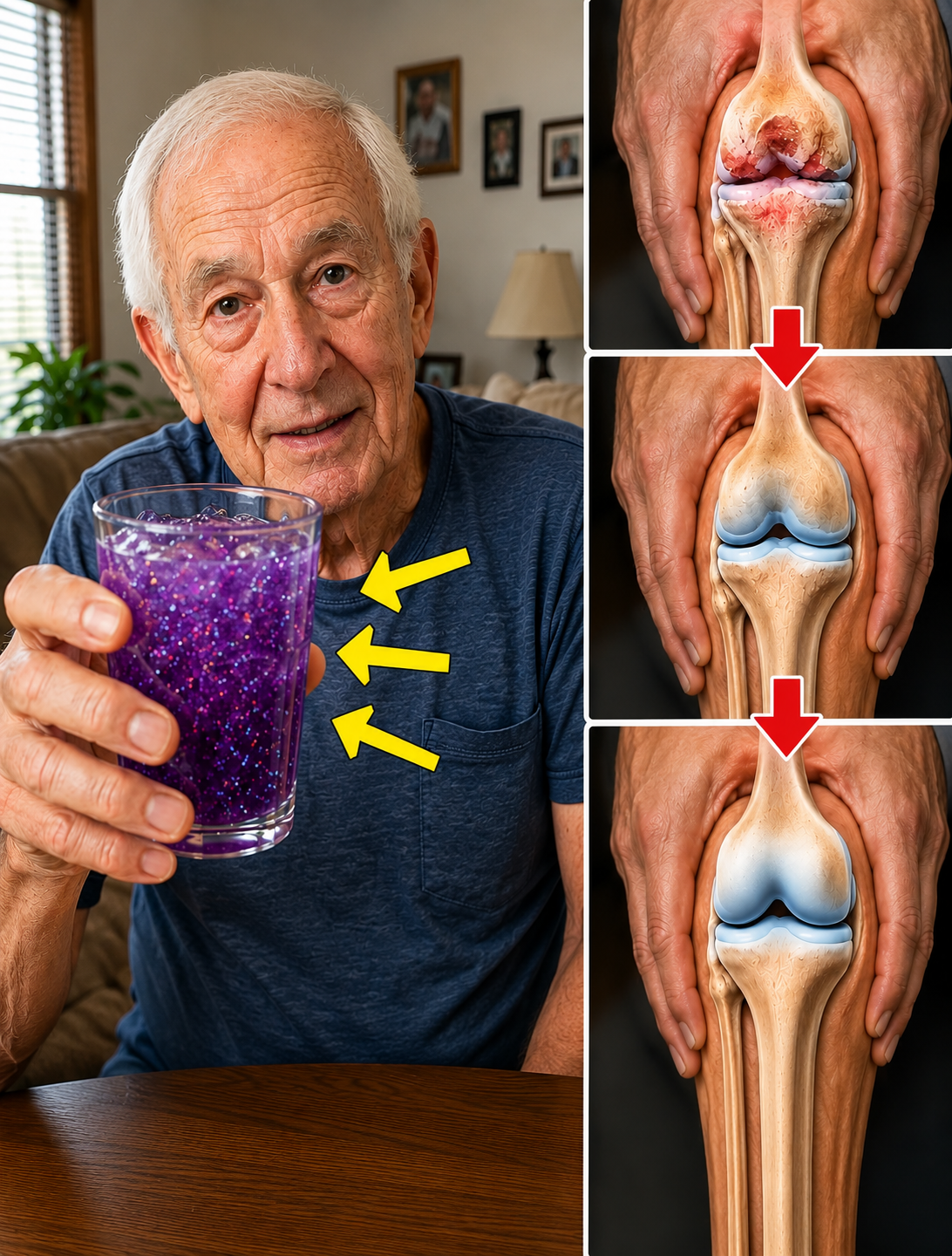
A bowl of bitter broth can feel like old-fashioned medicine.
The taste is sharp. The vegetable looks unusual. And online posts sometimes claim that bitter melon broth “feeds the joints,” removes inflammation, rebuilds cartilage, and gives painful knees exactly what they’ve been missing.
Bitter melon—also called bitter gourd or Momordica charantia—is a real food with interesting plant compounds. It has been studied most often for blood-sugar-related effects, not as a proven treatment for osteoarthritis.
So the most important point is this:
There is no good clinical evidence that bitter melon broth rebuilds knee cartilage, reverses osteoarthritis, or acts like a joint-repair medicine.
Research on bitter melon supplements is limited overall, and NCCIH notes that studies have generally been small or low quality even in the area where bitter melon has been studied most heavily—diabetes.
That doesn’t mean bitter melon is useless. It can be a nutritious vegetable and a flavorful part of a healthy meal.
But your knees are not literally “starving” for it.
🥒 What Is Bitter Melon?
Bitter melon is a green, ridged vegetable widely used in Asian, African, Caribbean, and other cuisines.
Its flavor is intensely bitter.
It can be:
Cooked in soups.
Stir-fried.
Stuffed.
Added to curries.
Made into tea or broth.
It contains fiber, vitamin C, and numerous naturally occurring plant compounds.
Because laboratory studies have found biological activity in some of those compounds, bitter melon has acquired a large medicinal reputation.
But an interesting plant chemistry profile does not automatically translate into proven arthritis treatment.
📊 Viral Claim vs. What We Actually Know
| Viral claim | Evidence-based reality |
| Bitter broth rebuilds cartilage | Not established |
| It “feeds” worn-out knees | Not established |
| Bitter melon cures arthritis | No |
| Bitter melon contains bioactive compounds | Yes |
| It has been studied for metabolic effects | Yes |
| Human evidence remains limited | Yes |
| Exercise improves knee OA pain and function | Strong evidence |
| Weight loss can help knee OA when appropriate | Strong evidence |
| Topical NSAIDs can help knee OA | Strong evidence |
The American College of Rheumatology/Arthritis Foundation guideline strongly recommends exercise for knee osteoarthritis, as well as weight loss for people with knee or hip OA who have overweight or obesity. It also strongly recommends topical NSAIDs for knee OA.
Bitter melon broth is not among those evidence-based core treatments.
🦵 What Is Actually Happening in an Arthritic Knee?
Knee osteoarthritis isn’t simply “inflammation that needs flushing out.”
The entire joint can be affected.
Changes may involve:
Cartilage.
Bone beneath the cartilage.
Joint lining.
Ligaments.
Muscles.
Tendons.
And the way forces move through the knee.
Common symptoms include:
Pain when walking.
Stiffness after sitting.
Difficulty going up or down stairs.
Swelling.
Reduced range of motion.
Grinding or creaking.
Weakness.
That’s why a single food isn’t likely to repair the whole problem.
🌿 What About Bitter Melon’s “Anti-Inflammatory” Reputation?
You’ll often see claims that bitter melon has anti-inflammatory compounds.
That is partly based on laboratory and animal research.
But this is a key scientific distinction:
An anti-inflammatory effect in cells or animals does not prove that eating bitter melon reduces osteoarthritis pain in people.
Many foods contain substances with interesting effects in laboratory experiments.
Far fewer have strong randomized clinical trials showing meaningful improvements in real patients.
For bitter melon and knee OA, that strong clinical evidence isn’t established.
🍲 A Simple Bitter Melon Broth
If you enjoy bitter melon, you can absolutely prepare it as food.
Bitter Melon Vegetable Broth
Ingredients
½ bitter melon
3 cups water or low-sodium broth
½ onion
1 garlic clove
Small piece of ginger
Carrot or bell pepper
Black pepper
Fresh herbs
Preparation
Slice the bitter melon lengthwise.
Remove the seeds and soft center.
Cut into thin slices.
If you want to reduce some bitterness, briefly soak the slices in water, then drain.
Simmer with the vegetables, garlic, and ginger for about 15–20 minutes.
Keep added salt modest.
Eat it as part of a meal.
Do not treat it as cartilage medicine.
🚫 Mistake #1: Thinking Bitterness Means Stronger Medicine
Humans often associate bitter taste with medicinal potency.
But taste doesn’t tell you whether something is clinically effective.
A bitter drink can be:
Nutritious.
Interesting.
Traditional.
Pleasant to some people.
But bitterness itself doesn’t indicate that a food is repairing a joint.
🚫 Mistake #2: Expecting Cartilage to Grow Back
This is one of the biggest arthritis myths online.
People may notice less stiffness after changing diet, losing weight, exercising, or using pain treatment and conclude:
“My cartilage regenerated.”
That’s usually not something we can infer from symptoms.
Pain can improve even when structural osteoarthritis remains.
Feeling better and rebuilding cartilage are not the same thing.
🚫 Mistake #3: Drinking Broth Instead of Strengthening Your Legs
If you have knee OA, muscle strength matters enormously.
Your quadriceps, hamstrings, gluteal muscles, and calf muscles help control the forces passing through the knee.
Weak muscles can make ordinary activities harder.
The ACR/Arthritis Foundation guideline strongly recommends exercise and notes that options can include walking, strengthening, neuromuscular exercise, and aquatic exercise.
That is much stronger evidence than anything available for bitter melon broth.
🏋️ What Exercises Can Help?
The appropriate program depends on your condition, but commonly used approaches include:
Walking.
Stationary cycling.
Water exercise.
Sit-to-stand practice.
Straight-leg raises.
Supported squats.
Resistance-band exercises.
Physical therapy.
You don’t need to train through severe pain.
The goal is gradual, tolerable improvement.
⚖️ Weight Loss Can Change Knee Load
For people with overweight or obesity and knee OA, weight loss is strongly recommended in the ACR guideline.
Why?
Because every step transfers force through the knee.
Reducing excess body weight can decrease repeated mechanical loading.
That has nothing to do with “detoxing inflammation.”
It’s biomechanics.
And no broth can duplicate it.
🧴 Topical Treatments Have Better Evidence
For knee OA, topical NSAIDs are strongly recommended in the ACR/Arthritis Foundation guideline.
These medications are applied over the painful knee.
They can provide useful pain relief for many people while generally producing less systemic exposure than oral NSAIDs.
They’re still medicines and can have risks, so individual medical history matters.
But they have substantially more evidence for knee OA than bitter melon.
🔥 Heat and Cold Can Help Too
For stiffness, some people prefer heat.
For soreness or swelling after activity, some prefer cold.
Neither treatment rebuilds cartilage.
But both may provide useful symptom relief.
And symptom relief matters if it helps you stay active.
🍽️ The Bigger Diet Matters More Than One Vegetable
If you want food to support joint health, think beyond bitter melon.
A balanced dietary pattern can help with:
Healthy body weight.
Muscle maintenance.
Cardiovascular health.
Blood glucose.
Overall nutrient intake.
Useful foods can include:
Vegetables.
Fruit.
Beans.
Whole grains.
Fish.
Olive oil.
Nuts.
Adequate protein.
Bitter melon can join that list.
It doesn’t need to dominate it.
🩸 Why Blood Sugar Comes Up With Bitter Melon
Bitter melon has been promoted extensively for diabetes.
That is where much of its supplement research exists.
But NCCIH says the available research on bitter melon and other herbal supplements for diabetes has generally been limited in size, quality, and number of studies and hasn’t proven these herbal products effective.
This matters for people with knee pain because diabetes and metabolic health can affect overall health and physical function.
But it doesn’t turn bitter melon into an arthritis treatment.
⚠️ Be Careful if You Take Diabetes Medication
Because bitter melon is often promoted for lowering blood glucose, taking concentrated products alongside diabetes medication deserves caution.
NCCIH advises people taking diabetes drugs to tell healthcare professionals about herbal supplements because combinations can produce unwanted effects.
That is especially relevant for:
Bitter melon extracts.
Capsules.
Concentrated juices.
Large medicinal doses.
Ordinary servings used as food are a different situation, but if you’re deliberately taking it as a glucose-lowering remedy, discuss it with your clinician.
🥣 Broth Can Still Be Useful in a Different Way
Soup itself can be helpful.
A vegetable broth can:
Increase vegetable intake.
Replace a high-calorie processed meal.
Provide hydration for people without fluid restrictions.
Make beans and lean protein easier to eat.
Help reduce reliance on highly processed foods.
If that improves overall nutrition or supports healthy weight management, your knees may indirectly benefit.
But again:
The broth isn’t rebuilding cartilage.
The benefit comes from the larger lifestyle pattern.
🍗 Don’t Forget Protein After 50
People worried about joints sometimes focus so heavily on “anti-inflammatory foods” that they forget protein.
But muscles support your joints.
Adequate dietary protein helps preserve and rebuild muscle alongside resistance exercise.
Meals can include appropriate amounts of:
Fish.
Chicken.
Eggs.
Greek yogurt.
Beans.
Lentils.
Tofu.
Other protein sources.
A bowl containing only bitter vegetables and water isn’t automatically a complete joint-health meal.
🥗 Upgrade the Broth Into a Real Meal
Try:
Bitter Melon Chicken Soup
Bitter melon
Low-sodium broth
Shredded chicken
Carrots
Onion
Garlic
Ginger
Fresh herbs
Or:
Bitter Melon Lentil Soup
Bitter melon
Lentils
Tomato
Onion
Garlic
Cumin
Low-sodium broth
Now you’re adding protein and fiber.
That’s far more useful nutritionally.
🦴 What About “Bone-on-Bone” Knees?
People often use this phrase to describe advanced osteoarthritis.
A food cannot simply place new cartilage between the bones.
Advanced OA may require a combination of:
Exercise.
Physical therapy.
Weight management.
Pain medication.
Bracing.
Injections.
Assistive devices.
And, for some people with severe disease, joint-replacement surgery.
The ACR guideline supports several non-surgical treatments, including exercise, topical and oral NSAIDs where appropriate, knee injections, and selected bracing strategies.
💉 What About Knee Injections?
Intra-articular glucocorticoid injections are among the treatments strongly recommended for knee OA in the ACR/Arthritis Foundation guideline.
They can provide temporary symptom relief for selected patients.
They don’t regenerate cartilage either.
But they are evidence-based options when appropriate.
🦯 A Cane Can Actually Help
It doesn’t look exciting on social media.
But cane use is strongly recommended in the ACR guideline for people with knee or hip OA when pain or instability significantly affects walking.
Used correctly, a cane can reduce loading and improve confidence.
That’s a practical intervention.
No viral ingredient required.
🚫 8 Common Bitter-Broth Mistakes
1. Treating It as a Cartilage Regenerator
There is no good evidence for this.
2. Assuming “Anti-Inflammatory” Means “Arthritis Cure”
Experimental anti-inflammatory effects aren’t the same as clinical OA treatment.
3. Drinking Concentrated Bitter Melon With Diabetes Medication
That may complicate blood-glucose management.
4. Replacing Exercise With Food Remedies
Exercise is strongly recommended for knee OA.
5. Ignoring Muscle Weakness
Weak muscles can worsen function.
6. Ignoring Excess Weight When Relevant
Weight reduction can improve knee OA symptoms in people with overweight or obesity.
7. Assuming Every Painful Knee Is Osteoarthritis
Other diagnoses can mimic OA.
8. Ignoring a Hot, Red, Rapidly Swollen Joint
That needs proper evaluation.
🚨 When a Painful Knee Needs Medical Attention
Not every painful knee should be managed at home.
Seek prompt care if you develop:
A very hot, red, swollen knee.
Fever with severe joint pain.
Sudden inability to bear weight.
Major injury or deformity.
A locked knee.
Rapid swelling.
Severe calf swelling or tenderness.
Chest pain or shortness of breath with leg swelling.
These symptoms may indicate problems such as infection, significant injury, gout, or vascular disease rather than routine osteoarthritis.
📅 A Better 7-Day Knee Experiment
Instead of drinking one broth every day and waiting for cartilage repair, use a week to understand your knees.
Day 1: Track when the pain appears.
Day 2: Try gentle walking or another tolerable activity.
Day 3: Begin appropriate leg-strengthening exercises.
Day 4: Review your footwear.
Day 5: Try heat for stiffness or cold after activity if helpful.
Day 6: Replace one heavily processed meal with a balanced whole-food meal.
Day 7: Compare your pain, stiffness, and walking ability.
If symptoms remain significant, discuss them with a healthcare professional.
❓ Frequently Asked Questions
Is bitter melon good for knee pain?
There isn’t strong clinical evidence showing that bitter melon reliably treats knee osteoarthritis pain.
Does bitter melon reduce inflammation?
It has demonstrated biological activity in experimental research, but that doesn’t prove that bitter melon broth reduces osteoarthritis inflammation in humans.
Can bitter melon rebuild cartilage?
No good clinical evidence shows that it regenerates worn knee cartilage.
Is bitter melon broth healthy?
It can be part of a nutritious diet, especially when prepared with vegetables, moderate sodium, and a good protein source.
Does the bitter taste mean it is medicinal?
No. Taste isn’t a measure of therapeutic effectiveness.
Can I drink bitter melon every day?
Food amounts may be tolerated by many people, but concentrated medicinal use is different. If you take diabetes medications or other regular medicines, discuss herbal or concentrated bitter melon products with your healthcare professional.
What actually works for knee osteoarthritis?
Exercise has strong evidence. Depending on the individual, weight management, topical or oral NSAIDs, braces, cane use, injections, and other treatments may also help.
Is walking bad for arthritic knees?
Not automatically. Appropriate exercise—including walking—can be beneficial for many people with knee OA. Exercise selection should be adjusted to symptoms and individual limitations.
Can weight loss really reduce knee pain?
For people with overweight or obesity, weight loss is strongly recommended because it can improve symptoms and reduce mechanical stress on the knee.
Does less pain mean my cartilage has grown back?
No. Pain can improve without structural regeneration.
⭐ The Bottom Line
Bitter melon is a legitimate vegetable.
It contains interesting plant compounds and has been investigated for several metabolic effects.
But research does not establish bitter melon broth as a treatment that:
Rebuilds cartilage.
Feeds worn-out knees.
Reverses osteoarthritis.
Or eliminates chronic knee pain.
Even in diabetes—the health area where bitter melon has received much more research attention—NCCIH says available herbal-supplement studies remain limited and haven’t established effectiveness.
For painful knee osteoarthritis, the evidence is much clearer around interventions such as exercise, appropriate strengthening, weight management when relevant, topical NSAIDs, selected braces, and other individualized medical treatments.
So if you enjoy bitter melon, cook it.
Make the broth.
Add vegetables and protein.
Let it support a healthy diet.
Just don’t mistake a bitter taste for proof that your knees have finally found the medicine they were “starving for.”