
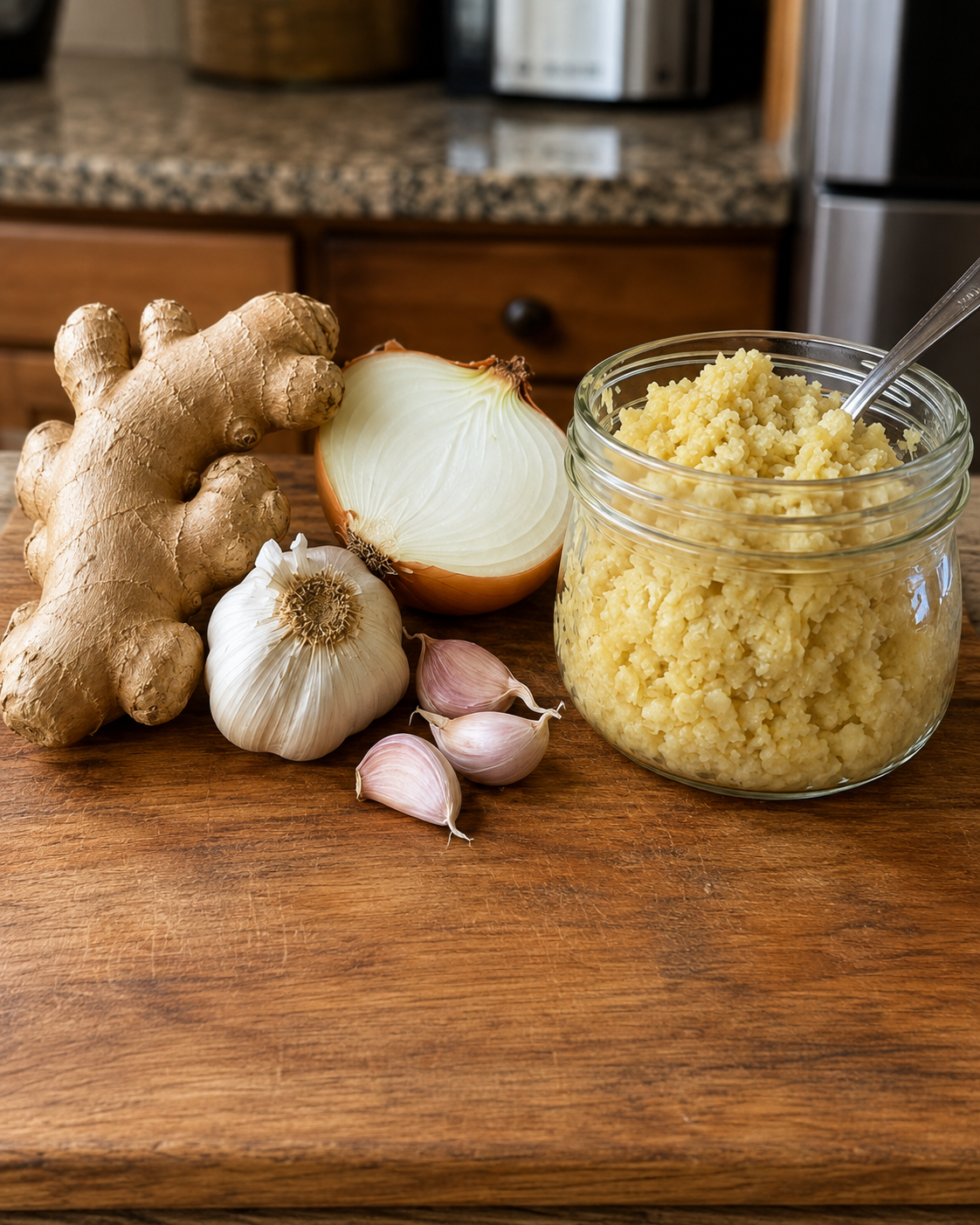
A teaspoon of ginger, onion, and garlic sounds like an unusually simple solution for two problems that become increasingly common after 50: rising blood sugar and persistent aches or joint discomfort.
Online posts sometimes go much further, claiming this kitchen mixture can “crush blood sugar,” shut down inflammation, and make pain disappear within minutes.
There is a legitimate reason these ingredients attract scientific interest.
Ginger, onion, and garlic contain biologically active plant compounds. Research has investigated them in connection with glucose metabolism, cardiovascular health, oxidative stress, and inflammatory pathways.
But that does not mean one teaspoon works like diabetes medication or a pain reliever.
And for an older adult taking medication, aggressively trying to force blood glucose downward with concentrated homemade remedies can potentially create problems—particularly when insulin or medications capable of causing hypoglycemia are involved.
The safest way to think about this mixture is:
Three nutritious culinary ingredients that may fit into a healthy eating pattern—not a treatment that replaces diabetes or arthritis care.
Important: If you take diabetes medication, anticoagulants/antiplatelet drugs, or several daily medications, talk with your healthcare professional before regularly using concentrated ginger or garlic preparations.
🌿 Why These Three Ingredients Get So Much Attention
Ginger, onion, and garlic belong to different plant families, but all contain compounds researchers find interesting.
Ginger
Contains compounds including gingerols and shogaols.
Onion
Provides sulfur-containing compounds and flavonoids such as quercetin.
Garlic
Contains sulfur compounds that change when garlic is chopped or crushed.
These compounds have demonstrated biological activity in experimental research.
But here’s the key distinction:
Biological activity doesn’t automatically equal a clinically meaningful treatment.
A substance can influence cells in a laboratory without producing the same magnitude of effect when someone eats one teaspoon at breakfast.
🩸 What Happens to Blood Sugar After 50?
As people age, several factors can make glucose management more difficult.
These can include:
- Reduced physical activity
- Changes in muscle mass
- Increased abdominal fat
- Insulin resistance
- Medication effects
- Changes in diet
- Sleep problems
Muscle is especially important because it’s a major destination for glucose after meals.
That’s one reason preserving muscle through appropriate resistance exercise becomes increasingly valuable with age.
No kitchen mixture can compensate for every factor influencing blood glucose.
🫚 Ingredient #1: Ginger
Ginger has been investigated for potential metabolic effects.
Some clinical research suggests ginger supplementation may modestly influence measures of glucose control in certain populations.
Researchers have proposed several possible mechanisms involving:
- Insulin signaling
- Glucose metabolism
- Oxidative stress
- Inflammatory pathways
But study results aren’t identical, and supplementation protocols can be very different from using fresh ginger in food.
So:
Ginger may be an interesting dietary ingredient.
It is not an emergency glucose-lowering treatment.
🧅 Ingredient #2: Onion
Onions provide several potentially beneficial plant compounds.
Red and yellow onions, in particular, contain flavonoids including quercetin.
Some small studies and experimental research have explored onions in relation to glucose metabolism.
This has fueled headlines such as:
“Raw onion drops blood sugar instantly.”
That’s misleading.
Even when studies observe changes after consuming onion, that doesn’t establish a teaspoon of onion as a predictable diabetes treatment.
Your response can depend on:
- What else you ate
- Your starting glucose
- Medication
- Insulin production
- Insulin sensitivity
- Physical activity
🧄 Ingredient #3: Garlic
Garlic is one of the most extensively discussed culinary herbs in cardiovascular nutrition.
When garlic is chopped or crushed, chemical reactions create various sulfur-containing compounds.
Research has investigated garlic preparations in connection with:
- Blood pressure
- Lipids
- Glucose metabolism
- Oxidative stress
Again, however, preparation matters.
Raw garlic, cooked garlic, aged garlic extract, garlic powder, and concentrated supplements aren’t interchangeable.
A positive study using a standardized supplement doesn’t prove that one raw clove produces the same result.
🔥 What About Pain and Inflammation?
This is the second half of the viral claim.
Ginger and garlic contain compounds capable of interacting with inflammatory pathways.
That’s scientifically plausible.
But pain is complicated.
Pain can originate from:
- Osteoarthritis
- Rheumatoid arthritis
- Muscle strain
- Tendon injuries
- Nerve damage
- Gout
- Spinal problems
- Circulation disorders
Reducing an inflammatory marker doesn’t necessarily eliminate pain.
And not every painful condition is primarily inflammatory.
📊 Viral Claim vs. What We Actually Know
| Viral Claim | More Accurate Interpretation |
| One teaspoon crashes blood sugar | Not established |
| Ginger contains biologically active compounds | Yes |
| Onion contains flavonoids such as quercetin | Yes |
| Garlic contains sulfur compounds | Yes |
| These foods may fit a healthy dietary pattern | Yes |
| The mixture replaces diabetes medication | No |
| It rebuilds damaged joints | No |
| It works as an instant painkiller | Not established |
| Concentrated forms may interact with medication | Yes |
This doesn’t make the ingredients worthless.
It puts them where they belong: in food rather than miracle medicine.
🥄 A Simple Ginger-Onion-Garlic Mix
If you tolerate these foods, there’s no need to turn them into an extreme medicinal shot.
You Will Need
- ½ teaspoon finely grated fresh ginger
- ½ teaspoon finely minced onion
- ½ teaspoon finely minced or crushed garlic
- 1 teaspoon olive oil
- Optional lemon juice
- Herbs to taste
Mix the ingredients and use a small amount as a dressing or flavoring for a meal.
For example, add it to:
- Cooked vegetables
- Lentils
- Beans
- Grilled fish
- Chicken
- Salad
This is generally a more sensible approach than swallowing a concentrated spoonful on an empty stomach.
🍳 Why Eating It With Food Makes More Sense
Raw ginger, onion, and garlic can be harsh on the digestive system.
Taking a concentrated mixture first thing in the morning may cause:
- Heartburn
- Abdominal discomfort
- Nausea
- Gas
- Reflux
There’s no established requirement to consume these ingredients on an empty stomach.
Your body doesn’t need to be “empty” for vegetables and spices to work.
Use them to make nutritious meals taste better.
⏱️ Can It Lower Blood Sugar in 10 Minutes?
This is where viral claims become particularly problematic.
There is no reliable evidence that a teaspoon of ginger, onion, and garlic will predictably lower dangerously elevated blood glucose within 10 minutes.
If your glucose is extremely high, don’t keep taking spoonfuls and waiting for a number to fall.
Follow your diabetes treatment plan.
And if severe hyperglycemia is accompanied by concerning symptoms, seek medical care.
⚠️ Lower Blood Sugar Isn’t Always Better
People often hear:
“This food lowers blood sugar!”
and assume that’s automatically positive.
But blood glucose can fall too low.
Hypoglycemia can occur in people using certain glucose-lowering treatments, especially insulin and some diabetes medications.
Symptoms can include:
- Shaking
- Sweating
- Hunger
- Dizziness
- Fast heartbeat
- Irritability
- Confusion
Severe hypoglycemia can cause:
- Seizures
- Loss of consciousness
That’s why “force your sugar down fast” is not a responsible health goal.
The goal is safe glucose management within an individualized target range.
👴 Why Hypoglycemia Matters More After 50
As people get older, hypoglycemia can become particularly dangerous.
A sudden glucose drop may contribute to:
- Falls
- Injuries
- Confusion
- Driving accidents
- Cardiovascular stress
Someone using insulin shouldn’t add multiple concentrated glucose-lowering supplements simply because they’re described as natural.
Food and medication can interact with the overall treatment plan.
💊 Don’t Stop Your Diabetes Medication
If your glucose readings improve after changing your diet, that’s excellent information to share with your healthcare professional.
It doesn’t mean you should independently stop medication.
Diabetes medications have specific purposes.
Depending on the medication, abruptly changing treatment can allow glucose to rise substantially.
Diet and medication frequently work together.
They aren’t necessarily competitors.
🩸 What Actually Helps Post-Meal Blood Sugar?
Several practical habits are more useful than searching for a glucose-lowering shot.
1. Watch carbohydrate quality and portions
A huge serving of refined carbohydrate can produce a larger glucose rise than a balanced meal.
2. Include protein
Protein can help make meals more satisfying.
3. Include fiber-rich foods
Vegetables, legumes, whole grains, nuts, seeds, and whole fruits can contribute fiber.
4. Move after eating
For many people, a short walk after a meal can help with post-meal glucose management.
5. Preserve muscle
Resistance training can improve metabolic health and becomes particularly valuable as we age.
🚶 The “10-Minute” Habit Worth Considering
If your health allows it, there’s a far more practical 10-minute strategy:
Take a gentle walk after meals.
Muscle contractions allow working muscles to use glucose.
Regular post-meal activity can be a useful part of glucose management.
That doesn’t mean everyone should exercise regardless of their medical condition.
But for many adults, consistent movement provides much more meaningful metabolic support than a raw garlic shot.
🦵 What About Knee Pain?
If your knees hurt after 50, don’t automatically blame generalized inflammation.
Osteoarthritis is common.
It involves changes throughout the joint, including cartilage, bone, and surrounding tissues.
Management may include:
- Appropriate exercise
- Strengthening
- Weight management when relevant
- Physical therapy
- Pain-management strategies
- Medication when appropriate
Ginger doesn’t rebuild worn cartilage.
Garlic doesn’t regrow a knee joint.
🏋️ Stronger Muscles Can Help Support the Knee
One of the most overlooked strategies for knee health is strengthening the muscles surrounding the joint.
Strong quadriceps, hamstrings, hips, and other supporting muscles can help improve function.
Appropriate activities may include:
- Walking
- Cycling
- Water exercise
- Resistance training
- Physical therapy exercises
The correct exercise depends on your condition.
Pain isn’t always a signal to stop moving permanently.
Sometimes carefully programmed movement is part of the treatment.
⚖️ Body Weight and Knee Stress
For someone with overweight or obesity and knee osteoarthritis, modest weight reduction may improve symptoms and reduce mechanical stress on the joint.
That doesn’t require a detox diet.
A sustainable approach combining:
- Nutritious food
- Appropriate calorie intake
- Protein
- Fiber
- Regular activity
is much more useful.
🧄 Can Garlic Thin the Blood?
Garlic supplements and concentrated preparations deserve caution for people taking medications that affect bleeding.
Ginger can also raise interaction concerns in concentrated supplemental amounts.
This becomes particularly important for people taking:
- Anticoagulants
- Antiplatelet medications
- Multiple supplements affecting clotting
Don’t stop prescribed medication.
Instead, tell your healthcare professional exactly which herbal products you’re considering.
💊 The Supplement Problem
A meal seasoned with ginger and garlic isn’t the same as swallowing capsules containing concentrated extracts.
Supplements can deliver much larger quantities.
Some products combine:
- Ginger extract
- Garlic extract
- Turmeric
- Cinnamon
- Berberine
- Chromium
- Bitter melon
and then advertise the mixture as a “natural glucose destroyer.”
Stacking multiple potentially active compounds makes interactions and side effects more difficult to predict.
Natural doesn’t mean pharmacologically inactive.
🫀 What About Blood Pressure?
Garlic has also been investigated for possible effects on blood pressure.
That’s interesting—but it creates another reason for caution.
Someone already taking medication for hypertension shouldn’t assume that adding concentrated garlic products is automatically harmless.
If your blood pressure becomes too low, symptoms can include:
- Dizziness
- Weakness
- Fainting
Older adults are particularly vulnerable to falls.
🍽️ A Better “After 50” Meal
Instead of swallowing the three ingredients alone, build them into dinner.
Ginger-Garlic Vegetable Bowl
Ingredients
- 2 cups mixed vegetables
- ½ cup beans or lentils
- Appropriate serving of fish, chicken, tofu, or another protein if desired
- ½ teaspoon grated ginger
- 1 small garlic clove
- 1 tablespoon finely chopped onion
- 1 teaspoon olive oil
- Lemon and herbs
Directions
Lightly cook the onion, ginger, and garlic.
Add the vegetables and protein source.
Finish with olive oil and lemon.
Now the famous ingredients are part of a meal providing:
- Fiber
- Protein
- Micronutrients
- Unsaturated fat
- Plant compounds
That’s a much stronger nutritional strategy than a teaspoon of raw ingredients by itself.
🌙 Don’t Ignore Sleep
Poor sleep can affect:
- Appetite
- Glucose regulation
- Pain perception
- Physical activity
- Mood
Someone sleeping four hours per night while searching for the perfect glucose-lowering spice is focusing on the smaller lever.
Healthy aging is rarely about one ingredient.
🚫 7 Common Mistakes With Ginger, Onion & Garlic
1. Taking Huge Raw Spoonfuls
This can irritate the digestive system.
2. Expecting Immediate Glucose Reduction
Food isn’t emergency diabetes medication.
3. Stopping Medication
Never change prescribed treatment based on a viral recipe.
4. Assuming Pain Always Means Inflammation
Nerve, mechanical, vascular, and other causes exist.
5. Buying Concentrated Supplements Without Checking Interactions
Especially important when taking several medications.
6. Ignoring the Rest of the Diet
One teaspoon can’t compensate for an unhealthy overall eating pattern.
7. Believing More Is Better
Increasing the dose can increase side effects without guaranteeing greater benefit.
👀 What Blood Sugar Numbers Should You Watch?
If you have diabetes, your clinician may ask you to monitor glucose:
- Before meals
- After meals
- At bedtime
- At other specific times
Targets aren’t identical for everyone.
Age, medications, cardiovascular disease, kidney function, hypoglycemia risk, and other factors can influence appropriate goals.
Follow your individualized treatment plan rather than a target copied from social media.
🚨 When High Blood Sugar Needs Medical Attention
Seek medical advice for persistently high readings despite following your treatment plan.
Urgent evaluation may be necessary when very high glucose occurs with symptoms such as:
- Repeated vomiting
- Severe dehydration
- Difficulty breathing
- Significant confusion
- Extreme weakness
- Loss of consciousness
Don’t try to correct a serious metabolic emergency with onion juice.
🚨 When Joint Pain Needs Evaluation
Arrange medical evaluation when pain is:
- Persistent
- Rapidly worsening
- Associated with significant swelling
- Limiting normal movement
- Associated with redness or warmth
- Accompanied by fever
- Following a serious injury
A suddenly red, extremely painful, swollen joint isn’t a situation for a home remedy.
🧠 After 50, Think Bigger Than One Teaspoon
Healthy aging isn’t built around finding the strongest ingredient.
Focus on:
Muscle
Use appropriate resistance exercise.
Movement
Avoid prolonged sedentary periods.
Nutrition
Eat adequate protein, vegetables, whole fruits, legumes, whole grains, healthy fats, and other minimally processed foods.
Sleep
Protect consistent, adequate sleep.
Blood pressure
Keep it appropriately managed.
Blood glucose
Monitor and treat diabetes correctly.
Medical care
Investigate new or worsening symptoms instead of masking them.
Ginger, onion, and garlic can fit beautifully inside this strategy.
They just aren’t the entire strategy.
❓ Frequently Asked Questions
Can ginger lower blood sugar?
Research has explored possible glucose-related effects, but ginger isn’t a substitute for diabetes medication or an emergency treatment for high glucose.
Does onion lower glucose immediately?
No reliable evidence shows that a teaspoon of onion predictably forces blood glucose down within minutes.
Is garlic good for diabetes?
Garlic can be part of a nutritious diet. Research has investigated garlic preparations for metabolic and cardiovascular effects, but it doesn’t cure diabetes.
Can I mix ginger, onion, and garlic?
Yes, they’re ordinary culinary ingredients and are commonly combined in food.
Is it better to eat the mixture raw?
Not necessarily. Raw preparations can cause digestive irritation, and there’s no established requirement to consume them raw.
Should I take the mixture before breakfast?
There’s no proven advantage to taking it on an empty stomach.
Can it stop arthritis pain?
It isn’t a proven rapid treatment for arthritis pain and doesn’t rebuild damaged joints.
Can I take it with diabetes medication?
Normal culinary use is different from concentrated medicinal preparations. If you’re using large amounts or supplements—especially alongside glucose-lowering medication—discuss this with your healthcare professional.
Can garlic interact with blood thinners?
Concentrated garlic products can be relevant to bleeding risk and medication interactions. Ask your healthcare professional before using high-dose supplements.
What’s more important after 50: supplements or exercise?
Both nutrition and medical care matter, but maintaining physical activity and muscle is enormously important for metabolic and musculoskeletal health. Supplements aren’t substitutes for these fundamentals.
⭐ The Bottom Line
Ginger, onion, and garlic are nutritious foods—not miracle medicines.
They contain interesting plant compounds, and researchers have studied them for potential effects involving glucose metabolism, cardiovascular health, oxidative stress, and inflammatory pathways.
But one teaspoon does not reliably:
- Crash blood sugar
- Cure diabetes
- Eliminate arthritis
- Rebuild knee cartilage
- Stop chronic pain within minutes
Use these ingredients where they make the most sense:
In your meals.
Combine them with vegetables, protein, legumes, healthy fats, and other minimally processed foods.
Then add the habits that matter even more after 50:
Regular movement, resistance exercise, adequate sleep, maintaining a healthy weight when appropriate, monitoring blood glucose, and taking prescribed treatment correctly.
And remember: if you use insulin or other medications that can cause hypoglycemia, the goal isn’t to make blood sugar fall as hard or as fast as possible.
The goal is safe, stable, well-managed blood glucose—not a dramatic drop created for a viral headline.