
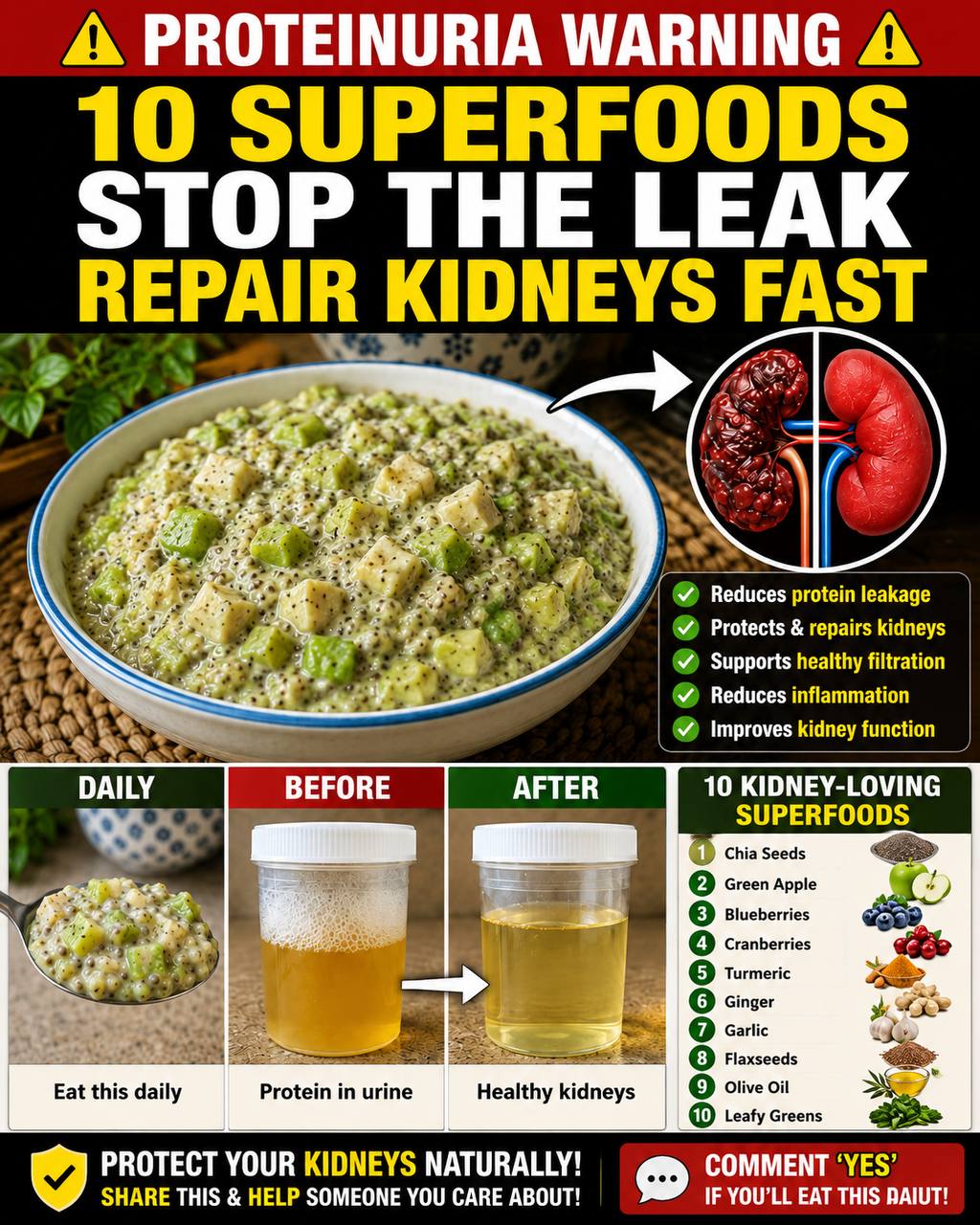
Headlines promising that certain “superfoods” can stop proteinuria and deliver dramatic kidney relief are misleading and potentially harmful. Proteinuria—the presence of excess protein in the urine—is a medical sign that often points to kidney stress or damage. It is not a condition that foods alone can reliably turn off.
This article explains what proteinuria actually means, why professional medical care is essential, and what dietary patterns may support overall kidney health. It does not offer a list of foods that cure or stop proteinuria, because no such list exists in reliable medical evidence.
What Proteinuria Means
Healthy kidneys filter waste while keeping valuable proteins in the blood. When the filtering units (glomeruli) are damaged, protein can leak into the urine. Common causes include:
- Diabetes
- High blood pressure
- Glomerular diseases
- Certain medications or infections
- Other chronic conditions
Proteinuria can be an early warning sign of chronic kidney disease (CKD). Leaving it unaddressed raises the risk of progressive kidney damage and cardiovascular complications. The correct response is medical evaluation—not a change in “superfoods.”
Why No Food “Stops” Proteinuria
No vegetable, fruit, seed, or other food has been shown in high-quality human trials to stop proteinuria on its own. Laboratory or animal findings involving plant compounds do not translate into proven treatments for people. Claims that specific foods “flood the kidneys with relief” or reverse protein leakage overstate the evidence and can delay proper care.
Effective management of proteinuria typically involves:
- Treating the underlying cause (for example, controlling blood sugar or blood pressure)
- Medications such as ACE inhibitors or ARBs, which have proven ability to reduce protein leakage in many patients
- Lifestyle measures that support overall kidney and cardiovascular health
- Regular monitoring by a healthcare professional
Diet plays a supportive role, but it is not a substitute for medical treatment.
Evidence-Based Dietary Approaches for Kidney Support
While no food stops proteinuria, certain dietary patterns help protect kidney function over time—especially when combined with medical care:
Control blood pressure and blood sugar
These are two of the most important factors in slowing kidney damage. A diet that supports healthy blood pressure (lower sodium, rich in vegetables and appropriate potassium sources if allowed) and steady blood sugar is foundational.
Moderate sodium intake
Reducing excess salt helps manage blood pressure and fluid balance. Most of the sodium in modern diets comes from processed and restaurant foods rather than the salt shaker.
Appropriate protein intake
Protein needs vary. Some people with kidney disease benefit from moderated protein under the guidance of a nephrologist or renal dietitian. Others, especially those on dialysis or with different nutritional needs, require different targets. Self-prescribing very high or very low protein diets can be harmful.
Emphasize overall diet quality
Patterns rich in vegetables, fruits (as appropriate for potassium restrictions), whole grains, and healthy fats—while limiting ultra-processed foods—are associated with better long-term health outcomes. Individual restrictions (potassium, phosphorus, fluid) must be personalized.
Stay hydrated according to medical advice
Adequate fluid intake supports kidney function for many people, but those with advanced kidney disease may need fluid limits.
A registered dietitian who specializes in kidney health can tailor recommendations to lab results and stage of kidney function.
The Danger of Relying on “Superfood” Lists
Promoting specific foods as solutions for proteinuria can lead people to:
- Delay seeing a doctor
- Stop prescribed medications
- Follow unbalanced diets that worsen electrolyte balance or nutritional status
- Develop a false sense of security
Kidney disease often progresses silently. Early medical intervention offers the best chance of slowing damage.
When to Seek Medical Care
Contact a healthcare provider if you notice:
- Foamy or bubbly urine
- Swelling in the legs, ankles, or around the eyes
- Unexplained fatigue
- Changes in urination frequency
- High blood pressure
- A known diagnosis of diabetes or kidney disease
Simple urine and blood tests can detect proteinuria and assess kidney function. These tests are far more informative than any dietary experiment.
Practical, Realistic Steps
- Get evaluated if proteinuria is suspected or already diagnosed.
- Follow prescribed medical treatment.
- Work with a doctor or renal dietitian on an eating pattern that matches your kidney function and overall health.
- Focus on sustainable habits: blood pressure control, blood sugar management, healthy weight, physical activity, and not smoking.
- Be skeptical of dramatic food claims. If a headline sounds too good to be true, it usually is.
Final Thoughts
No group of 10 superfoods has been shown to stop proteinuria or deliver special kidney relief. Proteinuria is a clinical sign that requires proper diagnosis and management. Diet matters for long-term kidney health, but it works as part of a comprehensive medical plan—not as a standalone cure.
If you have been told you have protein in your urine, or if you have risk factors such as diabetes or high blood pressure, the most effective next step is a conversation with a healthcare professional. Evidence-based medical care, combined with a sensible overall diet and lifestyle, offers the real path to protecting kidney function.