
For men over 60, a weak urine stream, frequent bathroom trips, urgency, and waking several times during the night can become frustrating enough to make almost any home remedy sound worth trying.
That is why posts promising that “one small cup relieves a swollen prostate within 12 hours” spread so quickly.
The problem is the time claim.
There is no herbal tea, juice, seed drink, or ordinary kitchen remedy proven to shrink an enlarged prostate or reliably relieve benign prostatic hyperplasia (BPH) within 12 hours. BPH is a noncancerous enlargement of the prostate and is the most common prostate problem in men over 50. It can narrow the urethra and interfere with urine flow.
Some herbs and foods have been studied for urinary symptoms, but when benefits have been reported, studies generally measured results over weeks or months, not a single afternoon or night.
So what can a small cup realistically do?
It may provide a pleasant routine, and depending on its ingredients, it may fit into an overall prostate-conscious lifestyle. But it should not be advertised as a 12-hour prostate treatment.
👨🦳 First: What Does “Swollen Prostate” Usually Mean?
Many people use the phrase “swollen prostate” to describe BPH.
BPH stands for benign prostatic hyperplasia.
“Benign” means it is not cancer.
As the prostate enlarges, it can press on the urethra—the tube carrying urine out of the bladder.
Common symptoms include:
- Difficulty starting urination
- Weak or interrupted urine stream
- Dribbling
- Frequent urination
- Urgency
- Waking repeatedly at night
- Feeling that the bladder has not emptied completely
BPH becomes increasingly common with age.
But urinary symptoms are not automatically caused by BPH.
They can also come from infection, bladder problems, medications, diabetes, prostatitis, neurological disease, or other conditions.
That is why persistent symptoms deserve proper evaluation.
🍵 What Could the “Small Cup” Be?
Instead of pretending there is one secret beverage, a safer home approach is a mild, unsweetened herbal drink that does not promise prostate shrinkage.
For example:
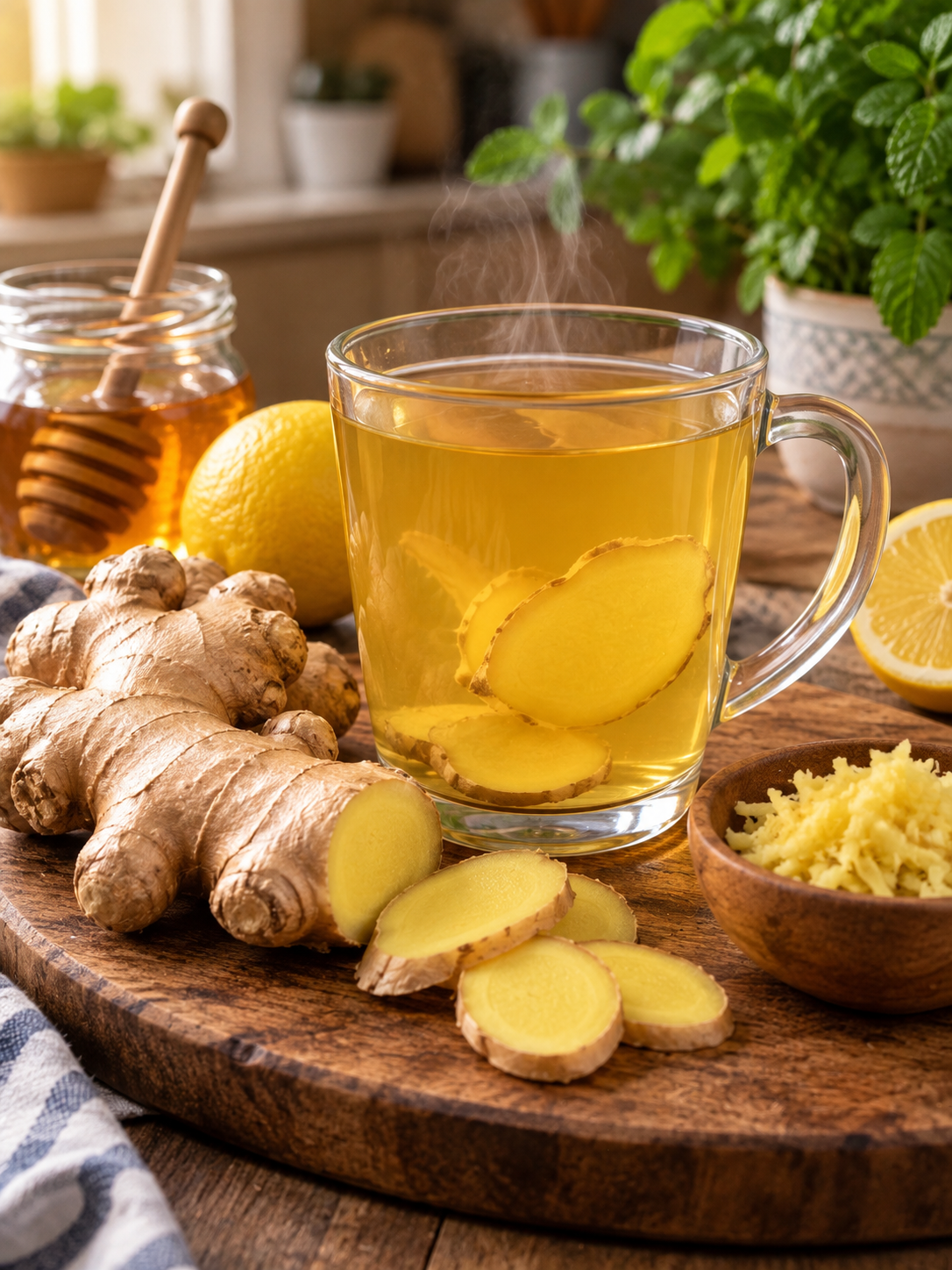
Simple Ginger-Pumpkin Seed Infusion
Use:
1 cup hot water
1 teaspoon crushed unsalted pumpkin seeds
2–3 thin slices fresh ginger
Steep for about 10 minutes, strain if desired, and drink earlier in the day.
This is a food-level preparation.
It is not a treatment for BPH.
And importantly, clinical studies involving herbal preparations generally use specific extracts or doses that cannot automatically be recreated with a kitchen cup.
🌱 Why Pumpkin Seeds Often Appear in Prostate Remedies
Pumpkin-seed products have been investigated for lower urinary tract symptoms.
Some trials suggest possible symptom improvement, but evidence remains limited and does not justify claims that pumpkin seeds quickly shrink the prostate.
The same applies to many other botanical products promoted for BPH.
NCCIH notes that complementary approaches such as stinging nettle and pygeum have shown limited evidence for improving some urinary symptoms, while study quality, doses, and preparations vary considerably.
That is very different from proving:
“Drink this cup and your prostate improves in 12 hours.”
🌿 What About Stinging Nettle?
Stinging nettle—Urtica dioica—has a long history of use for urinary symptoms.
NCCIH reports limited evidence that nettle may improve some lower urinary tract symptoms associated with BPH.
One older randomized trial involving 620 people reported improvement in symptom scores and urinary flow after six months, with benefits maintained during longer follow-up.
Notice the timeframe:
Six months.
Not six hours.
Not twelve hours.
This doesn’t mean nettle is useless.
It means viral headlines usually exaggerate what the research actually studied.
🌴 What About Saw Palmetto?
Saw palmetto may be the most famous herbal prostate supplement.
It is also a good example of why “popular” and “proven” are not synonymous.
NCCIH’s updated review notes that a 2023 review of 27 studies found that saw palmetto used alone provides little or no benefit for BPH symptoms overall. NIH-funded trials also failed to show meaningful improvement compared with placebo.
So a cup containing saw palmetto should not be presented as a guaranteed prostate remedy.
🍅 What About Tomato or Lycopene Drinks?
Tomatoes are nutritious and contain lycopene.
But NCCIH reports there is insufficient evidence to support lycopene for preventing or treating BPH.
A tomato-based drink may fit into a healthy diet.
It does not act like medication for prostate enlargement.
📊 Viral Claim vs. What Research Supports
| Claim | What the evidence says |
| One cup shrinks the prostate in 12 hours | Not established |
| Herbal drinks may improve some urinary symptoms | Possible for certain preparations, evidence limited |
| Stinging nettle may help BPH symptoms | Limited evidence |
| Saw palmetto reliably treats BPH | Current evidence does not support consistent benefit |
| Lycopene shrinks an enlarged prostate | Insufficient evidence |
| BPH can cause weak stream and nocturia | Yes |
| Lifestyle changes can help mild symptoms | Yes |
| Prescription treatment can improve symptoms | Yes |
| Complete inability to urinate is urgent | Yes |
⏱️ Why the “12-Hour” Promise Is Misleading
An enlarged prostate is tissue.
It does not normally shrink dramatically because someone drank one cup of tea.
Some prescription medicines can improve urinary symptoms relatively quickly by relaxing smooth muscle around the prostate and bladder neck.
Other medicines act more slowly by reducing prostate growth or shrinking prostate tissue over time.
NIDDK notes that established BPH management includes lifestyle changes, medicines, and surgery when necessary.
This makes an important distinction:
A person might feel temporarily better after changing fluid timing or bladder habits.
That doesn’t mean the prostate physically became smaller.
🌙 The Small-Cup Mistake That Can Make Nocturia Worse
Imagine someone wakes four times per night.
At bedtime, they drink a huge mug of “prostate tea.”
Now there is even more fluid entering the bladder during the night.
NIDDK recommends that men with mild prostate symptoms may benefit from drinking fewer liquids before bedtime and reducing caffeinated or alcoholic beverages.
So if you enjoy an herbal drink:
Have it earlier.
A small cup at 3 p.m. makes much more sense than a 20-ounce mug at 10:30 p.m. if nighttime urination is the problem.
☕ Caffeine Can Matter More Than the Herb
Coffee, energy drinks, caffeinated tea, and cola can aggravate frequency or urgency in some men.
Reducing caffeine—particularly later in the day—is one of the lifestyle strategies NIDDK identifies for mild BPH symptoms.
Before buying a complicated prostate supplement, try something simpler:
Move caffeine earlier.
Track nighttime bathroom trips for one week.
See whether anything changes.
🍺 Alcohol Can Also Increase Nighttime Trips
Alcohol may increase urine production and disrupt normal sleep.
A man may blame his prostate every time he wakes to urinate, but late-evening alcohol can be part of the pattern.
Reducing alcohol is also included among lifestyle changes that may improve mild BPH symptoms.
💊 Don’t Forget Cold and Allergy Medicines
This catches many men by surprise.
Certain cold and allergy medicines can worsen urinary symptoms.
NIDDK specifically advises reviewing medicines that may affect bladder function when managing BPH.
That includes some:
Decongestants.
Antihistamines.
And other medications.
If urinary flow suddenly becomes worse after starting a new medicine, tell your healthcare professional.
🚽 A Simple Technique That May Help: Double Voiding
Some men feel that urine remains after they finish.
A simple strategy is:
Urinate normally.
Wait briefly.
Relax.
Try again.
This is called double voiding.
It doesn’t shrink the prostate.
But for some people, it can help empty the bladder more completely.
💧 More Water Is Not Always the Answer
Another common viral recommendation says:
“Drink more water to flush the prostate.”
That can backfire.
Extra water does not wash prostate tissue away.
If frequency and nocturia are already major symptoms, enormous amounts of fluid—especially late in the day—may increase bathroom trips.
Hydration matters.
But timing matters too.
🏃 Movement and Weight Can Matter
BPH isn’t controlled by one food.
A broader lifestyle approach can make more sense.
NCCIH notes that standard treatment options include lifestyle changes as well as medication and procedures when appropriate.
Regular movement can also support:
Cardiovascular health.
Blood-glucose control.
Weight management.
Sleep.
Overall urinary health.
No exotic tea is required.
💊 What Actually Treats BPH?
Depending on symptom severity and prostate characteristics, doctors may use several approaches.
Watchful waiting
For mild symptoms that aren’t causing major problems.
Alpha blockers
These relax muscle around the prostate and bladder outlet and can improve urine flow.
5-alpha-reductase inhibitors
Medicines such as finasteride or dutasteride can stop prostate growth or shrink the gland in some men. NIDDK specifically identifies these medicines among established BPH treatments.
Procedures or surgery
Used when symptoms are severe, obstruction is significant, complications develop, or medicines aren’t enough.
This is why it is misleading to compare a homemade beverage directly with medical BPH treatment.
⚠️ “Natural” Doesn’t Mean Better Than Medication
Herbal marketing often says:
“No chemicals.”
But plants themselves are made of chemicals.
The real questions are:
Does it work?
At what dose?
How strong is the evidence?
What are the risks?
Could it interact with medications?
Has it been studied in older adults?
NCCIH recommends discussing complementary approaches with healthcare providers rather than replacing established care with unproven products.
🧪 Symptoms Matter More Than Guessing Prostate Size
Some men have significantly enlarged prostates but relatively manageable symptoms.
Others experience troublesome obstruction with less enlargement.
And some urinary symptoms aren’t caused by BPH at all.
A healthcare professional may evaluate:
Symptoms.
Medication history.
Urine tests.
Blood tests.
Physical examination.
Urinary flow.
Residual urine.
And, when appropriate, other testing.
NIDDK describes these kinds of evaluations as part of diagnosing prostate problems.
🧔 BPH Is Not Prostate Cancer
BPH is benign.
That means it is not cancer.
But that doesn’t mean every urinary symptom should simply be assumed to be BPH.
Prostatitis, bladder conditions, urinary infections, and other problems may produce overlapping symptoms.
That is another reason a cup of herbal tea should never become a substitute for diagnosis.
🚫 9 Mistakes Men Over 60 Should Avoid
- Expecting a drink to shrink the prostate within 12 hours. There is no evidence supporting that promise.
- Drinking large quantities immediately before bed. This may make nocturia worse.
- Stopping prescribed BPH medicine for an herbal product.
- Assuming saw palmetto must work because it is popular. Updated evidence finds little or no benefit when used alone for BPH symptoms.
- Ignoring caffeine and alcohol. Both may aggravate urinary symptoms.
- Taking multiple prostate supplements simultaneously. This makes side effects and interactions harder to identify.
- Assuming every weak stream is BPH.
- Ignoring blood in the urine, pain, fever, or rapidly worsening symptoms.
- Waiting at home when you cannot urinate at all.
🚨 The Symptom That Cannot Wait
If you become completely unable to urinate, seek medical attention immediately.
NIDDK explicitly identifies inability to urinate as a reason to obtain medical help right away.
Do not try to fix acute urinary retention by:
Drinking extra water.
Drinking another herbal cup.
Taking more supplements.
Waiting until morning.
A blocked bladder may require urgent treatment.
⚠️ Other Symptoms Worth Checking Promptly
Get medical advice for:
Blood in urine.
Painful urination.
Fever or chills.
Severe pelvic pain.
Repeated urinary infections.
Suddenly worsening urinary flow.
Increasing difficulty emptying the bladder.
These symptoms may indicate something beyond uncomplicated BPH.
❓ Frequently Asked Questions
Can one cup shrink an enlarged prostate?
There is no evidence that one herbal beverage can physically shrink an enlarged prostate within hours.
Can a prostate drink improve urine flow?
Certain herbs have been studied for urinary symptoms, but evidence is limited and preparation-specific. Improvements in studies generally occur over weeks or months, not 12 hours.
Is stinging nettle good for BPH?
There is limited evidence suggesting stinging nettle may improve some lower urinary tract symptoms, but this does not establish it as a replacement for established BPH therapy.
Does saw palmetto work?
Current NCCIH information says a 2023 review found saw palmetto alone provides little or no benefit for BPH symptoms.
Does tomato juice shrink the prostate?
No convincing evidence shows that tomato juice or lycopene reliably shrinks an enlarged prostate. NCCIH considers evidence for lycopene insufficient for BPH treatment or prevention.
Why do I urinate more at night?
BPH is one possibility, but nocturia can also be influenced by evening fluids, caffeine, alcohol, diabetes, sleep problems, medications, bladder disorders, and other medical conditions.
Should I stop drinking after dinner?
Not necessarily. The goal isn’t dehydration. But reducing large quantities of fluid close to bedtime may help some men with nocturia.
Can BPH become dangerous?
It can cause complications if obstruction becomes severe, including urinary retention and urinary tract problems. Persistent or worsening symptoms deserve evaluation.
Is BPH cancer?
No. BPH is a benign enlargement of the prostate.
What if I cannot urinate?
Seek urgent medical care.
⭐ The Bottom Line
The promise is powerful:
“One small cup relieves a swollen prostate in men over 60 within 12 hours.”
But current evidence does not support that claim.
Certain botanical preparations—including stinging nettle and pygeum—have shown limited evidence for improving some BPH-related urinary symptoms, while other popular products such as saw palmetto have not shown consistent benefit when used alone.
And importantly, these studies look at treatment over weeks or months, not one cup over 12 hours.
For men with mild symptoms, practical measures such as drinking less close to bedtime, reducing caffeine or alcohol when they aggravate symptoms, and reviewing medications that may worsen urination can sometimes help. Established medical treatments—including medications that relax the urinary tract or reduce prostate growth—are available when symptoms become troublesome.
So a small herbal cup may be an enjoyable part of your routine.
Just don’t ask it to do something no kitchen drink has been proven to do:
shrink an enlarged prostate overnight.
The most useful goal after 60 is not chasing a 12-hour miracle. It is improving urinary symptoms safely while making sure that BPH—or another treatable urinary problem—is properly diagnosed.