
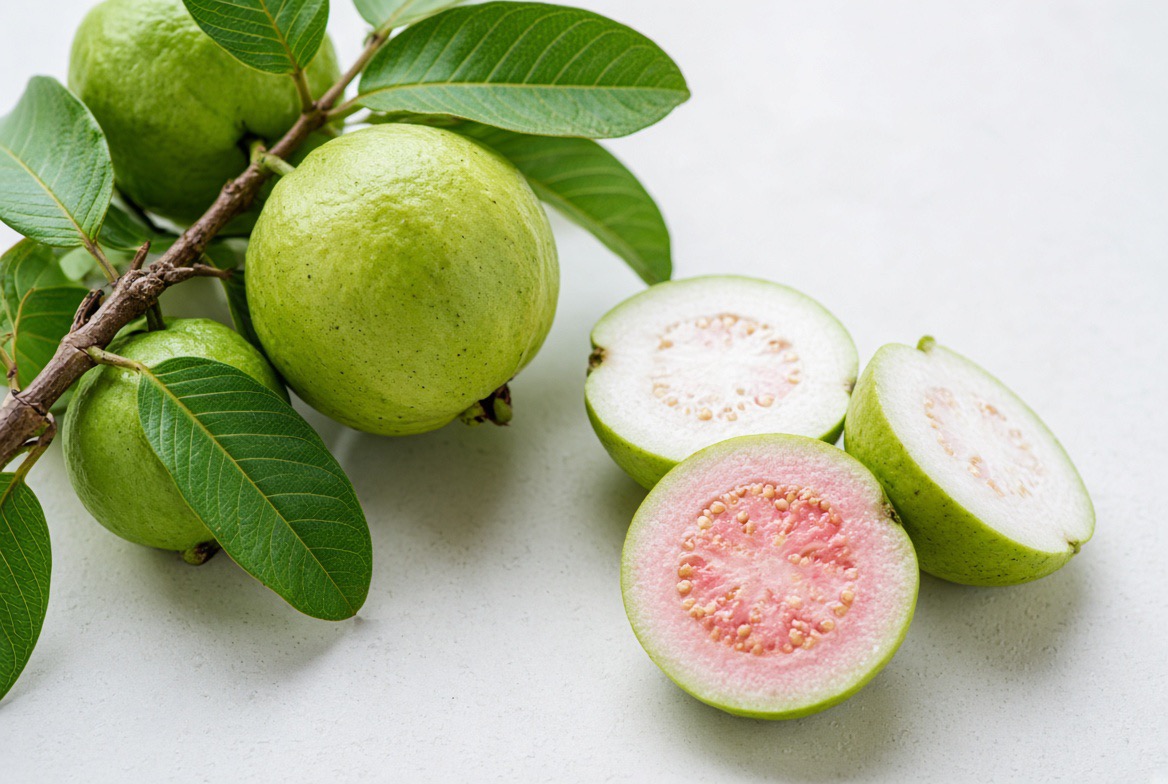
Imagine discovering that one tropical fruit could supposedly lower your blood sugar faster than insulin while making your hair grow longer, thicker, and stronger in just a few days.
It’s an extraordinary promise.
And it’s exactly the kind of headline that attracts attention across social media.
Guava fruit and guava leaves are frequently promoted as natural remedies for everything from diabetes to thinning hair.
Some viral posts claim:
“Guava lowers blood sugar faster than insulin!”
“Drink guava leaf tea and reverse diabetes naturally.”
“Boil guava leaves to make your hair grow rapidly.”
“Guava leaves wake up sleeping hair follicles.”
“One natural remedy replaces expensive medication and hair treatments.”
But what does the science actually say?
Guava is a nutritious tropical fruit containing fiber, vitamin C, and naturally occurring plant compounds.
Researchers have also investigated guava fruit extracts and guava leaf preparations for possible effects on blood glucose.
Separately, laboratory scientists have studied guava leaf compounds for their potential effects on biological pathways involved in hair loss.
However, there is no convincing clinical evidence that guava lowers blood sugar faster than insulin or that guava leaf rinses produce dramatic hair growth in humans.
Understanding the difference between promising preliminary research and proven medical treatment is essential.
Important Medical Disclaimer
This article provides general educational information and does not replace professional medical or dermatological advice.
Never replace insulin or prescribed diabetes medication with guava fruit, guava leaf tea, or herbal supplements.
People with type 1 diabetes require insulin because their bodies produce little or none. Stopping insulin can result in diabetic ketoacidosis, a potentially life-threatening emergency.
People using glucose-lowering medication should discuss concentrated guava extracts or medicinal guava leaf preparations with their healthcare professional.
Homemade scalp treatments may also cause irritation or allergic reactions.
Persistent hair loss deserves appropriate evaluation rather than relying exclusively on unproven remedies.
1. What Is Guava?
Guava, scientifically known as Psidium guajava, is a tropical fruit-bearing plant cultivated in many warm regions.
The fruit may have green or yellow skin and white, pink, or reddish flesh.
Its flavor ranges from mildly sweet to pleasantly tart.
Guava can be enjoyed:
Fresh.
Sliced into fruit salads.
Blended into smoothies.
Added to yogurt.
Or incorporated into desserts.
The leaves have also been used in traditional herbal preparations.
However, guava fruit and guava leaves are not nutritionally or medically interchangeable.
They contain different combinations of compounds, and scientific studies often investigate specially prepared extracts rather than ordinary food.
2. What Nutrients Does Guava Fruit Provide?
Guava is particularly known for its vitamin C content.
It also provides:
- Dietary fiber
- Natural carbohydrates
- Potassium
- Folate
- Small amounts of protein
- Carotenoids
- Various plant polyphenols
Approximate nutrition per 100 grams of raw guava
| Nutrient | Approximate amount |
| Calories | 68 |
| Carbohydrates | 14.3 g |
| Dietary fiber | 5.4 g |
| Protein | 2.6 g |
| Fat | 1 g |
| Vitamin C | 228 mg |
| Potassium | 417 mg |
Nutritional values vary depending on variety, ripeness, and growing conditions.
Guava can contribute meaningful nutrients to a balanced diet.
But containing vitamin C, fiber, and plant compounds does not make it a substitute for diabetes treatment.
3. Does Guava Lower Blood Sugar?
This is one of the more interesting areas of guava research.
Scientists have investigated guava fruit extracts and guava leaf preparations for possible effects on how glucose is absorbed and regulated.
Some studies have found reductions in blood-glucose responses after meals.
However, the research remains limited.
An experimental effect on blood glucose does not establish that guava treats diabetes as effectively as approved medication.
It also does not establish that eating one guava has the same effect as consuming a standardized research extract.
The preparation, dose, study population, and measured outcome all matter.
4. What Did the 2019 Guava Fruit Study Find?
A 2019 randomized clinical study investigated a specially prepared guava fruit extract in healthy adults.
The researchers examined how the extract affected blood-glucose levels after participants consumed a glucose solution.
The trial enrolled 31 volunteers.
The investigators reported a smaller increase in blood glucose at selected time points among participants who received the extract.
For example, the average increase above fasting glucose at 30 minutes was approximately:
2.60 mmol/L in the control group
compared with
1.96 mmol/L in the guava-extract group.
These findings suggest that a particular guava extract may influence intestinal glucose absorption.
But several limitations are important.
The study was small.
It involved healthy adults rather than establishing a diabetes treatment in patients.
The extract was prepared using specialized processing.
And the study did not compare guava with insulin.
It provides preliminary metabolic evidence—not proof that guava works faster than insulin.
5. What About Guava Leaf Tea?
Guava leaf tea has been investigated for its potential influence on post-meal blood glucose.
A 2010 scientific review described human studies involving a standardized guava leaf tea preparation.
In one small comparison, participants with type 2 diabetes continued their existing treatment.
After a meal, the researchers reported that guava leaf tea was associated with a lower two-hour glucose measurement than the control condition.
However, the effect was smaller than that of the glucose-lowering medicine voglibose.
The study did not establish guava leaf tea as an alternative to insulin.
And the findings cannot automatically be generalized to homemade teas brewed from arbitrary amounts of guava leaves.
6. Why the “Faster Than Insulin” Claim Is Misleading
Insulin is a hormone that helps glucose move from the blood into cells.
It is essential for normal glucose regulation.
People with type 1 diabetes produce little or no insulin and require insulin therapy.
Different insulin formulations have different onset times and treatment purposes.
Some act rapidly.
Others provide longer-lasting effects.
The claim that guava lowers blood sugar “faster than insulin” would require rigorous clinical studies directly comparing defined preparations, doses, and outcomes.
Such evidence has not established guava as faster or more effective than insulin.
The small guava studies often cited online did not make that comparison.
Therefore, the viral claim is scientifically unsupported.
7. Why Insulin Cannot Be Replaced by Fruit
For people with type 1 diabetes, insulin is life-sustaining.
The Centers for Disease Control and Prevention explains that people with type 1 diabetes must take insulin every day.
Without enough insulin, blood glucose can rise dangerously.
The body may begin producing excessive ketones, leading to diabetic ketoacidosis.
Symptoms may include:
Extreme thirst.
Frequent urination.
Nausea.
Vomiting.
Abdominal pain.
Rapid or deep breathing.
Fruity-smelling breath.
And confusion.
Diabetic ketoacidosis is a medical emergency.
Guava fruit, guava leaf tea, and herbal supplements cannot replace insulin.
8. Can Guava Help People With Type 2 Diabetes?
Guava can fit into a balanced eating plan for some people with type 2 diabetes.
Whole guava provides fiber along with carbohydrates.
Fiber can help make fruit more filling than a large serving of juice.
But guava still contains naturally occurring sugars.
For people counting carbohydrates, portions matter.
Research involving guava extracts suggests possible metabolic effects worth further study.
However, there is insufficient evidence to recommend guava fruit or leaf preparations as a stand-alone treatment for type 2 diabetes.
Continue prescribed medication and glucose monitoring.
9. Whole Guava vs. Guava Juice
This distinction matters.
Whole guava retains its natural dietary fiber.
Commercial guava juices and nectars may contain much less fiber and substantial added sugar.
Some bottled drinks are made from:
Fruit puree.
Water.
Sugar.
Sweeteners.
And flavorings.
They may contain relatively little actual guava fruit.
For everyday nutrition, whole fruit is generally a better starting point than heavily sweetened juice.
If you have diabetes, review the Nutrition Facts label and account for carbohydrates in your meal plan.
10. Can Guava Cure Diabetes?
No.
There is no convincing clinical evidence that guava cures type 1 or type 2 diabetes.
Some people with type 2 diabetes may achieve remission through appropriate interventions, but that is different from taking a herbal remedy.
Diabetes management may involve:
Balanced nutrition.
Physical activity.
Weight management when appropriate.
Glucose monitoring.
Medication.
And ongoing medical follow-up.
No single fruit or leaf preparation replaces these approaches.
11. What About Guava Leaves for Hair Growth?
The second viral claim is that guava leaves can make hair grow dramatically.
Traditional guava leaf preparations have been used for scalp and hair concerns in some cultures.
Common homemade methods include:
Boiling leaves in water.
Cooling the liquid.
Applying it to the scalp.
Massaging the scalp.
Or using it as a rinse.
Some posts promise visible regrowth in a week.
Others claim guava leaves reactivate dormant follicles.
But human clinical evidence supporting these claims is lacking.
12. What Did the 2022 Hair-Growth Study Find?
A 2022 laboratory study investigated guava leaf extracts and their possible effects on pathways related to androgenetic alopecia.
Androgenetic alopecia is a common form of hereditary hair loss.
It involves genetically susceptible hair follicles gradually becoming smaller.
Researchers studied guava leaf extracts in laboratory cell models.
They identified compounds including:
Catechin.
Gallic acid.
Quercetin.
And other phenolic substances.
The researchers observed changes in the expression of genes related to the androgen pathway.
These findings suggest possible biological mechanisms worth investigating.
However, the study did not demonstrate that guava leaf rinses regrow hair in people.
Laboratory gene-expression changes are not proof of clinically meaningful hair growth.
13. Why DHT Matters in Hair Loss
Dihydrotestosterone, commonly called DHT, is an androgen hormone.
In genetically susceptible individuals, DHT contributes to the miniaturization of hair follicles.
Over time, affected hairs may become:
Thinner.
Shorter.
Less pigmented.
And less visible.
Scientists sometimes investigate compounds that influence the pathways involved in DHT production or activity.
The guava leaf laboratory study examined some of these pathways.
But a substance affecting a molecular marker in a laboratory does not automatically become an effective treatment for hereditary hair loss.
Human trials are needed.
14. Can Guava Leaves Wake Up Dormant Hair Follicles?
There is no convincing human clinical evidence that guava leaf water reactivates dormant follicles.
The phrase “wake up follicles” is commonly used in beauty advertising.
However, hair growth depends on several biological factors, including:
Genetics.
Hormones.
Inflammation.
Nutrition.
Overall health.
And the condition of the follicle itself.
Different causes of hair loss require different treatments.
A homemade herbal rinse cannot be assumed to correct all of them.
15. Does Guava Leaf Water Make Hair Grow Faster?
There is no established clinical evidence that guava leaf water substantially accelerates human hair growth.
Scalp hair typically grows gradually, averaging roughly one centimeter per month, though rates vary.
A claim of several inches of new growth within days is biologically unrealistic.
Sometimes a product improves hair manageability or reduces breakage.
That can make hair appear healthier.
But reduced breakage is different from stimulating new growth at the follicle.
16. What About Guava’s Antioxidants?
Guava leaves contain plant compounds with antioxidant activity in laboratory experiments.
Oxidative stress is one of several processes researchers investigate in relation to hair follicle health.
However, antioxidant activity alone doesn’t establish that a topical extract treats baldness.
Scientists would still need to determine:
Whether active compounds penetrate the scalp.
Whether effective concentrations can be achieved safely.
Whether the product causes irritation.
Whether new hair growth occurs.
And whether the benefit persists over time.
These questions remain important.
17. Can Homemade Guava Leaf Rinses Irritate the Scalp?
Yes, potentially.
Plant preparations can cause irritation or allergic reactions.
Homemade herbal liquids may also become contaminated if prepared or stored improperly.
Possible problems include:
Itching.
Redness.
Burning.
Rash.
Scalp tenderness.
Or worsening irritation.
Do not apply untested concentrated mixtures to broken or inflamed skin.
If irritation occurs, discontinue use.
People with eczema, psoriasis, or chronic scalp conditions should be especially cautious.
18. What Actually Helps With Hair Loss?
Evidence-based treatment depends on the cause.
The American Academy of Dermatology identifies topical minoxidil as one option for certain forms of early hair loss.
Minoxidil can help stimulate growth and reduce additional shedding in some patients.
However, results take time.
The AAD explains that improvement may require approximately 6–12 months of consistent use.
Other treatments may be appropriate depending on the diagnosis.
These can include prescription medications, treatment of scalp disease, or correction of nutritional deficiencies.
No single product works for every type of hair loss.
19. Common Causes of Hair Loss
Hair loss may develop because of:
Hereditary pattern hair loss.
Alopecia areata.
Thyroid disorders.
Iron deficiency.
Significant illness or stress.
Certain medications.
Traction from tight hairstyles.
Scalp infections.
Hormonal changes.
Or scarring inflammatory disorders.
Some causes are temporary.
Others require early treatment to prevent permanent loss.
A dermatologist can help identify the cause rather than assuming every case can be treated with guava leaves.
20. Guava Claims vs. Scientific Reality
| Viral claim | What science supports |
| Guava provides vitamin C and fiber | Yes |
| Guava contains plant polyphenols | Yes |
| Selected extracts may affect post-meal glucose responses | Limited human evidence |
| Guava works faster than insulin | Not established |
| Guava cures diabetes | No |
| Guava replaces insulin | No |
| Guava leaves contain antioxidant compounds | Yes |
| Guava leaf extracts influence certain hair-related pathways in cell studies | Preliminary evidence |
| Guava leaf water makes hair grow rapidly | Not demonstrated |
| Guava regrows hair on bald scalps | Not established |
| Guava prevents all hair loss | No |
| Guava supplements are completely risk-free | No |
21. What About Guava and Skin Health?
Guava contains vitamin C.
Vitamin C is important for normal collagen synthesis and other biological functions.
Eating vitamin C-rich foods supports adequate nutrition.
But guava does not erase wrinkles overnight.
The fruit cannot directly restore lost facial volume or reverse all forms of skin aging.
Daily sunscreen, appropriate moisturizing, and evidence-based treatments have stronger support for managing certain visible signs of aging.
Guava can contribute to a nutritious diet without becoming an anti-aging miracle treatment.
22. Is Guava Safe for People With Kidney Disease?
Guava contains potassium.
Some people with chronic kidney disease need to manage potassium intake, while others do not require restrictions.
Therefore, appropriate portions depend on:
Blood potassium levels.
Kidney function.
Medications.
Dialysis status.
And overall dietary intake.
A large guava smoothie may contain more potassium than a small fruit serving.
People with CKD should follow individualized renal nutrition guidance.
23. Can Guava Cause Blood Sugar to Drop Too Low?
Ordinary portions of guava fruit generally should not be treated as glucose-lowering medication.
However, specially prepared guava extracts and concentrated guava leaf products have been investigated for glucose-related effects.
This raises reasonable caution when combining medicinal-strength preparations with drugs that can cause hypoglycemia.
People using insulin or sulfonylureas should discuss such supplements with their healthcare professional.
Do not adjust insulin doses because you begin eating guava or drinking herbal tea.
24. What About Guava Leaf Supplements?
Commercial guava leaf products may contain concentrated extracts.
Their composition can vary.
A product may contain very different amounts of plant compounds from those used in clinical research.
Supplement labels also do not guarantee clinical effectiveness.
Long-term safety information for concentrated preparations is limited.
If you take prescription medications, have chronic disease, are pregnant, or are breastfeeding, consult your healthcare professional before using medicinal guava leaf supplements.
25. A Simple Guava Smoothie Recipe
Rather than using guava as a diabetes cure, enjoy it as a nutritious fruit.
Fresh Guava and Yogurt Smoothie
Ingredients
- ½ cup ripe guava, chopped
- ½ cup plain unsweetened yogurt
- ¼ cup cold water
- Ice cubes, optional
- A pinch of cinnamon, optional
Instructions
Wash the guava thoroughly.
Cut into small pieces.
Remove hard seeds if necessary for your blender and preferred texture.
Add the guava, yogurt, and water.
Blend until smooth.
Add ice and serve.
This recipe provides fruit nutrients and some protein from yogurt.
It is not a treatment for diabetes or hair loss.
People counting carbohydrates should include the drink in their meal plan.
26. Three Better Ways to Support Healthy Hair
1. Eat Enough Protein
Hair contains structural proteins.
Adequate protein intake supports normal tissue maintenance.
Useful sources include eggs, fish, beans, dairy foods, and other suitable protein-rich foods.
2. Avoid Excessive Hair Damage
Frequent tight hairstyles, aggressive brushing, and excessive heat can increase breakage or contribute to certain forms of hair loss.
Gentle hair care may help preserve existing hair.
3. Identify the Cause of Shedding
If hair loss is persistent or progressive, seek professional evaluation.
Treatment is more likely to help when it addresses the actual cause.
27. Seven Practical Habits for Blood Sugar and Hair Health
Instead of expecting guava to transform both problems, consider the following habits.
Day 1: Review blood-glucose monitoring and prescribed medication.
Day 2: Include a balanced meal with protein and fiber.
Day 3: Enjoy a sensible portion of whole guava if it fits your dietary needs.
Day 4: Avoid aggressive hair styling and unnecessary heat.
Day 5: Review sleep and physical activity habits.
Day 6: Check whether any medications or medical conditions may be contributing to hair loss.
Day 7: Arrange appropriate medical or dermatological follow-up when needed.
These habits are not a seven-day cure.
They are practical steps toward consistent health management.
28. Ten Common Guava Myths
Myth 1: Guava lowers glucose faster than insulin.
No clinical evidence supports this comparison.
Myth 2: Guava leaf tea cures diabetes.
Small studies do not establish a cure.
Myth 3: People with type 1 diabetes can replace insulin with guava.
False and potentially life-threatening.
Myth 4: Guava leaves regrow hair in one week.
No convincing human clinical evidence supports this claim.
Myth 5: Guava leaf water reactivates every dormant follicle.
Not established.
Myth 6: Antioxidants automatically stimulate hair growth.
Laboratory antioxidant activity does not prove hair regrowth.
Myth 7: More guava leaf extract works better.
There is no validated therapeutic dose for rapid hair growth.
Myth 8: Natural remedies cannot cause side effects.
Plant extracts may irritate the skin or interact with medication.
Myth 9: Hair thinning always means vitamin deficiency.
Genetics, hormones, medications, and medical conditions can also be responsible.
Myth 10: A fruit can replace professional diabetes and hair-loss care.
It cannot.
Frequently Asked Questions
Can guava lower blood sugar?
Some small human studies suggest that specific guava extracts or guava leaf tea preparations may reduce certain post-meal glucose measurements. This does not establish guava as an approved diabetes treatment.
Does guava work faster than insulin?
No reliable clinical evidence demonstrates that guava works faster than insulin.
Can guava cure type 2 diabetes?
No. Guava has not been shown to cure type 2 diabetes.
Can people with diabetes eat guava?
Many can. Whole guava provides fiber and nutrients, but its carbohydrates should be included in an individualized eating plan.
Is guava juice good for diabetes?
Unsweetened guava products may fit some meal plans, but whole fruit generally retains more fiber. Sweetened guava nectar may contain substantial added sugar.
Can guava leaf tea replace diabetes medication?
No.
Can guava leaves make hair grow faster?
There is insufficient human clinical evidence to support this claim.
What did scientists find about guava and hair follicles?
Laboratory researchers observed effects of guava leaf extracts on certain genes involved in androgen-related pathways. Those findings have not established real-world hair regrowth in patients.
Can guava leaves reverse baldness?
No convincing clinical evidence demonstrates that guava leaf water reverses baldness.
Can I apply guava leaf water to my scalp?
Homemade preparations may irritate the skin or become contaminated. They are not established hair-growth treatments.
Does eating guava help hair growth?
Guava supplies nutrients such as vitamin C, but eating it has not been demonstrated to produce extraordinary hair growth.
What treatment has stronger evidence for pattern hair loss?
Topical minoxidil is one evidence-based option for certain forms of hair loss. A dermatologist can recommend treatment based on the cause.
How quickly does hair regrow?
Hair growth occurs gradually. Effective treatments often require months before visible improvement.
Is guava safe after age 60?
Whole guava can fit into many balanced diets, but kidney function, diabetes medications, and individual nutrition needs may influence appropriate portions.
Should someone stop insulin after seeing better glucose readings?
No. Medication changes should be made only with appropriate medical guidance.
Final Thoughts: The Truth About Guava, Diabetes, and Hair Growth
Guava deserves recognition as a nutritious tropical fruit.
It provides:
Vitamin C.
Dietary fiber.
Potassium.
Naturally occurring plant compounds.
And an enjoyable addition to a balanced diet.
Scientific research has also identified potentially interesting effects from specially prepared guava extracts.
Small studies suggest possible effects on post-meal blood-glucose responses.
Laboratory studies of guava leaves have identified mechanisms that may deserve further investigation for hair-related research.
But these observations do not establish the extraordinary promises seen online.
Guava has not been proven to lower blood sugar faster than insulin.
Guava cannot replace insulin or prescribed diabetes medication.
Guava leaf water has not been proven to make hair grow enormously or reverse baldness.
For diabetes, focus on proper medication, glucose monitoring, balanced nutrition, and medical follow-up.
For hair loss, identify the underlying cause and consider evidence-based treatment when appropriate.
Enjoy guava as food.
Appreciate the research for what it actually demonstrates.
And avoid allowing a viral miracle claim to replace proven care.
A nutritious fruit can support a healthy diet—but it is not a substitute for insulin or a clinically proven hair-growth treatment.
Health reminder: People with type 1 diabetes need insulin. Do not replace prescribed medication with guava products. Concentrated herbal extracts and homemade scalp treatments may pose additional risks.