
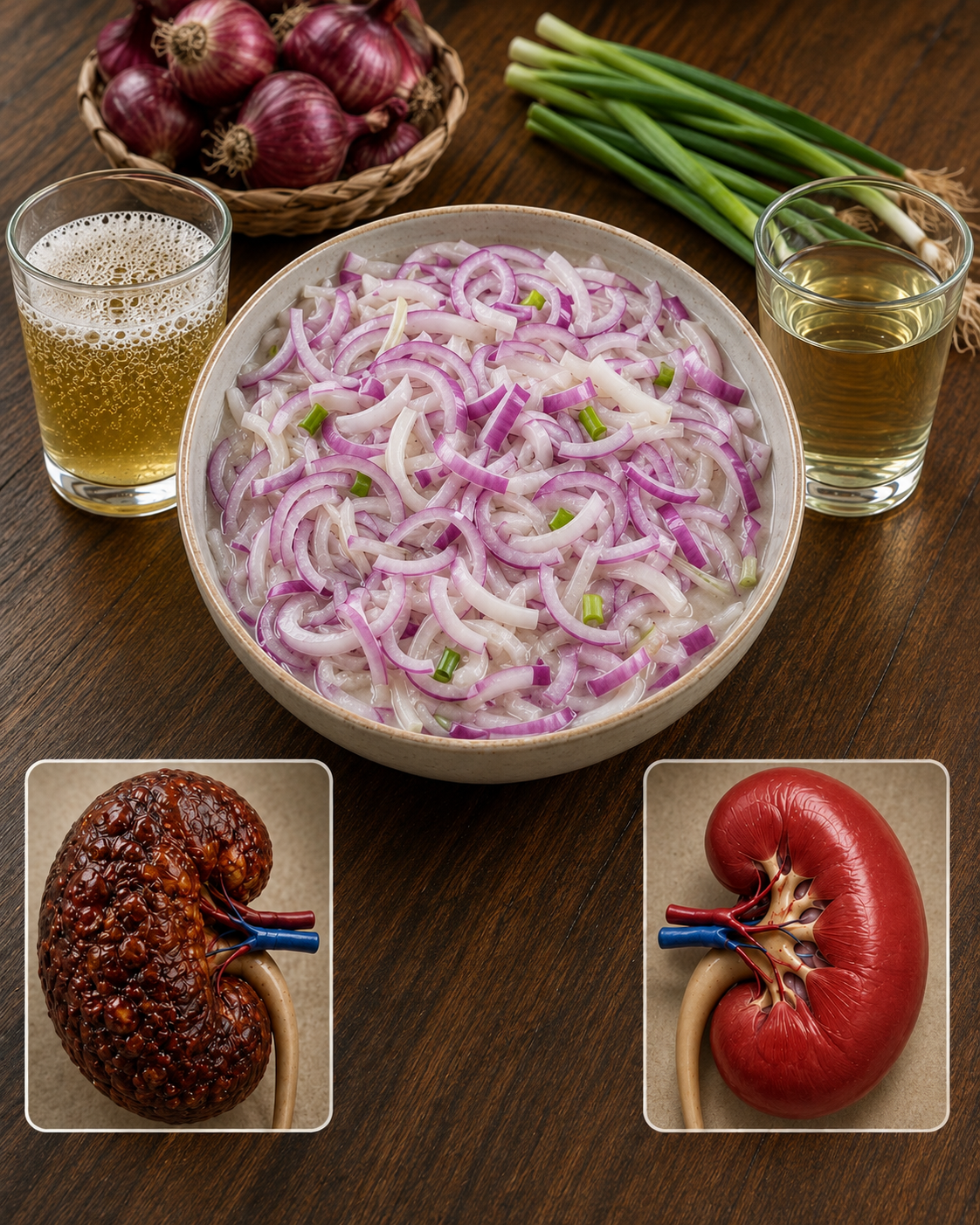
Seeing a creatinine result marked “high” can be unsettling.
It’s easy to go home, search online, and find dozens of lists promising that certain fruits, juices, teas, or vegetables can “flush creatinine out of your kidneys.”
That’s not how creatinine works.
Creatinine is a waste product related largely to normal muscle metabolism. Your kidneys filter it from the blood, which is why clinicians use serum creatinine—together with factors such as age and sex—to estimate kidney filtration through a calculation called eGFR.
But one creatinine result doesn’t tell the entire story.
Creatinine can also be influenced by factors such as:
- Muscle mass
- Recent intense exercise
- Hydration status
- Certain medications
- Creatine supplements
- Recent meat intake
- Acute illness
More importantly, no food has been proven to rapidly “flush” elevated creatinine from the bloodstream.
If kidney function is reduced, the goal is to identify the cause and protect remaining kidney function—not force the kidneys to work harder with a detox.
That said, food absolutely matters.
For many people, choosing more minimally processed, lower-sodium foods and following an eating pattern appropriate for their individual kidney function can support kidney and cardiovascular health.
Here are 8 everyday foods worth discussing with your healthcare professional or renal dietitian—plus the important reason why a “kidney-friendly” food for one person may not be appropriate for another.
Important: Kidney diets are highly individualized. Potassium, phosphorus, protein, sodium, and fluid needs can change depending on your kidney function, laboratory results, medications, and whether you’re receiving dialysis.
🧪 First: What Does Creatinine Actually Tell You?
Creatinine is produced continuously as part of normal muscle metabolism.
Your kidneys remove much of it from the bloodstream.
When kidney filtration declines, serum creatinine may rise.
But clinicians usually don’t interpret creatinine alone.
They may consider:
eGFR
Estimated glomerular filtration rate provides an estimate of how effectively your kidneys are filtering blood.
UACR
The urine albumin-to-creatinine ratio looks for albumin leaking into urine.
Albumin in urine can be an important marker of kidney damage.
Potassium
Kidneys help regulate potassium levels.
Bicarbonate
Kidney disease can affect acid-base balance.
Blood pressure
High blood pressure can both contribute to and result from kidney disease.
Blood glucose or A1C
Diabetes is a major cause of chronic kidney disease.
The trend over time is often more informative than one isolated creatinine number.
🥗 What Does “Kidney-Friendly” Really Mean?
There’s no universal kidney diet.
Someone with early chronic kidney disease and normal potassium may eat differently from someone with advanced CKD and elevated potassium.
Someone receiving dialysis may actually require more protein than someone with non-dialysis CKD.
That’s why internet lists labeling foods simply:
GOOD FOR KIDNEYS
or
BAD FOR KIDNEYS
can be misleading.
Instead, think about your:
- Kidney function
- Laboratory results
- Blood pressure
- Diabetes status
- Medications
- Protein requirements
With that context, several everyday foods can fit comfortably into many kidney-conscious eating patterns.
🍎 1. Apples
Apples are a convenient whole fruit providing:
- Fiber
- Vitamin C
- Polyphenols
- Natural sweetness
They’re also easy to use instead of highly processed desserts.
Try:
- Fresh apple slices
- Chopped apple with oats
- Apple with an appropriate unsalted nut butter
- Baked apple with cinnamon
The benefit isn’t that apples pull creatinine from your blood.
It’s that whole fruit can be part of a nutritious eating pattern while replacing less helpful processed choices.
Better choice:
Whole apple.
Less useful:
Large amounts of sweetened apple juice.
Whole fruit provides fiber and is generally more filling.
🫐 2. Berries
Blueberries, strawberries, raspberries, and blackberries provide:
- Fiber
- Vitamin C
- Anthocyanins and other polyphenols
They’re an easy addition to breakfast or snacks.
Try adding berries to:
- Oatmeal
- Plain yogurt, if appropriate for your kidney plan
- Whole-grain cereal
- A simple fruit bowl
Again, berries don’t “clean” the kidneys.
They’re simply nutrient-dense foods that can fit into many healthy dietary patterns.
🫑 3. Bell Peppers
Bell peppers provide color, crunch, vitamin C, and other plant compounds.
They’re also naturally low in sodium before seasoning or processing.
Try them:
- Raw with a meal
- Roasted
- Added to eggs
- Mixed into rice dishes
- Sautéed with onion and herbs
Instead of relying on salty sauces, season peppers with:
- Garlic
- Lemon
- Herbs
- Black pepper
- Small amounts of olive oil
This is one simple way to make lower-sodium meals taste better.
🥬 4. Cabbage
Cabbage is inexpensive, versatile, and easy to find.
It provides:
- Fiber
- Vitamin C
- Vitamin K
- Various plant compounds
Use it:
- Shredded into salad
- Lightly sautéed
- Roasted
- Added to soup
- Mixed with carrots and herbs
The important issue with soup is often sodium.
A homemade cabbage soup can be very different nutritionally from a canned soup containing a large amount of salt.
🥦 5. Cauliflower
Cauliflower is another versatile vegetable.
It can be:
- Roasted
- Steamed
- Mashed
- Added to soup
- Combined with other vegetables
Vegetables provide fiber and can help build satisfying meals without depending heavily on processed foods.
But don’t fall for the claim that cauliflower specifically lowers creatinine.
It doesn’t function like medication or dialysis.
Its value comes from being part of the overall diet.
🧅 6. Onions
Onions provide flavor without requiring much sodium.
That’s particularly useful because sodium intake can matter substantially in kidney disease.
High sodium intake can contribute to:
- Fluid retention
- Swelling
- Higher blood pressure
Onions work well with:
- Garlic
- Lemon
- Vinegar
- Herbs
- Olive oil
- Pepper
This can help make a lower-sodium meal more enjoyable.
That’s a much more practical kidney benefit than trying to find a “detox onion recipe.”
🫒 7. Olive Oil
Extra-virgin olive oil provides primarily unsaturated fat and is a cornerstone of Mediterranean-style eating patterns.
Use modest amounts for:
- Vegetables
- Salad dressing
- Roasting
- Cooking
- Marinades
Olive oil is also naturally free of sodium unless other ingredients are added.
It doesn’t lower creatinine directly.
But replacing certain saturated-fat-heavy foods with unsaturated fats can support cardiovascular health—and cardiovascular health is closely connected with kidney health.
🐟 8. Fish
Fish can provide:
- High-quality protein
- Vitamins and minerals
- Omega-3 fats in fatty varieties such as salmon, sardines, trout, and mackerel
But this recommendation requires an important qualification:
Protein needs differ in kidney disease.
Someone with non-dialysis CKD may receive different protein advice from someone receiving dialysis.
So don’t suddenly start eating enormous portions of fish because it’s described as kidney-friendly.
Think:
appropriate portion + individualized protein target.
Also watch sodium in:
- Smoked fish
- Salted fish
- Heavily processed seafood
- Certain canned products
Fresh or appropriately selected lower-sodium options may fit better.
📊 The 8 Foods at a Glance
| Food | Why It May Fit | What It Does NOT Do |
| Apples | Fiber and whole-fruit nutrition | Flush creatinine |
| Berries | Fiber and polyphenols | Repair damaged kidneys |
| Bell peppers | Nutrient-rich, naturally low sodium | Reverse CKD |
| Cabbage | Fiber and versatility | Detox the kidneys |
| Cauliflower | Useful minimally processed vegetable | Lower creatinine overnight |
| Onions | Adds flavor without relying on salt | “Clean” kidney filters |
| Olive oil | Unsaturated fat | Restore lost filtration |
| Fish | Protein; some varieties provide omega-3s | Cure kidney disease |
The pattern matters much more than any individual food.
🍽️ A Simple Kidney-Conscious Dinner
Here’s one practical example.
Lemon-Herb Fish With Vegetables
Ingredients
- Appropriate portion of fresh fish
- ½ cup cauliflower
- ½ cup bell peppers
- ½ cup cabbage
- 1 tablespoon chopped onion
- 1 teaspoon olive oil
- Lemon
- Garlic
- Fresh or dried herbs
Directions
Bake or grill the fish without heavily salting it.
Roast or sauté the vegetables.
Finish with olive oil, lemon, garlic, and herbs.
Serve with an appropriate carbohydrate or grain according to your individual eating plan.
This meal isn’t a creatinine treatment.
It’s simply a minimally processed meal that can be adapted to many kidney-conscious diets.
🧂 Sodium May Matter More Than the Latest “Kidney Superfood”
One of the most useful dietary areas to examine is sodium.
A high-sodium diet can contribute to:
- High blood pressure
- Thirst
- Fluid retention
- Swelling
And controlling blood pressure is extremely important for protecting kidney health.
Large sodium sources often include:
- Processed meats
- Packaged soups
- Fast food
- Restaurant meals
- Frozen meals
- Chips
- Salty sauces
- Instant noodles
A food doesn’t have to taste extremely salty to contain substantial sodium.
Read the label.
🍌 Do You Have to Avoid Bananas?
Not automatically.
This is one of the biggest kidney-diet misconceptions.
People hear:
“Kidney disease = no potassium.”
That’s too simplistic.
Some people with CKD develop elevated blood potassium and may need to adjust potassium intake.
Others maintain normal potassium levels and don’t require aggressive restriction.
Potassium also has important physiological functions.
Don’t remove every nutritious potassium-containing food unless your laboratory results and healthcare team indicate that you should.
🍅 The Same Applies to Tomatoes and Potatoes
Tomatoes and potatoes often appear on “never eat with kidney disease” lists because they contain potassium.
But whether they need restriction depends on the individual.
Your:
- Potassium level
- Kidney function
- Medication
- Portion size
- Overall diet
all matter.
A renal dietitian can help you determine which foods actually need modification.
🥛 What About Phosphorus?
As kidney function declines, phosphorus management may become important for some patients.
But phosphorus isn’t equally absorbed from every food.
A particularly useful step is checking ingredient labels for phosphate additives in highly processed foods.
Look for ingredients containing terms such as:
“phos.”
These additives can appear in:
- Processed meats
- Packaged baked goods
- Cola beverages
- Fast foods
- Processed cheese products
- Convenience foods
Don’t automatically eliminate every natural food containing phosphorus without individualized advice.
🥩 Can Too Much Protein Raise Creatinine?
Dietary protein and meat intake can influence creatinine measurements and kidney-related dietary planning.
A very large cooked-meat meal shortly before testing may temporarily influence serum creatinine.
Creatine supplements can also affect creatinine.
Tell your healthcare professional if you use:
- Creatine powder
- Bodybuilding supplements
- High-protein diets
But don’t drastically restrict protein on your own.
Too little protein can contribute to malnutrition and muscle loss.
And dialysis patients often have different protein requirements.
🏋️ Exercise Can Affect Creatinine Too
Intense exercise can sometimes influence creatinine because creatinine is related to muscle metabolism.
That doesn’t mean exercise damages healthy kidneys.
Regular physical activity is beneficial for overall health.
But if you performed unusually strenuous exercise immediately before laboratory testing, mention it when discussing an unexpected result.
The clinician needs context.
💧 Can Drinking More Water Lower Creatinine?
This is another popular internet recommendation:
“Drink gallons of water to flush the creatinine.”
That’s not a safe universal strategy.
Dehydration can sometimes contribute to elevated creatinine.
If you’re dehydrated, appropriate hydration matters.
But drinking excessive amounts of water doesn’t repair reduced kidney filtration.
And some people with advanced kidney disease, heart failure, or significant fluid retention may need individualized fluid limits.
So the goal is:
Appropriate hydration—not forced hydration.
🧃 Skip the “Kidney Detox Juice”
A typical kidney detox recipe might combine:
- Celery
- Beet
- Spinach
- Banana
- Orange
- Coconut water
It sounds incredibly healthy.
For a healthy person, these can be nutritious foods.
But for someone who has been instructed to restrict potassium, concentrating several potassium-rich ingredients into one large drink may be inappropriate.
Juicing also removes much of the fiber found in whole foods.
Kidney diets require context—not viral recipes.
🌿 Be Careful With Herbal Kidney Teas
Products marketed as:
- Kidney cleanse
- Renal detox
- Creatinine flush
- Kidney repair tea
deserve skepticism.
Herbal mixtures may contain multiple biologically active compounds.
Some can interact with medication.
Others may affect electrolytes or fluid balance.
And supplement quality can vary.
A struggling kidney doesn’t necessarily need more substances to process.
💊 Review Your Medications and Supplements
Certain medications can affect kidney function or influence creatinine measurements.
Don’t stop prescribed medication yourself.
Instead, bring a complete list to your healthcare professional, including:
- Prescription medication
- Over-the-counter pain relievers
- Vitamins
- Herbal supplements
- Protein powders
- Creatine
- Workout supplements
This is particularly important if your creatinine changed unexpectedly.
💊 A Word About NSAID Pain Relievers
Common NSAIDs include medications such as ibuprofen and naproxen.
These drugs can affect kidney blood flow and may be risky for certain people with kidney disease.
Someone with reduced kidney function shouldn’t assume an over-the-counter pain reliever is automatically harmless.
Ask your clinician or pharmacist which pain medications are appropriate for you.
🩸 Blood Pressure Is a Kidney Issue
Kidney health and blood pressure are tightly connected.
High blood pressure can damage kidney blood vessels.
Kidney disease can also make blood-pressure control more difficult.
That’s why protecting your kidneys isn’t just about choosing fruit.
It may also involve:
- Taking blood-pressure medication correctly
- Reducing excess sodium
- Exercising appropriately
- Maintaining a healthy weight when relevant
- Avoiding tobacco
- Monitoring blood pressure
These actions can be much more consequential than any “kidney superfood.”
🍬 Diabetes Matters Too
Diabetes is one of the major causes of chronic kidney disease.
If you have diabetes, kidney protection includes appropriate glucose management.
That may involve:
- Monitoring glucose
- Taking prescribed medication
- Managing blood pressure
- Following an appropriate eating pattern
- Regular kidney testing
Don’t replace diabetes medication with fruit, tea, or supplements because they’re advertised as kidney cleansers.
🧪 Two Numbers Worth Asking About
When you’re worried about creatinine, ask your healthcare professional about:
1. eGFR
This estimates kidney filtration.
2. UACR
This measures albumin relative to creatinine in urine and helps identify kidney damage.
Together with other laboratory results and your medical history, these provide much more useful information than staring at creatinine alone.
📈 One Abnormal Result vs. a Trend
A single abnormal creatinine result doesn’t automatically establish chronic kidney disease.
Clinicians often look at:
- Previous results
- Repeat testing
- eGFR
- Urine albumin
- Medications
- Recent illness
- Hydration
- Other health conditions
Chronic kidney disease generally involves abnormalities that persist over time.
So if one result worries you, don’t panic—and don’t begin an extreme detox diet that evening.
Follow up.
🚫 8 Common Mistakes After a High Creatinine Result
1. Trying to Flush Creatinine With Water
More water isn’t always better.
2. Starting a Juice Cleanse
Concentrated juices can create nutrient and electrolyte issues for some kidney patients.
3. Eliminating All Potassium
Not everyone with kidney disease needs potassium restriction.
4. Eating Almost No Protein
Protein requirements are individualized.
5. Taking “Kidney Repair” Supplements
Natural doesn’t mean kidney-safe.
6. Ignoring Sodium
This can matter significantly for blood pressure and fluid retention.
7. Forgetting Creatine Supplements
Tell your clinician if you’re using them.
8. Focusing Only on Creatinine
eGFR, UACR, potassium, blood pressure, glucose, and trends matter too.
🌅 A Simple Kidney-Friendly Day
Your exact diet should match your laboratory results, but a general minimally processed pattern might look something like this:
Breakfast
Oatmeal with berries and chopped apple.
Lunch
Cabbage and bell-pepper salad with an appropriate protein source and olive-oil dressing.
Snack
Whole fruit appropriate for your dietary plan.
Dinner
Lemon-herb fish with cauliflower and vegetables.
Flavor
Use:
- Onion
- Garlic
- Lemon
- Herbs
- Pepper
instead of relying heavily on salt.
Simple meals are often easier to manage than complicated detox recipes.
👴 Why This Matters More After 50
Kidney function tends to deserve more attention with age because conditions affecting the kidneys become more common.
These include:
- High blood pressure
- Diabetes
- Cardiovascular disease
Older adults are also more likely to take several medications.
That means an unexpected creatinine result deserves proper context.
Don’t assume it’s simply “aging.”
And don’t assume a fruit can fix it.
🚨 When Kidney Symptoms Need Prompt Medical Attention
Seek medical attention promptly if you develop concerning symptoms such as:
- Very little or no urine
- Rapidly worsening swelling
- Significant shortness of breath
- Persistent vomiting
- Severe weakness
- Confusion
- Blood in the urine
- Significant flank or back pain
- Sudden major change in urination
Kidney problems can sometimes progress without dramatic symptoms, which is another reason laboratory follow-up matters.
❓ Frequently Asked Questions
Can food lower creatinine?
No individual food reliably flushes creatinine from the bloodstream. Treating the reason for an elevated creatinine and protecting kidney function are more important.
Are apples good for kidneys?
Apples can fit into many kidney-conscious eating patterns and provide fiber and plant compounds. They don’t directly repair kidney damage.
Are blueberries kidney-friendly?
Berries can be useful whole-fruit choices for many people, although your overall diet should still reflect your individual laboratory results.
Should I stop eating bananas?
Not automatically. Potassium restriction should be individualized according to blood potassium, kidney function, medications, and professional guidance.
Should I stop eating protein?
No. Protein needs differ considerably according to the stage of kidney disease and whether someone receives dialysis.
Does lemon water lower creatinine?
There’s no convincing evidence that lemon water directly lowers creatinine by improving kidney filtration.
Can I drink extra water before my next blood test?
Don’t intentionally overhydrate to manipulate a laboratory result. Follow your normal hydration recommendations unless your healthcare professional tells you otherwise.
Are kidney detox teas safe?
Don’t assume so. Herbal products can contain active compounds, interact with medication, and may not be appropriate for impaired kidney function.
What tests should I ask about after elevated creatinine?
Ask about eGFR, urine albumin-to-creatinine ratio (UACR), repeat creatinine when appropriate, electrolytes, blood pressure, and other testing relevant to your situation.
Can creatinine return to normal?
Sometimes, depending on the cause. A temporary rise associated with dehydration, acute illness, medication effects, or other reversible factors may improve. Chronic kidney damage is a different situation and requires appropriate management.
⭐ The Bottom Line
If a creatinine result is keeping you awake, don’t immediately search for a food that promises to “flush your kidneys.”
Instead, start with the bigger question:
Why is the creatinine elevated?
Then look at the complete picture—including eGFR, urine albumin (UACR), potassium, blood pressure, diabetes status, medications, supplements, hydration, and the trend in your previous results.
Foods such as:
apples, berries, bell peppers, cabbage, cauliflower, onions, olive oil, and appropriately portioned fish
can fit into many kidney-conscious eating patterns.
But they’re not medications, and they don’t directly wash creatinine from your bloodstream.
The most useful kidney diet isn’t built around one magical fruit.
It’s built around appropriate portions, less excess sodium and highly processed food, good blood-pressure and glucose management, individualized protein and electrolyte needs, and regular medical follow-up.
And if you’ve actually been diagnosed with chronic kidney disease, consider asking for a renal dietitian.
Because when it comes to kidney nutrition, the safest diet isn’t the one with the longest list of forbidden foods.
It’s the one designed around your own laboratory results and stage of kidney function.