
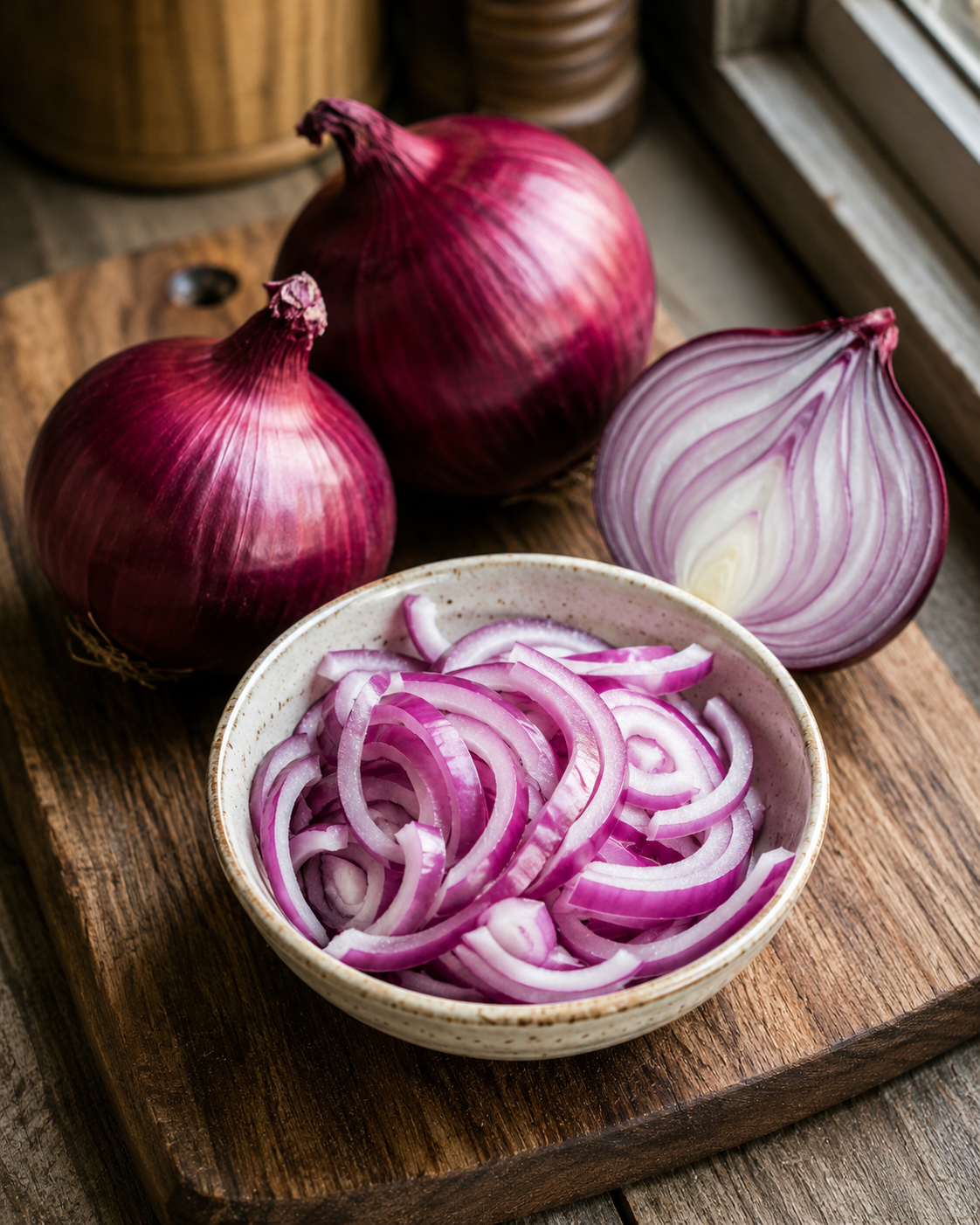
Red onions are inexpensive, widely available, and packed with flavor. They also contain fiber and plant compounds that have attracted interest from researchers studying metabolic health.
That has led to a much bigger claim circulating online: eat a particular red-onion recipe and your blood sugar will be forced down within 10 minutes.
That claim goes far beyond the evidence.
Some research suggests onions may have modest effects on glucose regulation when included regularly in the diet. One small preliminary study involving people with diabetes reported reductions in blood glucose after eating raw onion—but the measurements showing notable effects were taken over hours, not 10 minutes. (PubMed)
A broader systematic review of clinical trials involving onions and related vegetables also found possible improvements in fasting glucose, but the evidence relates to dietary patterns or interventions over time—not an emergency 10-minute glucose-lowering remedy. (PubMed)
For adults over 60, that distinction is especially important. Trying to make glucose fall rapidly can be dangerous for people using insulin or certain diabetes medications.
So instead of promising a “10-minute fix,” here’s what red onion may realistically offer, a simple way to include it in meals, and the precautions older adults should understand.
Important: Red onion is food, not a diabetes medication. Never replace insulin or prescribed diabetes treatment with onion, supplements, vinegar, herbs, or another home remedy.
🧅 Why Are Red Onions Interesting for Blood Sugar?
Red onions belong to the Allium family, alongside garlic, shallots, and leeks.
They provide several potentially useful dietary components, including:
- Fiber
- Flavonoids such as quercetin
- Organosulfur compounds
- Small amounts of vitamins and minerals
Researchers have investigated whether these compounds influence inflammation, insulin signaling, oxidative stress, and glucose metabolism.
That doesn’t mean eating an onion acts like taking medication.
Food contains many interacting compounds, and the effects of an overall diet are generally more important than one ingredient.
🩸 Can Red Onion Really Lower Blood Sugar?
There is some interesting evidence—but it needs context.
A preliminary clinical study examined raw onion consumption in people with type 1 and type 2 diabetes. Participants consumed 100 grams of raw onion, and researchers observed reductions in glucose measurements several hours later. (PubMed)
That’s interesting enough to justify further research.
But it does not demonstrate that:
- Onion works within 10 minutes
- Onion can replace medication
- Everyone will experience the same response
- Larger amounts work better
- Onion cures diabetes
Another meta-analysis examining clinical trials involving onions and related edible plants reported a modest average improvement in fasting glucose. The results across individual studies were not completely consistent, however. (PubMed)
A separate systematic review of randomized trials found potential improvements in several cardiometabolic measures from onion supplementation, particularly with longer interventions. Again, this is very different from an immediate blood-sugar “hack.” (PubMed)
⏱️ What About the “10-Minute” Claim?
This is where the viral claim becomes problematic.
There is no good evidence that eating a red-onion recipe will reliably force high blood glucose down within ten minutes.
And you generally shouldn’t try to make glucose plummet as quickly as possible.
For people with diabetes—especially older adults using glucose-lowering medication—blood sugar that falls too low can become a medical emergency.
The American Diabetes Association defines blood glucose of 70 mg/dL or below as low and recommends prompt treatment with fast-acting carbohydrates. (American Diabetes Association)
The goal of diabetes management isn’t the fastest possible reduction.
It is safe, sustainable glucose control.
👴 Why Adults Over 60 Need Extra Caution
Hypoglycemia deserves particular attention in older adults.
Low glucose can cause symptoms such as:
- Shaking
- Sweating
- Weakness
- Dizziness
- Confusion
- Blurred vision
- Poor coordination
In an older person, dizziness or confusion can also increase the chance of falling.
The ADA specifically highlights hypoglycemia-related falls as an important concern among older adults with diabetes. (American Diabetes Association)
Severe hypoglycemia can lead to loss of consciousness, seizures, coma, and other serious consequences. (American Diabetes Association)
That’s why combining diabetes medication with aggressive home remedies in an attempt to push glucose lower isn’t a good strategy.
🥗 A Simple Red Onion Recipe for a Balanced Meal
Instead of treating onion like medicine, use it as part of a meal containing fiber, protein, and healthy fats.
Simple Red Onion & Cucumber Salad
Ingredients
- ¼ small red onion, thinly sliced
- ½ cucumber, chopped
- 1 medium tomato, chopped
- A handful of leafy greens
- 1 tablespoon olive oil
- Fresh lemon juice to taste
- Black pepper
- Optional fresh parsley
Directions
Combine the vegetables in a bowl.
Add the olive oil and a small squeeze of lemon.
Toss gently.
Serve alongside an appropriate protein source such as grilled chicken, fish, beans, lentils, eggs, or another option that fits your meal plan.
Why this approach makes more sense
The onion isn’t being used as a “treatment.”
Instead, you’re creating a meal around minimally processed foods, vegetables, fiber, and protein.
That overall pattern is much more useful for long-term metabolic health than searching for one ingredient capable of immediately lowering glucose.
🍽️ Should You Eat Red Onion Raw or Cooked?
Both can fit into a healthy diet.
Raw onion retains its crisp texture and strong flavor.
Cooking makes onions softer and sweeter-tasting and may make them easier for some people to tolerate.
You don’t need to eat huge amounts of raw onion to obtain nutritional value.
If raw onion causes digestive discomfort, use smaller quantities or cook it.
Consistency in your overall diet matters far more than forcing yourself to eat a particular preparation.
📊 Viral Claim vs. What the Evidence Actually Suggests
| Claim | What We Actually Know |
| Red onion lowers glucose in 10 minutes | Not established |
| Onion may influence glucose metabolism | Some clinical research suggests potential effects |
| More onion produces faster results | Not established |
| Onion can replace diabetes medication | No |
| Onion can be included in a diabetes-friendly diet | Often, yes |
| Everyone with diabetes should eat raw onion daily | No |
| Long-term diet matters | Yes |
This is an important distinction whenever evaluating food-based diabetes claims.
Promising research isn’t the same as a proven treatment.
🧅 What About Onion Water?
Another popular internet remedy involves soaking or boiling onions in water and drinking the liquid.
There isn’t convincing evidence that onion water provides a special glucose-lowering advantage over simply eating onions as part of food.
Eating the whole vegetable also provides its natural food structure and fiber.
You don’t need to turn nutritious vegetables into medicinal drinks to benefit from eating them.
🍎 What Actually Helps With Post-Meal Blood Sugar?
Rather than relying on one vegetable, consider the entire meal.
A balanced plate often includes:
Non-starchy vegetables
Examples include leafy greens, broccoli, peppers, zucchini, cucumbers, tomatoes, and onions.
Protein
Eggs, fish, chicken, beans, lentils, tofu, and other appropriate protein sources can make meals more satisfying.
Higher-fiber carbohydrates
When carbohydrates are included, minimally processed and fiber-rich choices can often be preferable to heavily refined foods.
Appropriate portions
Even nutritious carbohydrate-containing foods influence glucose.
Your individual needs depend on your medications, activity level, health conditions, and diabetes-management plan.
🚶 Another Simple Habit: Appropriate Activity
For many people, regular physical activity is an important part of diabetes management.
Muscles use glucose for energy, and consistent activity can improve metabolic health.
But exercise recommendations need to match the individual.
Older adults with:
- Heart disease
- Balance difficulties
- Foot ulcers
- Neuropathy
- Severe arthritis
- Recent surgery
- High risk of hypoglycemia
may require personalized advice before changing their activity routine.
A dramatic new exercise program isn’t necessary.
Consistency usually matters more.
⚠️ 7 Red Onion & Blood Sugar Mistakes to Avoid
1. Expecting Results in 10 Minutes
There is no reliable evidence supporting this promise.
2. Replacing Medication With Onion
Never stop insulin or prescribed medication because your glucose looks better after changing your diet.
Medication changes should be made with your healthcare team.
3. Eating Huge Quantities
More isn’t necessarily better.
Large amounts of raw onion can cause bloating, gas, heartburn, or gastrointestinal discomfort.
4. Adding Honey to an “Onion Remedy”
Honey is still a source of carbohydrate and sugar.
A recipe doesn’t become glucose-lowering simply because the sugar comes from a natural ingredient.
5. Drinking Onion Juice Instead of Eating Balanced Meals
There is no need to juice onions to obtain their nutritional benefits.
6. Ignoring Your Glucose Meter or CGM
If you’ve been instructed to monitor glucose, objective measurements are more useful than judging how you feel after eating a remedy.
7. Combining Multiple Supplements and Remedies
Some supplements can interact with medications or potentially intensify their glucose-lowering effects.
The ADA recommends discussing supplements with your healthcare team because some may contribute to hypoglycemia or hyperglycemia when combined with medication. (American Diabetes Association)
💊 Medication Still Matters
Type 2 diabetes isn’t simply caused by eating the wrong food.
Multiple biological factors influence glucose regulation.
Different diabetes medications address these mechanisms in different ways. For example, metformin primarily decreases glucose production by the liver and improves insulin sensitivity. (American Diabetes Association)
Other medications work through completely different pathways.
That’s why replacing an evidence-based medication with one food doesn’t make physiological sense.
Food and medication can both be parts of diabetes management—but they don’t necessarily perform the same job.
🚨 What If Your Blood Sugar Is Already Low?
This is especially important.
If your glucose is 70 mg/dL or below, don’t eat onion hoping to “balance” it.
The ADA recommends the 15-15 rule for many cases of low blood glucose:
Consume approximately 15 grams of fast-acting carbohydrate, wait 15 minutes, and recheck glucose. If it remains below 70 mg/dL, repeat according to the recommended protocol. (American Diabetes Association)
Examples of fast-acting carbohydrate include glucose tablets, glucose gel, regular juice, or regular soda in appropriate portions.
Severe hypoglycemia—particularly confusion, inability to self-treat, seizure, or unconsciousness—is an emergency. (American Diabetes Association)
Follow your prescribed emergency hypoglycemia plan.
🩺 When High Blood Sugar Needs Medical Attention
A red onion salad isn’t an emergency treatment for dangerously high glucose.
Contact your healthcare team if your glucose is repeatedly outside the target range they’ve established for you.
Seek urgent medical guidance when very high glucose occurs together with concerning symptoms such as:
- Vomiting
- Significant dehydration
- Difficulty breathing
- Severe weakness
- Confusion
- Altered consciousness
People using insulin should follow their clinician-provided correction and sick-day plans rather than improvising with foods or supplements.
🌿 A Better Daily Strategy After 60
Instead of searching for something powerful enough to “force” glucose down, focus on habits you can repeat safely.
A realistic routine might include:
Morning: Eat a balanced breakfast appropriate for your diabetes plan and take medications as prescribed.
Lunch: Build meals around vegetables, appropriate protein, and sensible carbohydrate portions.
Afternoon: Stay physically active according to your abilities.
Dinner: Include plenty of non-starchy vegetables—red onion can simply be one of them.
Evening: Monitor glucose if your treatment plan requires it.
Every day: Take medications consistently and pay attention to patterns rather than individual readings alone.
Research in older adults with diabetes has shown that structured nutrition education and self-management interventions can improve metabolic outcomes over time. (PubMed)
That’s less exciting than a 10-minute kitchen trick—but considerably more useful.
❓ Frequently Asked Questions
Can red onion lower blood sugar?
Some small clinical studies and broader analyses suggest onions may have modest effects on glucose regulation. However, onions aren’t established as a standalone treatment for diabetes. (PubMed)
Can red onion lower blood sugar in 10 minutes?
There isn’t good clinical evidence demonstrating a reliable 10-minute glucose-lowering effect.
Is red onion safe for people with diabetes?
As a normal food, onion can generally be incorporated into many balanced eating patterns. Individual dietary needs can differ, however.
How much red onion should I eat?
There is no medically established therapeutic dose of onion for treating high blood glucose. Normal culinary portions are more sensible than attempting unusually large “medicinal” doses.
Is raw onion better than cooked onion?
Both can contribute to a nutritious diet. Choose the form you tolerate and enjoy rather than treating one as medicine.
Can I drink onion water every morning?
There’s no convincing evidence that onion water has unique diabetes benefits. Eating whole vegetables as part of balanced meals is a more straightforward approach.
Can I stop metformin if I eat onions every day?
No. Don’t discontinue metformin, insulin, or another prescribed diabetes medication because you’re eating onions or using another home remedy.
What if onion lowers my glucose too much?
Food-sized portions of onion aren’t normally used as a hypoglycemia treatment, but people taking insulin or medications that can cause lows should follow their glucose-monitoring plan. If glucose reaches 70 mg/dL or below, use your recommended hypoglycemia treatment rather than consuming more onion. (American Diabetes Association)
⭐ The Bottom Line
Red onion is a nutritious vegetable that can absolutely have a place in a balanced diet after age 60.
Research also gives scientists legitimate reasons to continue investigating onions and their plant compounds in relation to glucose metabolism.
But the evidence does not support the dramatic promise that a red-onion recipe will “force blood sugar down in 10 minutes.”
For older adults—particularly anyone taking insulin or glucose-lowering medications—trying to produce a sudden glucose drop can actually be dangerous.
Use red onion for what it is:
A flavorful, nutrient-containing vegetable that can contribute to an overall healthy eating pattern—not an emergency diabetes treatment.
The more dependable approach is balanced nutrition, appropriate physical activity, glucose monitoring when prescribed, regular medical care, and taking diabetes medication correctly.
And if your readings are repeatedly too high or too low, talk with your healthcare team rather than trying to correct the problem with increasingly powerful home remedies.