
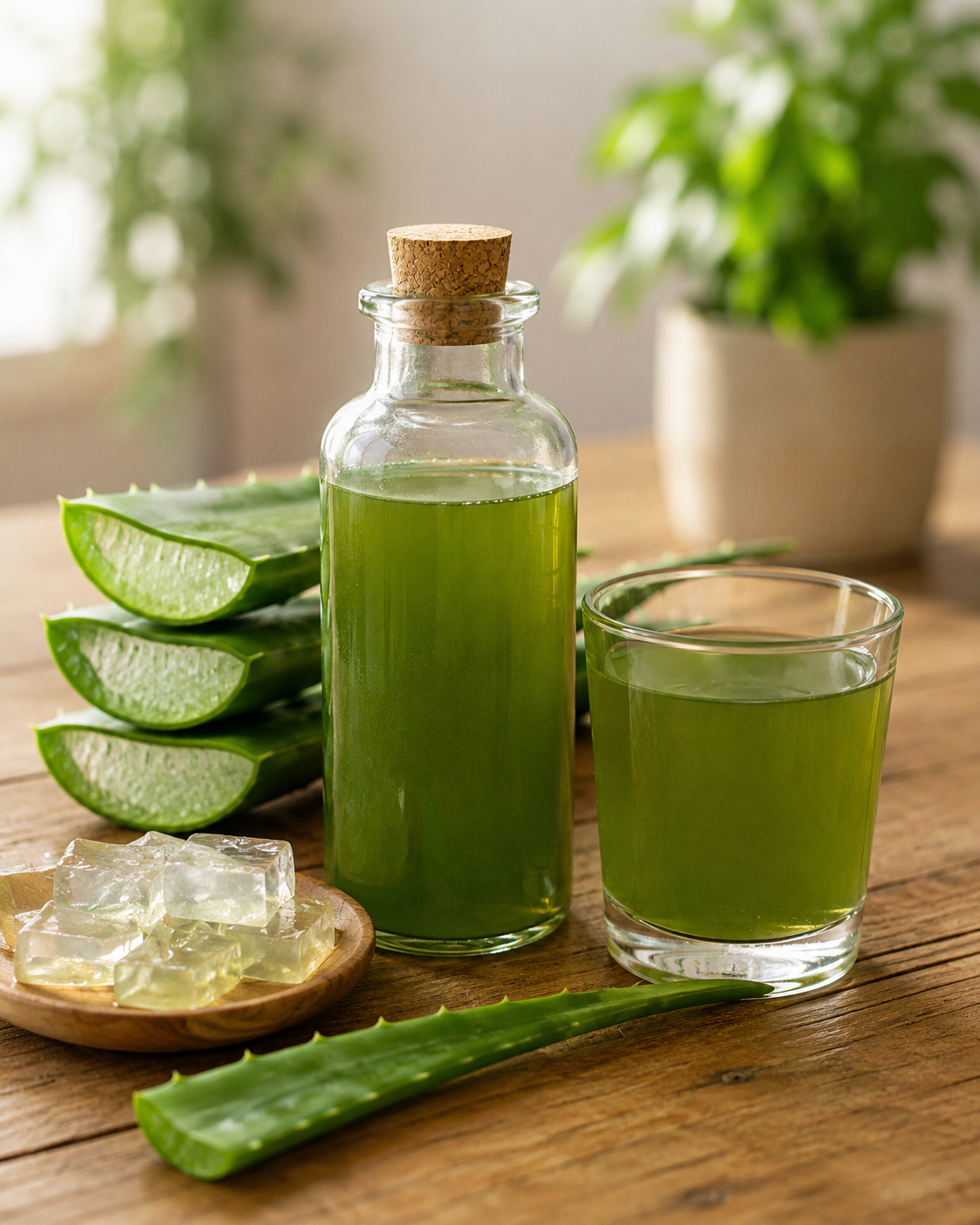
Aloe vera is best known as the cooling gel inside the thick leaves of the aloe plant. For generations, people have used it on the skin and scalp, and today it appears in shampoos, conditioners, masks, and countless DIY hair treatments.
One increasingly popular option is aloe vera hair oil—usually a combination of aloe vera and a carrier oil such as coconut, jojoba, or argan oil.
Social media sometimes takes the claims much further, promising that aloe oil can stop hair loss, dramatically accelerate growth, eliminate dandruff, or restore thinning areas.
The evidence isn’t nearly that simple.
Aloe vera may be useful as part of a gentle scalp and hair-care routine, particularly for moisturizing and conditioning. But it has not been proven to regrow hair in people experiencing medical hair loss, and homemade aloe-oil preparations require special attention to hygiene and storage.
Here’s what aloe vera hair oil may realistically do, how to make and use it more safely, and when hair or scalp changes deserve professional attention.
Important: Aloe vera hair treatments are cosmetic supportive care—not treatments for alopecia, scalp infections, psoriasis, or other medical conditions. Stop using any preparation that causes burning, itching, swelling, or persistent redness.
🌿 What Is Aloe Vera Hair Oil?
Pure aloe vera isn’t actually an oil.
Fresh aloe gel is mostly water.
“Aloe vera hair oil” usually refers to aloe that has been incorporated into or used alongside a carrier oil.
Common carrier oils include:
- Coconut oil
- Jojoba oil
- Argan oil
- Olive oil
- Sweet almond oil
Each creates a somewhat different texture.
For example, coconut oil is heavier and may work well on dry hair lengths, while jojoba tends to feel lighter on the scalp.
The oil primarily provides lubrication and helps reduce the dry, rough feeling of hair. Aloe contributes water-based compounds and creates a soothing, conditioning feel.
This distinction also creates an important DIY safety issue:
Fresh aloe gel and oil don’t naturally form a shelf-stable product simply because they’re mixed together.
Once fresh plant material or water is introduced into a homemade preparation, microbial contamination becomes a concern.
We’ll address a safer approach below.
🌱 What Can Aloe Vera Hair Oil Actually Do?
1. May Help Dry Hair Feel Softer
This is one of the most realistic benefits.
Hair becomes rougher when the cuticle is damaged or when repeated washing, heat styling, coloring, sun exposure, or environmental conditions remove protective lipids.
Applying a small amount of oil can coat the hair shaft and reduce friction.
That can make hair feel:
- Softer
- Smoother
- Easier to detangle
- Less rough
- More manageable
Aloe-based products may add another conditioning element.
The result is primarily cosmetic conditioning, not structural repair of severely damaged hair.
2. May Reduce the Appearance of Frizz
Frizz is influenced by humidity, hair structure, chemical damage, styling practices, and moisture.
A small amount of oil applied to the lengths can help smooth the surface of the hair.
This may make strands look shinier and more controlled.
People with fine hair should start with very little oil because excessive amounts can quickly make hair look greasy or flat.
3. Can Support a Comfortable Scalp
Aloe vera is frequently used for its cooling and soothing properties.
For someone with a mildly dry-feeling scalp, an aloe-based treatment may feel comfortable.
But persistent:
- Redness
- Thick scaling
- Severe itching
- Pain
- Crusting
- Pus-filled bumps
shouldn’t automatically be treated with DIY aloe.
Those symptoms can occur with conditions that require proper diagnosis.
💇 Does Aloe Vera Oil Make Hair Grow Faster?
This is where expectations need to remain realistic.
There isn’t strong clinical evidence demonstrating that homemade aloe vera hair oil can dramatically accelerate human hair growth.
Hair growth occurs inside follicles beneath the skin.
Applying a moisturizing mixture to the outside of the scalp doesn’t automatically stimulate those follicles.
However, good hair care can indirectly help hair look fuller and retain length.
If an oil treatment reduces friction and breakage, more of the existing hair may remain intact instead of snapping along the shaft.
That is different from creating new follicles or treating medical hair loss.
Remember:
Less breakage ≠ faster follicle growth.
Both can produce the appearance of longer or healthier hair, but they’re biologically different.
🧴 Aloe Vera + Coconut Oil: Why Is This Combination Popular?
Coconut oil is one of the most commonly paired ingredients with aloe.
Unlike many hair-oil claims, coconut oil has some research supporting its usefulness in reducing protein loss from hair when used appropriately.
That makes an aloe-and-coconut treatment particularly interesting for:
- Dry hair
- Damaged lengths
- Hair exposed to frequent washing
- Hair prone to breakage
But coconut oil isn’t ideal for everybody.
Some people find it:
- Too heavy
- Difficult to wash out
- Greasy on fine hair
- Uncomfortable on an oily scalp
Jojoba or argan oil may provide a lighter alternative.
📊 Choosing an Oil for Your Hair Type
| Hair/Scalp Type | Option to Consider | Main Goal |
| Very dry/coarse hair | Coconut oil | Rich conditioning |
| Fine hair | Argan oil | Lightweight smoothing |
| Dry-feeling scalp | Jojoba oil | Light conditioning |
| Damaged ends | Coconut or argan oil | Reduce friction |
| Naturally oily scalp | Minimal oil or aloe product alone | Avoid excess buildup |
This isn’t a medical prescription.
Hair texture and individual tolerance matter more than following rigid rules.
🥣 A Safer DIY Aloe Vera Hair Treatment
Many online recipes tell people to mix fresh aloe gel into a bottle of oil and keep it for weeks.
That’s not a good idea.
Fresh aloe contains water. Introducing water or fresh plant material into an oil preparation can create conditions where microorganisms may eventually grow.
Instead, make a small, single-use treatment.
You will need:
- About 1 tablespoon of commercially prepared plain aloe vera gel
- 1 teaspoon of coconut, jojoba, or argan oil
Choose an aloe product without ingredients you already know irritate your skin.
How to prepare it
Place the amount needed for one treatment into a clean bowl.
Add the oil.
Mix immediately before application.
Don’t worry if the mixture separates slightly—water-based aloe and oil naturally resist combining without an emulsifier.
Use it immediately and discard leftovers.
Do not prepare a large jar for long-term bathroom storage.
🧖 How to Apply Aloe Vera Hair Oil
Step 1: Start With a Small Amount
More product doesn’t necessarily produce better results.
Too much oil can make washing difficult and increase buildup.
Step 2: Apply Gently
If your scalp tolerates aloe, spread a thin layer without scratching or aggressively massaging.
For dry or damaged hair, concentrate more of the oil on the mid-lengths and ends.
Step 3: Leave It on Briefly
For a first application, approximately 15–30 minutes is enough to evaluate how your hair and scalp respond.
There’s no good evidence that leaving a DIY treatment on overnight is necessary.
Step 4: Shampoo
Wash gently with your regular shampoo.
Very oily hair may require a second light shampoo.
Step 5: Condition If Needed
Apply conditioner primarily to the lengths and ends.
🌙 Should You Leave Aloe Vera Oil on Overnight?
You can find countless overnight hair-oiling routines online, but longer isn’t automatically better.
Leaving heavy products on the scalp for many hours may:
- Increase buildup
- Make hair difficult to wash
- Irritate sensitive skin
- Transfer product to bedding and facial skin
For most people experimenting with aloe and oil, starting with a short pre-shampoo treatment is simpler.
If your scalp becomes itchy or uncomfortable, wash the product out immediately.
⚠️ 7 Common Aloe Hair-Oil Mistakes
1. Assuming It Will Cure Hair Loss
Hair thinning can have numerous causes, including genetics, aging, hormonal changes, nutritional deficiencies, medications, illness, and scalp disorders.
Aloe oil doesn’t diagnose or correct those causes.
2. Storing Fresh Aloe and Oil for Weeks
Fresh DIY mixtures aren’t automatically preserved.
Prepare small amounts and use them immediately.
3. Using Aloe Straight From the Leaf Without Proper Preparation
The yellow latex located near the aloe leaf’s outer layer contains compounds that can be irritating.
Commercially prepared topical aloe gel is easier to use consistently.
4. Applying Huge Amounts of Oil
A thin coating is usually sufficient.
5. Scrubbing the Scalp Aggressively
Hair that’s already fragile can break more easily with excessive friction.
Massage gently with fingertips—not fingernails.
6. Adding Essential Oils Without Understanding the Risks
Tea tree, rosemary, peppermint, and other essential oils are highly concentrated.
They can irritate skin, particularly when used undiluted.
Adding several essential oils doesn’t automatically make an aloe treatment more effective.
7. Ignoring Persistent Hair Loss
DIY treatments shouldn’t delay evaluation of unexplained or rapidly progressing hair loss.
🧪 Patch Testing Matters
“Natural” doesn’t mean allergy-free.
Before covering your entire scalp, apply a small amount of the finished mixture to a limited area of skin.
Watch for:
- Burning
- Itching
- Redness
- Swelling
- Rash
If a reaction develops, wash the area and don’t use the mixture again.
Anyone with significant eczema, psoriasis, allergies, open scalp wounds, or an existing scalp condition should be particularly cautious about experimenting with DIY preparations.
👩🦳 Hair Changes After 50: Don’t Assume It’s Just Aging
Hair often changes with age.
Individual strands may become finer, density can decrease, and the scalp may become drier.
But noticeable hair loss isn’t always simply “getting older.”
Possible contributors include:
- Genetic pattern hair loss
- Thyroid disorders
- Iron deficiency
- Significant nutritional changes
- Major illness or physical stress
- Certain medications
- Hormonal changes
- Scalp conditions
That’s why treating every case with an oil can delay finding the real explanation.
🚨 When Should You See a Dermatologist?
Consider professional evaluation if you notice:
- Sudden heavy shedding
- Bald patches
- Rapidly widening part
- Significant thinning over a short period
- Scalp pain or burning
- Persistent severe itching
- Thick scales or crusts
- Scarring
- Hair loss accompanied by other unexplained symptoms
A dermatologist can determine whether the problem originates primarily in the hair shaft, scalp, follicles, medications, nutrition, or another medical issue.
Early evaluation can matter for certain forms of hair loss.
✨ A Simple Routine for Healthier-Looking Hair
Hair doesn’t need dozens of homemade treatments.
A practical routine can be surprisingly simple.
Wash appropriately
Choose a shampoo that suits your scalp and washing frequency.
Condition the lengths
Conditioner helps reduce friction and improve manageability.
Limit excessive heat
Frequent high-temperature styling can damage the hair shaft.
Detangle gently
Start at the ends and gradually work upward.
Protect fragile hair
Avoid repeatedly pulling hair into extremely tight hairstyles.
Use oil strategically
A small amount on dry ends or as an occasional pre-shampoo treatment may be enough.
Support nutrition
Hair growth depends on adequate nutrition, including sufficient protein, vitamins, minerals, and overall calories.
Taking random high-dose supplements isn’t the same thing as correcting a diagnosed deficiency.
❓ Frequently Asked Questions
Can aloe vera oil regrow thinning hair?
There isn’t convincing evidence that homemade aloe vera oil regrows hair lost because of conditions such as androgenetic alopecia.
It may condition existing hair and help reduce breakage.
Can I apply aloe vera and oil every day?
Daily application isn’t necessary for most people and may cause buildup. Start occasionally and adjust according to your scalp and hair type.
Which oil is best to mix with aloe vera?
There isn’t one universally best choice.
Coconut oil may suit coarse or very dry hair, while jojoba or argan oil can feel lighter.
Can aloe vera help dandruff?
Aloe may feel soothing, but persistent dandruff can involve conditions such as seborrheic dermatitis.
If scaling and itching continue, an appropriate anti-dandruff treatment may be more useful than oil.
Can I sleep with aloe vera hair oil overnight?
It’s usually unnecessary. Starting with a 15–30 minute pre-shampoo treatment lets you assess tolerance without prolonged exposure.
How often should I use it?
For cosmetic conditioning, once or twice per week may be enough for many people. Adjust according to your hair and scalp response.
Can I mix rosemary oil with aloe?
Essential oils can cause irritation and require appropriate dilution. Don’t assume adding rosemary or another essential oil makes the treatment safer or more effective.
When will I see results?
Softness and manageability may change after the first few applications because those are conditioning effects.
Actual hair growth takes considerably longer and depends on follicle health and the underlying cause of any hair loss.
⭐ The Bottom Line
Aloe vera hair oil can be a useful conditioning treatment, particularly for people dealing with dry, rough, or breakage-prone hair.
The realistic benefits are straightforward:
More softness. Better manageability. Less friction. A comfortable hair-care ritual.
What it shouldn’t be marketed as is a miracle treatment for baldness or a guaranteed way to make hair grow rapidly.
If you want to try it, keep the formula simple, prepare only what you’ll use immediately, patch-test first, and stop if irritation develops.
And if your main concern is new, unexplained, or worsening hair loss, finding the cause is far more important than trying another DIY oil.
Healthy-looking hair usually comes from the combination of gentle hair care, appropriate nutrition, scalp health, and—when necessary—proper medical treatment.