
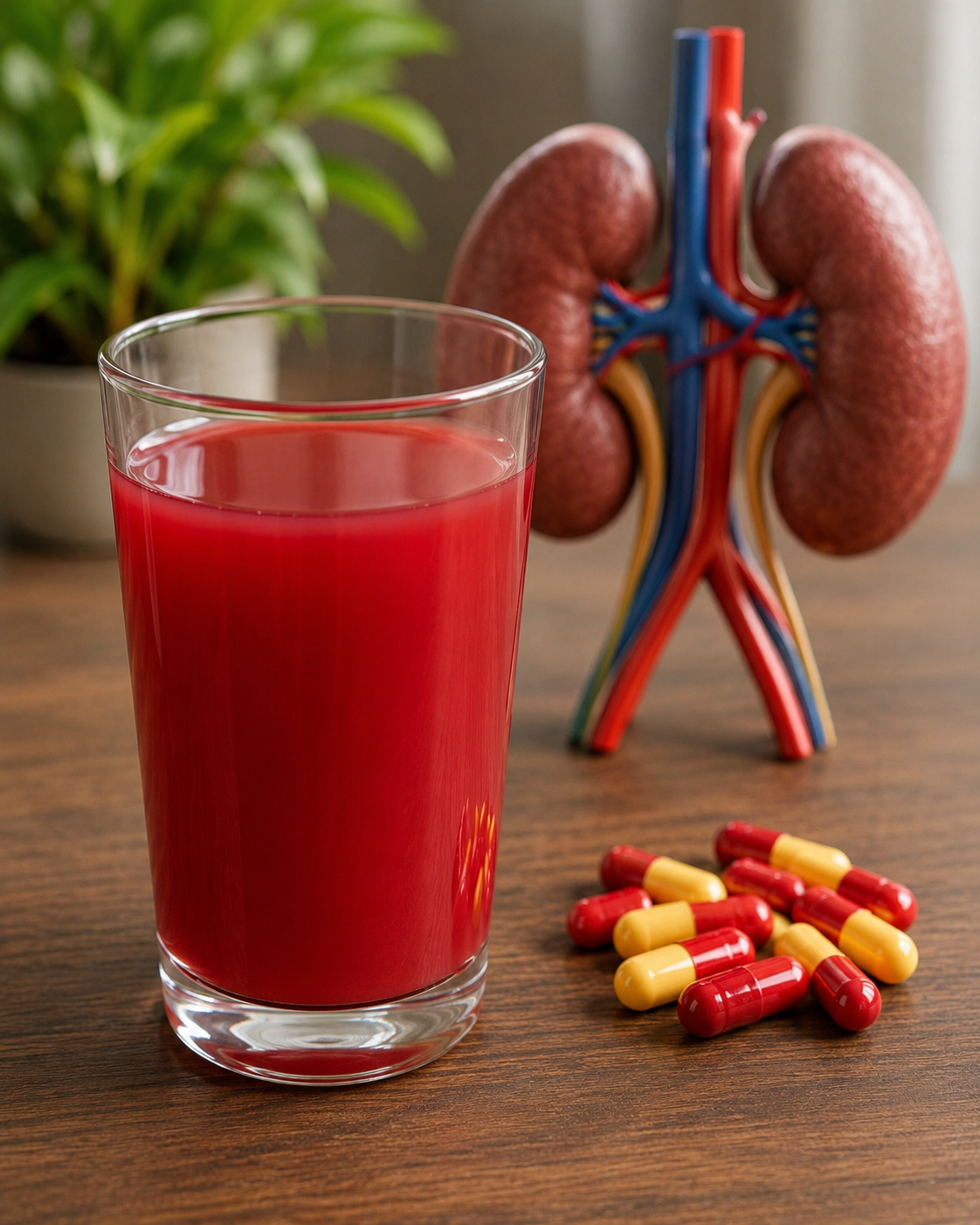
Seeing a layer of foam or persistent bubbles in the toilet can be surprising, especially when it starts happening more often. Online wellness posts sometimes describe this as the kidneys “dumping protein” and claim that certain vitamins can trigger a “kidney reset.”
That description is misleading.
Persistent foamy urine can sometimes occur when excess protein is leaking into the urine, but foam alone cannot diagnose kidney disease. It can also happen simply because urine hits the toilet water forcefully or because urine is more concentrated. A urine test is the reliable way to determine whether excess protein is actually present. (National Kidney Foundation)
And there is another important point: no vitamin has been proven to “reset,” cleanse, or regenerate the kidneys.
Some vitamins are important for normal health, while excessive supplemental amounts of certain nutrients can actually create additional problems for people with kidney disease or a history of kidney stones. (National Kidney Foundation)
Here is what foamy urine may mean, which supplements deserve extra attention, and what you can safely do to support kidney health.
🫧 Why Does Urine Sometimes Look Foamy?
Occasional bubbles aren’t automatically a warning sign.
Urine may temporarily appear bubbly when:
- You urinate quickly or forcefully
- Your bladder is very full
- Your urine is concentrated
- You haven’t been drinking enough fluid
- Cleaning products remain in the toilet bowl
Foam becomes more important when it happens consistently, particularly when accompanied by other symptoms.
The kidneys normally filter waste and excess fluid from the blood while keeping important proteins in circulation.
When the kidney’s filtering structures become damaged, proteins such as albumin can sometimes pass into the urine.
This is known as albuminuria or proteinuria. (American Kidney Fund)
Large amounts of urinary protein can contribute to persistent foamy or frothy urine.
But appearance isn’t enough to tell you whether protein is present.
🧪 How Do You Know If You’re Actually Losing Protein?
You get tested.
One commonly used test is the urine albumin-to-creatinine ratio (UACR).
The American Kidney Fund notes that a UACR below 30 mg/g is generally considered normal, while a result of 30 mg/g or higher can indicate kidney disease and may require additional evaluation. (American Kidney Fund)
A healthcare professional may also evaluate kidney function using blood tests such as estimated glomerular filtration rate (eGFR).
One abnormal result doesn’t necessarily establish chronic kidney disease.
Temporary proteinuria can occur with circumstances such as dehydration, fever, intense exercise, or significant physical stress. (American Kidney Fund)
Repeated testing helps distinguish temporary changes from an ongoing problem.
💊 What About Vitamins and Your Kidneys?
Vitamins are essential nutrients—but supplements can deliver doses far beyond what you’d normally obtain from food.
That matters because the kidneys participate in regulating and eliminating many substances.
For someone with healthy kidneys, ordinary dietary amounts of vitamins are generally not a concern.
For someone with chronic kidney disease (CKD), kidney stones, or certain other medical conditions, supplementation can be more complicated.
The National Kidney Foundation specifically advises people with CKD to use vitamins at healthcare-professional-recommended doses because some nutrients can accumulate or create additional risks. (National Kidney Foundation)
Instead of claiming that four vitamins “reset” the kidneys, let’s look at four supplement categories worth understanding.
1. Vitamin C: Helpful Nutrient, But More Isn’t Always Better
Vitamin C supports numerous normal body functions and is naturally available in fruits and vegetables.
But very high-dose supplementation isn’t automatically better.
Excess vitamin C can increase urinary oxalate under some circumstances. The NIH notes that high vitamin C intake has the potential to increase urinary oxalate and uric acid excretion, which may contribute to kidney-stone formation, particularly in susceptible individuals. (ODS)
The National Kidney Foundation similarly advises extra caution with vitamin C supplements for people concerned about kidney stones. (National Kidney Foundation)
Better approach
Get vitamin C primarily from a balanced diet unless your healthcare professional recommends supplementation.
Don’t start megadoses because a social-media post claims vitamin C will “flush” the kidneys.
2. Vitamin D: Important—but Dose Matters
Vitamin D plays essential roles in bone health and calcium regulation.
Kidney health and vitamin D metabolism are also closely connected, which means people with kidney disease sometimes require individualized vitamin D management.
But taking excessive vitamin D on your own can be dangerous.
Very high supplemental vitamin D intake can cause excessive calcium levels. In severe cases, vitamin D toxicity can contribute to kidney stones and even kidney failure. (ODS)
This doesn’t mean vitamin D is “bad for the kidneys.”
It means supplementation should match your actual needs.
Better approach
If you’re concerned about vitamin D deficiency, discuss testing and appropriate dosing with your healthcare professional instead of assuming a high-dose supplement is necessary.
3. B Vitamins: Sometimes Needed, but Not a Kidney Cleanse
B vitamins are often included in supplements marketed for energy, metabolism, and general wellness.
They’re frequently described as harmless because many are water-soluble.
The reality is more nuanced for people with impaired kidney function.
The National Kidney Foundation explains that the body normally gets rid of excess amounts of many B vitamins and vitamin C through the kidneys. With CKD, however, this process can be altered, so supplementation may need to be individualized. (National Kidney Foundation)
Certain kidney patients may indeed be prescribed specific B vitamins.
But that’s very different from saying B-complex supplements “reset” the kidneys.
Better approach
Don’t assume a high-potency B-complex is necessary simply because you have foamy urine.
Find out what is actually causing the symptom first.
4. Calcium-Containing Supplements: Pay Attention to the Bigger Picture
Calcium is essential for bones, muscles, nerves, and other normal body functions.
But dietary calcium and calcium supplements shouldn’t automatically be treated as identical.
Kidney-stone prevention recommendations can depend on the type of stone, overall diet, medications, kidney function, and urine-test results. The National Kidney Foundation lists calcium-containing mineral supplements among products that may require additional caution in people susceptible to kidney stones. (National Kidney Foundation)
Interestingly, simply eliminating calcium isn’t the answer either.
For certain kidney stones, getting an appropriate amount of calcium from food can actually be important because calcium in the digestive tract can bind substances that contribute to stone formation. (NIDDK)
Better approach
Don’t dramatically increase—or eliminate—calcium because of an online kidney remedy.
If you’ve had kidney stones or have CKD, ask your doctor or renal dietitian what intake is appropriate for you.
📊 Quick Guide: Vitamins, Supplements and Kidney Considerations
| Supplement | Why People Take It | Kidney Consideration |
| Vitamin C | Antioxidant support | High supplemental doses may be problematic for some stone-prone people |
| Vitamin D | Bone and vitamin D support | Excessive doses can cause high calcium and kidney complications |
| B vitamins | Energy metabolism/general supplementation | Needs may differ with impaired kidney function |
| Calcium supplements | Bone health | Appropriate amount depends on diet, kidney function and stone history |
The important word is individualization.
None of these nutrients should automatically be labeled either a kidney cure or a kidney toxin.
Dose, health status, diet, medications, and kidney function all matter.
🚫 The “Kidney Reset” Myth
Your kidneys don’t function like a dirty filter that periodically needs to be flushed or reset.
Healthy kidneys continuously:
- Filter the blood
- Remove metabolic waste
- Balance fluids
- Help regulate electrolytes
- Participate in blood-pressure regulation
- Help regulate red-blood-cell production
- Participate in vitamin D metabolism
When kidney disease develops, treatment focuses on identifying and controlling the underlying problem—not performing a cleanse.
Depending on the person, that may involve managing diabetes, controlling blood pressure, adjusting medications, changing dietary factors, or treating another underlying condition.
Proteinuria itself is treated according to its cause. (American Kidney Fund)
⚠️ 6 Mistakes to Avoid When You Notice Foamy Urine
1. Assuming Foam Automatically Means Kidney Failure
It doesn’t.
Occasional bubbles can have harmless explanations.
Persistent foam deserves investigation, not panic.
2. Trying a “Kidney Detox” Before Getting Tested
Supplements cannot tell you whether your kidneys are leaking protein.
A urine test can.
3. Drinking Excessive Amounts of Water
Hydration is important, but forcing enormous quantities of water isn’t a treatment for proteinuria.
The American Kidney Fund specifically notes that drinking water may dilute urine when someone is dehydrated, but it does not stop damaged kidneys from leaking protein. (American Kidney Fund)
People with advanced kidney or heart conditions may even have individualized fluid restrictions.
4. Taking High-Dose Vitamins Without Checking the Label
A multivitamin, energy supplement, immunity powder, fortified drink, and separate vitamin supplement can contain overlapping nutrients.
Check the total amount you’re consuming.
5. Stopping Prescription Medication
Never discontinue blood-pressure, diabetes, heart, or kidney medication because an online remedy promises to repair the kidneys naturally.
6. Ignoring Persistent Symptoms
Early kidney disease can sometimes produce few obvious symptoms.
Testing is much more useful than waiting for dramatic physical signs.
🩺 When Should Foamy Urine Be Checked?
Consider discussing persistent or unusually foamy urine with a healthcare professional, especially if it repeatedly occurs over several days or weeks.
It’s particularly important when foam appears alongside:
- Swelling around the eyes
- Swollen feet or ankles
- Unexplained fatigue
- Changes in urination frequency
- Blood-colored, pink, brown, or unusually dark urine
- Nausea or loss of appetite
Foamy urine together with swelling can occur when substantial amounts of protein are being lost through the kidneys. (National Kidney Foundation)
👴 Why Older Adults Should Pay Extra Attention
Kidney function can decline with age, and older adults are also more likely to take several prescription medications and supplements.
That makes supplement interactions and inappropriate doses particularly important.
Don’t assume a vitamin is harmless merely because it is available without a prescription.
Bring a complete list of your medications, vitamins, herbal products, powders, and other supplements to medical appointments.
A pharmacist can also help identify potentially unnecessary duplication.
🥗 What Actually Supports Kidney Health?
There’s no single vitamin that replaces the fundamentals.
Depending on your individual health situation, kidney-supportive habits can include:
Control blood pressure. High blood pressure is an important risk factor for kidney damage.
Manage blood sugar if you have diabetes. Long-term high blood glucose can damage the kidney’s filtering structures.
Avoid unnecessary supplement megadoses. More isn’t necessarily better.
Stay appropriately hydrated. Fluid needs vary, particularly for people with kidney or heart disease.
Pay attention to sodium. Excessive sodium intake can make blood-pressure management more difficult.
Eat an overall balanced diet. Your specific protein, potassium, phosphorus, calcium, sodium, and fluid needs can change if kidney function becomes impaired.
Don’t smoke.
Get tested when appropriate.
For people with known kidney disease, individualized advice from a physician and registered dietitian is much safer than following a generic “kidney cleanse.”
❓ Frequently Asked Questions
Does foamy urine always mean protein is leaking from my kidneys?
No.
Urine can bubble simply from hitting the toilet water forcefully. Persistent foam, however, can be associated with proteinuria and should be evaluated with a urine test rather than diagnosed by appearance alone. (National Kidney Foundation)
Can vitamins stop protein from leaking into urine?
There is no standard vitamin regimen proven to stop proteinuria.
Treatment depends on why protein is appearing in the urine.
Can dehydration cause temporary protein in urine?
Yes. Dehydration is among the conditions associated with temporary increases in urinary protein. (American Kidney Fund)
Will drinking more water remove protein from urine?
Not necessarily.
If you’re dehydrated, appropriate hydration can make urine less concentrated. But drinking water does not treat kidney damage responsible for persistent protein leakage. (American Kidney Fund)
Should I stop taking vitamin D?
Not simply because you’ve noticed foamy urine.
Vitamin D can be medically appropriate for many people. The concern is inappropriate or excessive supplementation. Talk with your healthcare professional about your dose and whether testing is appropriate.
Should people with kidney disease take a multivitamin?
Not automatically.
Nutritional requirements change with kidney function, diet, dialysis status, medications, and laboratory results. The National Kidney Foundation recommends taking vitamins in CKD according to healthcare-professional guidance. (National Kidney Foundation)
Can high-dose vitamin C cause kidney stones?
High vitamin C intake can increase urinary oxalate under some circumstances and may be a concern for susceptible individuals, particularly those with certain renal disorders or stone risks. (ODS)
⭐ The Bottom Line
Persistent foamy urine can sometimes be associated with protein in the urine, but you cannot diagnose proteinuria by looking into the toilet.
And despite catchy online claims, there are no four vitamins proven to trigger a “kidney reset.”
The smarter response is:
Notice the pattern → get the appropriate urine and blood tests → identify the cause → treat the underlying issue → use supplements only when they’re actually appropriate.
Vitamin C, vitamin D, B vitamins, and calcium all have legitimate nutritional roles. But supplementation—particularly at high doses—needs more care in people with kidney disease or a history of kidney stones.
If your urine remains unusually foamy, especially if you also develop swelling or other urinary changes, don’t try to cover up the symptom with a cleanse.
Get it checked.
Finding kidney problems early gives you and your healthcare team far more useful options than any supposed detox or reset.