
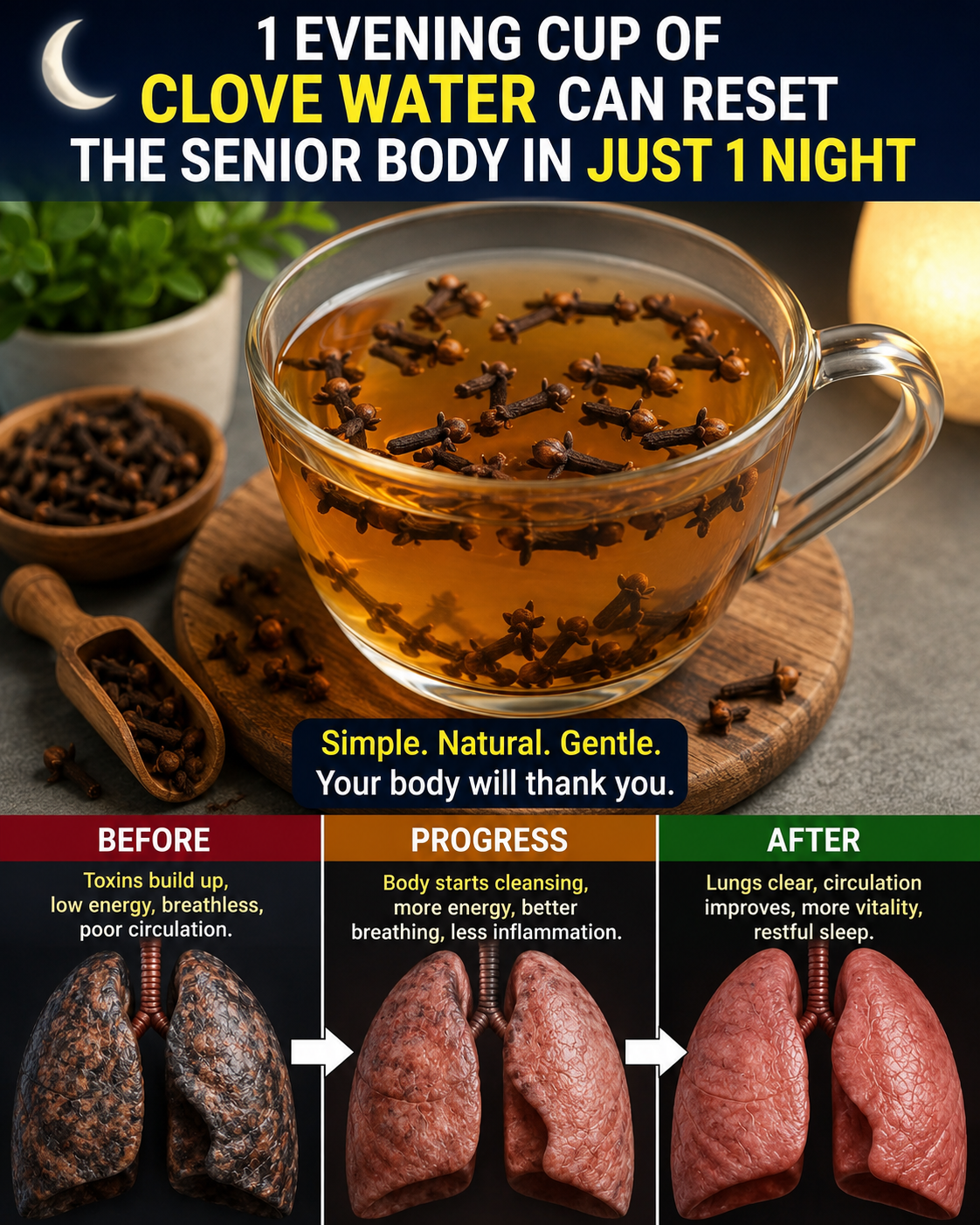
Cloves are small, aromatic flower buds that have been used in cooking and traditional wellness practices for centuries. Their warm, spicy flavor comes with a surprisingly complex mix of plant compounds, including eugenol—the compound responsible for much of clove’s distinctive aroma.
Recently, “clove water before bed” has become a popular nighttime wellness idea. Some people steep whole cloves in hot water and drink the infusion in hopes of supporting digestion, oral freshness, antioxidant intake, or general nighttime comfort.
But natural does not automatically mean risk-free—especially for older adults who may take prescription medications or manage chronic health conditions.
Clove water is not a treatment for disease, and research specifically studying clove water before bedtime is limited. Still, understanding what cloves contain, what benefits are plausible, and where caution is needed can help you decide whether this simple drink belongs in your evening routine.
Important: Clove water is a food-based beverage, not a medication. It should not replace prescribed treatments. Older adults taking daily medications should check with a healthcare professional before using concentrated clove preparations regularly.
🌿 What Exactly Is Clove Water?
Clove water is typically made by steeping whole cloves in hot water, allowing some of their flavor and plant compounds to move into the liquid.
It is considerably different from clove essential oil.
Clove oil is highly concentrated and should not simply be added to drinking water. Essential oils can cause irritation and may be harmful when swallowed improperly.
A mild clove infusion made with culinary whole cloves is the more conservative approach.
A typical cup might contain:
- 1 cup of hot water
- 1–2 whole cloves
- Optional cinnamon stick for flavor
Steep for approximately 5–10 minutes, remove the cloves, allow the drink to cool to a comfortable temperature, and sip slowly.
There is no scientifically established “ideal” bedtime dose of clove water.
🌙 Why Do People Drink Clove Water Before Bed?
There is nothing uniquely therapeutic about consuming cloves at night.
The appeal comes partly from turning a warm, caffeine-free beverage into a relaxing evening ritual.
People commonly drink it hoping to:
- Settle their stomach after dinner
- Replace sugary evening beverages
- Freshen the mouth
- Increase their intake of plant compounds
- Create a calming pre-sleep routine
Some of these ideas are reasonable from a lifestyle perspective, while others have much less scientific evidence than social-media posts sometimes suggest.
Let’s separate the possibilities from the exaggerations.
Potential Benefits of Clove Water
1. Provides Plant-Based Antioxidant Compounds
Cloves contain several bioactive compounds, with eugenol being one of the best known.
These compounds have demonstrated antioxidant activity in laboratory research.
Antioxidants help protect cells against oxidative damage. However, drinking clove water hasn’t been proven to prevent disease or reverse aging.
It is better viewed as another way of incorporating herbs and spices into a varied diet.
Whole foods remain the foundation.
2. May Be a Comfortable After-Dinner Drink
Warm beverages are often pleasant after a meal, and cloves have traditionally been associated with digestive comfort.
Some people report that mild herbal infusions feel soothing after eating.
However, this does not mean clove water treats reflux, ulcers, chronic bloating, or other gastrointestinal conditions.
Interestingly, cloves may irritate the digestive system in some people.
If you develop:
- Heartburn
- Stomach discomfort
- Nausea
- Burning
stop drinking it.
Persistent digestive symptoms deserve medical evaluation rather than increasingly concentrated home remedies.
3. Could Help Replace Sugary Nighttime Drinks
This is one of the simplest potential benefits.
Someone accustomed to drinking soda, sweetened tea, juice, or other sugary beverages at night could substitute an unsweetened herbal infusion.
That can reduce unnecessary added sugar without requiring a complicated dietary change.
Avoid turning clove water into another sugary beverage by adding several teaspoons of honey or sugar.
If sweetness is necessary, keep it modest.
4. May Temporarily Freshen the Mouth
Cloves have a powerful aroma, which is one reason they’ve historically appeared in oral-care traditions.
A mild clove beverage may leave the mouth feeling fresher temporarily.
But it does not replace:
- Brushing twice daily
- Fluoride toothpaste
- Cleaning between the teeth
- Denture care when applicable
- Regular dental examinations
Persistent bad breath can sometimes originate from dental disease, dry mouth, medications, reflux, or other conditions.
Masking the odor doesn’t address the underlying problem.
5. Adds Flavor Without Caffeine
People sensitive to caffeine sometimes struggle to find an interesting evening beverage.
Plain clove water naturally provides a strong flavor without requiring coffee or caffeinated tea.
That can make it useful as part of a nighttime routine.
If sleep is the goal, however, don’t expect cloves themselves to act as a sleeping medication.
🛌 Does Clove Water Actually Improve Sleep?
This deserves clarification because bedtime remedies are frequently marketed as sleep solutions.
There isn’t strong clinical evidence showing that drinking clove water before bed directly improves insomnia or significantly increases sleep quality.
The ritual may still be helpful.
Preparing a warm caffeine-free beverage, dimming the lights, putting away your phone, and following a consistent bedtime can signal that the day is winding down.
In other words, the routine surrounding the beverage may matter more for sleep than the cloves themselves.
For persistent insomnia, frequent nighttime waking, loud snoring, or excessive daytime sleepiness, speak with a healthcare professional.
👴 Why Older Adults Should Be More Careful
Age itself doesn’t automatically make clove water unsafe.
The concern is that older adults are more likely to take multiple medications or live with conditions that can change how herbs and concentrated plant products affect them.
Three areas deserve particular attention.
Blood-Thinning Medications
Eugenol has effects relevant to blood clotting.
Someone taking anticoagulant or antiplatelet medication should therefore be cautious about regularly consuming large or concentrated amounts of cloves.
This is particularly important before surgery or dental procedures.
Using ordinary culinary amounts of cloves in food isn’t necessarily equivalent to drinking concentrated preparations every day.
Ask your doctor or pharmacist about your specific medications.
Blood Sugar
Compounds in cloves have been studied for potential effects related to glucose metabolism.
That doesn’t make clove water a diabetes treatment.
For someone taking insulin or glucose-lowering medication, experimenting with large quantities or concentrated clove products could complicate blood-sugar management.
Never reduce or discontinue diabetes medication because of a home remedy.
Liver Concerns
Clove essential oil and excessive amounts of eugenol can be toxic.
This is another reason more is not better.
A weak culinary infusion is very different from swallowing clove oil, extracts, or highly concentrated preparations.
People with liver disease should discuss regular herbal-product use with their healthcare provider.
⚠️ Clove Water vs. Clove Essential Oil
This distinction is extremely important.
| Product | Concentration | Typical Use | Main Concern |
| Whole cloves | Low | Cooking/seasoning | Usually used in small amounts |
| Mild clove water | Low–moderate | Flavored beverage | May not suit everyone |
| Clove extract/supplement | Concentrated | Supplement | Interaction/dosing concerns |
| Clove essential oil | Very concentrated | Aromatic/topical products | Unsafe if swallowed improperly |
Do not assume that because one or two whole cloves can flavor tea, several drops of clove essential oil can safely be consumed.
They are not equivalent.
🍵 A Conservative Way to Make Clove Water
If your healthcare situation doesn’t give you a reason to avoid cloves, keep the preparation simple.
You will need
- 1 cup water
- 1–2 whole culinary cloves
Directions
Bring the water to a boil and remove it from the heat.
Add the whole cloves.
Allow them to steep for about 5–10 minutes.
Remove the cloves.
Let the beverage cool enough to drink comfortably.
Start with a small amount rather than making an unusually strong infusion.
There is little reason to believe that adding more cloves makes the drink more beneficial.
⏰ When Should You Drink It?
If you want clove water as part of a bedtime routine, drinking it roughly 30–60 minutes before bed is practical.
But timing isn’t medically established.
People who experience reflux may prefer drinking it earlier in the evening rather than immediately before lying down.
And anyone who wakes frequently to urinate should consider limiting fluids close to bedtime.
For older adults, that detail can matter more for sleep quality than the particular herbal drink chosen.
🚫 7 Common Mistakes to Avoid
Making the drink extremely concentrated. Stronger isn’t automatically healthier.
Drinking clove essential oil. A concentrated essential oil is fundamentally different from steeping culinary cloves.
Using it to replace medication. Clove water hasn’t been established as a treatment for diabetes, hypertension, infection, arthritis, or other diseases.
Assuming daily use is right for everyone. Medication interactions and individual health conditions matter.
Adding large amounts of sugar or honey. This can undermine the reason someone chose an unsweetened nighttime beverage.
Ignoring digestive irritation. Stop if it repeatedly causes burning, nausea, reflux, or stomach pain.
Believing dramatic online claims. Be skeptical of promises that clove water “detoxes” organs, melts fat, cures disease, or dramatically reverses aging.
🩺 Who Should Ask a Healthcare Professional First?
Extra caution makes sense if you:
- Take anticoagulant or antiplatelet medication
- Take medication for diabetes
- Have liver disease
- Have a bleeding disorder
- Have significant gastrointestinal problems
- Have an upcoming operation or dental procedure
- Take several prescription medications
- Have previously reacted to cloves or related spices
A pharmacist can also be an excellent resource for checking herb–medication interactions.
🌙 A Better Nighttime Wellness Routine
Instead of expecting one beverage to transform your health, build it into habits that have stronger evidence behind them.
An evening routine might look like this:
After dinner: Take a short, comfortable walk if appropriate for your mobility and medical situation.
1–2 hours before bed: Reduce caffeine, alcohol, heavy meals, and excessive fluids.
About an hour before bed: Lower bright lighting and reduce stimulating screen use.
30–60 minutes before bed: Enjoy a small caffeine-free beverage if desired.
At bedtime: Keep the bedroom dark, quiet, and comfortably cool.
Try to maintain reasonably consistent sleeping and waking times.
Those habits are more likely to influence sleep than relying on a particular spice.
🥗 Supporting Healthy Aging Beyond Herbal Drinks
Cloves can be one small component of a healthy diet, but healthy aging depends on the overall pattern.
Prioritize:
- Vegetables and fruit
- Beans and lentils
- Whole grains
- Nuts and seeds when appropriate
- Adequate protein
- Healthy unsaturated fats
- Regular physical activity appropriate for your abilities
- Consistent sleep
- Routine medical and dental care
Spices can make nutritious foods more enjoyable—which may be their most practical wellness benefit.
❓ Frequently Asked Questions
Can I drink clove water every night?
There isn’t a well-established clinical recommendation supporting daily bedtime clove water. Occasional weak infusions may be reasonable for many healthy adults, but older adults taking medication should check for potential interactions before making concentrated herbal drinks a daily habit.
How many cloves should I put in one cup?
There is no medically established therapeutic dose for homemade clove water. If you’re simply preparing a mild beverage, keeping it weak—such as 1–2 whole cloves per cup—is a conservative approach.
Does clove water burn belly fat overnight?
No reliable evidence shows that clove water causes meaningful overnight fat loss.
Long-term weight management depends primarily on overall nutrition, physical activity, sleep, health conditions, and energy balance.
Does clove water lower blood sugar?
Cloves contain compounds being researched in relation to glucose metabolism, but clove water should not be considered a diabetes treatment.
People using glucose-lowering medication should be particularly careful with concentrated supplements or remedies.
Can clove water lower blood pressure?
Clove water hasn’t been established as a treatment for high blood pressure. Continue prescribed blood-pressure medication unless your healthcare provider specifically changes your treatment.
Is clove water good for sleep?
There isn’t strong evidence that cloves themselves treat insomnia. A warm, caffeine-free beverage may nevertheless fit comfortably into a relaxing bedtime routine.
Can I add lemon or honey?
Small amounts can be added for flavor if they suit your diet and digestive system. Lemon may worsen reflux in some people, while honey adds sugar.
Is clove oil the same thing?
No. Clove essential oil is highly concentrated and carries substantially different safety concerns. Don’t substitute it for whole cloves in this beverage.
⭐ The Bottom Line
Clove water can be a flavorful, caffeine-free addition to an evening routine, and cloves contain interesting plant compounds such as eugenol. But many of the dramatic benefits attributed to bedtime clove water online go well beyond what research currently supports.
For older adults, the safest approach is particularly simple:
Keep it mild. Don’t swallow clove essential oil. Don’t use it as a substitute for medication. Pay attention to medication interactions. Stop if it causes discomfort.
If you take blood thinners, diabetes medications, have liver or bleeding problems, or use several prescription medications, ask your doctor or pharmacist before turning clove water into a daily habit.
A cup of clove water may be an enjoyable ritual—but the foundations of healthy aging remain a balanced diet, appropriate activity, good sleep habits, preventive healthcare, and taking prescribed medications correctly.