
Introduction
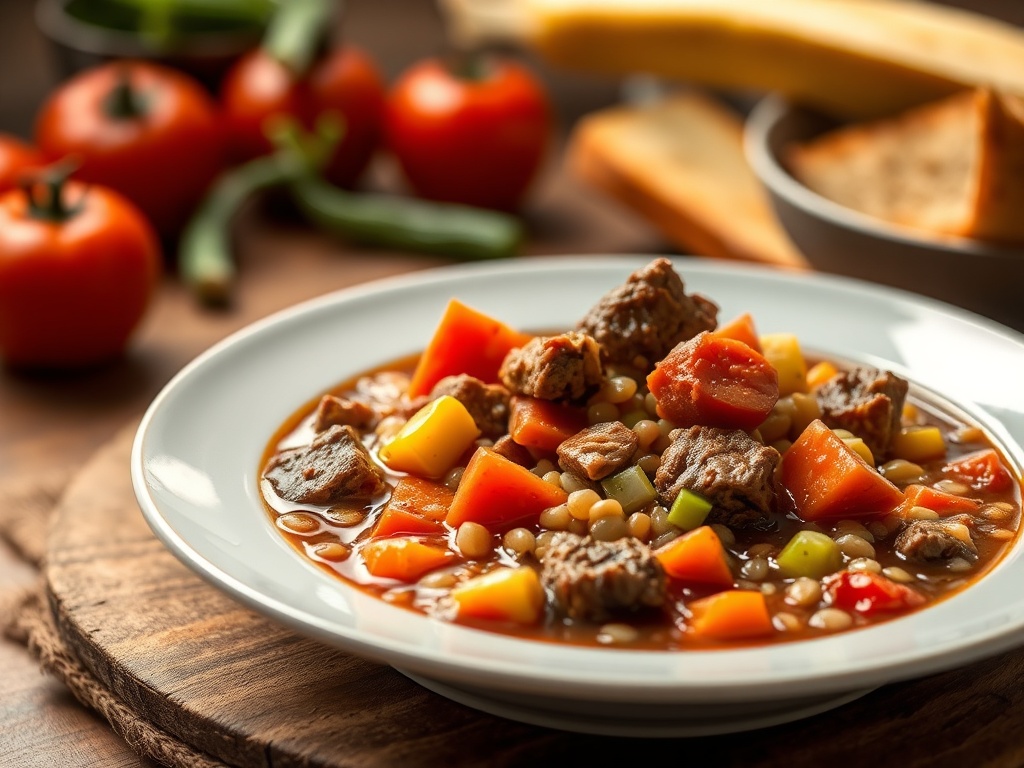
There’s something undeniably magical about a steaming bowl of homemade soup, especially when it’s as hearty and comforting as Beef Barley Soup. This classic dish is a culinary embrace, a warm hug in a bowl that effortlessly transports you to a place of cozy contentment. Imagine tender, succulent pieces of beef, lovingly simmered with a vibrant medley of crisp carrots, aromatic celery, sweet onions, juicy tomatoes, and plump corn, all swimming in a rich, deeply flavored beef broth. Each spoonful is a symphony of textures and tastes, making it the quintessential comfort food for chilly evenings, family gatherings, or simply when you crave something truly satisfying.
Our Beef Barley Soup recipe isn’t just delicious; it’s a testament to the power of simple, wholesome ingredients coming together to create something extraordinary. The star of the show, beyond the tender beef, is the chewy pearl barley, which adds a wonderful texture and makes the soup incredibly filling, transforming it from a mere appetizer into a complete and nourishing meal. What makes this particular recipe stand out is the careful layering of flavors – from the initial browning of the beef to the slow simmering that allows all the ingredients to meld into a harmonious and deeply savory experience. It’s a dish that tastes like it took hours of effort, yet with our straightforward instructions, you’ll find it surprisingly easy to prepare.
This isn’t just any Beef Barley Soup; it’s a delicious combination designed to be both incredibly flavorful and wonderfully versatile. It’s the perfect make-ahead meal, as the flavors only deepen and improve with time, making leftovers a highly anticipated treat. Whether you’re feeding a hungry family, preparing for a cozy night in, or simply looking for a wholesome and satisfying dish to warm you from the inside out, this Beef Barley Soup is guaranteed to become a cherished addition to your recipe repertoire. Get ready to savor every spoonful of this timeless, hearty classic.
Nutritional Information
Per serving (approximate values):
- Calories: 420
- Protein: 35g
- Carbohydrates: 40g
- Fat: 15g
- Fiber: 8g
- Sodium: 650mg
Ingredients
- 2 tablespoons olive oil
- 1.5 pounds beef chuck roast, trimmed and cut into 1-inch cubes
- 1 teaspoon salt, divided
- 0.5 teaspoon black pepper, divided
- 1 large yellow onion, chopped
- 2 carrots, peeled and diced
- 2 celery stalks, diced
- 2 cloves garlic, minced
- 1 (6 ounce) can tomato paste
- 8 cups beef broth (low sodium recommended)
- 1 (14.5 ounce) can diced tomatoes, undrained
- 0.5 cup pearl barley, rinsed
- 1 teaspoon dried thyme
- 0.5 teaspoon dried rosemary
- 1 bay leaf
- 1 cup frozen corn kernels
- 2 tablespoons fresh parsley, chopped (for garnish)
Instructions
- Heat 1 tablespoon of olive oil in a large Dutch oven or heavy-bottomed pot over medium-high heat. Season the beef cubes with 0.5 teaspoon salt and 0.25 teaspoon black pepper.
- Working in batches if necessary to avoid overcrowding, add the beef to the pot and sear on all sides until deeply browned, about 3-4 minutes per side. Browning the beef is crucial for developing rich flavor. Remove the browned beef to a plate and set aside.
- Reduce the heat to medium. Add the remaining 1 tablespoon of olive oil to the pot. Add the chopped onion, diced carrots, and diced celery. Sauté for 8-10 minutes, stirring occasionally, until the vegetables have softened and the onion is translucent.
- Add the minced garlic to the pot and cook for another 1 minute until fragrant.
- Stir in the tomato paste and cook for 2-3 minutes, stirring constantly, allowing it to slightly darken and deepen in flavor. This step enhances the umami in the soup.
- Pour in about 1 cup of the beef broth, scraping the bottom of the pot with a wooden spoon to deglaze and loosen any browned bits. These bits are packed with flavor.
- Return the browned beef to the pot. Add the remaining beef broth, diced tomatoes (undrained), rinsed pearl barley, dried thyme, dried rosemary, and bay leaf. Stir to combine.
- Bring the soup to a boil, then reduce the heat to low, cover, and simmer for at least 1.5 to 2 hours, or until the beef is very tender and the barley is cooked through. Stir occasionally to prevent the barley from sticking to the bottom.
- During the last 15 minutes of simmering, stir in the frozen corn kernels. Continue to simmer until the corn is heated through and the flavors have fully melded.
- Remove the bay leaf before serving. Taste the soup and adjust seasoning with the remaining 0.5 teaspoon salt and 0.25 teaspoon black pepper, or more to taste.
- Ladle the hot Beef Barley Soup into bowls. Garnish with fresh chopped parsley, if desired, and serve immediately.
Cooking Tips and Variations
- Browning the Beef is Key: Do not skip or rush this step. A deep, dark sear on the beef creates a rich, complex flavor that forms the foundation of your soup. Work in batches to ensure the pot isn’t overcrowded, which would steam the meat instead of browning it.
- Deglazing for Depth: After sautéing the aromatics and tomato paste, adding a splash of broth and scraping up the browned bits from the bottom of the pot (known as deglazing) captures all those flavorful caramelized sugars and incorporates them back into the soup.
- Barley Type Matters: This recipe uses pearl barley, which cooks more quickly than hulled barley and has a slightly softer texture. If using hulled barley, increase the simmering time by about 30-60 minutes. Quick-cooking barley can be used to significantly reduce cooking time, but it may become softer and less chewy. Add quick-cooking barley during the last 30 minutes of simmering.
- Don’t Overcook Barley: While you want the barley to be tender, overcooking it can result in a mushy texture. Keep an eye on it during the final stages of cooking.
- Seasoning in Layers: Season the beef before browning, season the vegetables as they sauté, and most importantly, taste and adjust the overall seasoning of the soup at the end. Salt, pepper, and sometimes a pinch of sugar can help balance the flavors.
- Vegetable Swaps: Feel free to customize your soup with other vegetables. Diced potatoes, green beans, peas, or even a handful of fresh spinach added at the very end are all delicious additions.
- Herb Additions: For an extra aromatic boost, consider adding a sprig of fresh rosemary or a few sprigs of fresh thyme tied with kitchen twine during the simmering process, removing them before serving. A pinch of dried marjoram can also complement the beef beautifully.
- Spice Boost: For those who enjoy a little heat, a pinch of red pepper flakes added with the garlic or tomato paste can provide a subtle warmth without overpowering the dish.
- Meat Options: While beef chuck roast is ideal for its tenderness and flavor when slow-cooked, you could experiment with lamb or venison stew meat for a different flavor profile. Adjust cooking times as needed for tenderness.
- Broth Alternatives: While beef broth is traditional, a good quality beef stock or even homemade bone broth will elevate the flavor even further. If using a very rich bone broth, you might want to dilute it slightly with water.
- Gluten-Free Option: To make this soup gluten-free, simply substitute the pearl barley with an equal amount of rice (brown or white, adjust cooking time accordingly) or quinoa. Add these alternatives during the last 20-30 minutes of simmering, or until tender.
- Pressure Cooker/Instant Pot Adaptation: To significantly reduce cooking time, you can adapt this recipe for a pressure cooker. Brown the beef and sauté the vegetables as instructed. Add all ingredients (except corn and parsley) to the pressure cooker. Cook on high pressure for 30-40 minutes for chuck roast, then allow for natural release for 10-15 minutes before quick releasing any remaining pressure. Stir in the corn and simmer on sauté mode for 5 minutes.
Storage and Reheating
Beef Barley Soup is an excellent make-ahead meal, as its flavors tend to deepen and become even more robust the day after it’s cooked. Proper storage and reheating ensure you can enjoy this delicious soup for days to come.
Refrigerator: Once the soup has cooled completely, transfer it to airtight containers. It can be stored in the refrigerator for up to 3-4 days. When reheating, gently warm the desired portion on the stovetop over medium-low heat, stirring occasionally, until heated through. You may need to add a splash of extra beef broth or water if the soup has thickened too much in the refrigerator.
Freezer: This soup freezes beautifully. Allow the soup to cool completely before transferring it to freezer-safe airtight containers or heavy-duty freezer bags. If using freezer bags, lay them flat for more efficient storage. Beef Barley Soup can be stored in the freezer for up to 3 months. To reheat from frozen, transfer the soup to the refrigerator to thaw overnight. Once thawed, reheat on the stovetop as described above, adding more liquid if needed. Alternatively, you can reheat directly from frozen in a pot over low heat, stirring frequently and breaking up the frozen block, until it’s fully thawed and heated through. Be mindful that the barley might absorb more liquid upon thawing, so having extra broth on hand is always a good idea.
Frequently Asked Questions
Why is my beef not tender after simmering for so long?
If your beef is still tough after the recommended simmering time, it usually means it needs more time on the heat. Chuck roast and other stewing cuts contain connective tissue that breaks down into gelatin with prolonged, low-and-slow cooking, resulting in tender, melt-in-your-mouth beef. Factors like the initial cut of beef, the size of the cubes, and even slight variations in your stovetop’s low setting can affect cooking time. Simply continue to simmer the soup, covered, until the beef reaches your desired tenderness. Don’t rush this process; patience is key for truly tender beef.
Can I make this soup in a slow cooker?
Yes, this Beef Barley Soup recipe adapts wonderfully to a slow cooker! To do so, you would still want to brown the beef and sauté the mirepoix (onions, carrots, celery) and garlic on the stovetop as directed, as these steps are crucial for flavor development. Then, transfer the browned beef, sautéed vegetables, tomato paste, beef broth, diced tomatoes, barley, dried herbs, and bay leaf to your slow cooker. Cook on low for 6-8 hours or on high for 3-4 hours, or until the beef is tender and the barley is cooked. Add the frozen corn during the last 30 minutes of cooking. Season to taste before serving.
My soup is too thick/thin. How can I fix it?
The consistency of Beef Barley Soup can vary depending on how much liquid the barley and other ingredients absorb. If your soup is too thick, simply add more beef broth or water, about half a cup at a time, stirring well and bringing it back to a gentle simmer until it reaches your desired consistency. If your soup is too thin, remove the lid and allow the soup to simmer gently for an additional 15-30 minutes, uncovered, to allow some of the liquid to evaporate and the soup to naturally thicken. Be careful not to over-reduce it, especially if the barley is already fully cooked, as it can become mushy.
What’s the difference between pearl barley and hulled barley?
The main difference lies in how they are processed. Pearl barley has had the outer husk and some of the bran layer removed, making it quicker to cook and giving it a softer texture. It’s the most common type found in grocery stores. Hulled barley, on the other hand, only has the outermost inedible husk removed, retaining more of its bran and germ. This makes it more nutritious but also requires a longer cooking time and results in a chewier texture. For this recipe, pearl barley is typically preferred for its quicker cooking time and pleasant chewiness, but hulled barley can be used with adjusted cooking times if you prefer its nutritional benefits and firmer bite.