
Introduction
There’s an undeniable magic that fills a home when fresh bread is baking. The aroma alone is enough to transport you to a place of comfort and warmth, promising a culinary delight that few other foods can rival. But often, the quest for homemade bread can feel daunting, with many bakers aiming for that elusive balance of rich flavor and a consistently moist crumb. This is where our Moist, Seed-Topped Loaf Bread steps in, offering a solution to the common desire for a truly exceptional homemade loaf that doesn’t compromise on either.
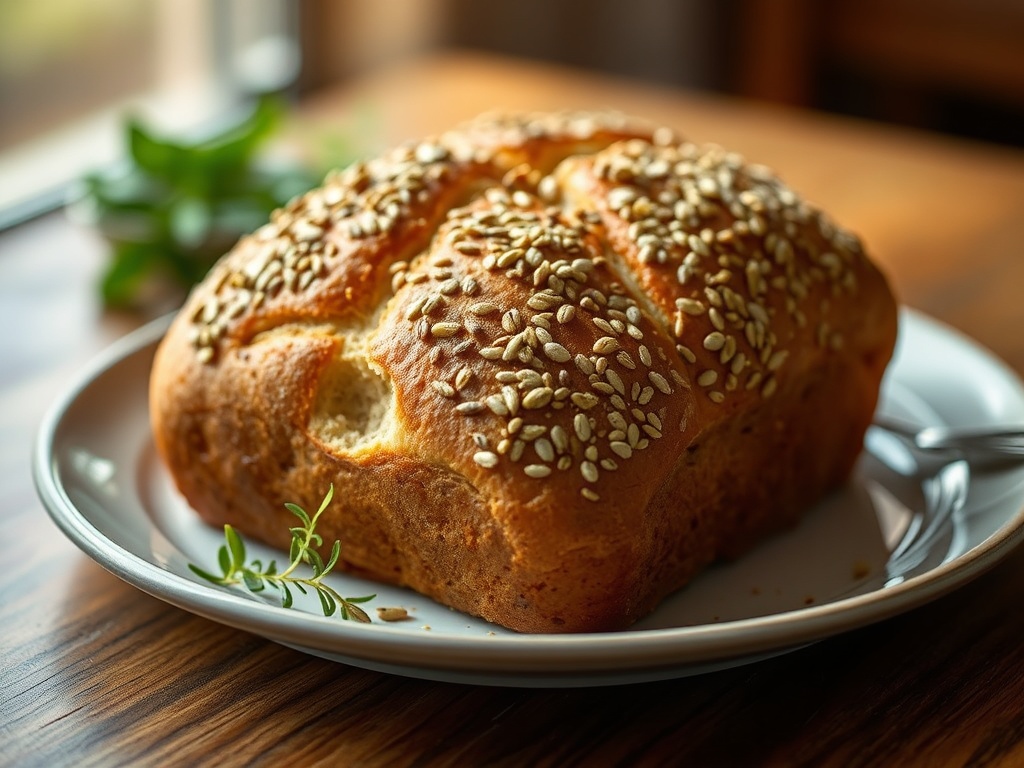
This recipe isn’t just about baking bread; it’s about crafting an experience. We’ve meticulously designed it to deliver a loaf that boasts an incredibly tender and moist interior, a hallmark of truly great bread. What truly sets this loaf apart, however, is its magnificent seed topping. A vibrant blend of various seeds not only enhances the visual appeal, turning a simple loaf into a work of art, but also infuses every slice with an irresistible nutty flavor and a delightful textural crunch. It’s a symphony for your senses, elevating the humble loaf to something extraordinary.
Prepare to embark on a baking journey that is as rewarding as it is delicious. Whether you’re a seasoned baker looking for a new favorite or a home cook eager to master the art of bread making, this Moist, Seed-Topped Loaf Bread will quickly become a cherished recipe in your repertoire. Get ready to fill your home with the intoxicating scent of freshly baked bread and savor the unparalleled taste of your own handmade masterpiece.
Nutritional Information
Per serving (approximate values):
- Calories: 250
- Protein: 8g
- Carbohydrates: 40g
- Fat: 6g
- Fiber: 3g
- Sodium: 300mg
Ingredients
- 3 cups (360g) all-purpose flour, plus more for dusting
- 1 packet (2 ¼ teaspoons or 7g) active dry yeast
- 1 tablespoon granulated sugar
- 1 teaspoon fine sea salt
- 1 cup (240ml) whole milk, warmed to 105-115°F (40-46°C)
- ¼ cup (60ml) warm water, 105-115°F (40-46°C)
- ¼ cup (56g) unsalted butter, melted and cooled slightly
- 1 large egg, at room temperature, plus 1 for egg wash
- For the Seed Topping:
- 1 tablespoon poppy seeds
- 1 tablespoon sesame seeds (white or black)
- 1 tablespoon flax seeds
- 1 tablespoon sunflower seeds
- 1 teaspoon coarse sea salt (optional, for extra crunch and flavor)
Instructions
- Activate the Yeast: In a small bowl, combine the warm water and granulated sugar. Sprinkle the active dry yeast over the top. Let it sit for 5-10 minutes until foamy, indicating the yeast is active. If it doesn’t foam, your yeast may be old or the water temperature was incorrect, and you should start with new yeast.
- Combine Wet Ingredients: In a large mixing bowl (or the bowl of a stand mixer fitted with the dough hook attachment), whisk together the activated yeast mixture, warm milk, melted butter, and one large egg until well combined.
- Add Dry Ingredients: In a separate bowl, whisk together the all-purpose flour and fine sea salt. Gradually add the dry ingredients to the wet ingredients, mixing until a shaggy dough forms.
- Knead the Dough: If using a stand mixer, knead on low speed for 8-10 minutes until the dough is smooth, elastic, and pulls away from the sides of the bowl. If kneading by hand, turn the dough out onto a lightly floured surface and knead for 10-15 minutes, adding only minimal flour if necessary, until it’s smooth and elastic. The dough should be slightly tacky but not sticky.
- First Rise (Bulk Fermentation): Lightly oil a clean large bowl. Place the dough in the bowl, turning it once to coat the top. Cover the bowl tightly with plastic wrap or a clean kitchen towel. Let it rise in a warm, draft-free place for 1 to 1.5 hours, or until doubled in size.
- Prepare Loaf Pan: Lightly grease a 9×5-inch (23×13 cm) loaf pan with butter or non-stick spray.
- Shape the Loaf: Once the dough has doubled, gently punch it down to release the air. Turn the dough out onto a lightly floured surface. Gently shape it into a rectangle roughly the length of your loaf pan. Fold the shorter ends towards the center, then roll the dough tightly from one long side to the other, creating a log. Pinch the seam closed firmly.
- Second Rise (Proofing): Place the shaped dough seam-side down into the prepared loaf pan. Cover the pan loosely with plastic wrap or a clean kitchen towel. Let it rise again in a warm, draft-free place for 30-45 minutes, or until the dough has risen about 1 inch above the rim of the pan and looks puffy.
- Preheat Oven & Prepare Egg Wash: About 15 minutes before the second rise is complete, preheat your oven to 375°F (190°C). In a small bowl, whisk the remaining large egg with 1 tablespoon of water or milk to create an egg wash.
- Apply Topping: Gently brush the top of the risen loaf with the egg wash, ensuring an even coat. In a shallow dish, combine the poppy seeds, sesame seeds, flax seeds, sunflower seeds, and optional coarse sea salt. Sprinkle the seed mixture generously over the egg-washed top of the loaf, pressing lightly to adhere.
- Bake the Loaf: Place the loaf pan in the preheated oven. Bake for 30-35 minutes, or until the crust is deeply golden brown and an instant-read thermometer inserted into the center of the loaf registers an internal temperature of 190-200°F (88-93°C).
- Cool Completely: Once baked, immediately remove the loaf from the oven and carefully turn it out onto a wire rack. Let the bread cool completely for at least 1.5 to 2 hours before slicing. This is crucial for the crumb to set and for the bread to achieve its optimal texture.
Cooking Tips and Variations
For consistent results, especially with flour measurements, always use a kitchen scale. Weighing your ingredients ensures accuracy far beyond volume measurements, which can vary greatly depending on how packed your flour is. Additionally, ensuring all your cold ingredients, such as eggs and milk, are at room temperature before mixing will lead to better emulsification and a smoother dough development. If your kitchen is cool, you can create a warm environment for proofing by placing the covered dough in a slightly warmed (but turned off) oven or near a sunny window. Don’t rush the proofing process; visual cues like the dough doubling in size and feeling springy to the touch are more reliable than strict clock times. To check for doneness, relying on an instant-read thermometer for an internal temperature of 190-200°F (88-93°C) is the most accurate method, even if the crust looks perfectly golden. Remember, cooling the bread completely on a wire rack is non-negotiable; slicing hot bread can lead to a gummy texture and prevent the starches from fully setting.
This recipe is wonderfully versatile. Feel free to experiment with your seed blend; chia seeds, pumpkin seeds, or even a sprinkle of rolled oats can be added for different flavors and textures. For a touch of whole grain goodness, substitute up to 1/2 cup of the all-purpose flour with whole wheat flour, though this might require a slight adjustment in liquid. To make a savory loaf, consider incorporating dried herbs like rosemary or thyme into the dough. If you prefer a slightly sweeter bread, a tablespoon of honey or maple syrup can be added to the liquid ingredients. For an even richer crust, you can brush the loaf with melted butter immediately after baking. If you’re feeling adventurous, try scoring the top of the loaf with a sharp knife or razor blade before the egg wash and seeds, which can create beautiful patterns and control the expansion of the bread during baking.
Storage and Reheating
To keep your Moist, Seed-Topped Loaf Bread fresh, store it at room temperature in an airtight container or a bread bag. It will stay fresh for 3-4 days. For longer storage, this bread freezes exceptionally well. Once completely cooled, slice the loaf and place the slices in a freezer-safe bag or container, separating layers with parchment paper if desired. It can be frozen for up to 3 months. To enjoy frozen slices, simply toast them directly from the freezer, or thaw at room temperature before use. Reheating a whole loaf can be done by wrapping it in foil and warming it in a 300°F (150°C) oven for 10-15 minutes, which helps to revive its texture and aroma.
Frequently Asked Questions
Why is my bread dense and not fluffy?
A dense crumb is often a sign of under-proofing or insufficient kneading. Ensure your yeast is active, and allow the dough to rise fully in both the first and second stages. Also, proper kneading is crucial for developing the gluten structure that traps gases and creates a light, airy texture. Make sure you’re kneading for the recommended time until the dough is smooth and elastic.
Can I use different types of flour?
While this recipe is designed for all-purpose flour, you can certainly experiment. Substituting a small portion (up to 25-30%) of the all-purpose flour with whole wheat or bread flour can work, but you may need to adjust the liquid slightly as whole wheat flour absorbs more moisture. Bread flour has a higher protein content, which can result in a chewier texture. Always introduce new flours gradually to understand their impact on the dough.
My seeds fell off after baking. What went wrong?
The egg wash acts as the “glue” for the seeds. If your seeds are falling off, it’s usually because the egg wash wasn’t applied generously enough, or the seeds weren’t pressed lightly onto the surface to ensure good contact. Make sure to brush the entire top of the loaf with egg wash before sprinkling on the seeds, and give them a gentle press.
How can I tell if my yeast is still good?
To test your yeast, combine 1 teaspoon of sugar with ¼ cup of warm water (105-115°F or 40-46°C). Sprinkle 2 ¼ teaspoons (one packet) of active dry yeast over the mixture. Let it sit for 5-10 minutes. If the mixture becomes foamy and bubbly, your yeast is active and ready to use. If there’s no activity, your yeast is likely expired or inactive, and you should discard it and use fresh yeast.