
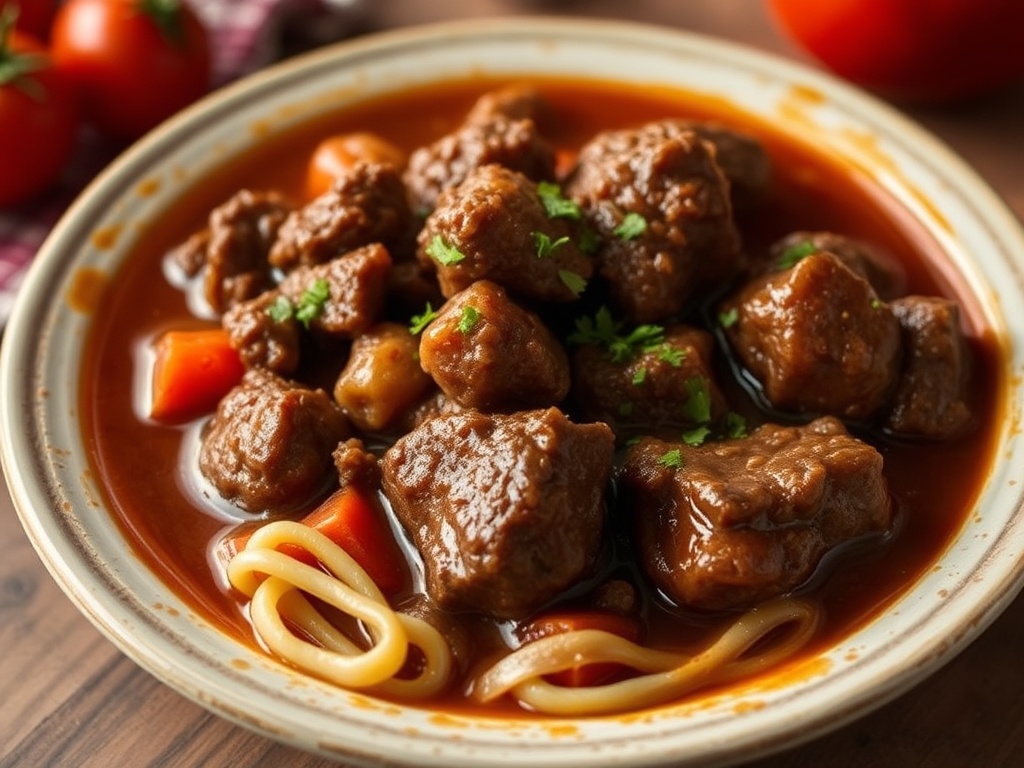
Hearty Beef Stew Goulash with Tender Meat
Introduction
Imagine a chilly evening, a warm kitchen, and the rich, comforting aroma of a simmering stew filling every corner. That’s the magic of a truly exceptional beef goulash. This isn’t just any stew; it’s a culinary embrace, a dish that speaks of hearth and home, promising deep, savory flavors and meat so tender it practically melts in your mouth with every bite. Originating from the rustic kitchens of Hungary, where it began as a hearty soup enjoyed by herdsmen, goulash has evolved into a beloved, substantial stew that transcends borders, bringing warmth and satisfaction to tables worldwide. While its roots are humble, its appeal is universal, and our recipe honors that tradition while elevating the experience to new heights of deliciousness.
What sets this particular Hearty Beef Stew Goulash apart is our unwavering commitment to achieving unparalleled tenderness in every morsel of beef, coupled with a depth of flavor that develops through careful layering and patient simmering. We’re not just throwing ingredients into a pot; we’re crafting a symphony of tastes, where the sweet warmth of paprika, the subtle earthiness of caraway, and the robust richness of beef broth converge to create an unforgettable meal. This isn’t a quick fix, but a labor of love that rewards you exponentially for your time, transforming simple ingredients into a dish that feels both gourmet and deeply comforting. Prepare to discover your new go-to recipe for those moments when only the most satisfying, soul-warming meal will do.
So, whether you’re looking to impress guests, gather your family around a delicious meal, or simply treat yourself to some well-deserved comfort food, this Hearty Beef Stew Goulash with Tender Meat is your answer. We’ve meticulously developed this recipe to ensure success for every home cook, guiding you through each step to achieve that perfect balance of tender meat, rich sauce, and aromatic spices. Get ready to embark on a culinary journey that promises to delight your senses and leave you feeling utterly content. It’s time to roll up your sleeves and create a dish that will earn a permanent spot in your recipe collection.
Nutritional Information
Per serving (approximate values):
- Calories: 480
- Protein: 40g
- Carbohydrates: 35g
- Fat: 22g
- Fiber: 6g
- Sodium: 650mg
Ingredients
- 2-3 pounds boneless beef chuck, trimmed of excess fat and cut into 1 1/2 to 2-inch cubes
- 2 tablespoons olive oil, plus more if needed
- 2 large yellow onions, finely chopped
- 4 cloves garlic, minced
- 1 large red bell pepper, cored, seeded, and chopped into 1-inch pieces
- 1 large green bell pepper, cored, seeded, and chopped into 1-inch pieces
- 3 tablespoons sweet paprika (Hungarian preferred)
- 1 tablespoon smoked paprika
- 1 teaspoon caraway seeds, crushed (optional, but recommended for authenticity)
- 1/2 teaspoon black pepper, freshly ground
- 1/2 teaspoon salt, plus more to taste
- 1 (28-ounce) can crushed tomatoes or diced tomatoes
- 4 cups beef broth, low sodium
- 2 bay leaves
- 2 large carrots, peeled and cut into 1-inch thick rounds
- 2 large potatoes (e.g., Yukon Gold or red potatoes), peeled and cut into 1 1/2-inch cubes
- 1 tablespoon all-purpose flour or cornstarch (for thickening, optional)
- 2 tablespoons cold water (if using flour/cornstarch)
- Fresh parsley, chopped, for garnish
- Sour cream or crème fraîche, for serving (optional)
Instructions
- Prepare the Beef: Pat the beef cubes dry thoroughly with paper towels. Season generously with 1/2 teaspoon salt and 1/2 teaspoon black pepper.
- Brown the Beef: Heat 2 tablespoons of olive oil in a large Dutch oven or heavy-bottomed pot over medium-high heat until shimmering. Working in batches to avoid overcrowding the pot, sear the beef cubes on all sides until deeply browned. This creates a rich crust that adds immense flavor. Remove browned beef to a plate and set aside.
- Sauté Aromatics: Reduce heat to medium. Add a little more olive oil if the pot is dry. Add the chopped onions to the pot and sauté for 8-10 minutes, stirring occasionally, until softened and translucent.
- Bloom Spices: Add the minced garlic, sweet paprika, smoked paprika, and crushed caraway seeds (if using) to the pot with the onions. Cook for 1-2 minutes, stirring constantly, until fragrant. This “blooming” of the spices in oil intensifies their flavor.
- Deglaze and Add Liquids: Pour in the crushed tomatoes and beef broth. Scrape the bottom of the pot with a wooden spoon to loosen any browned bits (fond) – these bits are packed with flavor. Return the browned beef and any accumulated juices to the pot. Add the bay leaves.
- Simmer for Tenderness: Bring the stew to a gentle boil, then reduce the heat to low, cover the pot, and simmer for 1 hour, stirring occasionally. This slow cooking begins the process of tenderizing the beef.
- Add Vegetables: After 1 hour, add the chopped carrots and potatoes to the pot. Stir well to combine.
- Continue Simmering: Cover the pot again and continue to simmer for another 1 to 1 1/2 hours, or until the beef is fork-tender and the vegetables are cooked through. The total simmering time will be between 2 to 2 1/2 hours.
- Add Bell Peppers: In the last 30 minutes of simmering, add the chopped red and green bell peppers. This ensures they cook through but retain some texture and vibrant color.
- Adjust Seasoning and Thicken (Optional): Taste the goulash and adjust salt and pepper as needed. If you prefer a thicker sauce, in a small bowl, whisk together 1 tablespoon of flour or cornstarch with 2 tablespoons of cold water to create a slurry. Stir the slurry into the simmering goulash and cook for another 5-10 minutes, stirring constantly, until the sauce thickens to your desired consistency.
- Rest and Serve: Remove the bay leaves. Let the goulash rest off the heat for 10-15 minutes before serving. This allows the flavors to meld further and the sauce to settle.
- Garnish: Ladle the hearty goulash into bowls. Garnish with fresh chopped parsley and, if desired, a dollop of sour cream or crème fraîche.
Cooking Tips and Variations
For the most tender beef, always pat it completely dry before browning. Moisture on the surface will steam the meat instead of searing it, preventing that crucial flavorful crust from forming. Don’t overcrowd your pot; work in batches to ensure each piece of beef gets proper contact with the hot surface. The quality of your paprika truly makes a difference in goulash; invest in good Hungarian sweet paprika and smoked paprika for the most authentic and rich flavor profile. Blooming these spices in oil before adding liquids intensifies their aroma and taste.
If you’d like to add a deeper, more complex flavor, consider deglazing the pot after browning the beef with about 1/2 cup of dry red wine (like Cabernet Sauvignon or Merlot) before adding the broth and tomatoes. Allow the wine to simmer and reduce for a few minutes, scraping up all the browned bits from the bottom of the pot, before proceeding with the recipe. For a touch of heat, a pinch of cayenne pepper can be added with the other spices. Experiment with different root vegetables like parsnips or celery root for added depth and texture. Mushrooms, particularly cremini or button mushrooms, can also be a delightful addition, added with the potatoes and carrots.
For a richer, slightly creamier finish, stir in 1/4 cup of heavy cream or a few tablespoons of sour cream into the stew just before serving (do not boil after adding cream). If you prefer a vegetarian version, you can adapt this recipe by using hearty vegetables like mushrooms, squash, and chickpeas, along with vegetable broth and omitting the beef. The long, slow simmer is non-negotiable for tender meat, so resist the urge to rush the cooking process. Trust that patience is a key ingredient in achieving goulash perfection.
Storage and Reheating
Goulash, like many stews, often tastes even better the next day as the flavors have more time to meld and deepen. To store leftover Hearty Beef Stew Goulash, allow it to cool completely to room temperature (this usually takes 1-2 hours) before transferring it to an airtight container. Refrigerate promptly, and it will keep well for up to 3-4 days. For longer storage, goulash freezes beautifully. Portion the cooled stew into freezer-safe containers or heavy-duty freezer bags, leaving a little headspace for expansion. It can be frozen for up to 3 months. Thaw frozen goulash overnight in the refrigerator before reheating.
To reheat, transfer the desired amount of goulash to a saucepan or pot. Heat gently over medium-low heat, stirring occasionally, until it is heated through and simmering. If the stew appears too thick after refrigeration or freezing, you can add a splash of beef broth or water to reach your desired consistency. Avoid reheating at very high temperatures, as this can cause the meat to toughen. You can also reheat individual portions in the microwave; place in a microwave-safe bowl, cover loosely, and heat in 1-2 minute intervals, stirring between each, until hot. Ensure the goulash is piping hot throughout before serving.
Frequently Asked Questions
What kind of beef is best for goulash?
Boneless beef chuck roast is ideal for goulash. Its rich marbling and connective tissue break down beautifully during the long, slow simmering process, resulting in incredibly tender, fall-apart meat that is full of flavor. You can also use beef short ribs or brisket for similar results.
Can I make this goulash in a slow cooker?
Absolutely! To adapt this recipe for a slow cooker, follow steps 1-5 (browning the beef, sautéing aromatics, blooming spices, and deglazing the pot) on the stovetop. Then, transfer all ingredients (beef, onions, spices, tomatoes, broth, bay leaves) to your slow cooker. Cook on low for 6-8 hours or on high for 3-4 hours, or until the beef is fork-tender. Add the carrots, potatoes, and bell peppers during the last 2-3 hours of cooking on low, or 1-1.5 hours on high. You may need to thicken the sauce on the stovetop before serving if desired, or add a cornstarch slurry directly to the slow cooker during the last 30 minutes.
Why is paprika so important in goulash?
Paprika is the defining spice of goulash, providing its characteristic color, aroma, and flavor. It’s not just for heat; high-quality sweet and smoked paprika contribute a complex, earthy, and slightly sweet depth that is essential to authentic goulash. Blooming the paprika in oil before adding liquids helps to deepen and release its full flavor potential, making it a crucial step for a truly flavorful stew.
My goulash meat isn’t tender, what went wrong?
The most common reason for tough meat in goulash is insufficient cooking time. Goulash requires a long, slow simmer to allow the connective tissues in the beef chuck to break down, resulting in tender, succulent meat. If your meat isn’t tender, simply continue simmering it, covered, on low heat until it reaches the desired tenderness. Don’t rush the process; patience is key here. Ensure your heat is low enough that the stew is just gently bubbling, not boiling vigorously, as high heat can also toughen meat.