
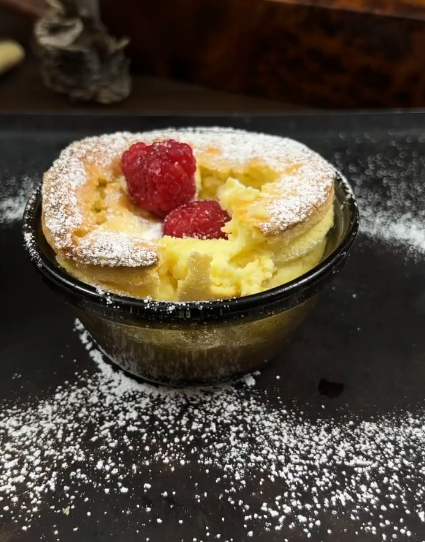
Classic Vanilla Soufflé 🇫🇷 – A One‑of‑a‑Kind French Dessert!
Fluffy, buttery and out of this world, this vanilla soufflé is a true piece of French culinary tradition. It’s elegant yet approachable, and when done right, it offers a light, airy texture that melts in your mouth. Serve it plain, with chocolate sauce, fresh berries, or your favourite accompaniment. 🍮🫐
Why this soufflé is so special
The word soufflé comes from the French verb suffler, meaning “to puff” or “to blow” — which perfectly describes how this dessert rises beautifully in the oven. :contentReference[oaicite:0]{index=0}
Here are a few reasons why this dessert stands out:
- It’s visually impressive: a tall, golden‑topped soufflé offers a wow factor for guests.
- It combines simple ingredients—eggs, milk, flour/cornstarch, vanilla—but the technique makes all the difference.
- It’s versatile: you can serve it with chocolate sauce, fresh berries, or keep it elegant and pure.
Ingredients & Step‑by‑Step Instructions
Ingredients
- 2 large egg yolks
- 2 tablespoons granulated sugar
- 4 tablespoons all‑purpose flour
- 2 tablespoons cornstarch
- ½ cup whole milk
- 1 tablespoon unsalted butter
- ½ teaspoon vanilla extract
- 2 large egg whites
- ½ teaspoon lemon juice
- Powdered sugar (for dusting)
Directions
- Preheat your oven to 375 °F (≈ 190 °C). Butter an appropriate soufflé dish (or individual ramekins) and dust with sugar (this helps with rise). :contentReference[oaicite:1]{index=1}
- In a small saucepan (over medium heat), combine the milk and butter until the butter has melted and the milk is warm.
- Meanwhile, in a bowl whisk together the egg yolks, granulated sugar, flour and cornstarch until smooth.
- Slowly pour the warm milk‑butter mixture into the yolk‑flour‑cornstarch mixture while whisking constantly to prevent lumps. Then return the mixture to the saucepan and cook, stirring, until you have a thick base (like a light pastry cream). This is your base for the soufflé. :contentReference[oaicite:2]{index=2}
- Remove from heat and stir in the vanilla extract. Let the mixture cool slightly.
- In a clean, dry bowl, beat the egg whites with the lemon juice until soft peaks form. Then gently fold the egg whites into the vanilla base mixture in two batches—first a third to lighten it, then the remainder gently so as not to deflate too much. :contentReference[oaicite:3]{index=3}
- Pour the mixture into the prepared dish, filling it up to about ¾ full (so there’s room to rise).
- Bake in the preheated oven for about 15‑20 minutes (in your recipe) — but depending on dish size/oven, it may take closer to 20‑30 minutes for a large dish. The soufflé should be well‑risen, golden on top, and still slightly wobbly in the centre. :contentReference[oaicite:4]{index=4}
- Once done, immediately dust with powdered sugar and serve right away (a soufflé waits for no one!). Serve with chocolate sauce or fresh berries if you like.
Health Tips & Safety Considerations
Food safety & best practices
Even though this is a dessert, good kitchen practices still matter:
- Ensure your eggs are fresh and from a trusted source; when whipped and folded, egg whites need a stable base.
- Make sure mixing bowls and utensils for egg whites are completely clean and dry—any grease or moisture can impede whipping the egg whites properly. :contentReference[oaicite:5]{index=5}
- Pre‑heat your oven properly and don’t open the oven door early while the soufflé is rising—sudden temperature changes can cause it to collapse. :contentReference[oaicite:6]{index=6}
Nutrition & moderation notes
This dessert is rich thanks to egg yolks, butter, and sugar. While it’s fine as an occasional treat, here are a few moderation and lightening suggestions:
- You could use 2 % milk instead of whole milk for slightly less fat (though whole milk gives a richer texture).
- Consider a smaller portion size; the visual impact of a tall soufflé often means large portions but you can serve smaller and still impress.
- Accompany the dessert with fresh berries (rich in antioxidants and fibre) rather than heavy sauces to balance richness.
Nutrition & Health Benefits Table
Here’s an estimated nutrition/benefit table based on one serving (assuming 1/4 of the soufflé dish, with no heavy chocolate sauce):
| Component | Estimated Amount | Health/Nutritional Note |
|---|---|---|
| Egg yolks (½ of 2 yolks per serving) | ≈ 45 kcal, ~2 g protein, ~3 g fat | Provides vitamin A, choline, and healthy protein. |
| Flour & Cornstarch base (~1 Tbsp total per serving) | ≈ 30 kcal, ~6 g carbs | Starches help stabilise the soufflé and give structure. |
| Milk (~⅛ cup per serving) | ≈ 20–25 kcal, ~2 g protein, some calcium | Provides calcium and protein, though small amount. |
| Butter (⅛ Tbsp per serving) & Sugar (~½ Tbsp) | ≈ 50–60 kcal extra from fat & sugar | This is what makes the dessert rich—again, moderation helps. |
| Total Estimated | ≈ 145–160 kcal (without toppings) | A moderate dessert portion; adding sauces or berries increases calories accordingly. |
Note: These are rough estimates; actual values vary significantly with dish size, toppings, and ingredient brands.
Variations & Customisation Ideas
Once you’ve mastered this vanilla base, you can experiment. Here are some fun ideas:
- Serve with chocolate sauce: Warm a little dark chocolate and cream and drizzle over the soufflé when it comes out of the oven.
- Berry accompaniment: Fresh raspberries, blueberries or strawberries add colour, flavour contrast and freshness against the rich soufflé.
- Flavour twist: Swap vanilla extract for 1 tsp of vanilla bean paste or scrape a vanilla bean for more intensity. Many classic recipes do just that. :contentReference[oaicite:7]{index=7}
- Smaller individual servings: Use ramekins instead of one large dish. This often makes the rise more reliable. :contentReference[oaicite:8]{index=8}
- Lightened version: Use half milk/half low‑fat milk, reduce sugar slightly, and portion smaller. Serve with fresh fruit rather than heavy sauce.
Expert Tip from Chef Gordon Ramsay
“For a successful soufflé you must respect the egg whites: whip them until they hold peaks but are still glossy, then fold in with care so you keep the air. Ensure your mould is properly buttered and sugared, pre‑heat the oven properly, and resist opening the door until time is up — that burst of air inside must set before cooling.” — Chef Gordon Ramsay :contentReference[oaicite:9]{index=9}
Frequently Asked Questions (10 FAQs) ❓
1. Why did my soufflé collapse?
Soufflés collapse when the fragile air whipped into the egg whites escapes prematurely. Opening the oven door too early, under‑whipping whites, or not preparing the mould properly are common causes. As French culinary sources note: “a sudden variation of temperature will cause it to deflate.” :contentReference[oaicite:10]{index=10}
2. Can I use low‑fat milk instead of whole milk?
Yes – you can use 2% or even low‑fat milk, but be aware that the texture might be slightly less rich and creamy. Whole milk gives more body to the base mixture.
3. Do I really need to dust the mould with sugar?
Yes, coating the buttered mould with sugar helps the soufflé climb the sides of the dish and prevents sticking. It also gives a lightly caramelised crust as it bakes. :contentReference[oaicite:11]{index=11}
4. How long can I wait to serve it?
Ideally you serve it immediately when it emerges from the oven. A soufflé begins to deflate shortly after cooling. One source states: “The soufflé must be served immediately… when a hot soufflé hits cooler air, it deflates.” :contentReference[oaicite:12]{index=12}
5. Can I make it ahead of time?
You can prepare parts of the base and refrigerate, but the final bake and serving should be just before eating. Some recipes allow the base to be made ahead. :contentReference[oaicite:13]{index=13}
6. Can I use other extracts/flavourings instead of vanilla?
Absolutely. Chocolate, lemon, raspberry, coffee or liqueur flavours can be used once you master the vanilla version. The technique remains the same. :contentReference[oaicite:14]{index=14}
7. My soufflé rose unevenly – why?
Uneven rise may result from uneven oven heat, incorrect mould preparation, or whites folded too vigorously (which can cause air pockets). Use a proper mould, centre in the oven, and avoid drafts or door opening.
8. Can I use a larger dish or many small ramekins?
Yes. Smaller individual ramekins often yield better, more reliable results because the heat penetrates more evenly and rise is more consistent. Larger dishes are fine but may require slightly longer bake time. :contentReference[oaicite:15]{index=15}
9. How do I know when it’s done?
The top should be golden and firm to the touch, yet the centre slightly wobbly (like jiggling jelly). Over‑cooking will dry it out, under‑cooking may leave it too liquid inside. :contentReference[oaicite:16]{index=16}
10. What should I serve it with?
Classic accompaniments include a dusting of powdered sugar, fresh berries, a warm chocolate sauce, or a small scoop of vanilla ice‑cream. The contrasting textures and temperatures make the dessert even more enjoyable.
Internal Links to Related Content
For more elegant dessert ideas and pastry tips, check out these related articles on our site:
- Elegant French Desserts to Impress
- Baking Techniques for Home Chefs
- Light Dessert Recipes for Everyday
Wrapping Up – Your Moment of Culinary Heaven
There’s something truly magical about pulling a soufflé out of the oven, seeing it gently towering above the rim, golden‑brown and fragrant with vanilla. With this recipe and guide, you’ll be ready to bring that same restaurant‑style elegance into your home kitchen. Whether you’re celebrating a special evening or simply treating yourself, this vanilla soufflé is a memorable dessert that shows skill, flavour and finesse.
So pre‑heat your oven, butter your dish, get those egg whites whipped to perfect peaks, and send this soufflé rising to great heights. Then serve immediately, enjoy the cloud‑like texture, savour those vanilla notes, and maybe add a cascade of berries or chocolate to make it even better.
Bon appétit!