
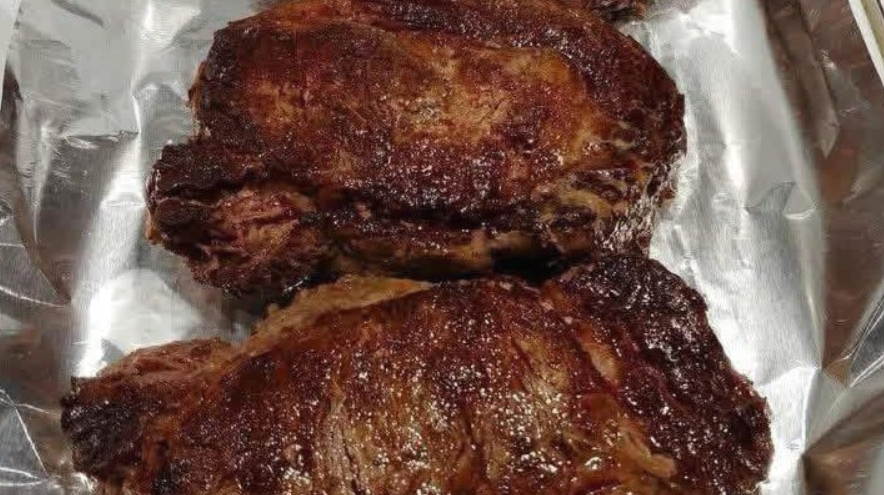
Hook: The Perfect Ribeye Steak Every Time
There’s something deeply satisfying about slicing into a beautifully cooked steak — the aromatic patter of butter, the herb‑infused crust, the tender pink inside. If you’ve ever wondered how to consistently turn out a tender, juicy, flavour‑rich ribeye steak that people will ask you to repeat time and again, you’re in the right place. With the method below, you’ll cook a steak that tastes professional, not fussy — and in a way that anyone from a seasoned cook to a beginner can master.
Introduction: Why This Method Works (and Why It Matters)
Here we’re working with a classic cut — the Ribeye Steak — and a straightforward pan technique that checks all the boxes: a high‑heat sear for flavourful crust, basting with butter, herbs and garlic for richness, and a proper rest to retain juiciness. This is the kind of method seasoned chefs like Gordon Ramsay or Ina Garten would recommend because it highlights the meat’s quality rather than hides it under heavy sauce.
You’ll also gain confidence in understanding the “why” behind each step — things like meat temperature, marbling, resting, seasoning — so you can adapt the technique across cuts, thicknesses or cooking surfaces. We’ll cover health and nutrition benefits, expert tips, food safety, variations, plus FAQs. By the end, you’ll have the full picture.
What You’ll Need: Ingredients & Setup
Here’s the ingredients list for our basic method (your version) and a few optional enhancements to elevate it even further.
- 1 rib steak (recommend ~2.5‑3 cm thick or more, for good control)
- Sea salt flakes — generous amount
- Freshly ground black pepper — generous
- Butter — ~50 g (for basting)
- 2 sprigs fresh thyme
- 1 clove garlic, crushed with its skin left on
Setup & prep tips:
- Take the steak out of the fridge at least 30 minutes before cooking so that it comes closer to room temperature; this promotes even cooking rather than a cold centre.
- Pat the steak dry with paper towels just before seasoning — moisture on the surface delays browning.
- Use a heavy‑based skillet (cast iron works wonderfully) and pre‑heat it on medium‑high to high heat until it’s very hot.
- Have your butter, thyme and garlic ready so you can add them right after the initial sear. Timing matters.
Step‑by‑Step Instructions
Here is the method laid out clearly. Think of this as the blueprint; you can adapt thickness or thickness variations if needed.
- Prep the Steak: Bring the steak out of the fridge ~30 minutes ahead. Pat dry. Preheat your skillet and make sure you have space around the steak so it sears rather than steams.
- Season Generously: On both sides — and optionally the fatty edge — sprinkle sea salt flakes and freshly ground black pepper. This ensures flavour through the meat, not just on the surface.
- Sear the Steak: Place the steak into the hot pan. For a ~3 cm thick steak, cook about 2 to 3 minutes each side for medium‑rare.
Use internal temperature guides: ~50 °C for rare, ~60 °C for medium, ~70 °C for well‑done. (These approximate targets align with many steak‑cooking references.)
Tip: If you don’t have a thermometer, feel the firmness: rare feels soft, medium yields more, well‑done firm. - Baste with Butter, Thyme and Garlic: After flipping the steak once (so you’ve got a crust on the first side), add the butter, the 2 sprigs thyme and the crushed garlic clove to the pan. Let the butter melt and foam slightly. Tilt the pan toward you so the melted butter pools, and use a spoon to continuously baste the steak with this aromatic butter for about 1 minute (or a little more) while it finishes cooking. This basting step builds flavour all over and helps the crust get extra richness.
- Rest the Steak: Remove the steak from the skillet and let it rest on a cutting board or warmed plate for about 5 minutes (or slightly longer if it’s very thick). Resting allows the muscle fibres to relax and the juices to redistribute — skip or shorten this and you’ll lose a lot of the juiciness when you cut.
- Serve: Slice the steak against the grain (look at the direction of the muscle fibres and cut perpendicular) for maximum tenderness. Lightly season again if needed (but often the salt from earlier plus the butter‑baste is sufficient). Serve with your choice of sides and enjoy immediately.
Expert‑Level Tips & Variations
Here are some ways to refine this further, channeling insight from professional chefs.
- Choose well‑marbled meat: The ribeye is prized for its marbling (intramuscular fat) which melts and bastes the meat from within, creating richness and juiciness. The better the marbling (without going overly fatty), the better the flavour and texture. :contentReference[oaicite:3]{index=3}
- Don’t crowd the pan: Give the steak enough space so heat doesn’t drop and so steam doesn’t build — you want a true sear, not poaching.
- Watch your fat and flavour additions: The butter‑thyme‑garlic combo adds a gourmet touch, but ensure your butter doesn’t burn — if your pan is super hot, you may want to reduce heat slightly for the basting step.
- Use a thermometer: Especially if your steak is thicker than ~3 cm, internal temperature is the most reliable way to hit your doneness rather than timing alone.
- Reverse‑sear option: For very thick cuts, you may opt to finish the steak in a pre‑heated oven after searing both sides — and then do the butter‑baste at the very end. This is common in professional kitchens for >4 cm cuts.
- Flavor variations:
- Swap thyme with rosemary or a few sage leaves for a different herb profile.
- Add a knob of garlic‑herb butter on top of the rested steak for extra richness.
- Finish with a sprinkle of flaky sea salt or cracked pepper just before serving for texture contrast.
- Pair with sauces like peppercorn, chimichurri, or a red wine reduction if you like more elaboration — though the steak is delicious on its own.
Health, Nutrition & Safety Considerations
Because we enjoy good food *and* we want to feel good about it, let’s talk about what this steak offers nutritionally — and also what to keep in mind.
Nutrition & benefits
The ribeye steak is packed with high‑quality protein and essential nutrients. Here are some highlight points:
- A 3 oz (≈ 85 g) serving of cooked ribeye steak provides ~199 calories, ~10.8 g fat, and ~23.8 g protein. :contentReference[oaicite:4]{index=4}
- It’s a good source of iron, zinc, vitamin B12 and B6 — nutrients which support muscle health, blood health, immune system and energy metabolism. :contentReference[oaicite:5]{index=5}
- Because it has essentially zero carbohydrates, it fits well with lower‑carb eating patterns (if that’s your preference). :contentReference[oaicite:6]{index=6}
- Including beef in moderation can help maintain lean muscle mass, especially important as we age or engage in physical activity. :contentReference[oaicite:7]{index=7}
Safety & moderation
That said, there are considerations to keep it balanced and mindful:
- Fat & saturated fat content: Ribeye is richer than lean cuts. For instance, one source notes 10.8 g fat per 3 oz with ~4.2 g saturated fat. :contentReference[oaicite:8]{index=8} If you have cardiovascular concerns, it’s wise to moderate portion size and balance with plenty of vegetables and leaner proteins on other days.
- Cooking method matters: Over‑charring or burning the crust may produce undesirable compounds. Use proper temperature control, good ventilation, and avoid excessive smoke or char beyond the crust.
- Resting is vital: If you skip the resting stage and slice immediately, many of the juices will escape, leading to a less‑moist steak. This isn’t just about texture — wasted juices mean flavour loss.
- Cuts and portion size: Keep portion size appropriate. A palm‑sized portion (≈3–4 oz cooked) accompanied by colorful vegetables and whole‑grains is a balanced meal.
- Storage & leftovers: If you have leftover steak, cool it promptly, store in an airtight container in the fridge, and use within 2‑3 days. Re‑heating should be gentle to avoid drying out. According to nutrition guidelines, proper food storage extends safety. :contentReference[oaicite:9]{index=9}
Nutrition & Health Benefits Table
Below is a table summarising approximate nutritional values and benefits for a 3 oz (≈85 g) cooked serving of ribeye steak. Values may vary based on grade (marbling), trimming, and cooking method.
| Nutrient | Approximate Amount | Notes / Health Benefit |
|---|---|---|
| Calories | ~199 kcal | From cooked portion. :contentReference[oaicite:10]{index=10} |
| Protein | ~23.8 g | High‑quality complete protein; supports muscle repair & maintenance. :contentReference[oaicite:11]{index=11} |
| Total Fat | ~10.8 g | Includes saturated and unsaturated fat; higher than leaner cuts. :contentReference[oaicite:12]{index=12} |
| Saturated Fat | ~4.2 g | Moderate; relevant to heart‑health considerations. :contentReference[oaicite:13]{index=13} |
| Iron | ~1.44 mg | Supports red‑blood‑cell production. :contentReference[oaicite:14]{index=14} |
| Zinc | Good source | Important for immune function & healing. :contentReference[oaicite:15]{index=15} |
Key takeaway: When you serve a ribeye steak, you’re offering a richly flavoured, nutrient‑dense piece of meat. When portioned and paired wisely, it can absolutely fit into a balanced, enjoyable eating pattern.
Why This Recipe Method Works — Breaking It Down
Let’s revisit the method and understand *why* each step matters, so you can adapt it confidently to your kitchen.
- Bringing steak closer to room temperature: Starting from very cold can cause the outer layers to overcook while the centre remains undercooked. Allowing ~30 minutes stabilises temperature, promoting even cooking.
- Season generously ahead: Salt helps season through and aids in crust formation. Pepper adds flavour and texture. Doing it right up front ensures you’re enhancing the meat, not just masking it.
- Pre‑heating a heavy skillet & searing: A good sear locks in flavour by browning via the Maillard reaction (that golden crust). The ribeye’s marbling means fat renders as it cooks, aiding flavour and texture. :contentReference[oaicite:16]{index=16}
- Basting with butter, thyme and garlic: This step is about flavour layering. The melted butter mingles with aromatic thyme and garlic, creates a luscious compound liquid that coats the meat — adding richness and helping the crust finish beautifully. This is hallmark of professional steak cooking technique.
- Resting the meat: Very important. The muscle fibres, under heat, contract and push juices inward; resting lets them relax and re‑absorb the juices rather than lose them once cut. The result: a juicier steak.
- Cutting and serving: Slicing against the grain ensures more tender bites; little finishing touches (flakes of sea salt, a light sprinkle of cracked pepper) add texture and flavour bursts at the end.
Common Mistakes to Avoid
Even seasoned home cooks slip up sometimes. Here are pitfalls and how to sidestep them:
- Overcrowding the pan: If you cook multiple steaks in a small pan, the temperature drops and you’ll end up steaming rather than searing.
- Oil or butter burning: If the pan is overheated or butter turns too brown or black, you’ll get a bitter flavour. Use moderate‑high heat and adjust as necessary.
- Skipping the rest: Many go straight from pan to plate — but resting is not optional if you want retained juiciness.
- Cutting immediately: Cutting too soon causes juices to run out and the meat to finish cooking rapidly, potentially becoming tough or dry.
- Using too thin a steak for this method: If your steak is very thin (<2 cm), the window for perfect medium‑rare is narrow; you may end up overcooking. For thinner cuts you may reduce sear time or use a different method (e.g., flash grill).
Serving Suggestions & Pairings
Once you’ve cooked the steak, you want to serve it in a way that honours it. Here are some pairing ideas:
- Vegetable sides: Simple roasted asparagus, sautéed green beans with garlic, or a crisp salad with vinaigrette offer contrast to the richness of the steak.
- Starches: Go classic with roasted potatoes, mashed sweet potatoes, or a quinoa‑pilaf for a lighter whole‑grain side.
- Sauce options (optional): While the steak needs nothing, if you’d like to add a finishing sauce:
- Garlic herb butter on top of the rested steak.
- A peppercorn cream sauce.
- A bright chimichurri (parsley, garlic, olive oil, vinegar) to cut through richness.
- Beverage pairings: For wine lovers: a full‑bodied red (like Cabernet Sauvignon or Malbec) pairs beautifully. If you prefer non‑alcoholic: a robust iced tea or sparkling water with citrus pairs nicely.
Presentation tip: Let the steak rest on a warmed plate or board, slice it, fan out the pieces or stack them loosely, and let any butter from the pan drizzle over. Sprinkle a tiny bit of flaky sea salt just before serving for that finishing flourish.
Frequently Asked Questions (10 Detailed FAQs)
- 1. What thickness of steak should I choose for this method?
- For best control using this method, a thickness of ~2.5‑3 cm (≈1 to 1¼ inch) is ideal. Thicker gives you more margin for error in cooking; thinner steaks may overcook before a good crust forms. Adapt time accordingly.
- 2. Can I cook a ribeye steak from fridge‑cold?
- Technically yes, but not recommended if you want even doneness. Starting too cold means outer layers may overcook while the centre remains underdone. Letting it come closer to room temperature (~30 min) improves results.
- 3. How do I know when the steak is at my desired doneness?
- Use a meat thermometer: rare ~50‑52 °C, medium ~60 °C, well‑done ~70 °C (or higher, depending on thickness and preference). Without a thermometer, use the “feel test”: rare = soft and squishy, medium = slight give, well‑done = firm. Better yet, combine feel + a timer + visual cues.
- 4. What if the steak surface is browning too quickly before the centre is done?
- If you notice this, reduce the heat slightly, or after searing both sides for crust, you can lower heat or move the pan slightly away from direct flame. For thick cuts, a short finish in a pre‑heated oven (e.g., 180°C/350°F) is a good alternative.
- 5. Do I really need to rest the steak? Could I skip it?
- Yes — resting is important. Without it, juices flow out when you slice, leaving the steak drier and less flavourful. A 5‑minute rest for a standard steak (longer for very thick cuts) is a small investment for a big flavour payoff.
- 6. How long can I leave the steak to rest and still serve it warm?
- For a standard size steak, ~5‑10 minutes of rest is fine and the piece will still retain warmth. If you rest it much longer (>15 minutes) without covering loosely, it may start cooling; you can tent it lightly with foil (not tightly wrapped) to preserve heat.
- 7. How should I slice the steak for best results?
- Always slice against the grain. Look at the muscle fibres running in one direction and cut perpendicular. This results in shorter fibres in the bite, making each piece more tender. Also, optionally slice at a slight angle for larger surface per bite.
- 8. What size portion is appropriate?
- A good portion size for a rich cut like ribeye is about the size of your palm (~3‑4 oz cooked) for a balanced meal, particularly when paired with vegetables and a moderate starch. If serving larger portions, balance the richness with lighter sides and fresh salad.
- 9. Can I make this method ahead of time (e.g., for a dinner party)?
- You can partially prep ahead (season steak ahead, maybe bring to near room temperature), but for best texture and flavour, cook and serve the steak just before eating. If you must cook ahead, rest the steak, store loosely covered at room temp for a short time, then gently reheat (low oven or warm skillet) to avoid over‑cooking. Reheating will slightly affect texture compared to fresh‑cooked.
- 10. What if I want to cook a leaner steak occasionally?
- If you’re looking for something leaner, choose cuts with less marbling (like sirloin or tenderloin). You can still use the same method (season, hot sear, butter‑herb basting, rest), but reduce resting time and monitor doneness carefully as leaner cuts can dry out faster.
Final Thoughts & Make It Your Own
Cooking a ribeye steak with confidence comes down to respecting the ingredients, understanding the key steps, and making small adjustments to suit your kitchen and tastes. The method above gives you a reliable roadmap: bring the steak closer to room temperature, season well, sear for flavour, baste with butter + thyme + garlic for richness, rest to lock in juices, slice and serve with intention.
Feel free to make this your own: maybe swap thyme for rosemary or add a splash of red wine just at the end of the basting. Maybe pair with a colourful roasted vegetable medley or a simple chimichurri for a fresher contrast. The key is that the steak remains the star, supported (not overshadowed) by your accompaniments.
When you serve that first slice — that perfect rosy interior, the aromatic butter glaze, the crisp set crust — you’ll know you got it right. And your guests (or you!) will savour every bite. Enjoy the experience, the flavour, the moment. 👏